|
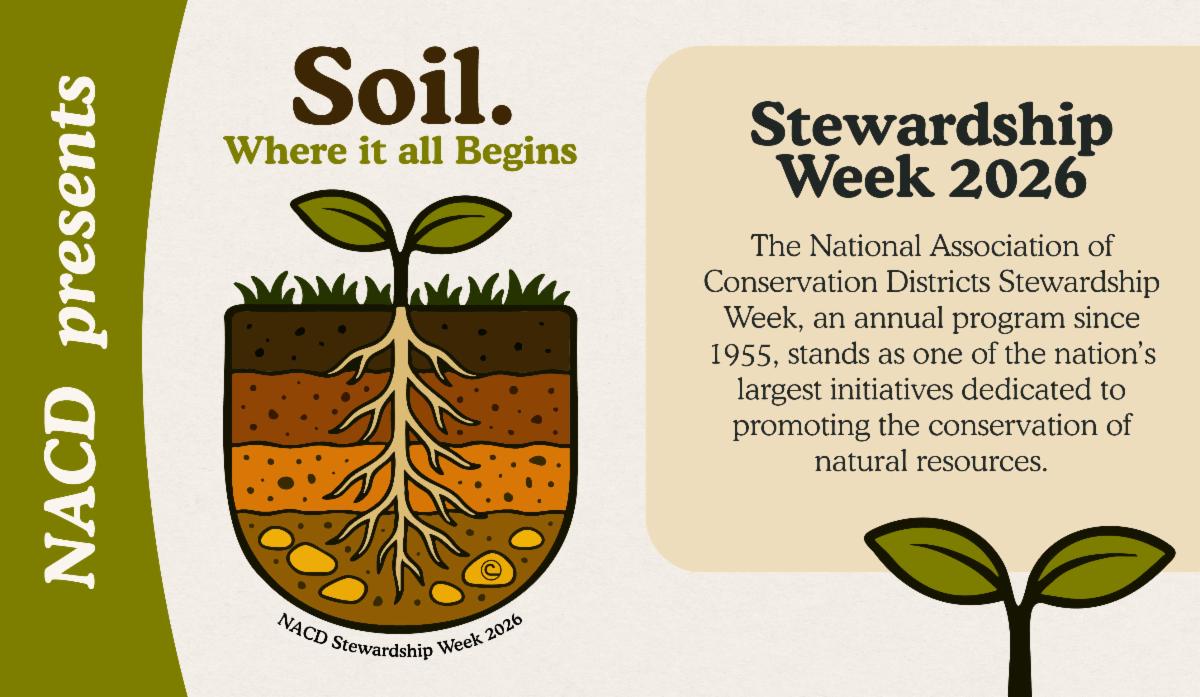
NACD's 2026 Stewardship Week will be celebrated April 26 - May 3, with the theme: Soil. Where it All Begins!
This year’s focus highlights soil as a living resource that supports food production, water quality, wildlife habitat, and healthy communities. Conservation districts across the country use this week to connect people of all ages to the role soil plays in everyday life and long-term natural resource conservation. Stewardship Week is a visible way for districts to share their work and connect conservation to the communities they serve.
Here are some ways your district can celebrate Stewardship Week:
- Host educational events in your community with ready-to-use education materials from NACD designed for classrooms, field days, and community events. Resources include a K-8 Instructor Guide, student journals, and activity mats. Each education piece is flexible, so districts can adapt activities to local priorities.
- Ask your governor to proclaim the week of April 26 - May 3 as Stewardship Week using NACD’s sample proclamation and instructions.
- Work with local news, radio, and television stations to make public service announcements using NACD’s templates.
- Partner with local businesses for soil-themed community projects.
- Share soil health content on your social media accounts using the #NACDStewardshipWeek and #SoilWhereItAllBegins hashtag.
- Follow NACD on Facebook, Instagram, and YouTube. Like and share Stewardship Week 2026 content, posts, and videos.
Find resources mentioned here and more on NACD's website.
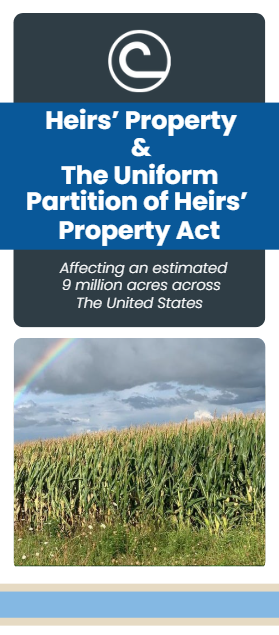
| HEIRS' PROPERTY AND THE UNIFORM PARTITION OF HEIRS' PROPERTY ACT BROCHURE | |
The NACD Outreach Subcommittee created the Heirs' Proprty and Uniform Partition of Heirs' Property Act brochure to aid districts in spreading awareness about heirs’ property and how this issue can affect landowners’ ability to access USDA Farm Bill programs. Districts can use this Canva template or download the brochure as a PDF here. Please add in your own district contact information before printing and distributing the brochure.
The information in this brochure was carefully reviewed by the Outreach Subcommittee for accuracy and applicability, so we ask that you only edit the contact information in this brochure to reflect your own, and leave the content as is. If you’d like to learn more about Heirs’ Property, you can read this article.
| CELEBRATE EARTH DAY WITH SCIENTISTS TAGGING SALMON! | |
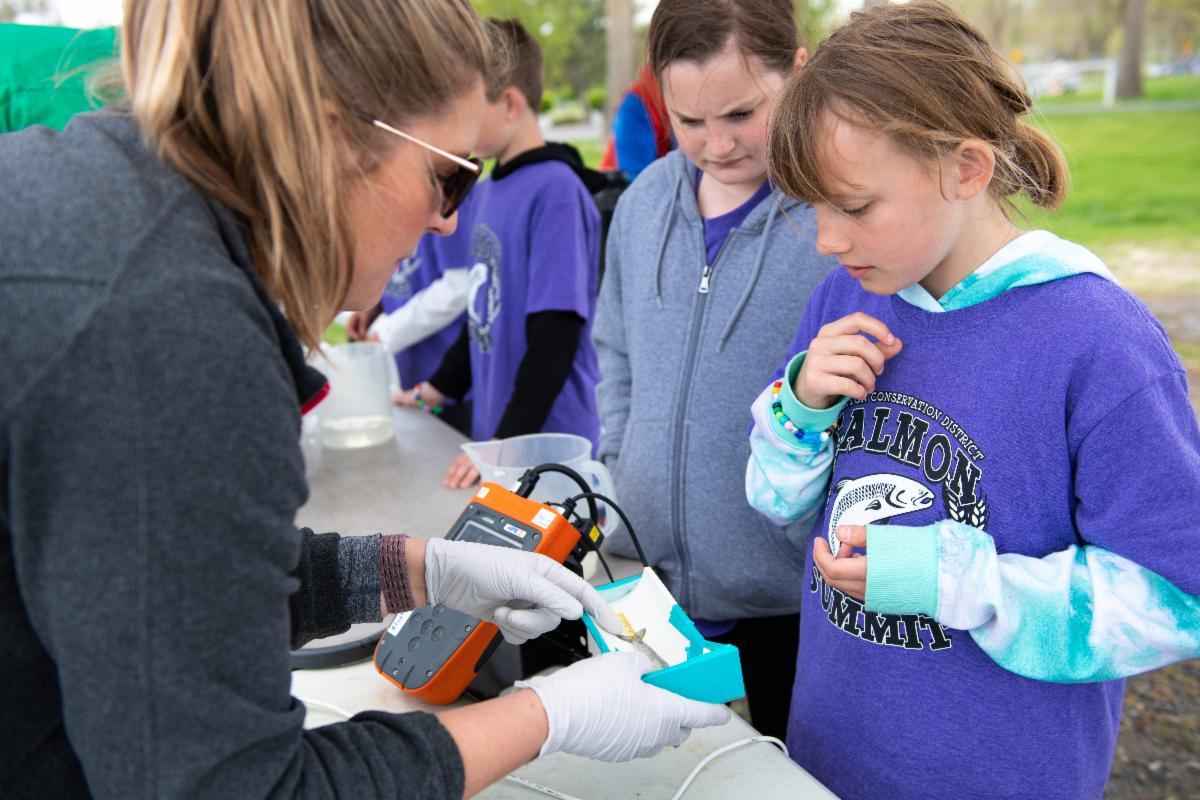
Join Benton Conservation District and scientists from the Pacific Northwest National Laboratory (PNNL) as they implant high-tech tags into young salmon fish along the Columbia River during an award-winning live streaming event called Virtual Salmon Summit for Earth Day, hosted in 20-minute sessions from 10 a.m. to 1:30 p.m. PT on April 21 and 22.
Watch as elementary school students accompany individual salmon through each step of the tagging and release process, explained by PNNL scientists and American Sign Language interpreters. Teachers can submit student questions during the event, asking anything about the fish, the scientists’ career, or even what happens if a tagged fish gets eaten! Scientists will respond to questions during the event. Participating teachers will receive updates after the event as the tagged salmon migrate downstream past milestones along the Columbia River to the Pacific Ocean.
Pre-registration is required for this free event; the registration deadline is April 15. Click here to register. For assistance contact rachel-little@bentoncd.org.
| |
WHAT'S UP IN WASHINGTON?
GOVERNMENT AFFAIRS UPDATES
| |
The White House released the President’s Budget on April 3. Similar to last year’s proposed budget, many programs utilized by conservation districts have been zeroed out in favor of the administration’s other priorities. The President’s Budget is regarded as a guiding document for Congress to highlight the administration’s priorities but ultimately Congress makes the final decision on spending through the appropriation process. NACD will provide a deeper analysis in next week's update.
USDA announced further plans for reorganization by highlighting changes to the U.S. Forest Service (USFS). USFS states it is realigning its organizational structure to strengthen local leadership, streamline operations, and improve mission delivery. The changes include moving headquarters to Salt Lake City, transitioning to a state-based leadership model—similar to moves made by the Bureau of Land Management in the last Trump administration—and building a network of operations centers.
Action Items
NRCS is reviewing and requesting feedback on the Conservation Practice Standards (CPS). They have posted the redline documents for 48 conservation practice standards on the CPS Website; click and scroll down the page to see the listing. Please take some time to review and provide comments.
Your input will help ensure technical assistance is relevant, flexible, and truly addresses the resource concerns affecting your operations. Today, April 7, is the final day to submit comments via CPS Feedback.
Please note, the posted Conservation Practice Standard documents are Pre-Decisional/Deliberative, meaning they are not final and some have not yet been published to the federal register for public comment. This opportunity to provide feedback is in addition to the public comment period available in the Federal Register. Comments received will not be publicly posted.
| STRENGTHENING FORESTRY CAPACITY IN NEW JERSEY | |
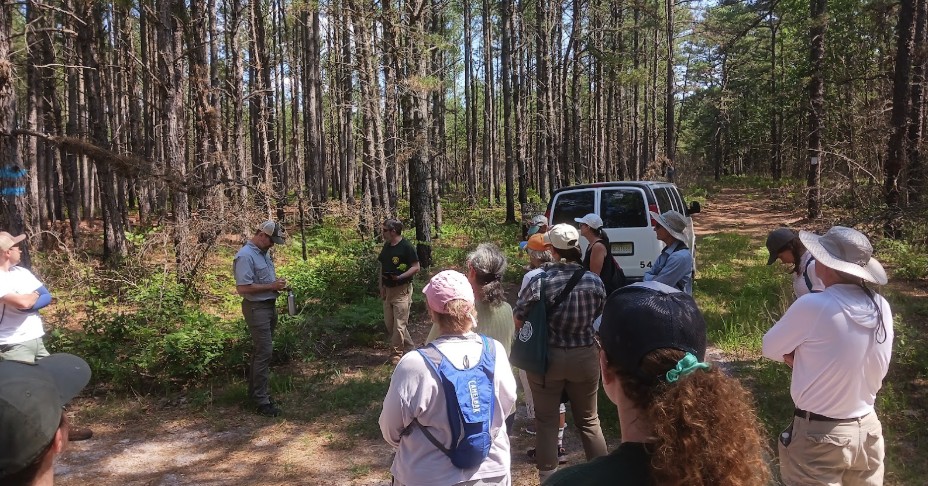
In southern New Jersey, the DelAtlantic Soil Conservation District (SCD) began its forestry work with limited capacity to meet a growing local need. After a Northeast Mid-Atlantic Partnership for Forests and Water meeting, District Manager Michael Kent met Annica McGuirk, then NACD’s Northeast Representative, who encouraged him to utilize NACD’s Technical Assistance (TA) grant program to support their needs.
“I tailored the TA grant toward forestry,” said Kent. “A lot of it was outreach and capacity building, working with NRCS, helping their forester write plans, and seeing how the district could fill the gap.”
DelAtlantic SCD received the grant and brought a forester onto staff to help build the program. That early investment laid the foundation for lasting growth.
| |
New Jersey offers woodland owners tax relief through its Farmland Assessment Program, including the Forest Stewardship Program, which eliminates income requirements and reduces pressure to over-harvest small parcels.
Every stewardship plan requires a New Jersey Department of Environmental Protection Natural Heritage Program review for rare species. Current work includes restoring bog turtle habitat and supporting recovery of Atlantic white-cedar, benefiting species like swamp pink and Hessel’s Hairstreak. Wildfire, climate change, and invasive species add urgency. Spongy moth, multiflora rose, phragmites, and other invasives create constant pressure—and constant work. Southern pine beetle occurrence is also increasing in the region as climate change expands its northern range.
Kent says that success hinges on clear communication and education. Outreach for the district ranges from tree-ID workshops to partnerships with Rutgers Extension, New Jersey Forest Service, New Jersey Audubon, and woodland owner groups.
“The technical part’s the easy part. You need staff who can explain—in layman’s terms—why we cut trees or burn and how that makes forests healthier,” said Kent. “A lot of people think managing a forest means just letting it be. We need to educate people on why we do what we do.”
Read the full story on NACD's blog and see more stories like this in the Forestry Notes newsletter.
| | Join Conservation Coffee on Tackling Nitrate | |
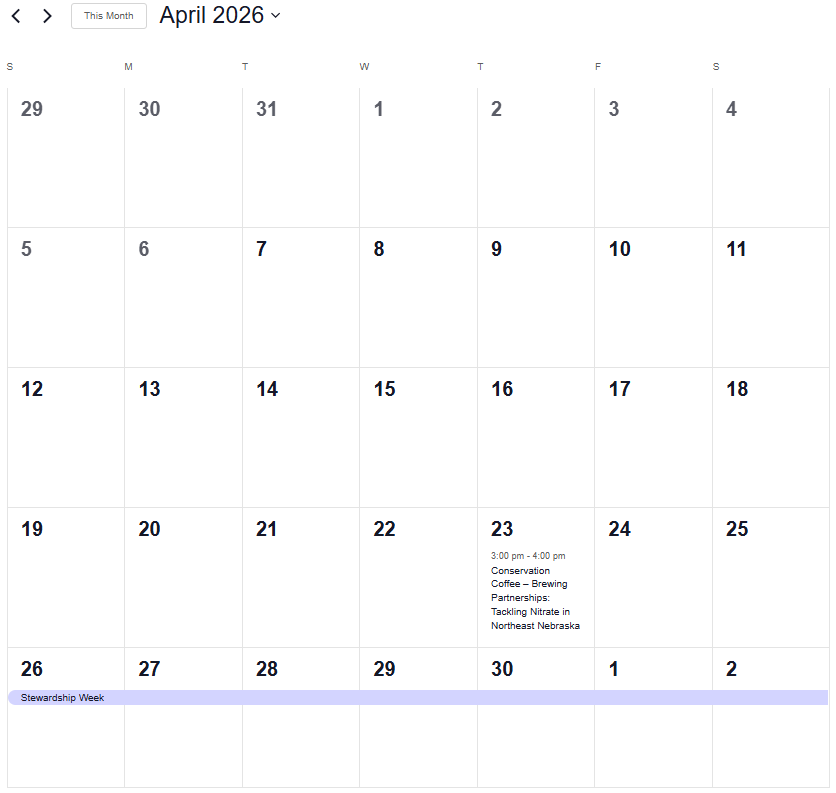
Join NACD's next Conservation Coffee webinar, Brewing Partnerships: Tackling Nitrate in Northeast Nebraska – Producer Outreach and Source Water Protection Through the Lower Elkhorn and Lewis & Clark Natural Resources Districts on April 23 at 3:00 p.m. ET.
Presented by Jim Olson, Source Water Protection Specialist, learn how proactive outreach and producer partnerships are protecting drinking water in northeast Nebraska.
Register here to join.
| Save the Date: Upcoming Meetings | |
There are tons of opportunities this year to connect and network with fellow conservation districts at NACD national and regional meetings, including:
NACD’s Summer Conservation Forum and Tours | July 17-22 | Grand Rapids, MI | Hosted in partnership with the Michigan Association of Conservation Districts
Northern Plains Region Meeting | June 22-24 | Helena, MT | Hosted by the Montana Association of Conservation Districts
Southeast Region Meeting | August 9-12 | Cherokee, NC | Hosted by the North Carolina Association of Soil & Water Conservation Districts
Northeast Region Meeting | August 24-27 | Wilmington, DE | Hosted by the Delaware Association of Conservation Districts
Pacific and Southwest Joint Region Meeting | August 24-28 | Guam | Hosted by Guam’s conservation districts
South Central Region Meeting | September 22-23 | Hosted by the Louisiana Association of Conservation Districts
| FDA Approves Screwworm Spray | |
The U.S. Food & Drug Administration (FDA) has approved emergency use of a topical spray to help prevent and treat New World screwworm, giving producers another tool as the threat continues along the southern border.
The spray, F10 Antiseptic Wound Spray with Insecticide, can be used on cattle, sheep, goats, deer, birds, and captive wildlife. It is not approved for dogs or cats. The product works by
protecting open wounds from flies and killing larvae that cause screwworm infestations.
The spray is sold over the counter and can be used on wounds as needed. Producers must follow
label directions and observe 30-day slaughter withdrawal for treated cattle, sheep, and goats.
Milk from treated animals must be discarded during treatment and for 10 days after.
Learn more in this release from FDA.
| Join Women Caring for the Land Professionals Event | |
The University of Missouri's Center for Regenerative Agriculture and Kansas Soil Health Alliance are hosting Women Landowners Leading Regeneration events. These events are designed to bring together women landowners and conservation professionals to support successful, resilient farmland management.
Attendees will gain practical conservation knowledge and build confidence in connecting with tenants.
Join one of the upcoming in-person events:
Each in-person event is followed by three optional virtual gatherings to continue the learning and connection. Topics include conservation planning, land succession, and incentives/cost-share opportunities.
Reach out to vorism@missouri.edu with any questions.
| |
Improve your Outreach with our Members Only resources! In 2024, we partnered with KR Creative Strategies to bring outreach training sessions to our districts in the Southwest Region. They were so popular that we made these available for all districts to use.
Find our five recorded trainings and three companion worksheets in the Optimize Your Outreach and Communication Skills section of our Members Only page. As a reminder, the Members Only page is a benefit to dues-paying members at any level. Please reach out to us if you need assistance with accessing this webpage.
| Promote your conservation district or state association's tree sale, annual meeting, webinar, field day, or other events on NACD's Calendar of Events! | |