2025-27 Budget Wraps: What's Next? | | |
After months of seeming inaction, the 2025-27 budget came together swiftly. Governor Evers and Republican lawmakers announced a compromise budget deal on July 1. The Senate approved it on the evening of July 2, followed by the Assembly's passage just before 1 a.m. on July 3. The Governor signed the budget into law less than an hour later and used his powers to issue 23 partial vetoes, roughly half the number of vetoes he issued in previous budgets.
Probably the most significant veto of a transportation provision was the deletion of an I-94 Corridor study in Western Waukesha County, a last-minute addition that was not in the Joint Committee on Finance (JFC) transportation motion or corresponding Legislative Fiscal Bureau summary. The governor vetoed the measure requiring WisDOT to examine the improvement and expansion of I-94 from County Trunk Highway SS to the Jefferson County border, as he objects to “circumventing the Department of Transportation's process for developing corridor studies through the ordinary Transportation Project Commission process.”
Budget Highlights
- $200 million in new, ongoing revenue
- $150 million for the Agricultural Roads Improvement Program, with $30 million earmarked to address small structures (6'-20') in poor or worse condition
- $100 million for Local Roads Improvement Program-Supplemental
- Increased funding for state highway routine maintenance activities and General Transportation Aids
- Sufficient increases to the State Highway Program to keep projects like I-41 and I-94 East-West on track
- Final approval (enumeration) for the I-39/90/94 project
Check out TDA’s summary of the JFC’s transportation motion for more information.
Looking Forward
We are deeply grateful that the 2025-27 budget sustains critical projects and programs, providing much-needed investment in our state and local communities. However, some programs remain underfunded, and there are challenges ahead.
The 2025-27 budget relies on a $565 million one-time General Fund (GF) allocation. This level of GF support is unlikely to be sustainable.
As we prepare for the next budget cycle, we must emphasize the importance of transportation investments, clearly communicating how funds are utilized and how stakeholders work together to maximize their impact. Stay engaged—we’ll need everyone’s support to keep Wisconsin moving forward.
| | I-43 North-South Upgrade Complete | |
The $550 million I-43 North-South project in Milwaukee and Ozaukee counties, which began in early 2022, is complete as of July 15. A ribbon-cutting ceremony marked the on-time and under-budget completion of this critical infrastructure upgrade connecting Glendale to Grafton.
Tens of thousands of travelers rely on I-43 each day, making it one of the busiest routes in the state. This section of the Interstate connects people and businesses across the region and provides access to airports, transit, rail, ferries, and Port Milwaukee.
The upgrade widened 14 miles of the Interstate, rebuilt five interchanges, added a new interchange at Highland Road, replaced a Union Pacific railroad bridge, and introduced Southeast Wisconsin's first diverging diamond interchange at Brown Deer Road. These improvements aim to enhance safety, reduce congestion, and boost economic growth across the region.
| | Budget Reconciliation Bill Impacts Transportation Programs | | |
The $3.4 trillion budget reconciliation bill, dubbed the “One Big Beautiful Bill Act” (OBBBA) and signed into law by President Donald Trump on July 4, 2025, affects some transportation programs and initiatives.
The legislation terminates several programs from the 2022 Inflation Reduction Act, including the Low Carbon Labeling for Construction Materials, Neighborhood Access and Equity, and Low Carbon Transportation Materials grant programs. The bill is reported to claw back billions in funding, some from projects awarded but not yet obligated, like 6th Street in Milwaukee.
The bill also phases out electric vehicle (EV) tax credits, eliminating the $7,500 credit for new EVs and $4,000 for used and commercial EVs by September 30, 2025. Tax credits for EV charging infrastructure under the Alternative Fuel Vehicle Refueling Property Credit program will end by June 30, 2026.
In terms of funding increases, the bill provides $12.5 billion to update the nation's Air Traffic Control systems and almost $25 billion for the Coast Guard.
The original House bill included national registration fees for electric ($250/year) and hybrid ($100/year) vehicles. However, they didn't make it to the final bill.
| | House Passes FY 2026 Transportation Bill with $4.4B IIJA Funding Shift | |
The House Appropriations Committee approved the Fiscal Year 2026 Transportation, Housing and Urban Development (THUD) bill on July 17, redirecting billions from the Infrastructure Investment and Jobs Act (IIJA).
The bill provides $22.1 billion in new discretionary funding for the Department of Transportation, which is $3.1 billion below the FY25 enacted level. However, it repurposes $4.4 billion from various IIJA advance appropriations accounts, including the National Electric Vehicle Infrastructure (NEVI) formula funding program, to add funding to various “regular” General Fund appropriations.
The bill honors IIJA’s $83.3 billion in obligation limitation for trust fund programs, including $62.7 billion for the Federal-Aid Highways and $14.6 billion for transit formula programs.
Modal Summary of New Resources (excluding IIJA advance appropriations)
Highways
$64.4 billion for the Federal Highway Administration, about $2 billion above FY 2025.
- $63.4 billion for highway trust fund programs.
- $954 million in Community Project Funding for 464 highway projects.
- Transfers $200 million of advance appropriations from the Reconnecting Communities Pilot program to the Tribal Transportation program and $200 million of advance appropriations from the National Culvert Removal and Replacement program to the Infrastructure for Rebuilding America (INFRA) grant program for truck parking projects.
Transit
$14.9 billion for the Federal Transit Administration, $1.8 billion below FY 2025.
- $14.6 billion in formula transit programs through the highway trust fund.
- $54 million for Capital Investment Grants, significantly lower than the $2.2 billion provided in FY 2025. According to the committee, this funding plus unallocated balances from FY 2025 and $1.6 billion in FY 2026 advance appropriations available through IIJA provides $3.6 billion in FY 2026.
- $96 million in Community Project Funding for 95 transit projects.
Aviation
$23.3 billion for the Federal Aviation Administration (FAA), $2.3 billion above the FY 2025.
- $13.8 billion for operations from the Airport and Airway Trust Fund (AATF) and the General Fund.
- $4 billion for the Airport Improvement Program from the AATF.
- $5 billion in Facilities and Equipment, $1.8 billion above the FY 2025 level. This amount includes $1 billion from the NEVI program.
- $284 million in Community Project Funding for 88 airport improvement projects.
Rail
$3.1 billion for the Federal Railroad Administration, slightly above FY 2025.
- There are no new General Fund appropriations for Amtrak or the Federal-State Partnership for Intercity Passenger Rail program (FSP).
- $2.3 billion for Amtrak in FY 2026, $925 million for the Northeast and $1.4 billion for the National Network, is funded using FSP advance appropriations.
- $538 million for the Consolidated Rail Infrastructure Safety Improvement (CRISI) program, including $38 million in Community Project Funding for 25 projects. $500 million is funded from FSP advance appropriations.
Other
- $123.4 million for the Port Infrastructure Development Program, partially funded by the Reduction of Truck Emissions at Port Facilities program advance appropriation and including Community Project Funding for 19 port projects.
- $514 million for the Essential Air Services program, which provides subsidies to air carriers to maintain a minimal level of scheduled air service to small communities that had received air service prior to the Airline Deregulation Act of 1978.
- No new funding for Better Utilizing Investments to Leverage Development (BUILD) or Mega programs. The BUILD grant program receives $1.5 billion, and the Mega grant program receives $1 billion in annual advance appropriations through the IIJA.
The Senate has yet to put forward its version of the THUD bill. With only two of the 12 regular appropriations bills approved by the House and none by the Senate, Congress has a significant amount of work to do before Sept. 30, the end of the federal fiscal year, to avoid the need for a continuing resolution.
Resources
| USDOT Hosts Surface Transportation Reauthorization Rollout Event | | |
The U.S. Department of Transportation (USDOT) held an event on July 17 at its headquarters in Washington, D.C., to kick off discussions on the reauthorization of federal surface transportation programs, which are set to expire in September 2026. The function brought together congressional leaders, state transportation officials, and industry stakeholders to shape the future of U.S. infrastructure funding.
USDOT Secretary Sean Duffy noted in his remarks at the event that the U.S. must “do better and can do better” in terms of building transportation infrastructure. He then announced the four principles USDOT will follow in developing surface transportation reauthorization proposals and input:
-
Enhancing transportation safety, including bridges, safety for transportation workers and pedestrians, truck parking, and autonomous vehicles.
-
Accelerating project delivery for transportation projects, including reforming the National Environmental Policy Act (NEPA) and permitting, enhancing One Federal Decision, and increasing the use of technology.
-
Increasing opportunities through investment in transportation infrastructure that promotes economic growth, including through expanded capacity and mobility, congestion relief, and more private sector investment.
-
Strengthening partnerships with States and other key stakeholders to improve transportation outcomes, including prioritizing the federal interest, greater efficiencies, and research.
Deputy Secretary Steven Bradbury announced the creation of a public information-gathering platform, enabling stakeholders to contribute ideas and recommendations for surface transportation reauthorization. The Federal Register notice says: “DOT invites stakeholders to provide input on any aspect of Federal transportation infrastructure policy to inform the surface transportation reauthorization process. Please be as specific as possible, including identifying any statutory changes necessary to effectuate your idea.” Comments must be received by August 20.
House Transportation and Infrastructure Committee chairman Sam Graves (R-MO) re-emphasized the principles he outlined in a newspaper op-ed several weeks ago, including fixing the Highway Trust Fund. In addition, he stated that he is committed to moving a bipartisan surface transportation bill, written from the ground up with Ranking Member Rick Larsen (D-WA), as they did with last year’s Federal Aviation Administration reauthorization bill.
| | TDA On The Go Podcast: A Look Back with Marathon County Highway Commissioner Jim Griesbach | | |
Jim Griesbach, Marathon County Highway Commissioner, joins TDA Executive Director Debby Jackson on the latest On The Go podcast to discuss highlights from his distinguished three-decade career in transportation and the vital role of professional relationships in the industry.
Throughout the conversation, Jim reflects on significant changes he's witnessed, including advances in winter highway maintenance technologies, and shares insights about major projects he's championed, such as the ongoing work to relocate the county's highway department headquarters and shop facilities. He speaks passionately about his commitment to highway worker safety and his efforts to advance related legislation over the years. Jim emphasizes how crucial connections and relationships are within the transportation sector for sharing information and exploring innovative solutions.
As he prepares for retirement from Marathon County in September, we extend our best wishes to Jim as he embarks on this new chapter of his life.
Listen to this episode of the TDA On The Go Podcast now.
| | |
With the budget finalized and pleasant weather upon us, it’s the perfect time for a road trip—especially with friends!
TDA’s Debby Jackson recently joined colleagues from the League of Wisconsin Municipalities to meet with Waterloo Mayor Jenifer Quimby to discuss upcoming state highway projects. In Waterloo, as in many Wisconsin communities, local officials face the same transportation challenges as the state: how to fund critical investments in state highways and local roads. We greatly appreciate Mayor Quimby’s time and the tour of her city.
July was also an ideal time to connect with transportation advocates nationwide in Washington, D.C., at the 12th Annual National Workshop for State & Local Transportation Advocates, hosted by the American Road & Transportation Builders Association’s (ARTBA) Transportation Investment Advocacy Center (TIAC). This conference fosters the exchange of best practices and experiences. Jackson was thrilled to participate on a panel discussing funding options.
| | Niagara Secures $3.6M via State Surface Transportation Program | | |
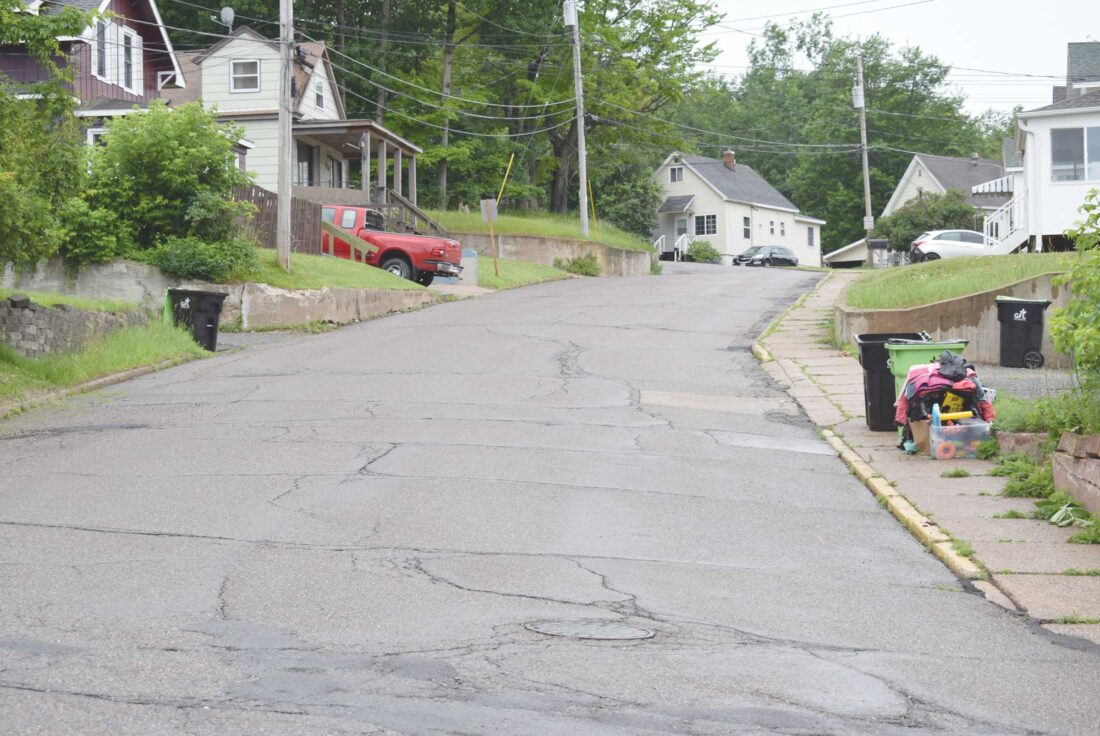
Niagara, a growing community in Marinette County, has identified critical needs for infrastructure upgrades on Hill Street and Forest Street. These roads serve as key local connectors for residents, businesses, and emergency services, but have suffered from wear and deterioration over time.
Niagara will undertake comprehensive reconstruction and resurfacing projects on Hill and Forest Streets. Improvements will include pavement replacement, enhanced drainage systems, sidewalk upgrades, and improved street lighting.
Niagara’s investment is made possible by a Wisconsin Department of Transportation Surface Transportation Program – Local (STP-L) grant.
Read More
| | Thank you to our 2025 Organizational Sponsors | | -
TDA Annual Meeting: Nov. 13, at the Madison Marriott South (Formerly Sheraton Madison Hotel)
| | |
EAA AirVenture Oshkosh
EAA AirVenture transforms Wittman Regional Airport into one of the world's busiest airports, with thousands of aircraft flying in from around the globe for the week-long aviation celebration. AirVenture, the world's largest aviation gathering, runs through July 27.
A new University of Wisconsin-Oshkosh study reveals that AirVenture contributes $257 million annually to the Fox Valley regional economy and supports over 2,000 jobs across the five-county area. The event drew a record 686,000 attendees in 2024, with more than 70% traveling from out-of-state and 94 different countries.
| | |
Wisconsin Local Technical Assistance Program: Using PASER and WISLR to Manage Your Roads
Eau Claire, August 12, 2025
Deforest, August 14, 2025
Workshop Overview
This workshop will benefit both new and current WISLR users. Those new to WISLR and PASER will learn how to get started using WISLR and learn how to rate asphalt pavement condition using PASER. Current WISLR users who have not created maps or produced 5-year plan projections in WISLR will learn how to use these powerful tools.
Who Should Attend?
This training is intended for Wisconsin town, village, city, and county officials and their consultants who rate the condition of their roads using PASER and submit their ratings to WisDOT through the Wisconsin Information System for Local Roads (WISLR).
For more information and to register, visit go.wisc.edu/PASERandWISLR.
| |
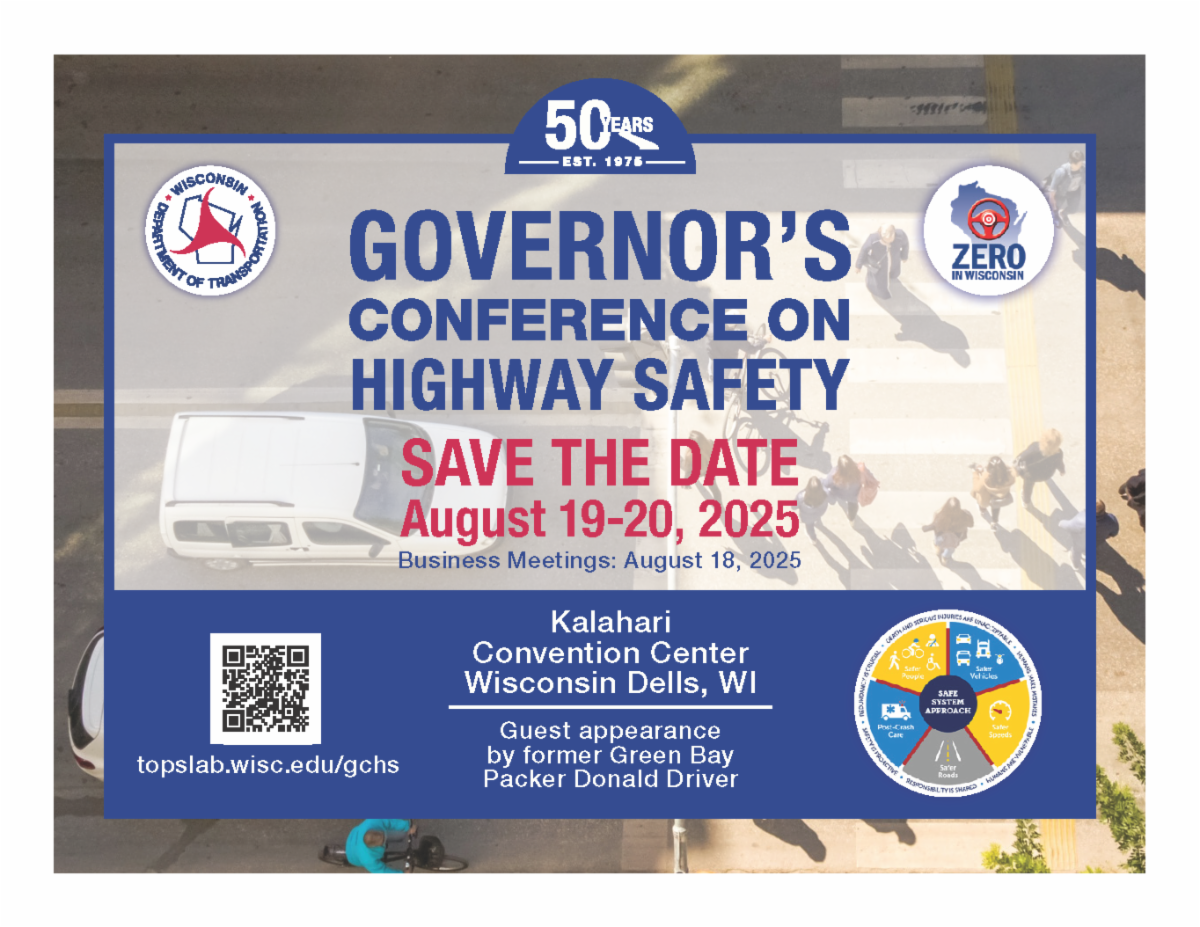
Governor's Conference on Highway Safety
Each year, the Wisconsin Department of Transportation welcomes its partners in traffic safety from across the state and nation to the Governor's Conference on Highway Safety.
The 50th Annual Governor’s Conference on Highway Safety will be held Aug. 19-20, at the Kalahari Convention Center in Wisconsin Dells.
The Governor’s Conference provides attendees with opportunities to learn about current evidence-based best practices in education, enforcement, and partnerships to prevent traffic fatalities and serious injuries on Wisconsin roads.
To register, visit topslab.wisc.edu/gchs.
| | |
Registration Open for the Fall Wisconsin Aviation Conference
The Wisconsin Airport Management Association and the host airport, La Crosse Regional Airport, will hold the 69th annual Wisconsin Aviation Conference (WAC) on Oct. 20-22 at the La Crosse Center.
Looking to attend? Details and registration information are available here.
More information is available for those interested in exhibiting at or sponsoring the event.
| | If you would like TDA to consider including your organization's update or event in an upcoming newsletter, please forward information to Luke Pearson at luke.pearson@tdawisconsin.org. | |
Transportation Development Association of Wisconsin10 East Doty Street, Suite 201 | Madison, WI 53703
(608) 256-7044 | general@tdawisconsin.org
| |
| | | |