|
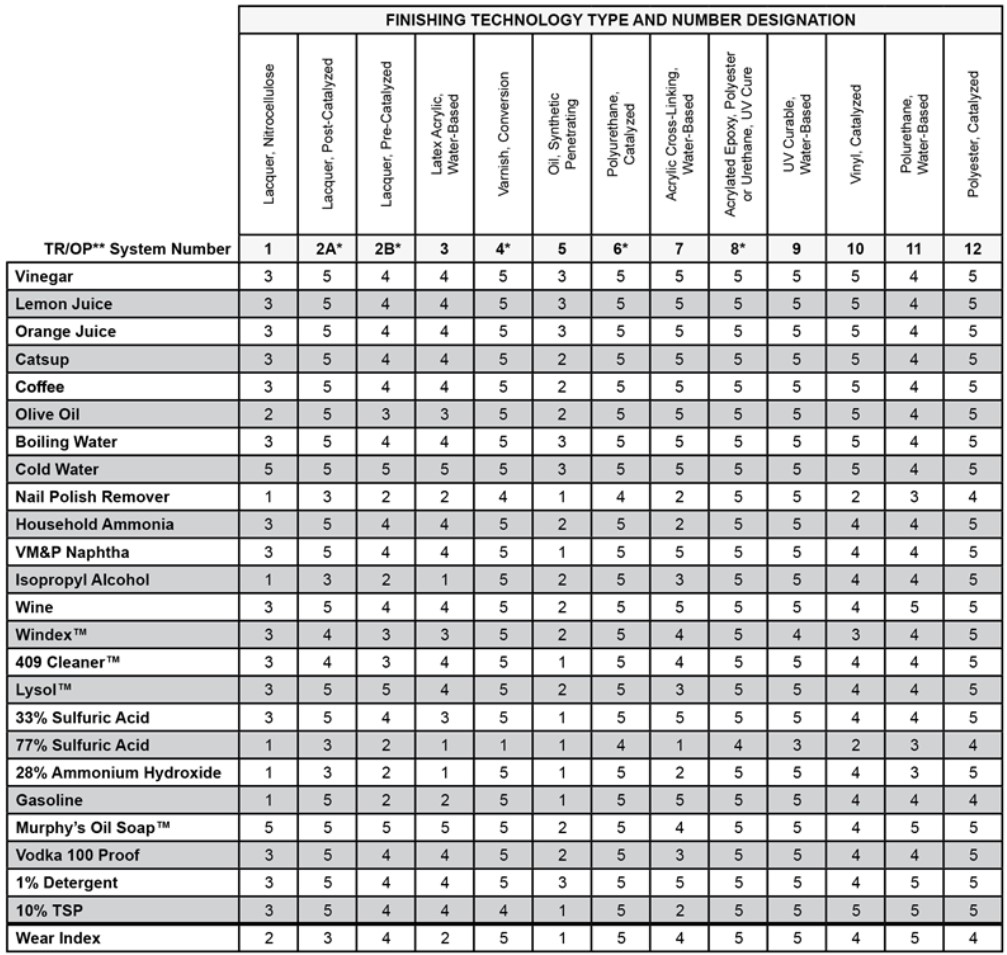
Some of the challenges with commercial finishing are inconsistencies in the finish, environment, color matching, application mistakes, durability, and surface contamination. Inconsistencies in finish are usually caused by improper sanding or poor application techniques. Environmental challenges such as humidity and dust in the air can cause uneven drying/curing and imperfections in the final product. Color matching challenges can happen when two elements come together that were produced by two different fabricators. An example of this might be the color match between the door jams and the door when they are done separately by the millworker and the door company. Application mistakes can happen when the finish is applied too heavy or too light. The result will either be runs/drips in the case of too heavy and uneven sheen in the case of too light. Durability problems occur when the finish selected is inappropriate for the environment. An example would be a working surface such as a tabletop or transaction ledge. If the finish cannot withstand the wear and tear it will show scratches, scuffs and stains. Surface contamination happens when the wrong finish is used for the protection of the surface. An example would be using an oil finish in a wet environment. We have all seen the rings on a table from a drink cup. Did you know that the Architectural Woodwork Institute standard ANSI/AWI 0400-2022 Factory Finishing has a Performance Characteristic table that defines chemical resistance and wear by reagents such as coffee, olive oil and even wine? See Photo Below.
5 – No effect from the test.
4 – Minimal effect or slight change and little repair required.
3 – Some effect; noticeable change, and the coating will recover with minimal repairs.
2 – Moderate effect, performance adversely affected and repairs required.
1 – Poor performance and film failure is imminent and repairs are difficult.
|