Lost in Transmission

~The Challenges of Sending Data by Radio~

What happens when we try to send data by radio?

Radio is highly susceptible to fading and interference, for example when both transmitter and receivers are constantly changing positions or operating close to other stations using similar frequencies.


For sending and receiving binary signals, this has to be treated diligently. Although radio modules can send and receive such signals – normally they do not have the intelligence to deduce the occurrence of a bit error. Such a bit error can potentially lead to incorrect behaviour in a machine or equipment.

Hamming - maintaining integrity in radio data links

Somehow we would like the receiver to sense that the data it receives is authentic. If not, it can discard and wait for the next transmission or request a re-transmission. The necessity of redundant bits in addition to our message means a reduction in the effective bit rate, higher processing delays and if re-transmission is necessary - a two way channel.

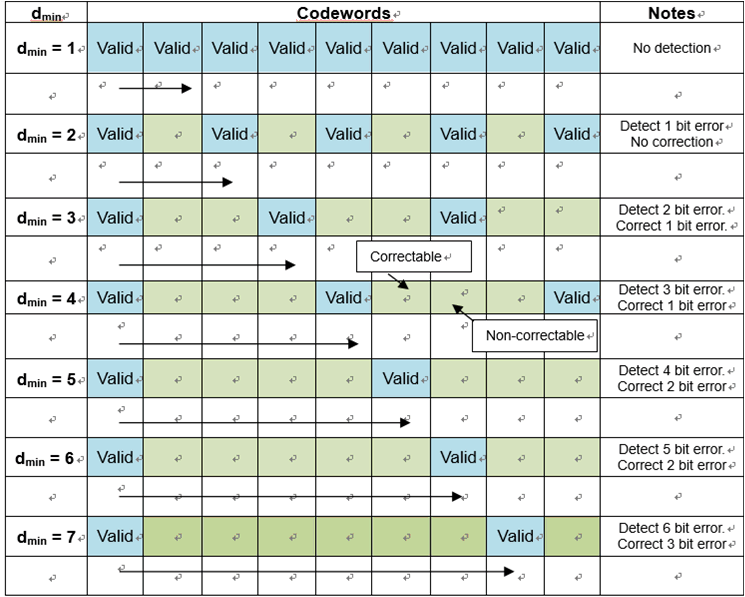
Block encoding - Hamming codes fall under this category. We can supplement our message blocks with extra bits. Since the result is now a longer block, we now have valid and invalid codes the receiver can potentially receive. Judging by where the received code appears in relation to the valid codes, the receiver can detect an error and also correct it.

Ready to dive deeper into "Hamming and linear codes" Click and visit our website!

Visit our Website


50th Anniversary

~3rd special feature~


Relocation from Matsumoto to Hotaka


In 1989, we purchased 10,000 square meters of land in Hotaka.

This was during the bubble economy, and we were able to purchase an area three times larger than we had initially planned. It would have been impossible to purchase this size of land if it had not been during the bubble period.


At that time, it was our 15th year anniversary and we made a "5-year business plan". 

For our 5-year business plan, we pictured what company we would like to be in the future.

“Five years from now, we will be in our 20th fiscal year, so we implemented a goal to increase our sales from the current 12 billion yen to 2 billion yen in the 20th fiscal year.”

By 1994, we decided to relocate the company to the Hotaka site.


In 1989, we produced an engine starter following the development for a specific low-power radio.

Thanks to this success, we believed that we could achieve our sales target as long as we committed to selling our products with all of our efforts. We even travelled to cold regions to promote the product. Eventually, we achieved our goal, and our business is now attracting attention not only as a consumer product, but also as an OEM product for a major automobile manufacturer.

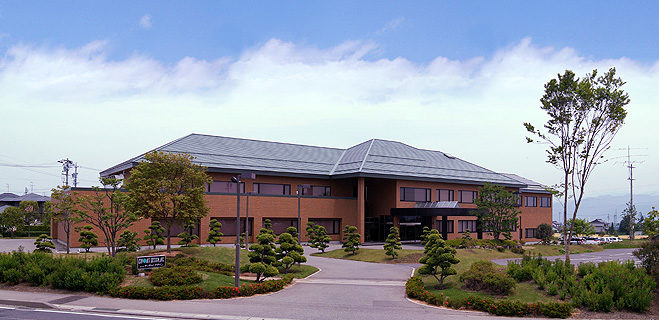
As we achieved our five year plan, the construction of a new building in Hotaka was completed and occupied in the autumn of 1994.


Our dream became a reality and now we continue to challenge ourselves in assisting our customers with specific low-power radio developments.


Discover more
Sincerely,

Circuit Design, Inc
 
Circuit Design, Inc. | Website | email
 
LinkedIn Share This Email