Rail Workers Weekly News Digest
Number 30 - October 15th, 2019
|
|
Below is a series of articles compiled over the previous week.
They are of interest to railroad workers.
_____________________________________________
|
|
Article 1
Railroads to renew push for one-man crews in contract talks
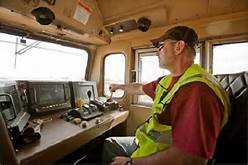
OMAHA, Neb. (AP) — The biggest U.S. freight railroads appear ready to renew their push to reduce their crews to one person from the current two-man operation used at major railroads now.
Eight U.S. railroads have filed a federal lawsuit against the union that represents rail conductors to force the union to negotiate about crew sizes during the next round of contract talks that starts in November.
The union says the railroads are undermining the bargaining process by turning to courts to force the issue.
The railroads argue they should be allowed to negotiate to have the discretion to operate trains with reduced crews and possibly move conductors out of locomotives to ground-based jobs.
Labor agreements requiring two-person crews have been in place for roughly 30 years at the major railroads, although many short-line railroads operate with one-man crews already.
Earlier this year, the Federal Railroad Administration abandoned a proposed rule to require two-man crews because it said there wasn't enough evidence to show they are safer.
Railroads argue that the completion of new systems that can stop trains automatically, called Positive Train Control, will make it unnecessary to have a second person in the locomotive. All the major railroads are required to have those systems operating by the end of 2020.
Five years ago, BNSF negotiated a contract that would have allowed one-person crews on tracks with that automatic braking system, but the union rejected that deal.
|
|
Article 2
American Railroads Are Already in Recession With No End in Sight
This year’s railroad slump is getting worse as a slowdown in manufacturing threatens broader weakness in the U.S. economy.
There’s no bottom in sight as the decline in carloads for large U.S. railroads widened to 5.5% in the third quarter, the biggest drop in three years, according to weekly reports from the Association of American Railroads. Shipments are down for autos, coal, grain, chemicals and consumer goods, with crude oil the only bright spot.
The rail downturn underscores the damage from the U.S.-China trade war, which is making shippers more cautious and crimping freight -- validating earlier warnings from railroad executives. Companies that stocked up on inventory last year amid President Donald Trump’s tariff threats are now working it off. Adding to the cargo drop, a brief rise in coal exports has fizzled and bad weather has delayed crop harvests and dragged down grain carloads.
“What’s quite clear is that we’re not yet at a trough -- trains have not yet bottomed,” said Ben Hartford, an analyst with Robert W. Baird & Co. “We need to have some clarity in trade policy.”
While a railroad recession doesn’t necessarily presage a broader slump, it’s a dramatic turn from 2018, when rising shipments of autos, coal, lumber, chemicals and other commodities spurred U.S. rail carloads to rise 3.6%. Last year’s hot freight market jacked up trucking prices, and transportation costs spiked for companies including General Mills Inc. and Procter & Gamble Co.
|
|
Article 3
STB proposes new policy, rules for rail demurrage charges
The
Surface Transportation Board
(STB) yesterday released three decisions that address how freight railroads apply demurrage and accessorial charges to rail shippers.
The decisions are aimed at improving the dispute resolution process between shippers and railroads; promoting transparency; and making the agency more accessible, STB officials said in a press release.
The decisions involved are:
•
a proposed policy statement
to facilitate more effective problem solving between railroads, shippers and receivers by providing information on principles the STB would consider in evaluating the reasonableness of demurrage and accessorial rules and charges;
•
a proposed rule to make unambiguous
that the regulation of demurrage is not excluded for exempt miscellaneous commodities and boxcar transportation, and to treat the exemption for certain agricultural commodities similarly.
The decisions were issued to address matters arising from the STB's two-day public hearing in May on railroad demurrage and accessorial charges. The hearing was held in response to significant changes that the Class Is have recently made to their demurrage and accessorial rules and charges.
"In testimony and in written comments, shippers, receivers, and others expressed concern about the commercial fairness, reciprocity and feasibility of the recent changes to demurrage and accessorial rules and charges being implemented by the Class I railroads," STB officials said.
|
|
Article 4
Rail Renaissance, RIP
(Editor's Note: Even
Trains Magazine
- long a cheerleader for the rail industry and hostile to unions - is starting to question the wisdom of "Precision Scheduled Railroading.")
Railroad analyst Anthony Hatch coined the term “Railroad Renaissance” to commemorate the industry’s rebirth. How right he was! By 2004 railroads had become red hot, gobbling up market share and expanding capital budgets to increase capacity. Today it’s obvious we’ve come to a turning point. Fully half the Big Six railroads (CSX, Norfolk Southern and Union Pacific) appear to have thrown in the towel and no longer pursue business growth. Oh yes, they all talk the talk, but won’t walk the walk. North of the border, the railroad business is booming, but that could just reflect the nature of Canada’s energy-driven economy. This leaves BNSF Railway, which appears to be torn. I sense that CEO Carl Ice wants to keep investing in a bigger railroad, but last year BNSF returned twice as much money to owner Berkshire Hathaway ($5.5 billion) as it had in 2016, and had to borrow to fund capital spending.
Today Hatch concedes to me: “The Renaissance is troubled for sure. . . I would say the patient is weak but stable.” But as I see it, the Railroad Renaissance is on its deathbed.
The problem is that growing your business is expensive for railroads. A decade ago some railroads were spending one-fifth to one-fourth of their revenue on capital projects. After all, unless you expand capacity, taking on more carloads will only gum up the works and drive those new customers away. Granted, railroads are generating record amounts of cash. But there is conflict over what to do with that money.
Reinvest it in the property? The owners—investors, Wall Street—are saying no, that they would rather have the money returned to them in the form of higher dividends and expanded share buybacks. It’s not just a railroad phenomenon, either. For as long as I remember, pundits have deplored Wall Street’s short-term vision.
|
|
Article 5
U.S. freight-rail traffic slide continues into October
U.S. freight-rail traffic volume remained soft during October's first week, with railroads logging a combined 515,061 carloads and intermodal units, down 7.1 percent compared with the same week last year, according to
Association of American Railroads
(AAR) data.
Total carloads for the week ending Oct. 5 were 247,028 units, down 8.5 percent, while intermodal volume was 268,033 containers and trailers, down 5.8 percent, AAR officials said in a press release.
Only two of the 10 carload commodity groups that AAR tracks on a weekly basis posted increases: Chemicals were up 1,247 carloads to 32,610; and petroleum and petroleum products were up 57 carloads to 12,592.
Commodity groups posting decreases included coal, down 12,097 carloads to 76,970; metallic ores and metals, down 3,271 carloads to 18,898; and grain, down 2,995 carloads to 19,698.
|
|
Article 6 -
NOTE: Each month, the Poolson-Oden Law Firm publishes an article in their newsletter from RWU. See the most recent newsletter Here. In return, RWU features an article they submit in the RWU Weekly Summary.
Don’t Get Railroaded: The Journey of an Amtrak Engineer to Get Back to Work after her Injury
All railroad workers are protected by the Federal Railroad Safety Act (FRSA) which
was enacted in 2008:
(1) to promote safety in all areas of railroad operations, and
(2) to ensure that railroad employees engaging in certain protected activities under the Act could do so without the fear or threat of discrimination or retaliation from their railroad employer.
A recent federal Department of Labor administrative law judge (“ALJ”) decision highlights the tactics that railroads use against their employees and one possible statutory remedy for those tactics.
An Amtrak Engineer, J. Nagra, suffered a neck injury in a train/truck collision. Due to the severity of the injury, this engineer was forced to be out of work for almost 2 years while she received medical treatment for her injuries. Nagra continually treated to get better in order to return to engineering with Amtrak. Her treating neurosurgeon noted she was highly motivated to return to work. During the time that she was recovering, Nagra filed an injury lawsuit under the Federal Employers’ Liability Act [FELA] lawsuit to protect her rights if she was not able to return to work. Unfortunately, the federal court presiding over her FELA case dismissed Nagra’s claims against Amtrak. Nagra never received any money for her case from Amtrak by settlement or a jury verdict.
Even though Amtrak paid absolutely nothing to Nagra, Amtrak was not interested in having a 19-year employee back at work, even after her case was dismissed. The railroad’s in-house lawyer, outside lawyer, and several middle managers in labor relations and in Amtrak’s transportation department disliked Nagra. They saw her FELA case as a chance to be rid of her forever. When the treating neurosurgeon eventually decided she had recovered well enough to return to work, the railroad refused to allow her to do so. Amtrak justified this under its “estoppel policy.” “Estoppel” is a legal standard that prevents a person or company from saying one thing and then changing a position after somebody else has relied on the first position. The purpose of the estoppel doctrine is to prevent injustice by stopping people and companies from being inconsistent in their positions, such as receiving money for a permanent disability while trying to go back to work.
|
|
Article 7
UPS: Weather's been severe, but Class Is are missing the on-time mark regardless
The head of transportation for
United Parcel Service
(UPS) can sum up Class Is’ service performance for much of this year in one word: underwhelming. Although they got off to a good start in 2019’s first three weeks, the large railroads didn’t meet stringent on-time performance and availability requirements in the first half, says UPS Vice President of Corporate Transportation Ken Buenker.
The world’s biggest parcel delivery company, UPS is one of the largest users of intermodal rail services in North America. For each Class I, the company assigns a minimal acceptable result (MAR) of 95 percent reliability for on-time deliveries or outbound departures.
Since UPS’ package and freight forwarding business hinges on the delivery times promised to customers, its operations need to be carried out like clockwork, including the timely transportation of parcels by rail, truck or air.
But Class Is many times didn’t meet the MAR in the year’s first two quarters, says Buenker. For example, a load that was scheduled to reach a sorting hub at 2:30 a.m. at times arrived at about 3 a.m., delaying a sort and potentially causing a service failure for UPS.
Promised times of arrival are critical since one miss by a transportation provider can impact the flow of parcel movements in the company’s network. UPS each day handles more than 20 million packages worldwide and operates 1,056 small package facilities in the United States and Canada.
“It’s all about the MAR to us. As we make our deliveries, rail is just a small piece of it,” says Buenker. “Railroads have got to be reliable.”
|
|
Article 8
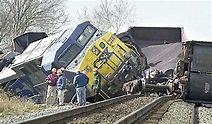
NTSB preliminary report provides details on collision of CSX trains in PTC territory in Ohio
The National Transportation Safety Board’s preliminary report on the August collision of two CSX Transportation trains provides more detail on the wreck that occurred in territory protected by positive train control.
Local train H702, which rammed into 110-car frac sand train, W314, at a control point, was operating with its PTC system in restricted mode at the time of the 5:08 a.m. collision near Carey, Ohio, according to the preliminary report released on Thursday.
“The crew’s first job assignment was to set out 30 empty cars in Carey. CSX instructions specify that for trains operating with active PTC, crews performing pickups, set offs, or other switching activities including shoving movements must: (1) Stop the train/locomotive; (2) Use restricted mode for the PTC system. In restricted mode, the PTC system allows train movement at restricted speed and no longer automatically stops the train before it can violate a red (stop) signal,” the preliminary report says.
After 30 of the train’s 176 cars were set out, the conductor planned to ride a railroad shuttle van to a nearby grade crossing to reboard the train.
“The engineer of train H70211 departed with the PTC system still in restricted mode and continued westbound for about 2 miles to CP Springs,” the report says. “Preliminary event recorder data indicated the train speed never exceeded 20 mph (upper limit threshold of CSX restricted speed rule). The train continued past the red signal at CP Springs and collided with the sixth railcar of the eastbound train W31411.”
|
|
|
|
|
|
|