Today is the last day to take
advantage of this discount!
We would love it if you would register and join us in Orlando!
| |
Attention Fellows and Residents! | |
|
ASIPP is pleased to announce a scholarship to help fellows and residents participate in the 2025 ASIPP Annual Meeting. Recipients of this scholarship will receive reimbursement for up to three nights stay at the host hotel at the official ASIPP single-occupancy room block rate. This includes room block room rate and tax.
The number of scholarship recipients will be limited so it is important to apply soon!
| |
Abstract submissions are open for ASIPP's 2025 Annual Meeting!
The abstract submission deadline is March 10, 2025.
Don't miss this opportunity to share your insights and help shape the future of pain management.
| |
|
|
Big U.K. study finds benefit lasting years for one key outcome
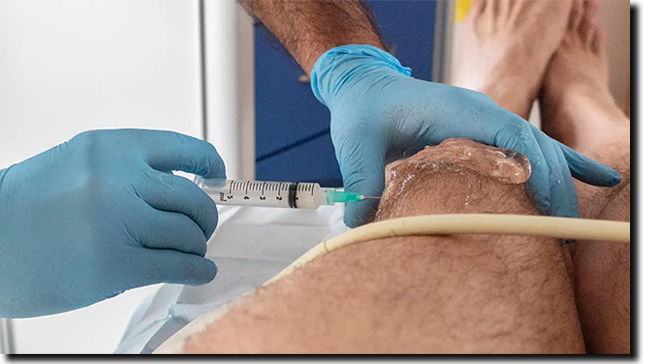
British patients with osteoarthritis (OA) who received intra-articular corticosteroid injections had less usage of opioid-containing drugs and other painkillers for years afterward, researchers said.
Over the 5 years following a single steroid injection, prescriptions for opioid-nonopioid combination products (e.g., oxycodone-acetaminophen, sold as Percocet) and acetaminophen alone were reduced by nearly two-thirds in people with knee OA, according to Samuel Hawley, DPhil, MSc, BSc, of the University of Bristol in England, and colleagues.
Five-year rates for these medications were also significantly reduced in patients who received serial injections, the researchers reported in Rheumatology, and the painkiller classes with major reductions following serial injections also included uncombined opioid products.
Read More
| |
|
The Medicare Final Rule has significantly changed the provision of telehealth services. Starting April 1, 2025, most telehealth services will require patients to be physically present in an office or medical facility located in a rural area. This restriction excludes patients in non-rural areas from accessing telehealth services altogether. Even for those in rural regions, traveling to a designated facility can be extremely difficult, undermining one of telehealth’s primary benefits—providing care from the patient’s home. These changes will impose substantial transportation costs, create burdens for elderly patients who cannot drive, and disrupt the working population that relies on telehealth for accessible care. Currently, approximately 20% of patients depend on telehealth services.
Furthermore, if this rule remains in place, Medicare Advantage, Medicaid, and commercial insurers are expected to adopt similar policies, likely with reduced reimbursements. This will effectively dismantle telehealth services, severely limiting patient access to essential health services.
This issue is crucial for millions of patients across the country, and we hope you will take action to help preserve access to these vital services. We urgently request you to contact CMS and members of Congress (House and Senate).
| |
|
Increased levels of moderate to vigorous physical activity were associated with a delayed rise in the concentration of phosphorylated tau181 (p-tau181) in blood over time in older adults with memory complaints, a study found. The cognitive benefits were attenuated at elevated baseline p-tau181 concentrations.
METHODOLOGY:
- This post hoc secondary analysis of the MAPT trial included 558 adults with memory complaints aged 70 years or older, recruited from 13 memory centres in France and Monaco between 2008 and 2011.
- Participants were eligible if they had spontaneous memory complaints, a gait speed ≤ 0.77 m/s, or a limitation in instrumental activities of daily living. Individuals with a diagnosis of dementia, Mini Mental State Examination scores < 24, or limitations in basic activities were excluded.
Read More
| |
|
New 2025 Dates
Mark your calendars!
March 29, April 26, May 31, & June 28
Four (4) hour virtual exam
- ABIPP Path – Combined CCPM/ CSM Exam
For those with subspecialty in Pain Medicine
Two (2) hour virtual exam
- ABIPP Competency Exam in IPM
For those without primary board certification
Two (2) hour virtual exam
- ABIPP Competency Exam in Regenerative Medicine
Two (2) hour virtual exam
- Controlled Substance Management Competency Exam
Two (2) hour virtual exam
- Documentation, Coding, Compliance, Practice Management Competency Exam
Two (2) hour virtual exam
| |
|
A legacy of care and expertise
When we think of medical breakthroughs, discoveries like penicillin or the polio vaccine often come to mind. Anesthesia is another transformative advancement, turning once-impossible surgeries into routine procedures. At the heart of this progress are Certified Registered Nurse Anesthesiologists/Anesthetists (CRNAs) -- advanced practice providers who have been administering safe, expert anesthesia care and pain management services for more than 150 years.
Due to a recent debate over regulations proposed by the District of Columbia's Department of Health on the question of whether CRNAs can use the descriptive term "nurse anesthesiologist," I'm providing historic and clarifying context for how CRNAs helped pave the path for the profession as a whole.
The Pioneering Path of Nurse Anesthesiologists
Nurse anesthesiology dates back hundreds of years. Sister Mary Bernard Sheridan became one of the first documented nurses to skillfully administer anesthesia in the late 1800s at St. Vincent's Hospital in Erie, Pennsylvania. She was part of a wave of nurses who developed the expertise needed to safely administer anesthesia at a time when the science of anesthesiology was still in its infancy. During this time, surgeons routinely chose nurses to give anesthesia to patients.
Read More
| |
- ASIPP Members Only Site Information - | |
-
To log in for the first time you will need to click “forgot password” at the bottom of the login window.
- Check your email and then log in as directed.
-
If you have problems logging into your account, click here.
| |
|
Hallucinogens are associated with a 2.6-fold increased risk for premature death in some individuals seeking emergency care, according to a recent study. The risks are especially substantial in vulnerable patients who are suicidal, who are susceptible to severe mental illness, or have comorbid conditions such as respiratory disease or cancer.
The findings come at a time of renewed interest in the therapeutic potential of substances like psilocybin, lysergic acid diethylamide, methylenedioxymethamphetamine (MDMA), and ketamine for mood and substance use disorders. In 2023, the Canadian Institutes of Health Research allocated roughly $3 million to three clinical trials examining psilocybin-assisted psychotherapy in the treatment of alcohol use disorder, treatment-resistant depression, and end-of-life psychological distress in patients with advanced cancer.
“The use of hallucinogens and psychedelics is very rapidly increasing; 5.9% of Canadians used a hallucinogen last year,” said lead study author Daniel Myran, MD, Canada Research Chair in Social Accountability at the University of Ottawa and a scientist at the Bruyère Health Research Institute, the Institute for Clinical Evaluative Sciences (ICES), and the Ottawa Hospital.
Read More
| |
|
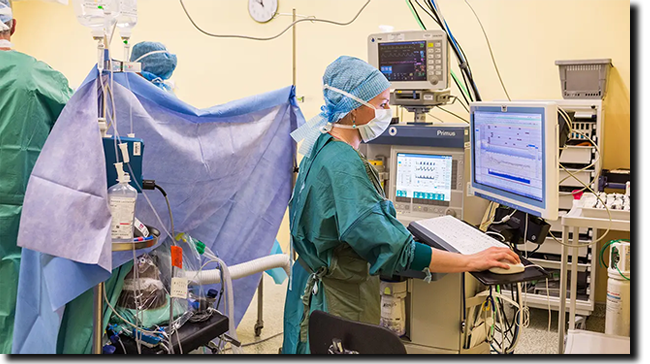
Inhaled anesthetics punch well above their weight when it comes to generating greenhouse gases, so the specialty of anesthesiology has been trying to reduce its reliance on the most egregious of these agents. The largest teaching hospital in Europe appears to have found a successful approach.
Anesthesiologists and intensive care staff at the Charité medical system in Berlin, Germany, reduced carbon emissions from anesthetic gases by more than 80% between 2018 and 2023. Education about greenhouse gases in anesthetic agents caused the institution to abandon use of the carbon-intensive anesthetic gas desflurane altogether, according to a new report in Anesthesia & Analgesia.
The authors of the article noted 2024 was the first year global warming exceeded 1.5° C above preindustrial levels, the benchmark set by the Intergovernmental Panel on Climate Change to reduce the worst impacts of climate change like extreme heat or flooding. The strategies in the report aim to encourage anesthesiologists to reduce their carbon footprint without harming patient care.
Read More
| |
|
Pain Medicine Case Reports (PMCR) and Editor-in-Chief Alaa Abd-Elsayed, MD, PhD would like to invite you to submit case reports and case series to the PMCR journal. Your article will be published free of charge.
Open access journals are freely available online for immediate worldwide open access to the full text of published articles. There is no subscription fee for open access journals. Open access journals are no different from traditional subscription-based journals: they undergo the same peer review and quality control as any other scholarly journal.
Interested in becoming a member of the PMCR Editorial Board?
Editorial board members are asked to review 2-6 manuscripts per year. Please submit your most up-to-date CV to sgold@asipp.org for consideration.
For more information or to submit your articles, click here.
| |
|
Rhett Layman, MD, Frankie Prologo, Mamerhi Okor, MD, Jesse Jones, MD, Meghana Muppuri, MBBS, and Junjian Huang, MD
Abstract
BACKGROUND: Chronic low back pain (LBP) is a widespread disease particularly as the population continues to age. The most common type of chronic LBP is axial LBP caused by disc degeneration leading to vertebrogenic back pain. Recently, the concept of vertebrogenic LBP has become more mainstream as has its treatment, basivertebral nerve ablation (BVNA). Herein, we report a case where BVNA was performed in the setting of existing hardware at the treatment levels.
CASE REPORT: Sixty-eight-year-old woman with chronic LBP status post anterior L5/S1 instrumented fusion presents with persistent chronic LBP centralized to L5/S1. Preoperative imaging demonstrates increased signal on bone scan at L5/S1 and BVNA was performed adjacent to the screws, resulting in significant relief of LBP and without complication.
CONCLUSIONS: BVNA is feasible to perform at levels where existing spine hardware is present.
KEY WORDS: BVNA, basivertebral nerve ablation, radiofrequency ablation, low back pain, chronic low back pain, vertebrogenic low back pain, disc degeneration, fusion hardware, interventional radiology, case report
Read More
| |
|
Thomas R. Hickey, MD, and James M. Hitt, MD, PhD
Abstract
BACKGROUND: Guidelines on the use of opioids in chronic pain management increasingly recommend consideration of buprenorphine for patients on long-term full agonist opioid therapy. Published strategies for patients’ transitions to buprenorphine vary widely in terms of study design, dose, formulation, and timing of buprenorphine initiation. A further limitation in informing an ideal transition strategy is the paucity of data describing factors that influence the likelihood of a successful transition.
OBJECTIVES: We sought to describe factors that influenced the likelihood of a successful transition to buprenorphine.
STUDY DESIGN: Retrospective cohort study.
SETTING: This research used data from the national Corporate Data Warehouse of the Veterans Health Administration
METHODS: We reviewed the Veterans Affairs Corporate Data Warehouse for information concerning patients who had outpatient opioid prescriptions and had received microgram-strength buprenorphine. With this information in mind, we examined the factors associated with a successful transition to buprenorphine.
RESULTS: We identified significant reductions in the number of patients prescribed full agonist opioids and in the total dose of opioids prescribed after buprenorphine exposure, with the largest effect observed in patients who continued using buprenorphine. While the potency and dose of baseline opioids were not predictive of the continued use of buprenorphine, higher opioid doses were associated with a decreased likelihood of continuation. Although factors correlating with patient support were associated with buprenorphine continuation, factors correlating with reduced support were associated with lower odds of continued buprenorphine use.
LIMITATIONS: Limitations inherent to large-scale observational studies are present, including imperfect data quality/ integrity, incomplete data, and the use of stop codes and CPT codes to determine the nature of a clinical encounter. The dataset is limited to the information collected, which excludes other factors likely associated with the outcomes. We used the continuous prescription of buprenorphine as a surrogate marker of a successful transition. Given the retrospective nature of the study, we are unable to determine if buprenorphine exposure is causally related to reduced opioid use. The population served by the Veterans Health Administration is not representative of other populations, and the results of this study may not generalize to other patient populations.
CONCLUSIONS: Our findings support the recommendation to trial buprenorphine in patients receiving chronic opioid therapy. This study’s results also suggest that patient factors and shared decision-making are more important predictors of success than are the pharmacologic properties, potency, or dose of pre-rotation opioid exposure.
KEY WORDS: Buprenorphine, chronic pain, chronic opioid therapy, long-term opioid therapy, opioid rotation, opioid weaning, opioid use disorder
Read More
| |
|
Joshua B. Lewis, MD, PhD, Sayed E. Wahezi, MD, Ugur Yener, MD, Alan D. Kaye, MD, PhD, Marco Lawandy, DO, Suwannika Palee, MD, and Joseph D. Fortin, DO
Abstract
BACKGROUND: Chronic low back pain is a global health burden with significant health care costs. Accurate diagnosis and treatment are often complicated due to its multifactorial nature. The sacroiliac joint has been identified as a major source of lower back pain, especially among the elderly and individuals with a history of lumbar fusion surgery. Conservative treatments frequently fall short in providing relief, leading to the exploration of alternative interventions such as sacroiliac joint radiofrequency ablation (RFA).
OBJECTIVES: We aimed to demonstrate a novel approach for sacroiliac joint RFA based on new ex vivo evidence.
STUDY DESIGN: Development of a novel methodology integrating ex vivo evidence and clinical approach.
SETTING: Academic health care institution.
METHODS: Current radiofrequency methods, such as conventional RFA, water-cooled RFA, and cryoneurolysis, involve 2 main needle placement strategies: the palisading and the strip lesioning techniques. Additionally, the periforaminal/intraforaminal lesion technique, performed with fluoroscopy, visualizes the dorsal sacral foramina by adjusting the beam according to sacral tilt while the patient is prone. Targeting the lateral borders of the S1–S3 foramina, the technique aims to reach described lateral branch neural locations. Needle placement focuses on the lateral borders of the posterior sacral foramina, spaced one mm to 10 mm from the foraminal border, often following a clock face analogy. Protruding electrode RFA needles are recommended because of their demonstrated larger lesion width. After directing the needles to the lateral border of the S1–S3 posterior sacral foramina and then medially into the foramen, a lateral projection confirms proper needle placement beyond the posterior sacral ridge. Sensory-motor testing follows, with 0.5 mL of iohexol 180 administered to assess vascular flow and minimize contrast medium migration. Subsequently, 0.5 mL of lidocaine 2% is given for ablation anesthesia.
RESULTS: This technique achieves an estimated 95% needle approximation of the lateral branches, enhancing neural ablation efficacy by optimizing needle tip positioning.
LIMITATION: Our technique faces challenges as lesion success rates decrease with distance from the foramen.
CONCLUSION: Adipose interference is minimized when a protruding electrode RFA needle is used within a posterior sacral foramen; neural approximation may be enhanced by giving 2% lidocaine prior to ablation. Considerable gaps in knowledge still exist despite advances in our understanding of the effect of tissue on RFA. Thorough research aimed at refining RFA procedures is essential to ensuring the best feasible patient care and sustainable pain relief. For sacroiliac joint RFA, perineural lateral branch ablation is a viable option that needs further clinical research.
KEY WORDS: Sacroiliac joint, radiofrequency ablation, fluoroscopy, lateral branch, chronic low back pain
Read More
| |
|
ASIPP is now in collaboration with Curi Medical Liability Program
Since this malpractice insurance program officially launched in November 2018, ASIPP has signed up hundreds of providers with an average savings of 30%. This is professional liability insurance tailored to our specialty and will stand up for us and defend our practices.
Curi is a full-service advisory firm that serves physicians and their practices. Their valued advice is grounded in your priorities and elevated in your outcomes. They are driven by a deep understanding of your specific circumstances in medicine, business, and life. To read a few important points to keep in mind about the program, including discounts, administrative defense, cyber coverage, aggressive claims handling, and complimentary risk management CME activities, visit our website.
| | |
|
Group Purchasing Organization Offer Better Pricing and Creates Added Value
ASIPP has formed a partnership with Henry Schein and PedsPal, a national GPO that has a successful history of negotiating better prices on medical supplies and creating value-added services for independent physicians. Working with MedAssets, PedsPal provides excellent pricing on products like contrast media that alleviate some of the financial pressures you experience today.
Learn More
| |  |
|
ASIPP, Fedora Healthcare Solutions Partnership
ASIPP offers our members the benefit of a unique revenue cycle management/ billing service.
We have received a tremendous amount of interest in the ASIPP billing and coding program.
Click here to learn more about the negotiated rate for practices and more!
| |
|
Like and follow ASIPP® on Facebook, X, and LinkedIn for the most
up-to-date news related to you, your practice, and your patients!
| | | | |