Monthly News & Opportunities


January 8, 2026 | V3 #1


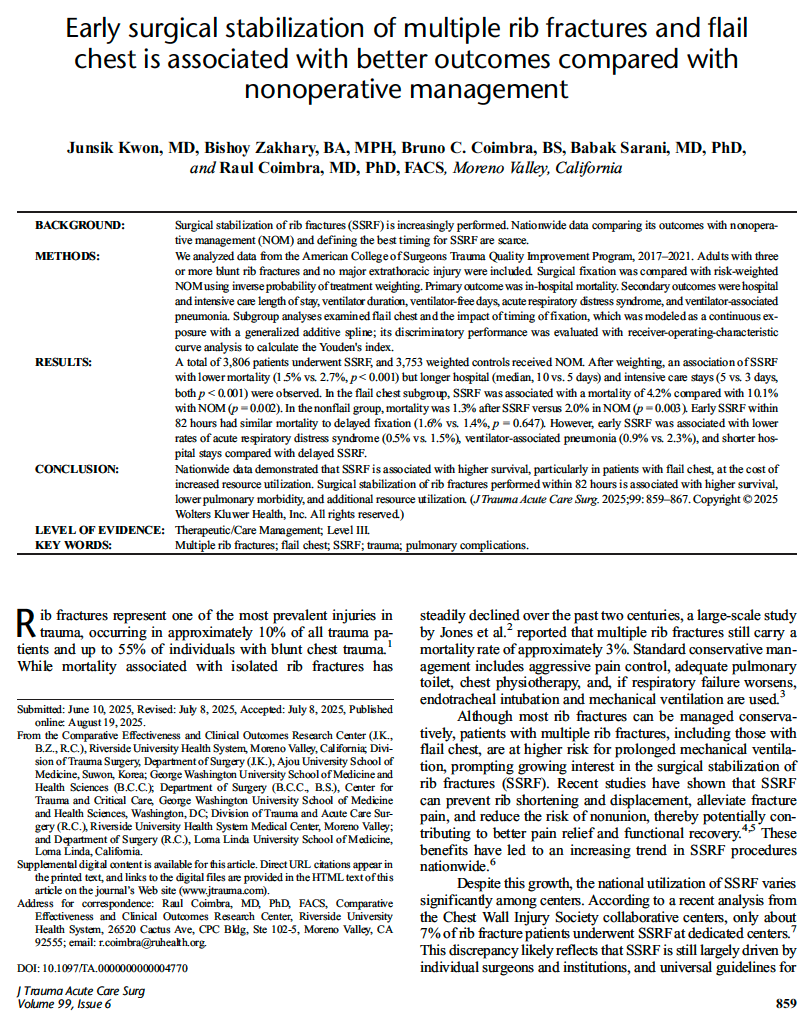
New Data Show that Fixing Broken Ribs Early Can Save Lives

Rib fractures are a common injury after trauma, but when multiple ribs are broken—or when the chest wall becomes unstable (a condition known as flail chest)—the consequences can be serious. Patients may struggle to breathe, require prolonged ventilation, or develop life-threatening lung complications.


A new nationwide study published in the Journal of Trauma and Acute Care Surgery (2025;99(6):859-867) and led by Raul Coimbra, MD, PhD, offers some of the clearest evidence yet that surgically stabilizing broken ribs can improve survival, especially when the procedure is done early and at experienced centers. Read More


Dr. Coimbra presented the research to the Chest Wall Injury Society (CWIS) journal club last month. To hear his in depth analysis about the findings and some remaining research gaps related to patient-centered outcomes such pain relief and functional recovery, click the link below.


Join Online for the Final Design For Implementation Conference:


February 25-26, 2026


Register to attend the Design for Implementation: The Future of Trauma Research & Clinical Guidance conference in February!


This final convening in the three-year series will focus on the intersection of evidence, implementation, and sustainability. Attendees will explore AI’s current role in clinical guidance, the balancing of gold-standard evidence and real-world practice, and alignment of incentives to support dissemination.


While in-person attendance is limited, all interested trauma community members are invited to attend and participate remotely at no cost.


The agendas, attendees, and recorded presentations from the previous two meetings can also be found at the link below:


Help Communicate the Local Impact of Federal Research Cuts

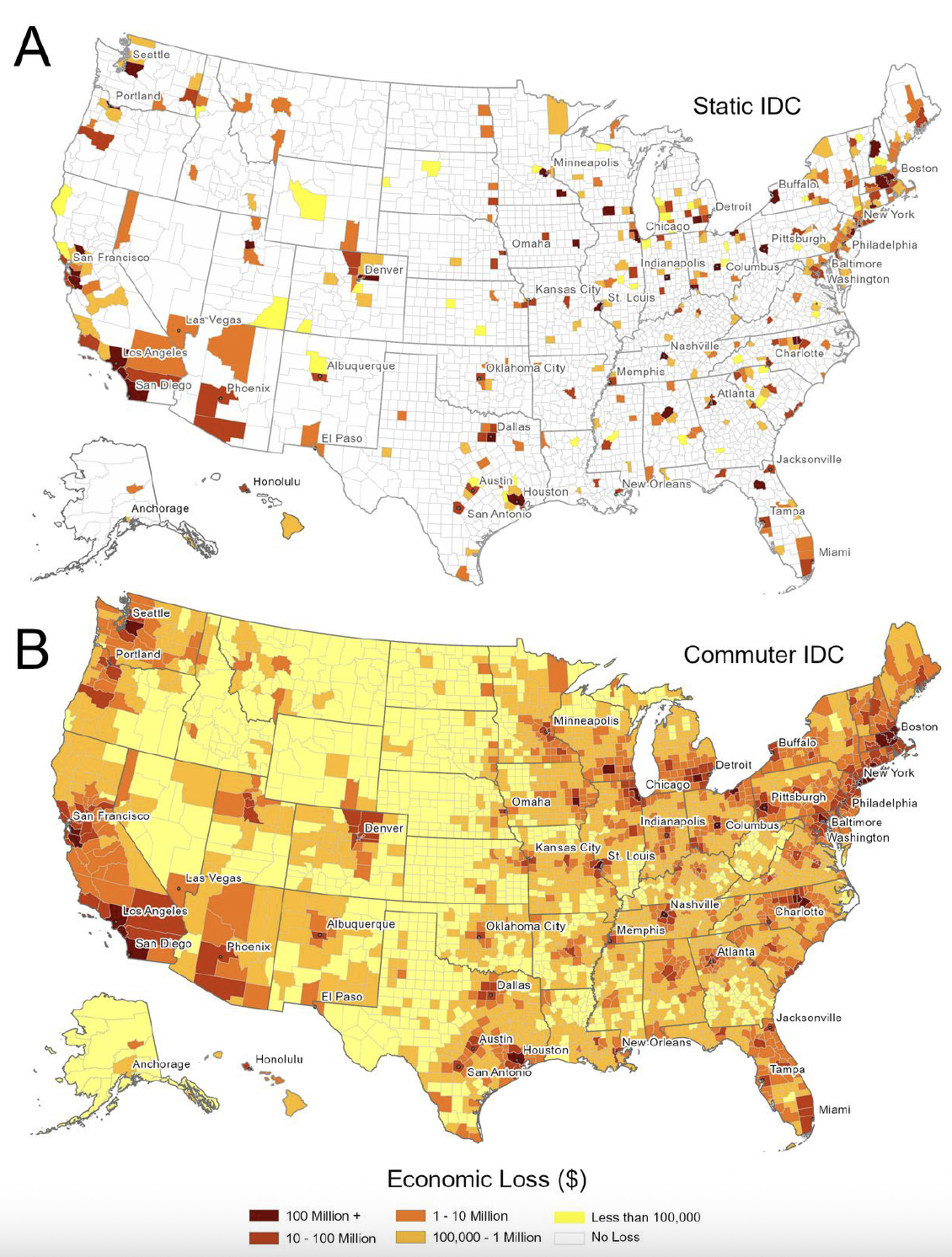
In a recent Research!America Alliance webinar, "Science Matters: Confronting the Impacts of Federal Cuts to Research on Communities Nationwide," University of Maryland biologist Joshua Weitz presented a clear and compelling case for why federal investments in research—and particularly NIH funding—matter far beyond academic institutions.


Drawing on new data, public opinion research, and interactive tools, the presentation underscored how proposed and enacted funding cuts ripple through local economies, health systems, and communities across all 50 states.


Visit Dr. Weitz's map of federal health research cuts to see the impact in your area: HERE


Dr. Weitz highlighted that NIH’s $37 billion extramural research portfolio delivers approximately $2.56 in economic activity for every dollar spent, while supporting hundreds of thousands of jobs nationwide. Importantly, NIH funding is geographically distributed, meaning that cuts affect regional hospitals, universities, and surrounding communities, including those engaged in trauma and acute care research. 


Reach out to your legislators at the link below and share specifics about how funding cuts are affecting your community!

CNTR Investigator Resources

Catch the Third Webinar in our NTRR Series - Learn How to Submit!

In the latest episode of the NTRR webinar series, operations manager, Nick Medrano, takes a detailed look at submitting data, walking through a demonstration using dummy data. If you're thinking about submitting study data to the repository any time soon, this is a much-watch session!


Date: January 29, 2026

Time: 11:30 a.m. (CDT)

Topic: Deep dive on the NTRR data submission process

Cost: Free

2024 TQP Participant Use File (PUF) Now Available for Researchers


The American College of Surgeons Trauma Quality Programs has released the 2024 Participant Use File (PUF) - a de-identified dataset containing more than 1.3 million records from more than 800 participating trauma centers. This dataset provides researchers and trauma professionals with the opportunity to analyze trends, evaluate outcomes, and drive evidence-based improvements in trauma care.


The PUF supports research and quality improvement across the trauma community and is available at no cost to researchers affiliated with trauma centers participating in the ACS Trauma Quality Improvement Program (TQIP).


Learn More and Request Access

See You at the EAST Annual Scientific Assembly in Atlanta!


Come see CNTR at the EAST meeting this month. We love to meet our collaborators in person, brainstorm new ideas, and make new friends! The CNTR booth will be in the lobby near registration--we hope to see you there!

 
LinkedIn