When Utility Billing Becomes a Landlord-Tenant Problem


RUBS was designed to solve a practical problem: how to fairly divide utility costs in master-metered buildings. But what began as a property-management solution is increasingly colliding with rent-control laws, disclosure requirements, and questions about what owners may legitimately pass through to tenants.


The issue is already playing out across the Bay Area, where Oakland, Berkeley, and Alameda have placed restrictions on RUBS, while Los Angeles is considering further action.


And for owners of older buildings without individual meters, the underlying problem remains: someone still has to pay the utility bill.


We look at the growing scrutiny of RUBS, the challenge of unequal consumption, and what rental property owners should consider before implementing—or continuing—a utility allocation system.


See Why RUBS Is Becoming a Problem →

3,654 Eviction Lawsuits. But How Did They End?


Eviction lawsuits are up in San Francisco. But the headline number leaves out something important: we know how many cases were filed—not how most of them ended. We took a closer look at what the numbers actually tell us.


Read the analysis →

Practical Guidance at a Glance


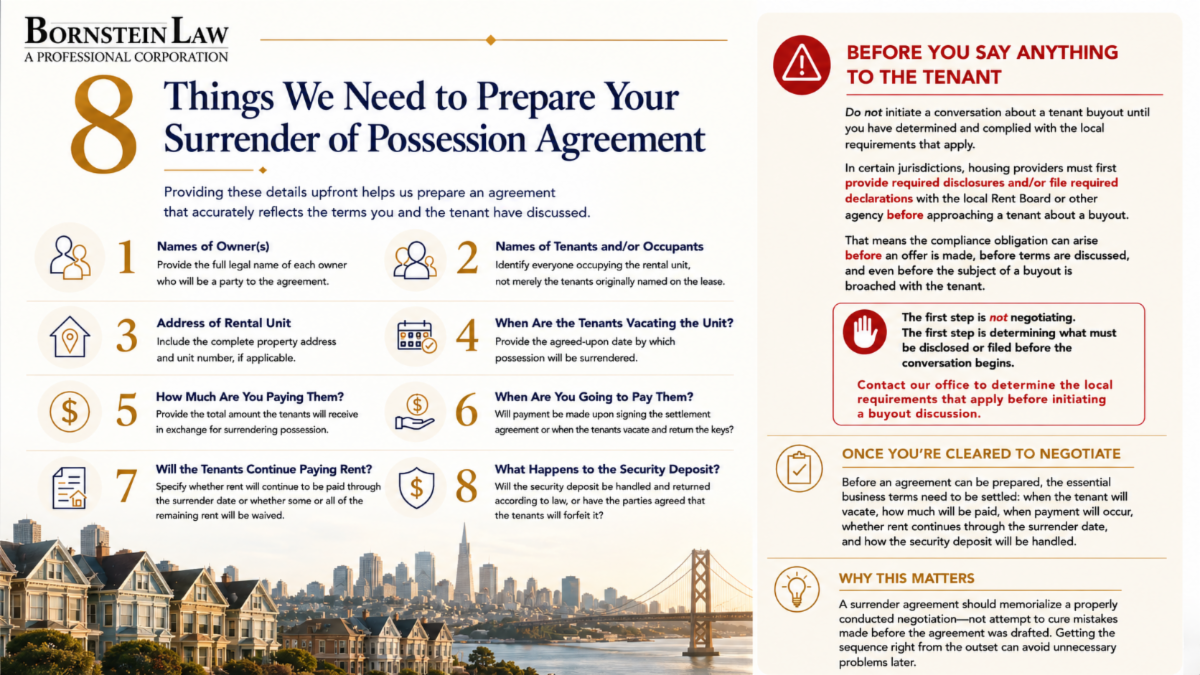
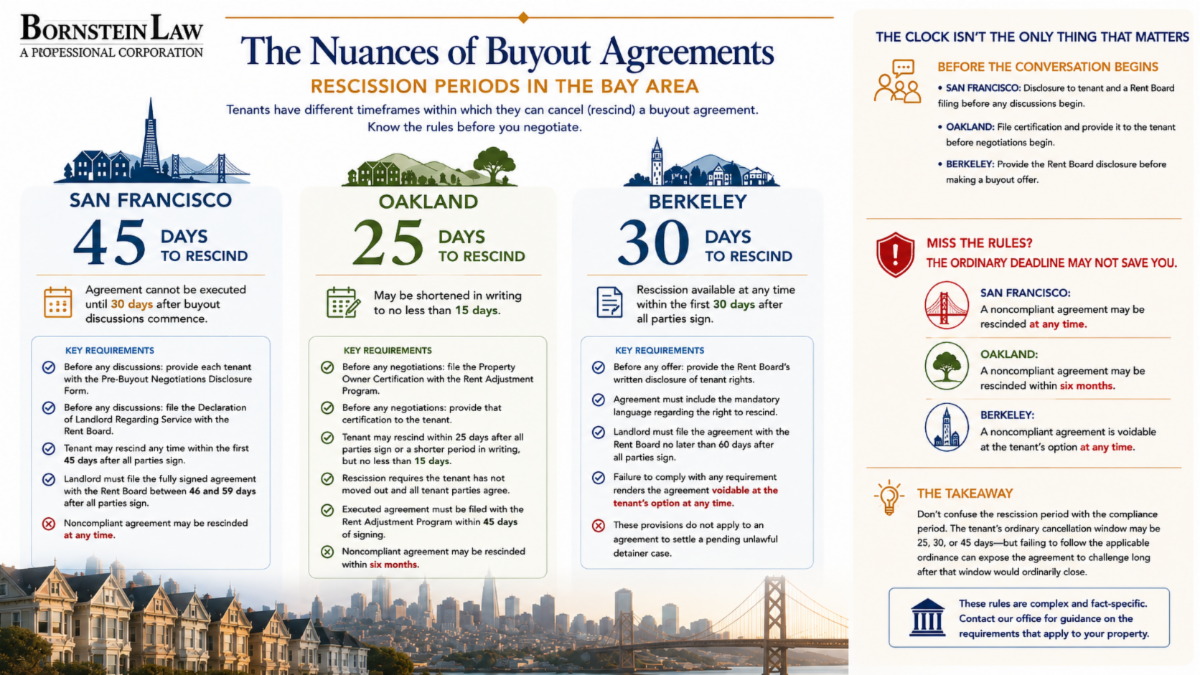
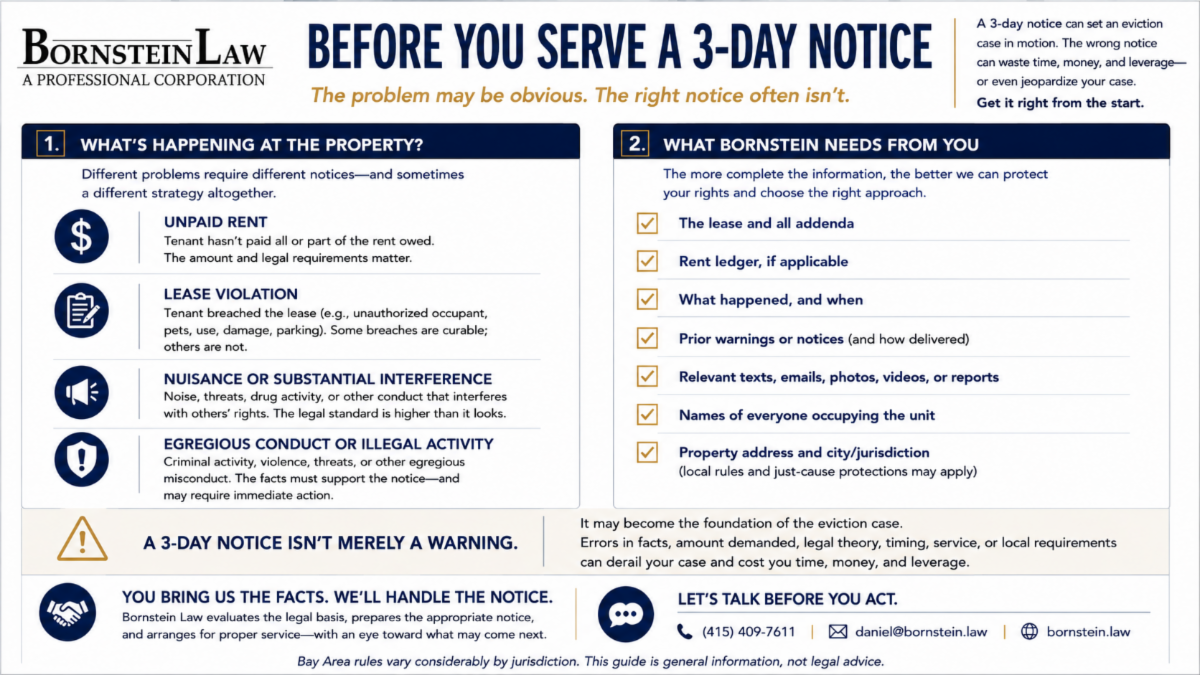
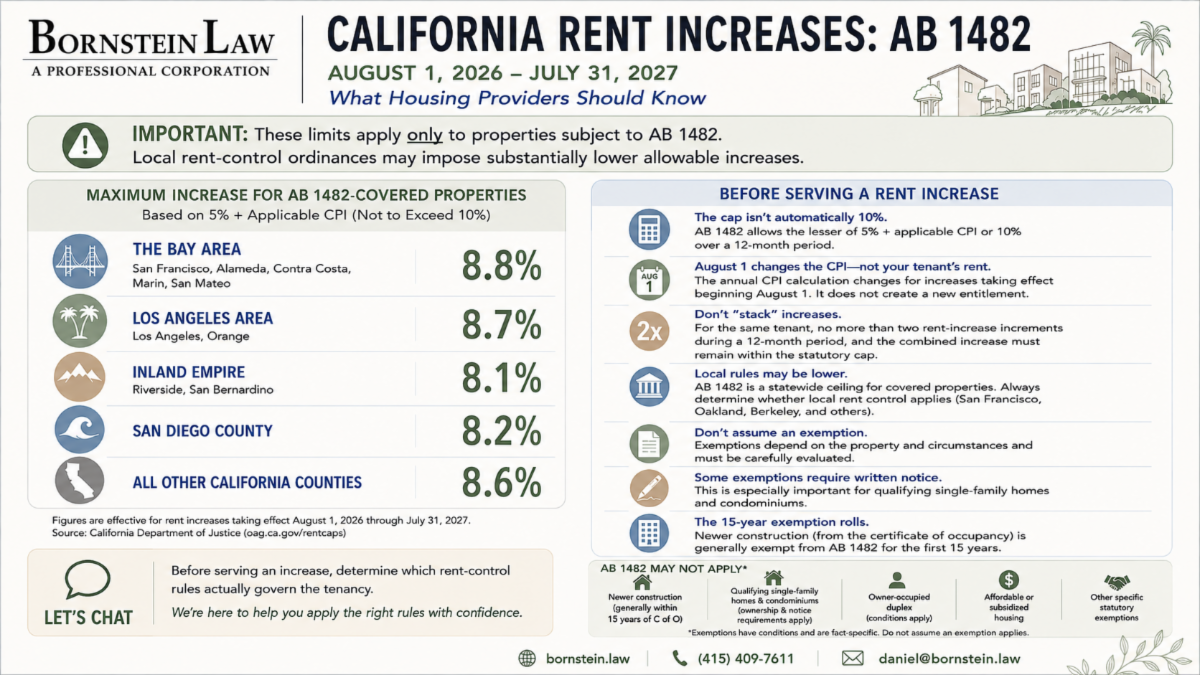
We’re expanding our library of practical cheat sheets—concise, downloadable resources that turn complex landlord-tenant laws, procedures, and compliance issues into clear guidance property owners and housing professionals can keep close at hand.


8 Items Needed to Prepare a Tenant Surrender of Possession Agreement

Tenant Buyout Rescission Periods in San Francisco, Oakland, and Berkeley


Before You Serve a 3-Day Notice

Permissible Rent Increases Under State Law (AB-1482)


A NOTE FROM DANIEL BORNSTEIN

What the headlines—and the rules—don’t always tell you

One of the things I’ve learned practicing landlord-tenant law for over three decades is that the obvious answer is often not the complete answer.


Utility billing is a good example. Dividing expenses among tenants may seem like a straightforward business decision, until rent-control rules and local ordinances enter the picture.


I’ve also been studying eviction numbers coming out of San Francisco. What we know is that filings have increased. What we largely don’t know is how those cases ended. A lawsuit may result in a tenant leaving, but it may also be settled, dismissed, or resolved with the tenancy continuing. That distinction gets lost when every filing is casually described as an “eviction.”


And sometimes the most useful legal advice is preventive. Before serving a notice, make sure you get it right. Before discussing a buyout, understand the required disclosures, agreements, and rescission rights.


The same caution applies to rent increases. One of our new one-page guides summarizes permissible rent increases under AB 1482, but an important caveat bears emphasizing: those limits apply to properties governed by statewide rent control.


Many Bay Area owners would be thrilled to have the ability to raise rents by 8% or more, but properties subject to stricter local rent-control ordinances are limited to considerably smaller increases. Always determine which rules govern the property before calculating or serving a rent increase, and seek counsel if there is any uncertainty.


Thanks, as always, for your continued engagement as we try to make sense of an increasingly complicated rental housing landscape.

Dedicated to your real estate success,

Is there a matter top of mind? Schedule a time to talk. Daniel@bornstein.law.


Help us help others. Share with like-minded owners, property managers, and real estate professionals swimming upstream in a complicated regulatory regime.

X Share This Email
LinkedIn Share This Email