Recently, customers have requested the
chord diameter
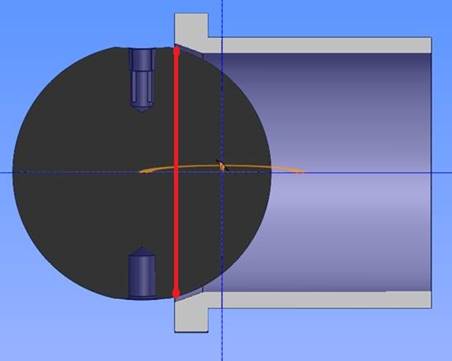
of our iron butterfly valves, particularly when using plastic (PVC, HDPE, etc.) piping and flanges. For those unfamiliar with this term, the chord diameter is the measurement from two points on the butterfly disc where the valve body and the mating flange meet. This dimension is essential to provide the butterfly disc with clearance within the mating pipe so that the valve is allowed to fully open and close.
In typical applications, our resilient-seated butterfly valves are installed using 125# cast iron B16.1 flanges, or 150# cast steel B16.5 flanges in conjunction with standard weight pipe. In these cases, disc clearance is not an issue, as iron and steel flanges
and
our iron butterfly valves are held to the rigid Disc-To-Pipe-Clearance standards of ASME. However, installers using plastic materials for the piping/mating flange need to consider that not all plastic piping is equal, nor are all plastic flanges manufactured to the exacting ASME standards.
The model below represents plastic materials for the piping/mating flange, and shows the chord diameter depicted in red. Note the taper on the inner diameter (I.D.) of the flange. In this case, the taper is required to allow the disc to move freely. On plastic piping systems, installers should verify dimensions prior to installation to eliminate interference with the valve’s operation.