American Revolution 250th | | Indoctrination or Education? | | |
This administration is promoting the upcoming 250th anniversary of the American Revolution as a time to celebrate “a new era of American greatness.”
U.S. history textbooks and standards are plastered with the country’s founding documents, so-called “Charters of Freedom”: the Declaration of Independence, the Constitution, and the Bill of Rights. It is important that young people study these texts so they can better understand and act upon the system of government they have inherited. In most cases, however, the curricular charge accompanying these documents discourages critical thinking. Instead, they and their authors must be celebrated, if not worshipped.
| |
A study of the Constitution should encourage students to think critically. Instead, mainstream resources, like the National Constitution Center’s (NCC) “Which Founder Are You?” quiz, prompt students to focus on superficial characteristics of the Founders and ignore issues of race and class. (Online at NCC through 2022 and still used in classrooms.) | | |
In the face of the racial justice uprisings of 2020, the Trump administration doubled down on this approach with a glaringly whitewashed “1776 Commission.”
And state lawmakers have flooded legislatures with bills that outlaw teaching the history of racism or sexism, while insisting upon the “study” of founding documents. These measures demand that teachers and students never question the ruling class that founded this country — nor the one at the helm today.
That is why we have compiled resources for an honest study of the American Revolution, so that students can learn from history to shape a more just future. We invite your feedback and suggestions of resources to add.
| | |
Other Founding Documents
People’s Primary Docs and Teaching Ideas
| The set of documents assembled in this lesson, by Mimi Eisen, offer a more complex and accurate account of the Revolutionary era than those that appear in most textbooks. | | Dated from 1774 to 1798, these 26 letters, petitions, poems, essays, and declarations were authored by contemporaries of the Founders: a Cherokee leader in what became Tennessee, a formerly enslaved woman in Boston, a populist mob in Philadelphia, and many more voices typically cast to the margins or wiped from the mainstream historical record. Some speak directly to the likes of John Adams and Thomas Jefferson. All ask that we rethink the meaning of the principles professed by the Founders. | | | |
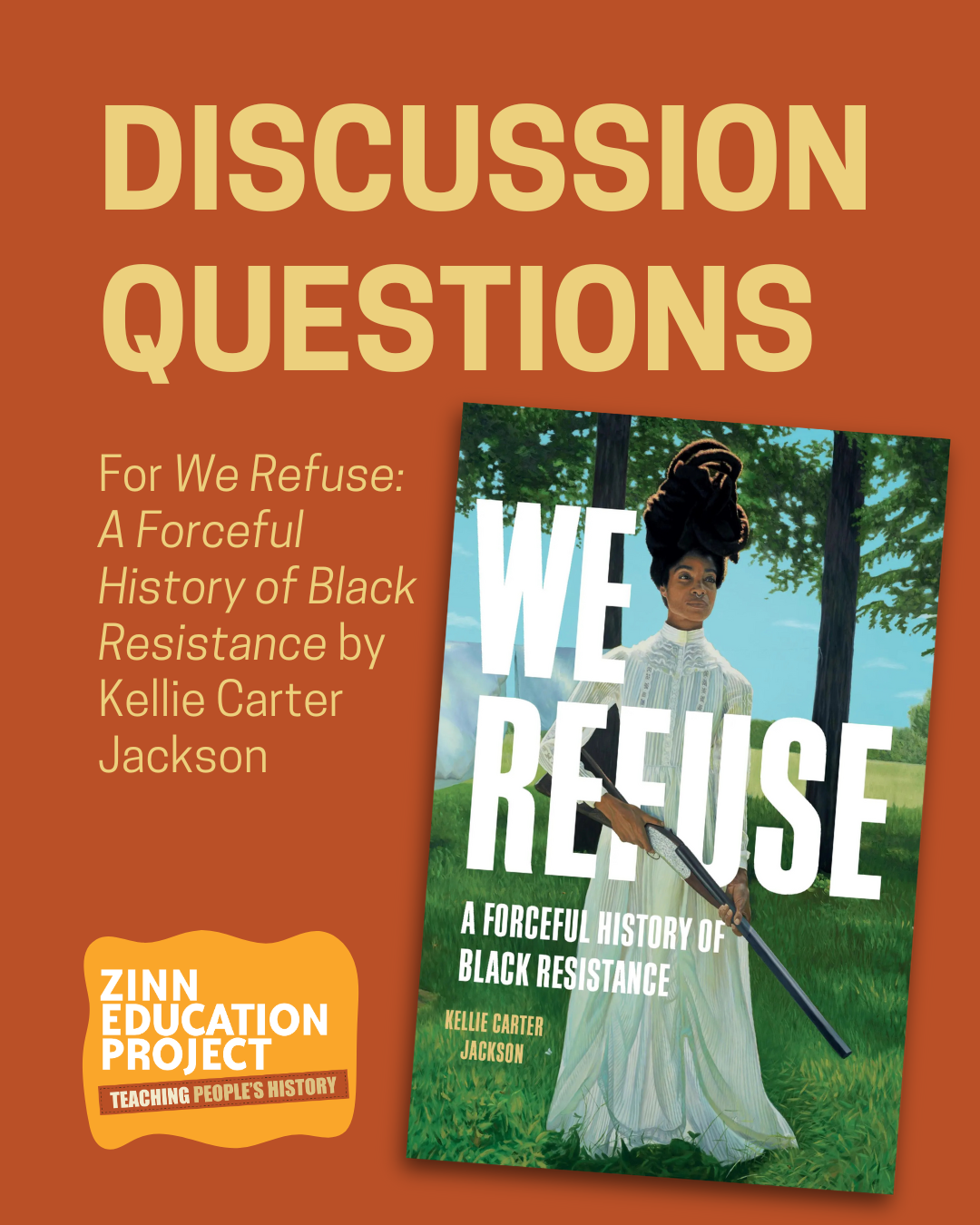
We offer questions to accompany Kellie Carter Jackson’s chapter on revolution in We Refuse. For example:
Jackson argues that,
| | | |
The hardest work of revolution is sustainability. The victory of the American Revolution appears sustaining, but only if we examine white power structures. The American Revolution, per my definition, was not revolutionary.
It did not protect Indigenous peoples. It did not free the enslaved.
It did not replace an exploitative system with an equitable one. . . Revolution is possible; Haiti and Guadeloupe proved as much.
| |
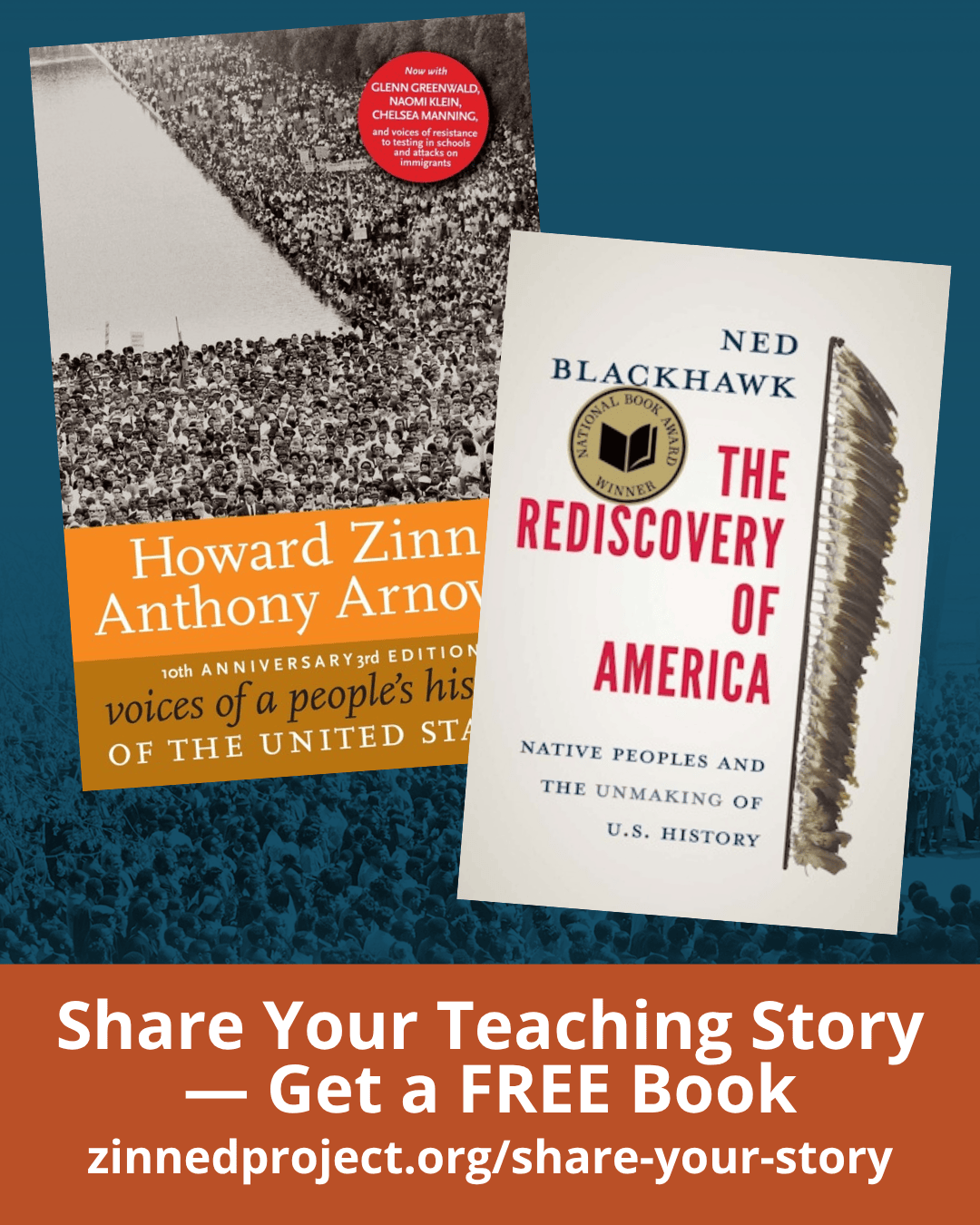
| Consider whether or not the “American Revolution” is an accurate title for the era. If not, what would be a better title? | | Both books provide readings on the American Revolution and the Constitution. | |
|
Educator-Led Study Groups
Teaching for Black Lives
| | In a time of censorship and political repression, educator-led study groups are building communities of resistance and hope. | | |
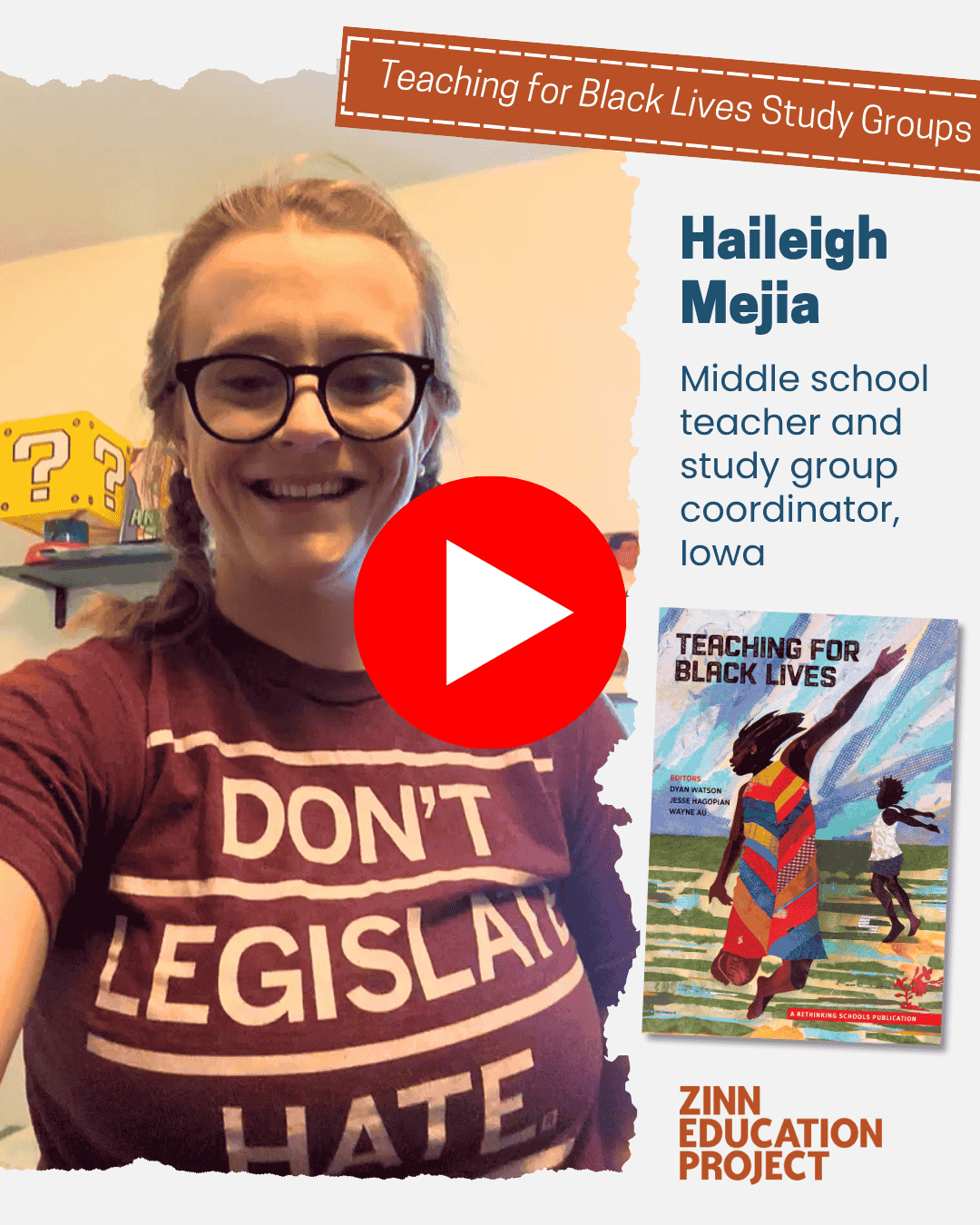
Each participant in the Zinn Education Project study groups receives a copy of Rethinking Schools’ Teaching for Black Lives, a subscription to Rethinking Schools magazine, a year-long menu of workshops and seminars to choose from, and access to a national network of social justice educators.
Watch Haileigh’s video testimonial on why you should form a group at your school, district, or state!
| | | |
Check out these events hosted by the Zinn Education Project and our colleagues.
DCAESJ Social Justice Curriculum Fair in person, August 23, Washington, D.C.
How the Word Is Passed: Remembering Slavery and How It Shaped America with Clint Smith, August 25
| |
Native Knowledge 360° Teach-In in person, September 20, New York City
Original Sins: The (Mis)education of Black and Native Children and the Construction of American Racism with Eve L. Ewing, September 22
18th Annual Northwest Teaching for Social Justice Conference in person, October 18, Portland, Oregon
King of the North: Part Two with Jeanne Theoharis, October 27
Police Against the Movement: The Sabotage of the Civil Rights Struggle and the Activists Who Fought Back with Joshua Clark Davis, November 10
105th National Council for the Social Studies Conference in person, December 5–7, Washington, D.C.
Black History Is for Everyone with Brian Jones, January 26
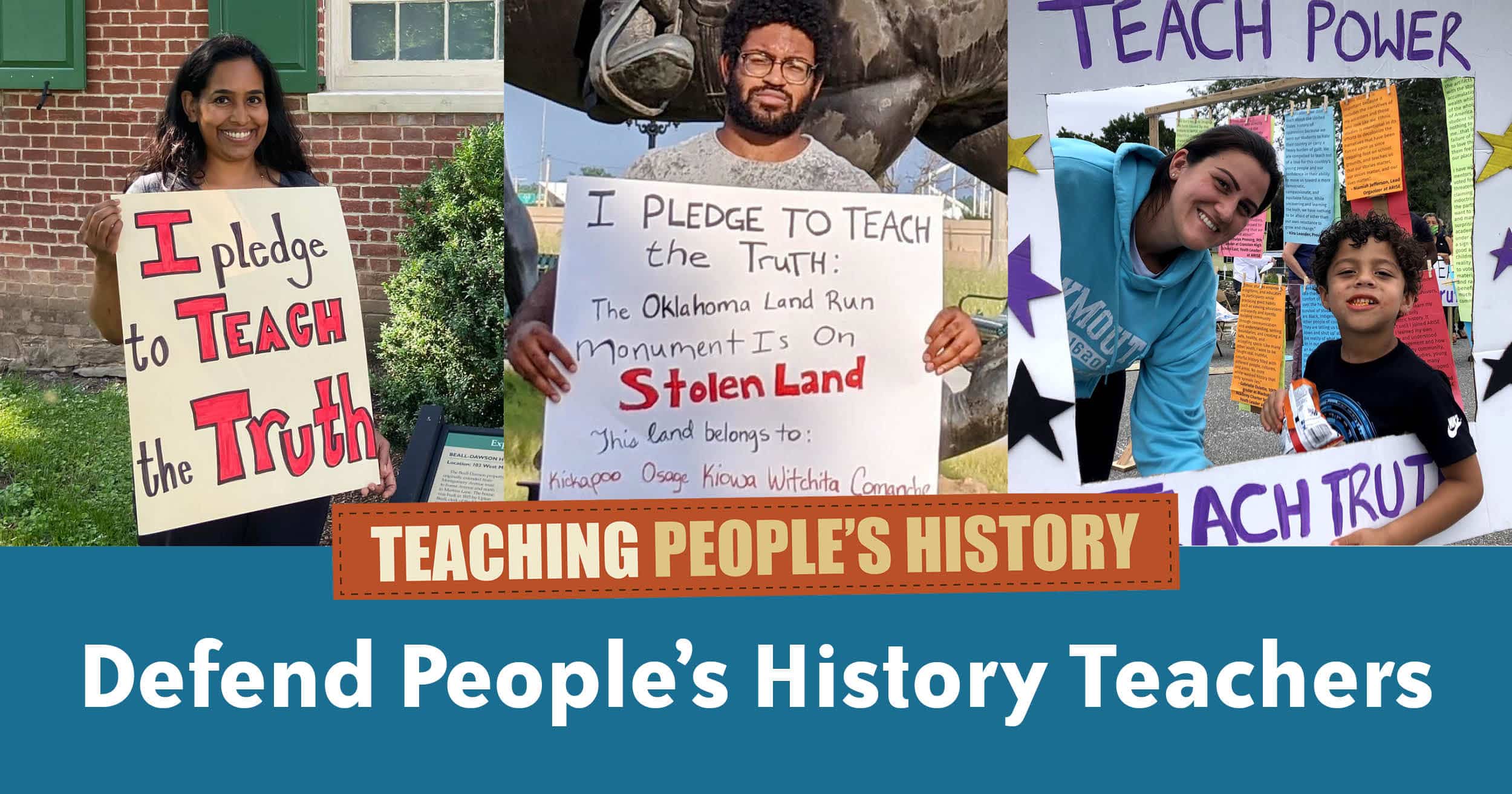
| | Teachers are under attack for teaching truthfully about U.S. history. Please donate so that we can continue to offer free people’s history lessons and resources, and defend teachers’ right to use them. | | | | |