|
Conservation depends greatly on sound scientific research, which helps guide our actions, in hopes of creating the greatest positive impact. In a field that is generally understaffed, underfunded, and constantly at odds with private interests, there has been a growing need for cooperative efforts between agencies, organizations, and individuals - creating systems in which the whole is greater than the sum of its parts. One of particular interest is the Motus Wildlife Tracking System.
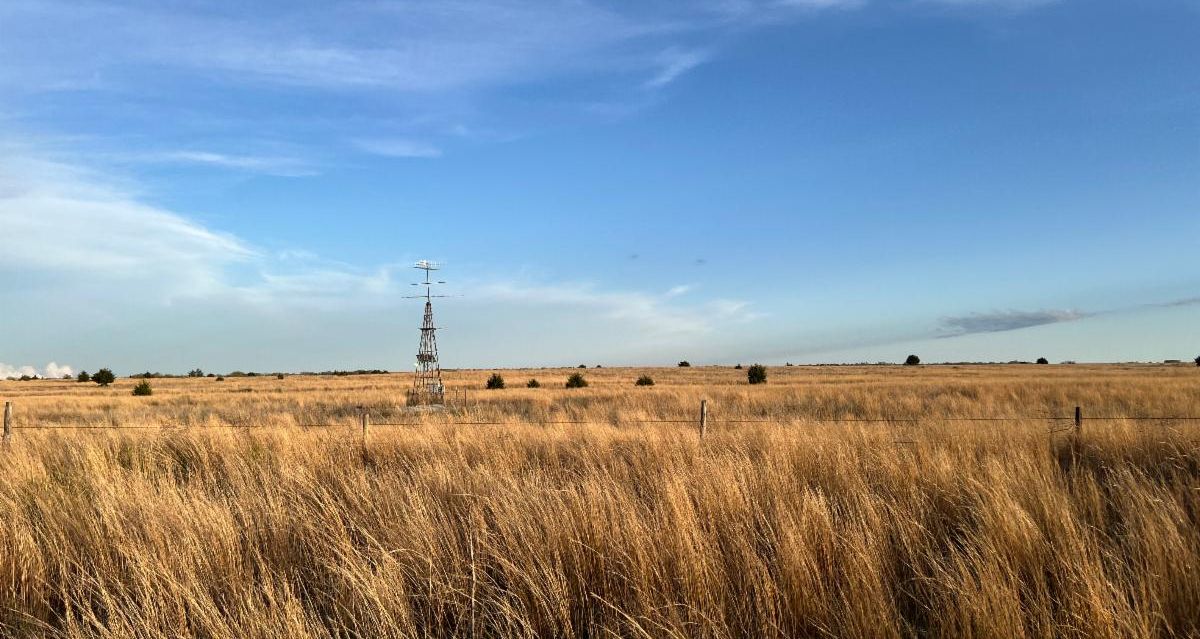
“Motus,” Latin for motion, has created a new wave in the tracking of small flying animals with the use of radio telemetry. Individual bats, birds, and insects are captured and equipped with a small tag, which then emits a signal for individual recognition. Motus tags are small, lightweight, and all operate on a single frequency which can then be picked up and recorded by any one of their receiving stations. Receiving stations, commonly referred to as Motus Towers, are erected on both public and private land most prominently in the United States and the western hemisphere, but expanding rapidly. A vast network is forming, capable of tracking local, regional, and global movement of individuals then providing that data in an open-source format online.
Data from these towers help drive research, filling gaps in our understanding, and providing us insights which improve our decision making. AOK sees the value in cooperative conservation efforts such as this, and we want to do our part. AOK currently has three (3) Motus Towers located throughout our Protected Areas:
- Hutton Niobrara Ranch Wildlife Sanctuary
- Far West Wildlife-Friendly Farm
- Howell and Carmen Johnson Wildlife Preserve
Each of these contain a link directly to the station report on the Motus website where you can view detections, track the movement of individual animals, or explore the globe!
|