Wednesday Weblog for April 1, 2026 | | "Leadership is not something you do to people; it’s something you do with people." Dr. Paul Hershey, a Founder of Situational Leadership® | | Leading Off: A 1981 Workshop | | |
In 1981, when I was based in the Los Angeles area, I heard about a workshop that was taking place at UCLA and signed up. When I arrived at the ballroom, there were two guys up front and an easel and they started drawing this matrix describing Situational Leadership®.
I learned that Situational leaders adapt their style to match the needs of the individual and the demands of the task. Rather than relying on a single approach, they assess competence, commitment, and context before deciding how to lead.
At times they provide clear direction; at others, they offer support, coaching, or autonomy. Their effectiveness comes from flexibility, awareness, and the ability to diagnose what each situation requires.
By aligning their behavior with the moment, they improve performance, build confidence, and develop others over time. Situational leaders understand that leadership is not about consistency of style, but consistency of results through thoughtful, responsive adjustments.
About two weeks after the workshop, I picked up the handout they had given us and realized that I had been practicing what I was taught. I was surprised that it was so easy to internalize and I kept using and teaching the concepts for the next 40 years as I led teams.
When I became a consultant six years ago, my first action step was to reach out to the Center for Leadership Studies to get certified as an instructor for Situational Leadership®, and that happened only a few months into my new career.
Last year, they introduced a new workshop, Situational Conversatons™, and I immediately applied to get certified. I've conducted the workshop many times, and it remains one of the best received, easiest to internalize workshops I've ever done, and I think the statistics about communication are part of its success.
| | Leadership Happens One Conversation at a Time | | |
Over the years I’ve learned a lot about the concept of avoiding difficult conversations. I've done it and I've seen it done or not done, as the case may be. People avoid difficult conversations.
As soon as I heard the key concepts during my certification workshop, I found myself nodding immediately: “Oh, yeah, that’s right.”
It’s one of the best courses I’ve ever taken—and one of the best I’ve ever taught. The reason is simple. There’s almost no pushback. People listen, they nod, they ask questions, and they leave with a clearer sense of how to handle conversations than when they walked in. And really, isn’t that the purpose of training? To equip people to be more effective than they were before?
| | |
I was so eager to get started with teaching the course, that I booked workshops the week after I was going to be certified.
Looking back now, I can modestly boast that I was the first Partner/Trainer for CLS to be certified in the course in the world.
Since then, I’ve seen the program have a significant impact. In one organization, it was so successful that internal leaders became certified themselves and now carry the work forward.
Which brings us to something that tends to surprise people—until they see it in their own experience.
| | |
Most leaders believe they are good communicators. If you asked a room full of managers to rate themselves, the majority might place themselves above average—clear, direct, approachable, effective. And yet, when you look at surveys about what’s actually happening inside organizations, a different picture starts to emerge.
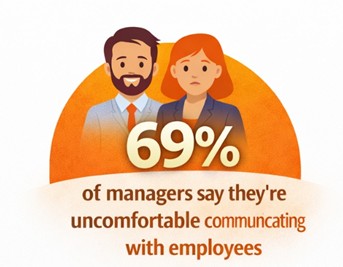
Nearly 69% of managers say they are uncomfortable communicating with employees. Not just difficult conversations, any conversations.
At first glance, that might raise a question—then why are they managers? But the answer is usually straightforward. Most were promoted because they were strong individual contributors, not because they were trained to lead conversations.
The impact of that gap is significant. Employees continue doing the wrong things—or doing the right things the wrong way—without feedback. And we all know the phrase: feedback is a gift. The problem is, it’s a gift that often isn’t given.
| | |
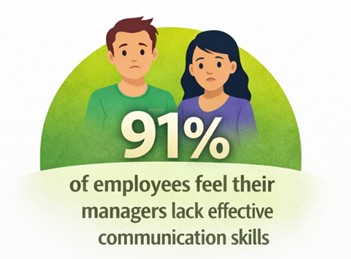
At the same time, 91% of employees say their managers lack effective communication skills. That’s not a small disconnect—it’s a systemic one.
If you’re an employee reading this, you may be nodding. If you’re a manager, it’s worth pausing for a moment, because perception matters—and in this case, perception is shaping performance.
The discomfort around these conversations is real. About 66% of workers say they feel stressed or anxious when they know a difficult conversation is coming. That’s not surprising.
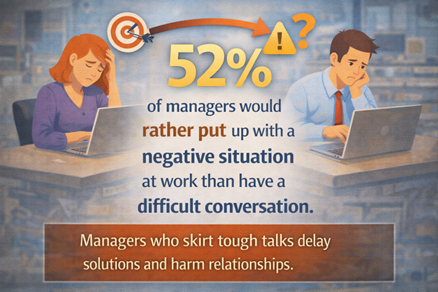
What is more telling is that 57% say they would do almost anything to avoid that conversation, and 52% of managers say they would rather put up with a negative situation than address it directly.
That’s where the cost begins to show up. Because now the issue doesn’t just exist—it lingers, it compounds, and it affects performance, relationships, and outcomes over time.
| | |
I was reminded of this recently in a very simple moment.
I was talking with someone who was frustrated with a member of their team. The performance wasn’t where it needed to be, and it had been that way for a while. As they described the situation, it was clear—they knew exactly what the issue was. They had thought about it, talked about it with others, and could articulate it in detail.
So I asked a simple question.
“Have you had that conversation with them?”
There was a pause.
“Well… not exactly.”
What followed was familiar. They didn’t want to discourage the person. They didn’t want to create tension. They weren’t quite sure how it would land. So instead, they adjusted around the issue. They worked harder themselves. They hoped it would improve. It didn’t.
And that’s the pattern these statistics are pointing to. It’s not that people don’t see the issue. It’s not that they don’t care. It’s that the conversation—the one that could actually change things—doesn’t happen.
Avoiding the conversation doesn’t protect the relationship—it delays the result.
| | |
I’ve seen a version of this play out outside of work as well.
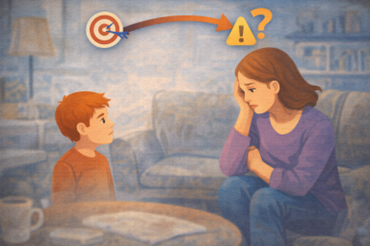
A parent shared with me that they were frustrated with their child’s attitude. Nothing major—just small things that were starting to add up. Tone. Effort. Follow-through. Again, they could describe it clearly. They could point to specific examples.
But when I asked if they had addressed it directly, the answer was similar.
“Not really. I don’t want to overreact.”
So instead, they let it go. Then it happened again. And again. And eventually, what started as something small became something bigger—not because the issue itself had grown, but because it had never been clearly addressed.
When the conversation finally did happen, it wasn’t as difficult as expected. In fact, it was productive. But it came later than it needed to happen.
Different setting. Same pattern.
What we avoid early rarely stays small—it usually grows quietly.
| | |
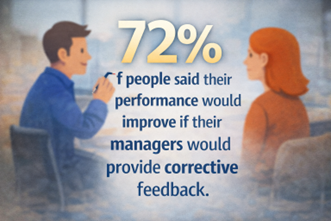
And then there’s this: 72% of people say their performance would improve if their managers provided corrective feedback.
Which raises a simple but important question—could it really be that straightforward?
In many cases, yes. But only if the conversation actually happens—and happens in a way that can be heard.
That’s where Situational Conversations™ model comes in. Most of us default to a single communication style. We say things the way we’re comfortable saying them. We assume clarity because we understand our own intent.
But the other person is hearing that message through their own lens—different experience, different confidence level, different expectations. The result is often the same: the message doesn’t land the way it was intended.
| | |
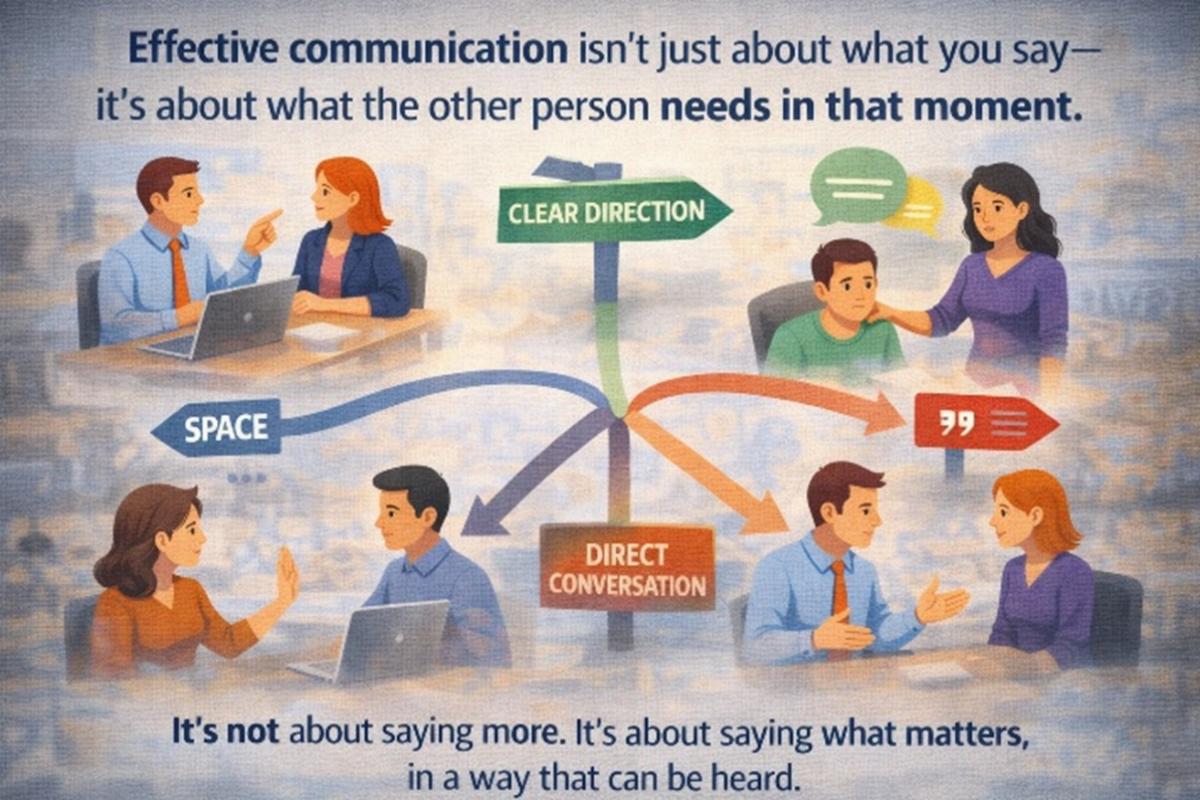
Effective communication isn’t just about what you say—it’s about how well it matches what the other person needs in that moment. Sometimes people need clear direction.
Sometimes they need support. Sometimes they need space. And sometimes they need a direct, honest conversation that doesn’t get avoided.
When leaders adjust their conversations to fit the situation, things start to shift. Feedback lands. Expectations become clearer. Performance improves—not because people are working harder, but because they’re being led more effectively.
It’s not about saying more. It’s about saying what matters, in a way that can be heard.
Taking This Further
In fast-moving environments, communication isn’t just about frequency—it’s about fit. What works in one moment or with one person can miss the mark entirely in another.
I spend a lot of time working with leaders on how to adjust their conversations in real time so that what they intend to say is actually what gets received.
Because life moves fast. The insights are there. If we’re paying attention.
| | If you or your organization is interested in learning more about Situational Leadership®and Situational Conversations™ email me at edoherty@outlook.com and we can connect. | About The Center for Leadership Studies: For more than 50 years, The Center for Leadership Studies, founded by Dr. Paul Hersey, has been the global home of the original Situational Leadership® Model. With more than 15 million leaders trained, Situational Leadership® is the most successful and widely adopted leadership model available. Deployed in more than 70% of Fortune 500 companies, the Situational Leadership® Model and influence-focused courses enable leaders to engage in effective performance conversations that build trust, increase productivity, and drive behavior change. CLS services customers both domestically and internationally through an extensive network of more than 200 learning professionals in more than 25 languages. Visit https://situational.com/ to learn more. | | Sources include research from Interact (internal communication studies), HR.com (employee communication surveys), Bravely (workplace conflict research), Zenger Folkman (leadership effectiveness research), and Gallup (employee engagement and feedback studies). | | Surprise Photo at the End: | | Joe's Positive Post of the Week | | Join the Smart Subscribers | | If you are reading this on a social media platform, click below and you'll automatically receive a 'different' story every week on Wednesday. | | |
The Roll Call of states and countries where readers reside: Arizona, California, Colorado, Connecticut, Delaware, Florida, Georgia, Hawaii, Illinois, Indiana, Iowa, Kansas, Kentucky, Louisiana, Maine, Massachusetts, Michigan, Mississippi, Missouri, Montana, New Hampshire, New Jersey, New Mexico, New York, North Carolina, North Dakota, Ohio, Pennsylvania, Puerto Rico, Rhode Island, South Carolina, South Dakota, Tennessee, Texas, Vermont, Virginia, Washington and Washington DC, Wisconsin plus Canada, Conch Republic, Australia and the United Kingdom.
| | Refer a friend to Sign Up for the Wednesday Weblog | | |
Ed Doherty
774-479-8831
www.ambroselanden.com
ed-doherty@outlook.com
Forgive any typos please.
| | | | | |