E-Newsletter | July 10, 2020
|
|
Combing Through Our Collection
(As many of you may know, the museum is in the midst of a significant update to the electrical system of the Cushing House. While that means we have to move, store and protect many of our collection pieces, it also gives us the chance to re-examine some treasures. This week Madison Vlass, our executive assistant, is relocating pieces from the Industries Room including a large case of locally made combs.)
- “Growing up in West Newbury, I knew that a significant part of our local economy had been based on comb factories. The ubiquitous fine-tooth plastic hair brushes that I was picturing, however, are a far cry from these incredible tortoise shell and horn adornments that made West Newbury famous.”
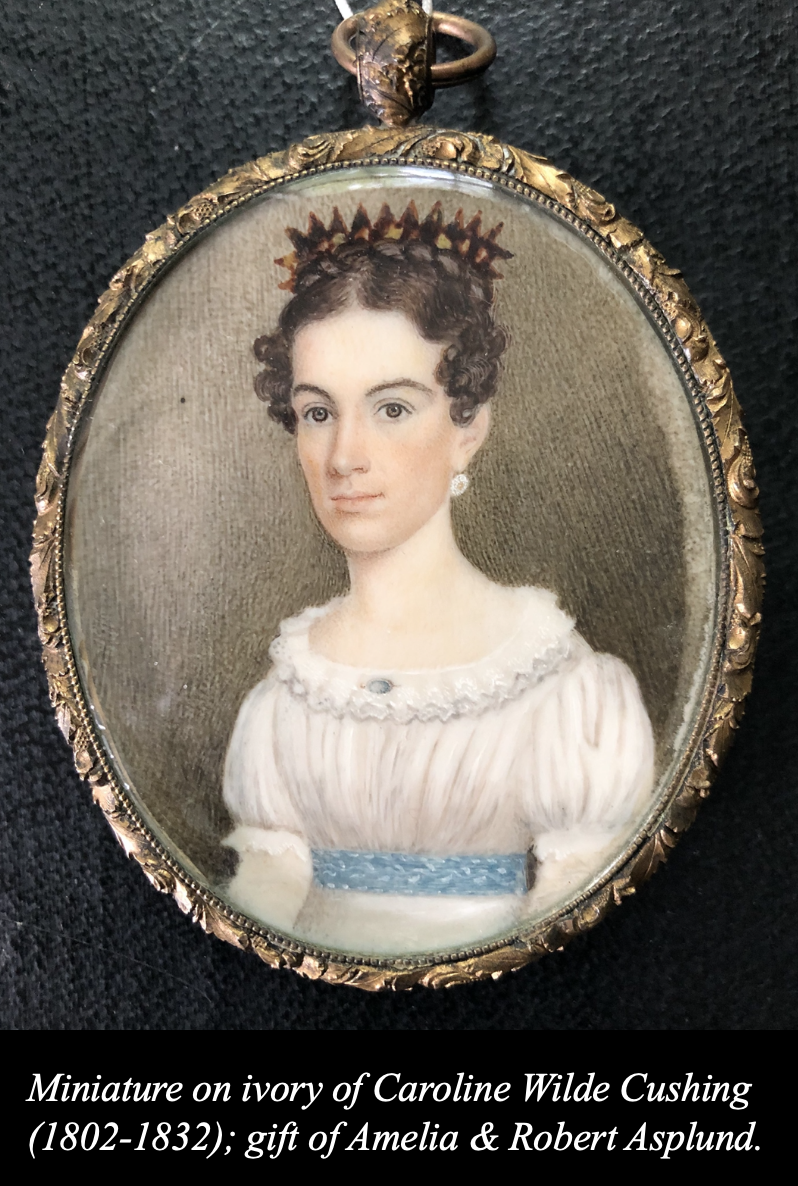
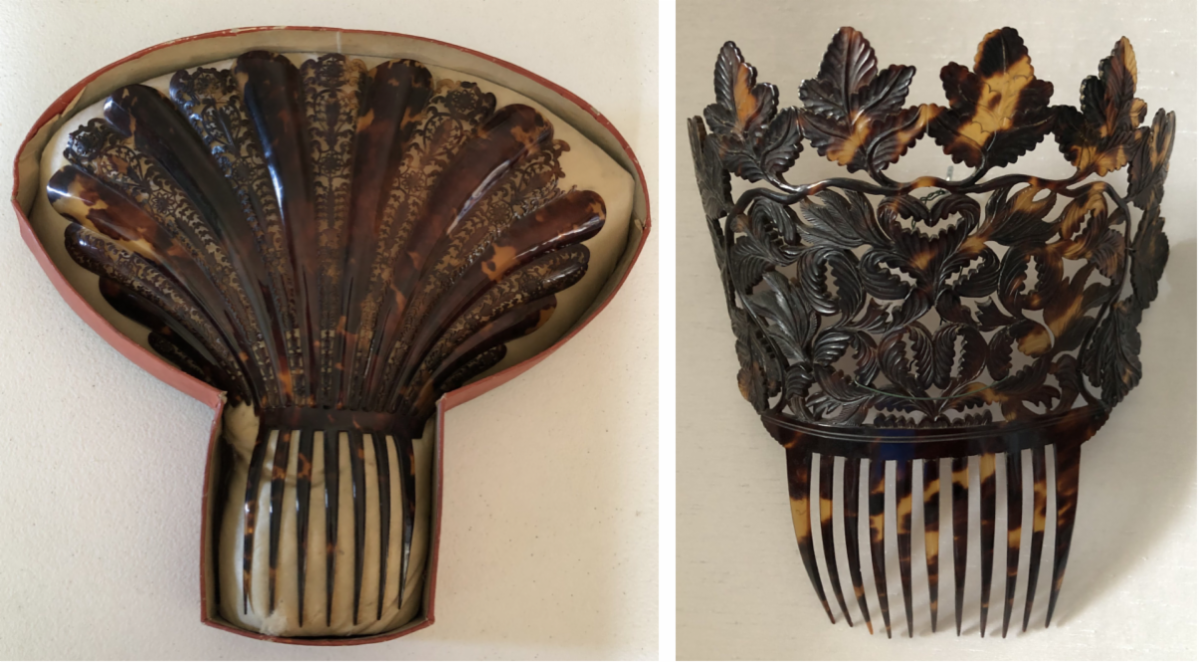
Combs have existed as status symbols in most advanced societies for millennia. Even Colonial America was not immune to the opportunity to show off. The earliest combs here would have been imported from Europe at a very high cost and therefore would have been reserved for those with wealth and standing. Women wore these works of art prominently on top of intricate hairstyles. They were typically made from rare materials such as tortoise shell, silver or ivory.
It was not until 1759 that a local man named
Enoch Noyse
began experimenting and succeeded in making rough, but worthy, imitations of the expensive foreign imports. He found that he could flatten animal horn (a widely available and cheap material) by heating it in oil, pressing it between stones, and cutting it into the shape of combs and buttons. This was a significant achievement, especially for the rural parish that we now call West Newbury, however his business stayed local and rudimentary.
The true industry of comb making began about 20 years later. It is popularly believed that a Hessian soldier sought Noyse out during the Revolutionary War. This man,
William Cleland
(probably an anglicized spelling of the name), had been a comb maker in his hometown in Germany and brought his tools of the trade with him to America. With these specialized instruments and Cleland’s knowledge, the two became well known for their innovative designs which were on par with European exports. They began using tortoise shells and antler, along with horn, and selling them near and far.
Old Newbury, at that time, was already a major center of trade and shipping. It wasn’t long before more comb makers sprang up, copying the techniques of Noyse and Cleland. By the 1830s, the newly incorporated West Newbury had about 30 comb shops. Unfortunately for the residents, the process of boiling and clarifying the raw materials smelled horrific! Despite this, the demand was high, and shops gave way to larger-scale factories in both in town and in the surrounding cities of Newburyport and Haverhill.
The development of rubber, which was cheap and easy to mold, gradually replaced horn, shell and antler. The comb industry spread to other parts of the country and declined in West Newbury, effectively ending by the early years of the 20th century. It has now become a treasured part of the town’s history.
The West Newbury Historical Society – check out their Facebook page
here –
also has an impressive assortment of locally made combs in their collection.
(Below, two elaborate combs from the museum's collections.)
|
|
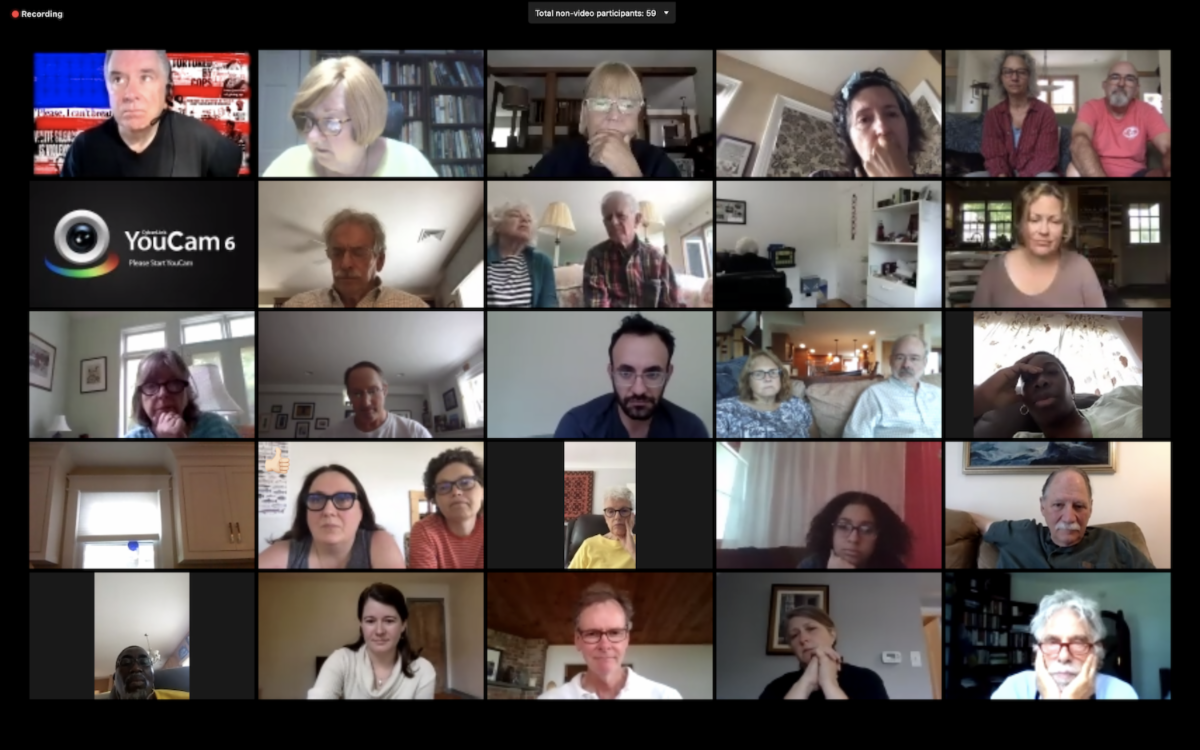
(Above, participants listen closely to Douglass' powerful words.)
Madison Vlass,
executive assistant with the Museum of Old Newbury, welcomed everyone and explained Douglass's connection to Newburyport, citing the anti-slavery speech he gave in 1841 at the (then) Prospect Street Church.
Following this,
Susan Edwards,
executive director with the Museum of Old Newbury, introducing the event's moderator, shared, "Edward Carson is an independent historian, researcher and author. He will lead off the reading and then guide us through a discussion at the conclusion."
Carson, the current Dean of Multi Cultural Education and a member of the History Department at the Governor's Academy in Byfield, is a graduate of Alabama Christian Academy, earning a B.A. in History and Biblical Christianity, and he holds a graduate degree from Harding University.
His current research looks at race, religion and Black Thought, particularly that of W.E.B. DuBois. Carson has published and presented papers focusing on Black identity, religion and the nature of history teaching.
In his opening remarks,
Edward Carson,
offered this insight, "
Frederick Douglass struggled with the Fourth of July due to its framing of democracy. He could not breathe, nor could four million slaves breathe. I am convinced that community readings such as this will allow white people to self-reflect and ponder their white privilege. Events exactly as like this ask folks to stop saying 'not racist,' and activates them into action as anti-racist."
Vlass concluded the event with this keen observation, "Douglass spoke these words 168 year ago and they are still relevant and worth examining in today's social and political culture. As Eddie said, we have to be hopeful and find some kind of light to move ourselves forward. Reading together today was a great starting point."
Newburyport was just one of a number of cities and town's across Massachusetts and the country joining together to have an honest and real dialog about race using Douglass' still-powerful words to start the conversation.
The program was presented by the First Religious Society Unitarian Universalist and the Museum of Old Newbury, with funding provided in part by
Mass Humanities
and the
Massachusetts Cultural Council.
This year was the third and most well attended event.
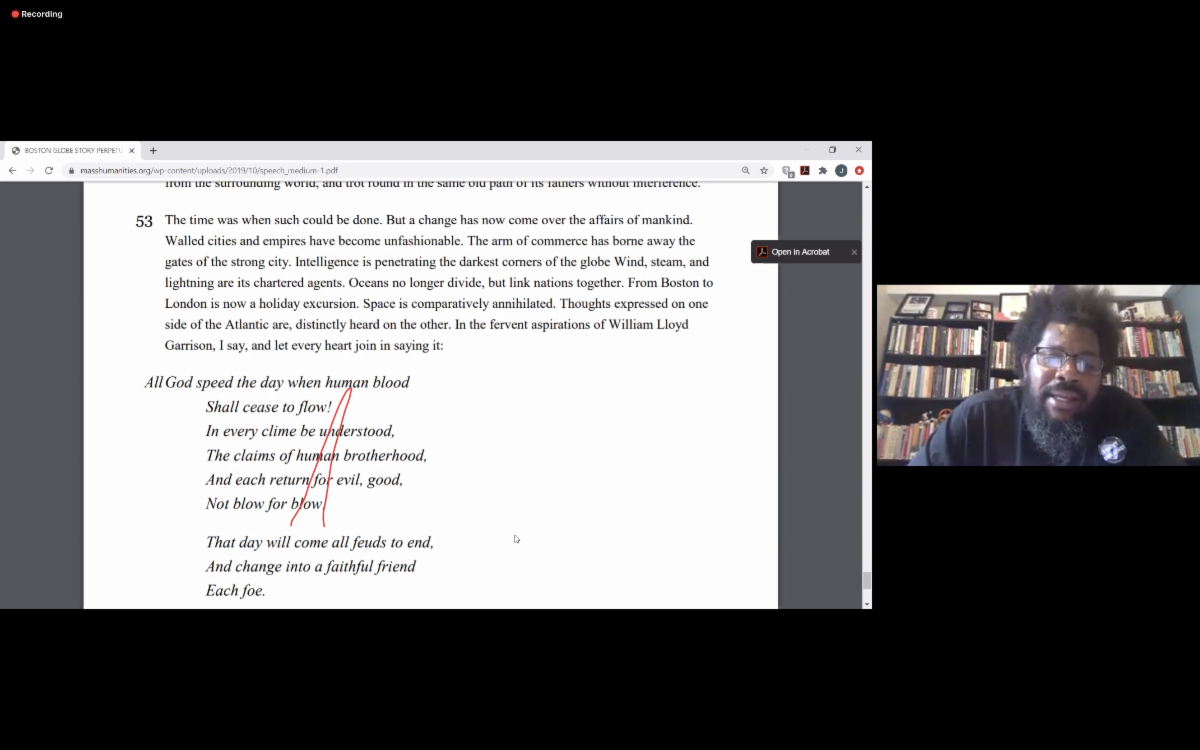
(Below, at the end of the call, Eddie Carson encourages all 104 people still participating to join with him in reading the last stanza quoting fellow abolitionist, William Lloyd Garrison.)
|
|
Puzzle Me This...Ready-and-Abel Johnson
Abel Johnson
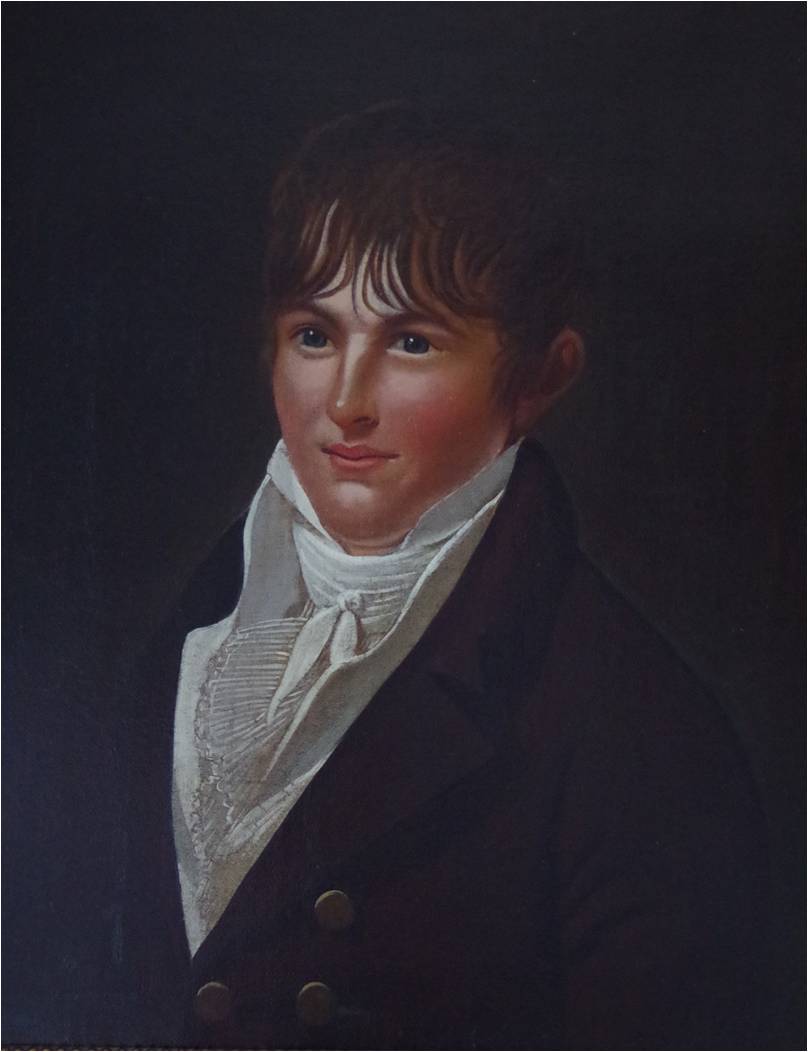
(1793-1826), son of Newburyport merchant and shipmaster Capt. Nicholas Johnson and brother-in-law of John Newmarch Cushing, was a shipmaster himself in the merchant trade out of Newburyport.
He was elected to the Marine Society in 1818 and died off Cape Henry, Haiti, at the age of 33. He might not have yet been 20 years old when he sat for this painting. Despite his handsome face, Hannah Gould, a Newburyport author, wrote an unkind rhyme for the entertainment of her girl friends, about his limp caused by one leg being shorter than the other.
The portrait was painted in Amsterdam by artist Charles Delin (1756–1818).
Click on the image to begin.
|
|
Something is Always Cooking at the Museum
Maura Ockerbloom
shares her mother-in-law's go-to summer dessert. Though apricot is a favorite, any preserve of your choosing could work, too.
Frozen Apricot Delight
2 packages plain ladyfingers
1/2 gallon vanilla ice cream
1 16-ounce jar apricot preserves
1 6-ounce can frozen lemonade
In a large bowl, cut ice cream into chunks to soften. Line bottom of angel food cake pan (or a similar pan with a removable center core) with ladyfingers, finished side up. Take whole sheets of ladyfingers and line pan, finished side out. Ladyfingers are "standing up" on sides of the pan. Add preserves and undiluted frozen lemonade to softened ice cream. Mix well, working out lumps. Gently spoon ice cream mixture into pan, careful not to nudge fingers loose from sides of pan. Place in freezer, overnight if possible. Remove center core from pan and slice 2-3 ladyfingers per serving. Decorate with sliced berries if desired.
|
|
Museum Mail
Good Morning:
Please pass on to the editor how wonderful it was to have the items “From our Collection” in this edition's eNews. So often in our busy lives we see things without realizing “why they are,” and especially if we live in places distant to the item, i.e., the Hat and Wig connection. Keep it coming.
Also the historical photos and pictures turned into Jigsaws. I am a member of the Queensland Family History Society and let other members of our group know of your eNews and Jigsaws link. Oh, and also the delicious Lemon Bread.
I love reading your eNews from Brisbane, Australia. Keep up the diversity post Covid.
(PS: I am a direct Descendant of Jacob Perkins down the Chubb Line.)
Cheers,
Wendy Angliss
Brisbane, Australia
_________________________________________________
Dear Editor:
Wondering if Dr. Eliphalet Emery was related to the Hales? Loving the E-Newsletters and hoping that the "lectures" will be available online before too long. Happy 4th of July to all "cousins." Delighted and
privileged to be a descendant of several Founders.
Sally Wood Hlavay
Calgary
(Editor's note: Wendy and Sally, it's official, we are now the "International" Museum of Old Newbury! Thank you for writing in.)
|
|
Noon Today..."Yeat Yeat, Don't Tell Me!"
Zoom in today at noon for episode five of "Yeat Yeat, Don't Tell Me!" the Newbury area's fastest and most fascinating half hour trivia show.
Laugh and learn with your hosts,
Jack Santos, Custom House Maritime Museum,
and
Colleen Turner Secino, Museum of Old Newbury.
Yeat Yeat, I can't wait!
|
|
During this difficult period of COVID-19, we rely on your support more than ever. We are working to reschedule many of the programs that we have had to postpone, as well as develop new, online programs for you to enjoy and keep us connected. We hope, if you are able, that you will consider a
donation
to the museum. Thank you for your continued support.
|
|
Museum of Old Newbury
98 High Street
Newburyport, MA 01950
978-462-2681
|
|
|
|
|
|
|
|