Empowering DNA Analysts to Testify in Court with Confidence | | |
Expert witness testimony can make the difference in a case, and learning to root testimony in the science, the processes, and the data is pivotal to ensuring DNA evidence presented stands up to the pressures of a courtroom setting. 2026 marks the third consecutive year that our testimony workshop has been offered at the International Symposium of Human Identification (ISHI). Developed in collaboration with forensic experts and legal professionals, this workshop examines what effective DNA expert testimony looks like in practice.
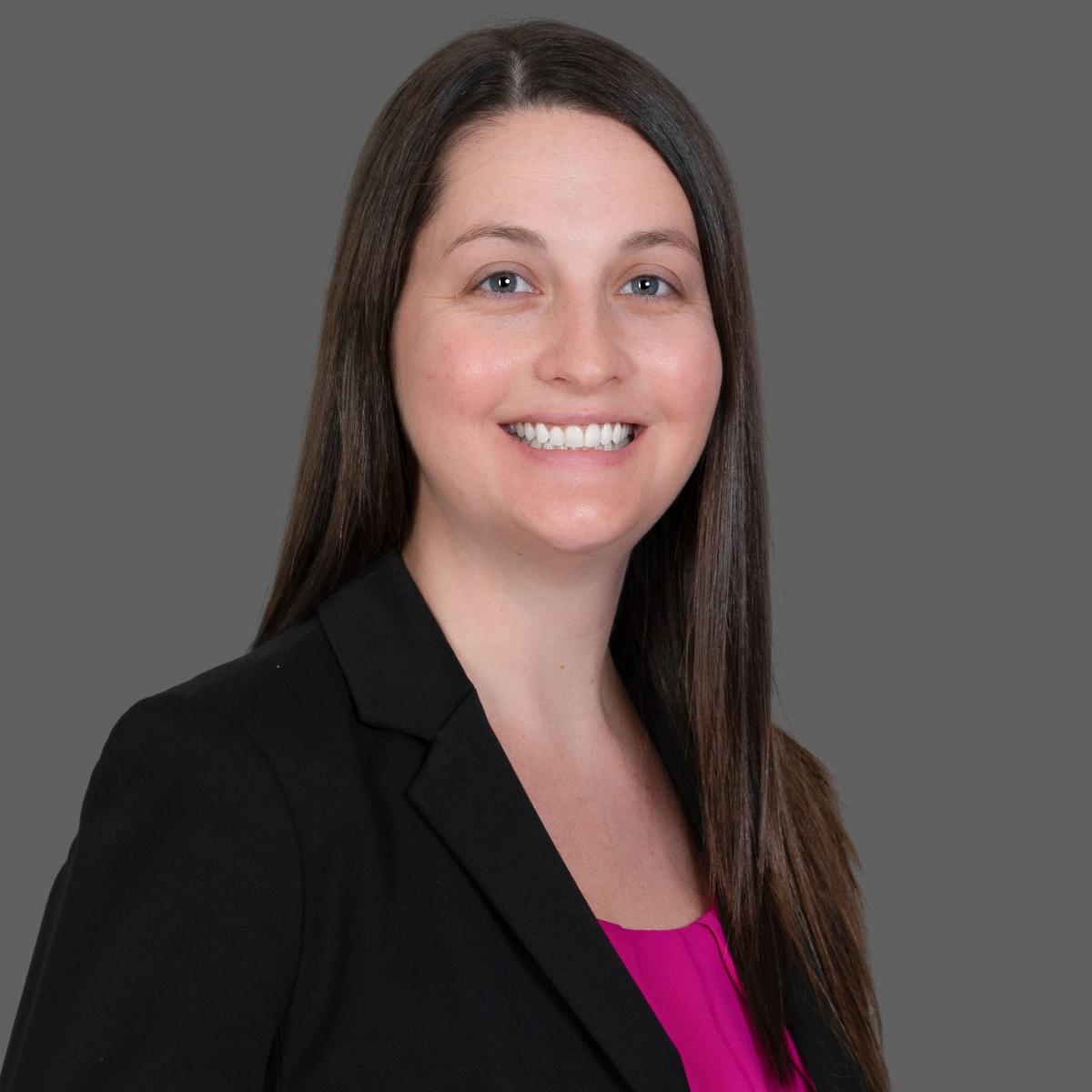
Samantha Wandzek, Technical Leader of Signature Science’s Forensic DNA Laboratory, together with her workshop co-chair and panel of forensic specialists, educates participants on DNA limitations and effective testimony and trial preparation. Workshop participants are asked to critically evaluate real testimony examples and reflect on their prior courtroom experience.
| | |
From the Lab Bench to the Witness Stand: Communication of DNA Evidence
Thursday, October 29
1:30-4:30 PM
| | Samantha Wandzek, MS
Technical Leader | | | |
Drawing on perspectives from both scientists and attorneys, attendees will:
-
Learn about current community issues. Discuss current community-recommended guidelines for testimony and other timely topics in the field.
-
Evaluate transcripts from DNA expert testimony. Have interactive discussions about actual courtroom testimony and brainstorm different approaches that can be used.
-
Refine how they communicate what the data actually supports. Learn tips for how to deliver the facts regardless of the framing of the counsel’s question, avoiding over or understatement of what the data shows.
If your laboratory is looking to strengthen how your analysts present findings in court, add our workshop From the Lab Bench to the Witness Stand: Communication of DNA Evidence to your ISHI plans today!
| |
Catch Up with Us in the Exhibit Hall!
Booth #207
October 26 – 29
| | | Grant Funding is Available for Your Cases | | |
The Bureau of Justice Assistance has announced that solicitations are now open for the FY26 Capacity Enhancement for Backlog Reduction (CEBR) grant program!
Who's eligible?
State and local government crime laboratories that conduct forensic DNA and/or DNA database sample analysis.
What can a laboratory use BJA grant funding to achieve?
Supporting the BJA's mission to improve public safety and protect our communities from violent crime, the grant provides funding for laboratories to process more evidence for upload to CODIS and to reduce evidence backlogs. If your laboratory has considered increasing its capacity through an outsourcing partnership with a private laboratory, these funds can help bridge the gap behind planning and execution. Connect with our team today - we can walk through the grant application process, learn about your unique needs, and answer any questions you have about our capabilities, credentials, and our outsourcing processes.
Grants.gov Deadline October 29, 2026
Application JustGrants Deadline November 5, 2026
| | Celebrating National Forensic Science Week! | | |
We celebrate the scientists, analysts, and examiners whose work at crime scenes and in laboratories nationwide moves cases forward and supports investigators pursuing answers for victims, families, and communities. To commemorate the week (9/20-9/26), our forensic science team offered their inspiration and advice:
What got you interested in forensic science as a career?
Samantha Wandzek, Technical Leader:
I was an avid reader and got into reading true crime novels. I also loved shows like “The New Detectives” that came out in the late 90s. I knew forensic science would be my career after that.
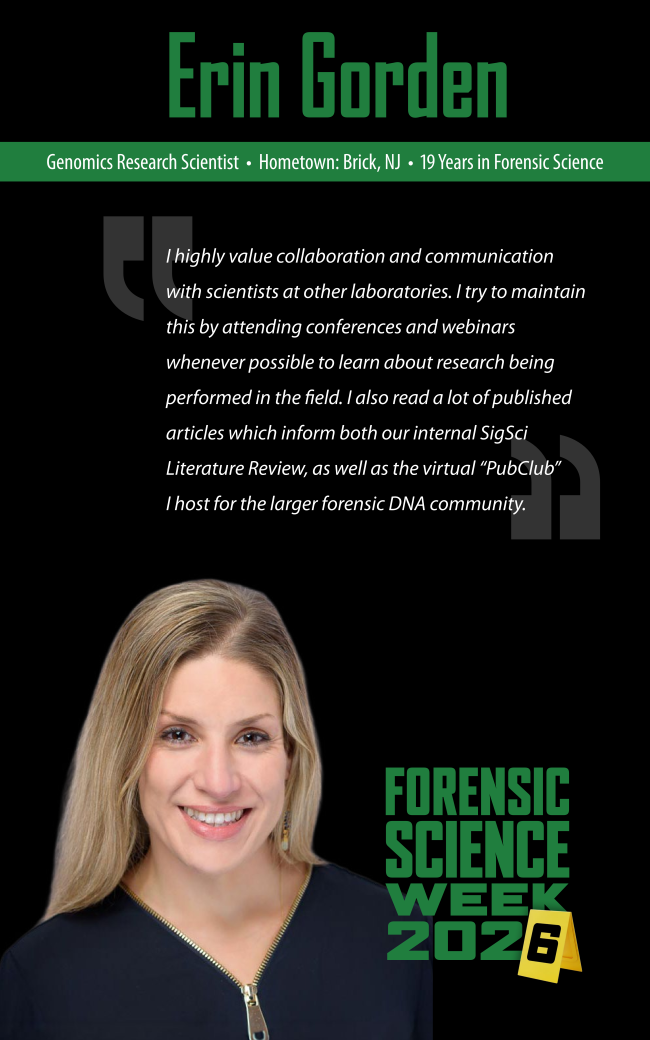
Erin Gorden, Genomics Research Scientist: I always wanted to be involved in the criminal justice process – when I was a child, I wanted to be a police officer and later a prosecutor or defense attorney. Then, I took a class in genetics when I was in high school. This was around the same time that CSI was gaining popularity, and I realized I could combine my interest in genetics with criminal justice by going the forensic science route.
| |
| | | |
How have you seen FIGG affect what is possible with DNA evidence?
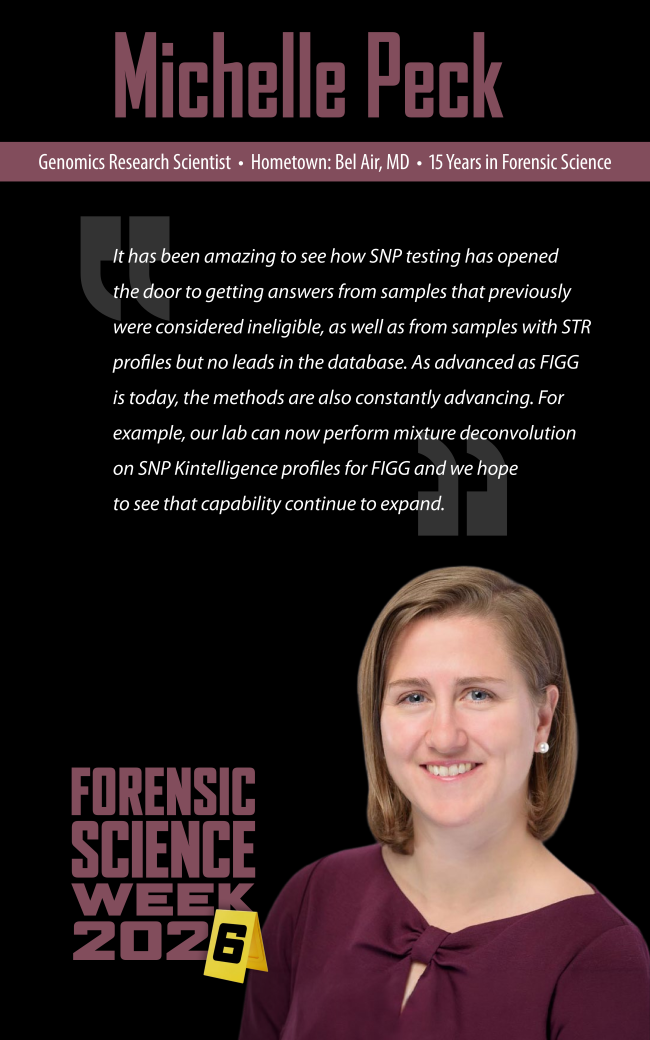
Michelle Peck, Genomics Research Scientist: It has amazing to see how SNP testing has opened the door to getting answers from samples that previously were considered ineligible, as well as from samples with STR profiles but no leads in the database. As advanced as FIGG is with solving cold and active cases, the methods are also constantly advancing. For example, we can now perform mixture deconvolution on SNP Kintelligence profiles for FIGG and hope to continue expanding that capability.
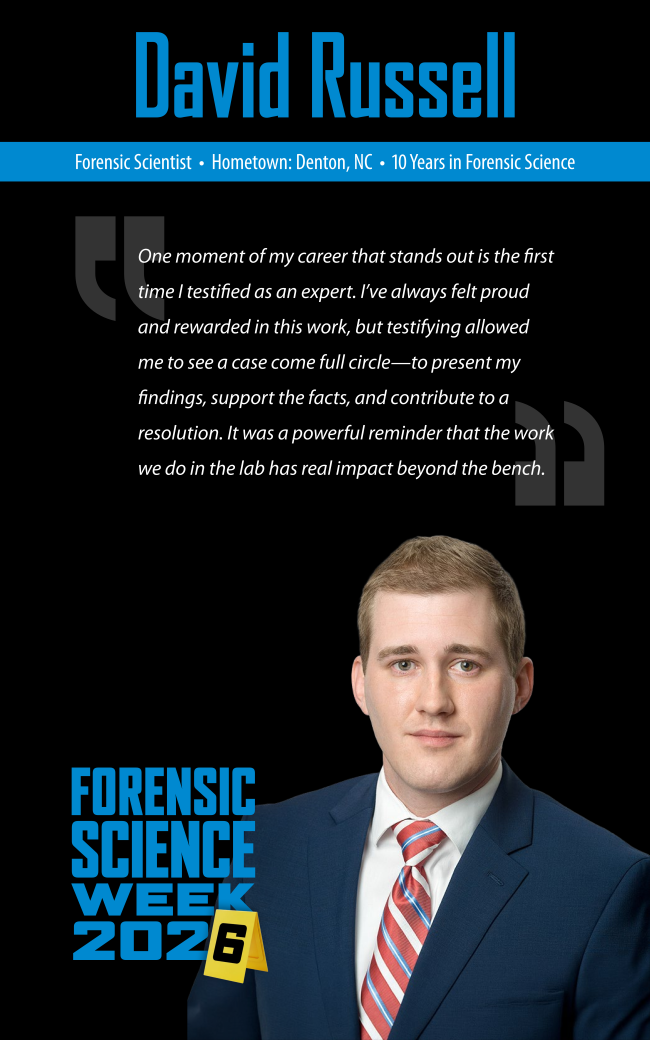
David Russell, Forensic Scientist: The advent of these more focused tools and new analytical approaches offers additional ways to develop investigative leads and, ultimately, helps move cases closer to resolution.
| | |
Is there one moment that made you especially proud to do this work?
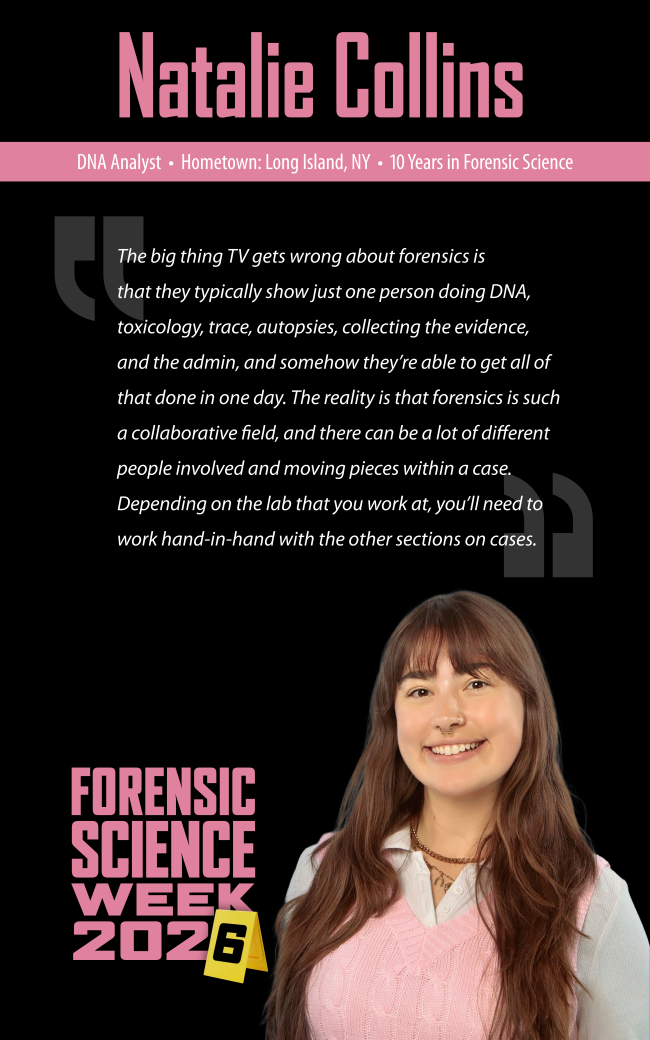
Natalie Collins, DNA Analyst: There’s been countless moments that I’ve felt proud of the work that I do and being a part of this incredible field. One of my first “wow I’m making an impact” moments was when I was working for the Armed Forces DNA Identification Laboratory (AFDIL) and I had the opportunity to go to a family update where we collected DNA from family members of service members that had died in past conflicts (ex. WWII) in order to help identify them. The family members were all genuinely so thankful and grateful for the job that we were all doing and that just put everything into perspective for me. Really, every time that I’m able to testify in a case and help bring justice to the victims I am proud of all of the work that I’m doing to help make this world a better place.
| | |
|
What's does collaboration look like between you and the investigators or attorneys who rely on your results?
Sarah Bowden, Remote DNA Analyst: Analyzing the evidence and preparing a scientific reports based on my findings is only part of the job. The other important part is to make sure that the recipient of the report understands exactly what those findings mean, and what they mean in context of the alleged offense. We really emphasize communication and education as we collaborate with investigators and/or attorneys. That collaboration may involve educating attorneys on the types of analyses we perform, the statistical methods we use, and the quality controls we have in place to ensure our results are accurate and reliable. Having that communication prior to trial typically leads to a more effective direct examination.
| |
| |
| |
How do you stay current as methods and technology evolve in your field?
Erin Gorden: I highly value collaboration and communication with scientists at other laboratories. I try to maintain this by attending conferences and webinars whenever possible to learn about research being performed in the field. I also read a lot of published articles which inform both our internal SigSciLiterature Review, as well as the virtual “PubClub” I host for the larger forensic DNA community.
Michelle Peck: It is always helpful to learn what colleagues in the forensic DNA field are doing. I recently attended the International Society for Forensic Genetics (ISFG) Congress in Montreal and was able to learn about how others are approaching common challenges and finding ways to solve them. These opportunities for technical exchange can help confirm our approach, guide us in a new direction, or even spark a novel idea.
| | What got you interested in a career in the criminal justice field? When have you felt the most moved by the impact of your work? Do you have any advice for future forensic scientists? Let's keep the conversation going on LinkedIn - we can't wait to hear from you! | |
| Supporting Law Enforcement Education | | |
Enhancing Investigations through Genetic Genealogy Training
Anaheim, CA
We were pleased to support the latest instance of the National Criminal Justice Training Center's (NCJTC) regional training courses this month. As part of this three-day training session, we delivered an interactive presentation to attendees in Anaheim, CA and instructed participants on the basics of DNA, and the methods and genealogical research that shape the FIGG process. We highlighted the value of working with a private laboratory and provided practical guidance for investigators looking to leverage the powerful new technology to help solve their most challenging cases, starting with the case review and strategic evidence selection processes we employ to maximize the potential for probative DNA results.
Next stops this winter: Florida and Maryland!
| | Join Our Growing Laboratory Team | | |
Looking to make a career move?
We are looking to fill a few exciting roles! Signature Science is looking to hire a DNA Analyst in Charlottesville's Advanced Genomics Laboratory and a Forensic Technician in our Austin-based Forensic DNA laboratory.
In either role, you'll serve a robust, growing client base, and enjoy a diversified, exciting caseload in a supportive environment that fosters and encourages career growth and development.
Learn more about our forensic casework services and advanced DNA research here and apply to start a rewarding career at Signature Science today!
| | Want to stay connected? Keep up with SigSci on LinkedIn. | | | | |