|
Dear Health Gap Community:
Election Day is just 11 days away. More than ever, we need to embrace the power we have to vote – and to vote for the people who will protect our healthcare. In this week's video, I share my perspective on the urgent need to make our voices heard.
We Must Save Us! Blessings to you for a safe and healthy week ahead.
Renee Mahaffey Harris, MPH
President & CEO
| | |
Vote for those who are going to protect our healthcare! Make your voice heard on Election Day
We are sick of it! The rising healthcare costs, people losing their healthcare. We must exercise our rights to vote for those who are going to protect our healthcare! Make your voice heard on Election Day November 3! #WeMustSaveUs
| | |
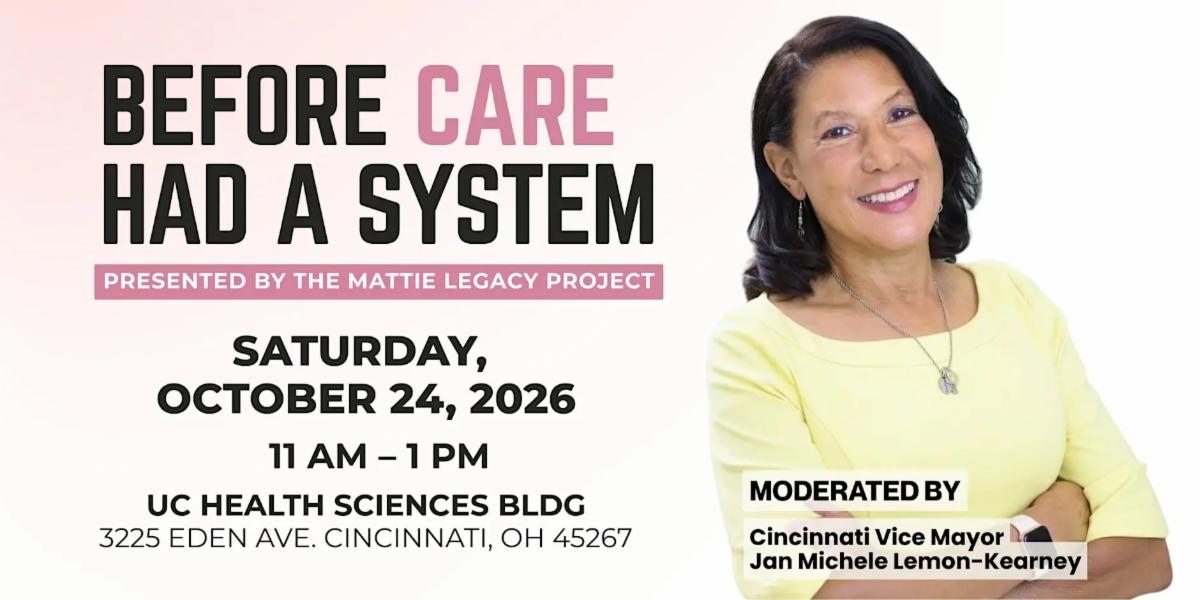
October 24: A Community Conversation on Breast Cancer Awareness, Care, Trust, Advocacy & Black Health History in Cincinnati
Before Care Had a System is a free community conversation inspired by the breast cancer advocacy of Cincinnati community leader Mattie Bell Kinney. On October 24th, we’ll use Mattie’s history as a starting point for a present-day conversation about healthcare access, trust, health disparities, caregiving, survivorship, family health, and the relationship between healthcare systems and the communities they serve.
The discussion will be moderated by Vice Mayor Jan-Michele Lemon Kearney and will include healthcare, community, advocacy, and lived-experience perspectives. Guests will have an opportunity to ask questions and connect with local health and community resources.
Free and open to the public. Registration is encouraged.
| | |
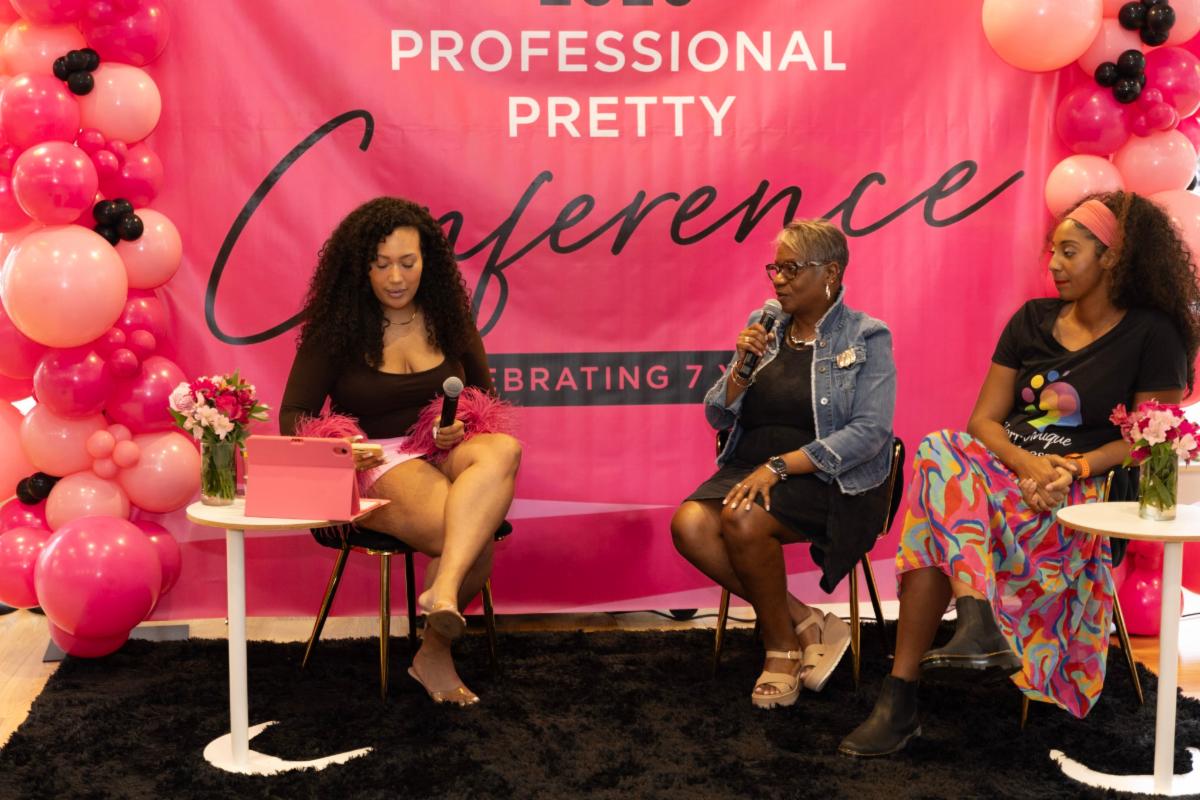
7th Professional Pretty Conference
Professional Pretty is about creating spaces where women can learn, connect, feel seen, and leave inspired to become the fullest versions of themselves. The annual conference took place on Friday, October 9, 2026, at the First Financial Innovation Center in Cincinnati, hosted by Morgan A. Owens and featuring the Health Gap's own Renee Mahaffey Harris.
| |
Why Black and Latino people in the U.S. are more likely to develop kidney disease
Kidney disease doesn’t affect every community equally. Black and hispanic/latino people in the U.S. face a higher risk of developing kidney disease, raising important questions about health disparities, access to care, and early detection. CJ Zenzick, post-kidney transplant coordinator at Hartford HealthCare, joined Good Morning Connecticut at 9 a.m. to discuss.
| |
WHO Warns Inequality Fuels the Growing Impact of Non-Communicable Diseases
Non-communicable diseases account for three-quarters of deaths worldwide but affect different population groups in different ways, a World Health Organization study showed on Tuesday. In its biggest-ever look at inequality in health and non-communicable diseases (NCDs), the WHO studied the top four killers -- cancer, cardiovascular diseases, chronic respiratory diseases and diabetes. It also looked at the five main risk factors driving them -- tobacco use, alcohol consumption, obesity, unhealthy diets, physical inactivity and air pollution.
|
Caregiving gap grows as women devote more years to aging adults
Women in the United States can expect to provide seven years of care over their lifetimes to aging family members or friends—up from six in 2011, University of Michigan research shows.
As of 2023, that amounts to three years more than men, whose lifetime caregiving held steady at four years, according to a new study published in the Journals of Gerontology Series B. Caregivers help older adults with various tasks, including personal care, household chores, transportation and medical tasks.
"Millions of adults help an older relative or friend manage their daily activities and the numbers of men and women in this role are growing rapidly in the U.S.," said Vicki Freedman, research professor in the Survey Research Center at U-M's Institute for Social Research. "Despite attention to the growing number of men taking on caregiving responsibilities, the gap in lifetime family caregiving has not closed between men and women in recent years."
|
To Improve Prostate Cancer Outcomes, Screen Black Men At 40
National health outcomes are the combined outcomes of the populations a country serves. When one group bears a disproportionate share of disease and death, improving that group’s outcomes is not a narrow or competing objective; it is necessary to improve national performance.
Prostate cancer makes this principle difficult to ignore. For 2026, the National Cancer Institute estimates there will be 333,830 new US cases and 36,320 deaths. The age-adjusted incidence rate among non-Hispanic Black men is 200.1 per 100,000, much higher than the rate among non-Hispanic White men: 122.2 per 100,000. The corresponding mortality rates are 36.2 and 18.1 per 100,000. Black men are therefore not a peripheral population in the US’s prostate cancer strategy. They bear the greatest burden, and their outcomes materially shape the national picture.
The U.S. Preventive Services Task Force (USPSTF) should respond by recommending that clinicians proactively offer shared decision making and a baseline prostate-specific antigen test at age 40 to Black men of African ancestry, explicitly including African American men and African-born Black men.
|
Executive order calls for creation of NIH Women’s Health Division
An executive order issued by the White House Oct. 19 directs the Department of Health and Human Services, through the National Institutes of Health, to establish a Women’s Health Division. The new division will focus on conditions that uniquely or disproportionately affect women. The order calls for more research into cardiovascular disease, stroke, Alzheimer’s Disease, autoimmune and inflammatory conditions, osteoporosis, mental health, chronic pain, endometriosis, fibroids, polyendocrine metabolic ovary syndrome, infertility, maternal health, menopause, neurological disorders, aging and other conditions. Additionally, the order includes the creation of the White House Women’s Health Task Force, which will coordinate federal efforts on women’s health.
| | |
More Articles of Interest
The American Association for Cancer Research, October 20, 2026
Canadian Medical Association Journal, October 19, 2026
by Ronald L. Lindsay, MD, October 18, 2026
| | | | |