¡Versión en español a seguir! |
|
This month we focus on using anti-racist practices to support black, indigenous, and other families of color. |
|
New Year, New Feature! Scroll down for our new section: Equity Corner
|
|
Community Partnerships
Use Community Resources to Strengthen Program Quality
|
|
PBS KIDS Talk About Race & Racism |
|
This new half-hour program, “PBS KIDS Talk About: Race & Racism,” features authentic conversations between real children and their parents, and includes content from PBS KIDS series Daniel Tiger's Neighborhood, Arthur and Xavier Riddle and the Secret Museum. The show features kids and their parents talking about race and racial justice-related topics in an age-appropriate way, such as noticing differences in race, understanding what racism can look like, and embracing the role we all have to play in standing up for ourselves and each other. Consider sharing this with families to offer ideas to build on and continue building a more understanding community. This page also includes:
|
|
Knowing and using these community resources will support PAS: Item 17- Family Support Involvement, BAS: Item 8-Community Resources, and NAEYC Accreditation: Standard 7-Families |
|
Welcoming Environment
Ensure Your Program Feels Inviting
|
|
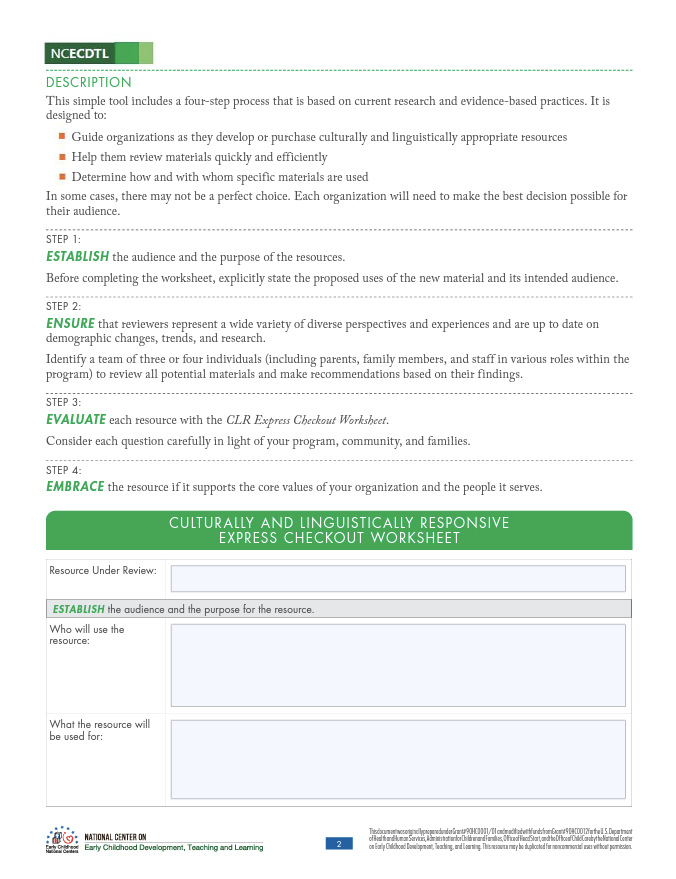
Culturally and Linguistically Responsive Express Checkout Worksheet |
|
core values of our program and community. This simple tool provides information that allows us to:
- Guide organizations as they develop or purchase culturally and linguistically appropriate resources
- Help them review materials quickly and efficiently
- Determine how and with whom specific materials are used
|
|
|
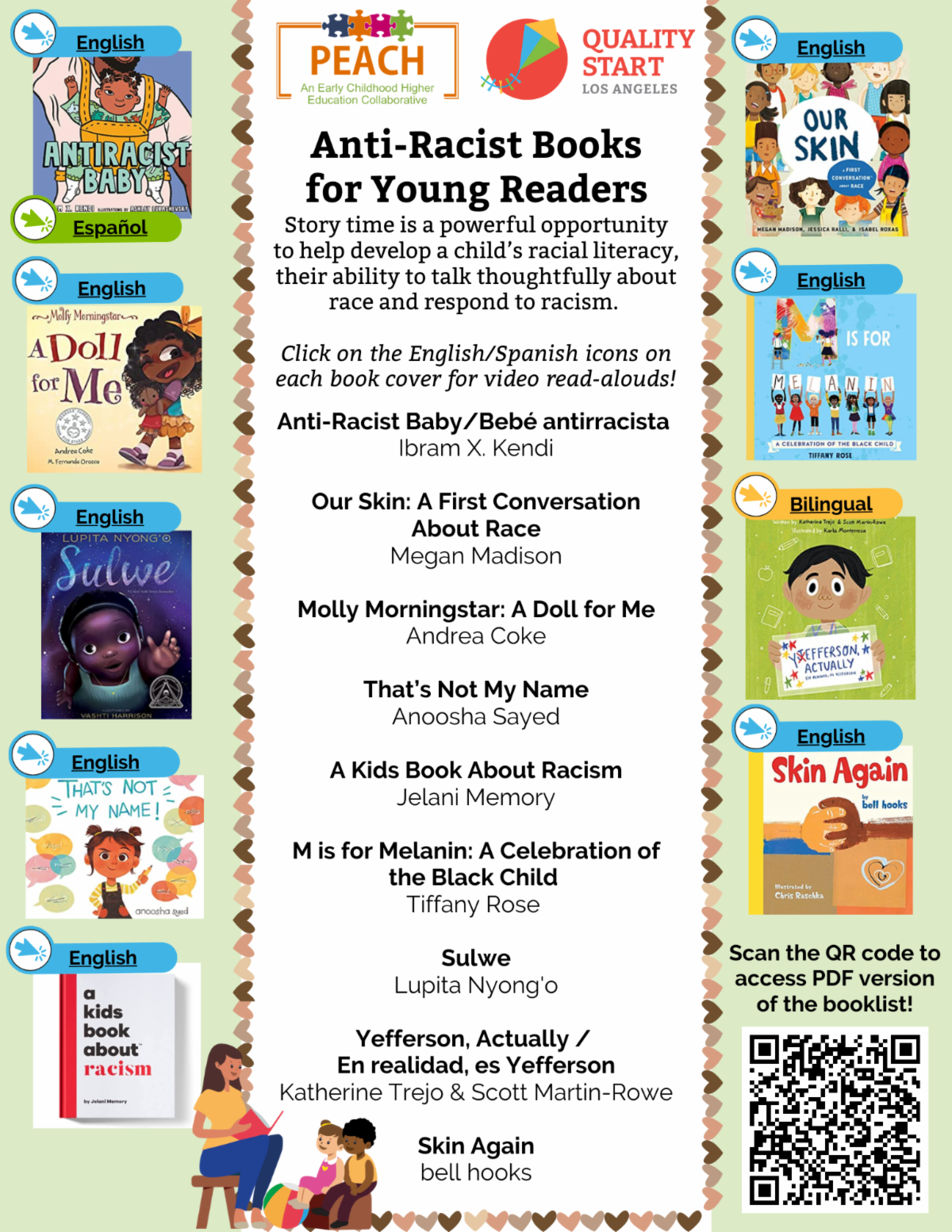
Check out QSLA's newest booklist for Anti-Racist Books! Click the image on right or scan the QR code to view the PDF with clickable links. Each book has a corresponding read-aloud of the book on YouTube! |
|
|
This resource will support ECERS-R: Item 9 and FCCERS-R: Item 35- Provisions for Parents, PAS: Item 16- Family Communications, and BAS: Item 7- Provider Parent Communications. |
|
Staff Development and Support
Enhance Your Family Engagement Knowledge and Skills
|
|
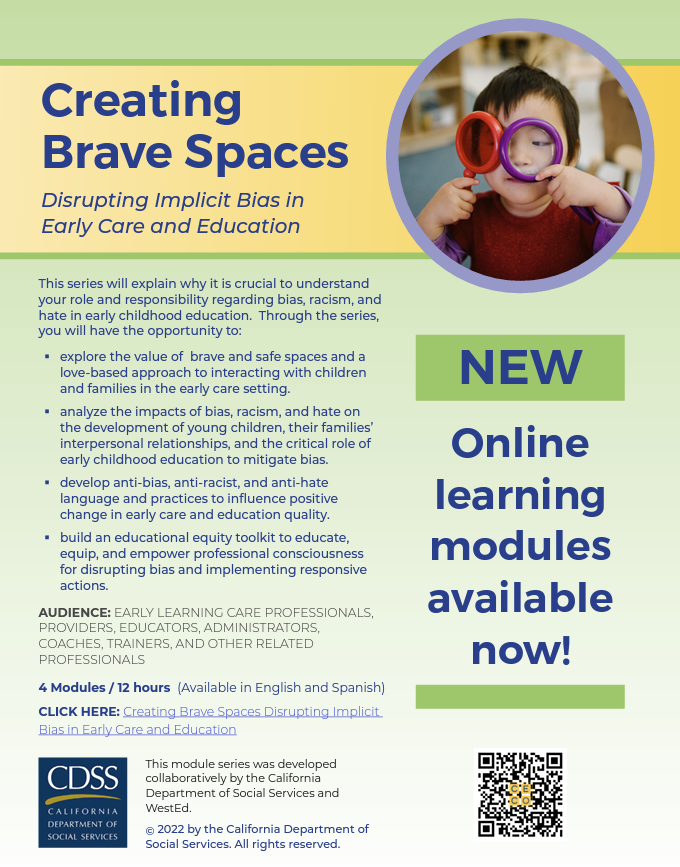
Creating Brave Spaces: Disrupting Implicit Bias in Early Care and Education |
|
- Explore the value of brave and safe spaces,
- Analyze the impacts of bias, racism, and hate,
- Develop anti-bias, anti-racist, and anti-hate language, and
- Build your educational equity toolkit.
Time: 4 modules over 12 hours
How to Register: Click here to create a FREE account with CECO then look for the module "Creating Brave Spaces..." in the Module Catalog.
|
|
These trainings support ECERS-R: Item 43- Opportunities for Professional Growth, PAS: Item 3- Staff Development, FCCERS-R: Item 37- Opportunities for Professional Development, and BAS: Item 1-Qualifications and Professional Development |
|
Family Partnerships
Work with Families to Build a Stronger Program
|
|
Conversations Around Race:
Resources from Embrace Race
|
|
Embrace Race offers us a variety of resources for our own reflection and several we can use in partnership with families. Check out these 3 recorded conversations (and their transcripts for learners who prefer to read!), and consider sharing 1 or a few with families as a way to continue supporting their child's racial literacy:
|
|
This resource will support ECERS-R: Item 38 and FCCERS-R: Item 35- Provisions for Parents, PAS: Item 16- Family Communications, and BAS: Item 7- Provider Parent Communications. |
|
Equitable Approaches to Supporting Children and Families
|
|
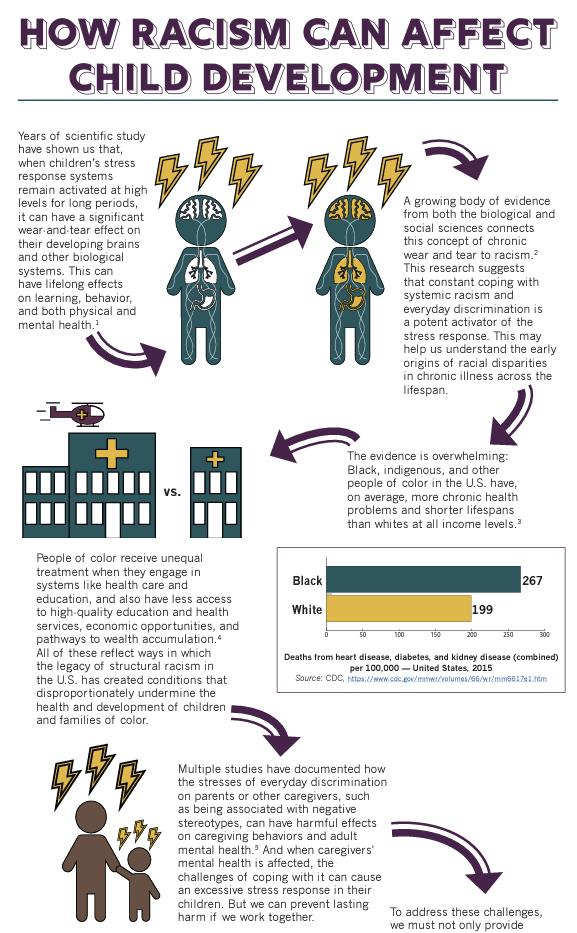
How Racism can Affect Child Development |
|
Years of scientific study have shown us that, when children’s stress response systems remain activated at high levels for long periods, it can have a significant wear-and-tear effect on their developing brains and other biological systems. This infographic offered by Harvard's Center on the Developing Child explains in basic terms how racism in particular gets “under the skin” and affects learning, behavior, and lifelong health. To address these challenges, we must not only provide needed services for all young children and families, but also create new strategies to address “upstream” inequities that systematically threaten the health and well-being of young children of color and the adults who care for them.
|
|
|
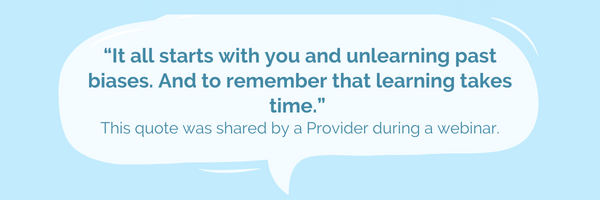
If you would like to share some inspiring words, click here! To see more provider perspectives, field related news, and early learning resources follow our social media accounts.
*These quotes have been edited for grammar and clarity.
|
|
Are you looking for support in another area?
|
|
Were you forwarded this email?
Would you like to sign up to receive our Family Engagement Newsletters?
|
|
|
|
|
|
|