International Foundation for Gastrointestinal Disorders
December 2021 eNewsletter
|
|
|
Greetings!
December is Constipation Awareness Month.
Most people experience bouts of constipation from time to time. But, for millions of Americans, constipation isn't something that just goes away. Chronic constipation affects up to 20% of adults and 16% of children in the United States alone. While common among all ages, genders, and populations, constipation is one of the most challenging gut symptoms to define because it occurs differently in each person.
This year, in recognition of Constipation Awareness Month, you can join us to help raise awareness on social media platforms using the hashtags #UnderstandingConstipation and #ConstipationAwarenessMonth.
|
|
|
|
The term "constipation" can refer to; infrequent bowel movements, experiencing difficulty while using the bathroom, incomplete evacuation, or the passing of small/hard stool.
For some, constipation is acute, meaning it goes away fairly quickly, but for others, constipation is a daily dilemma that has persisted for many years, maybe even since childhood.
Those affected by constipation frequently report that their symptoms interfere with their daily activities, negatively impact their self-confidence, and often prevents them from fully engaging in personal and professional activities.
|
|
Click here to download the 2021 Constipation Awareness Month campaign material and/or click here to watch animated videos about constipation.
|
|
For individuals with gastroparesis, getting adequate nutrition can be a challenge.
Due to impaired gastric emptying, affected individuals may not be able to consume enough food and liquids to get the necessary calories, vitamins, minerals, and fluids, or absorption of nutrients may be diminished.
While more research is needed, nutrition strategies for gastroparesis aim to prevent further delay of gastric emptying to reduce symptoms and ensure the best possible nutrition.
Click the button below to learn about nutrition strategies for gastroparesis.
|
|
For those with a chronic GI condition like irritable bowel syndrome (IBS), even everyday life can be challenging.
The obligations, work deadlines, stress of traveling during a pandemic can make someone feel even more overwhelmed.
But, you can help lessen the impact of the hustle and bustle of the holidays by practicing self-care.
Click the button below to learn how to practice active self-care to reduce your stress this holiday season.
|
|
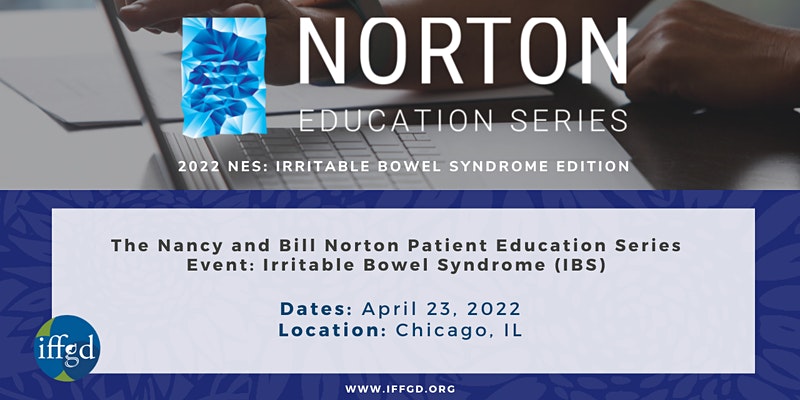
You do not want to miss our first ever in-person Norton Patient Education Series (NES) in Chicago, Illinois, on Saturday, April 23, 2022.
In collaboration with Northwestern University, Feinberg School of Medicine, we will host a free special edition of the Norton Patient Education Series (NES) dedicated to Irritable Bowel Syndrome (IBS).
This free 1-day event will feature live educational presentations for patients and others impacted by irritable bowel syndrome (IBS). Continental breakfast and lunch are included. There will also be a post-event social hour for patients to get to know each other, share stories and resources.
The event will take place Saturday, April 23rd, starting at 9:00 a.m. CT in Chicago, Illinois. The Chicago venue is TBD.
Click here to register, review the NES event agenda, and read speaker bios.
|
|
As we get closer to a new year, many look for new opportunities to set new goals and increase their exercise regimen.
There may be some concern that intense exercise could trigger or worsen symptoms for individuals who regularly experience specific (gastrointestinal) GI symptoms, such as chronic diarrhea and reflux.
Understanding why this can happen during exercise can help you develop a plan to minimize your symptoms while still getting the benefits of regular exercise.
Click the button below to learn more about Exercise and GI symptoms.
|
|
Short bowel syndrome (SBS) is a group of intestinal issues related to poor absorption of nutrients. It is sometimes known as short gut syndrome or intestinal failure.
The main cause of SBS is the surgical removal of half or more of the small intestine to treat intestinal diseases, injuries, or defects present at birth.
SBS can also be caused by disease or injury that prevents the small intestine from functioning as it should despite a normal length.
The small intestine is where most digestion of food and absorption of nutrients occur. People with short bowel syndrome cannot absorb enough water, vitamins, and other nutrients from food to sustain life.
Click the button below to learn more about SBS.
|
|
Clinical trials and research studies help to improve our understanding of the underlying mechanisms of diseases and advance the development of new and better treatment options. By participating in a study, you can help further the advancement of research and learn more about your condition.
Here are 3 studies currently recruiting participants:
|
|
Dr. Whitehead is Professor of Medicine (Division of Gastroenterology and Hepatology) and Adjunct Professor of Obstetric and Gynecology (Division of Urogynecology) at the University of North Carolina. He is Director of the UNC Center for Functional Gastrointestinal and Motility Disorders.
He was continually funded by NIH since 1977 and received research support from NIDDK, NIDCR, NICHD, NIA, NINR, and NIMH. His grants have included studies of (1) causes and treatment of constipation, (2) causes and treatment of fecal incontinence in special populations such as spina bifida and the elderly, (3) role of visceral perception in IBS, (4) comorbidity of IBS with other disorders, and (5) psychological and behavioral treatment of gastrointestinal disorders. He is principal investigator for a multisite study of the treatment of fecal incontinence (U01 DK115575) comparing biofeedback and Solesta injections for severe forms of fecal incontinence.
|
|
|
Dr. Whitehead obtained his PhD in clinical psychology from the University of Chicago in 1973. Previous positions included the University of Cincinnati, Johns Hopkins University School of Medicine, and the Gerontology Research Center of the National Institute on Aging. He has been at the University of North Carolina since 1993. He was on the Scientific Advisory Board of the Rome Foundation from 1993 to 2016.
Honors include Master of the American College of Gastroenterology, Fellow of the American Gastroenterological Association, Janssen Award for Clinical Research, International Foundation for Functional Gastrointestinal Disorders Award for Research Excellence, and Functional Brain-Gut Research Award for Clinical Research.
**IFFGD has an Advisory Board made up of 60 medical professionals from various disciplines representing the USA and ten other countries. Many of these individuals are noted experts in the field of functional gastrointestinal disorders.
**IFFGD first offered Research Awards in 2003 (and Research Grants in 2007). To date, we have presented Awards to 45 researchers from around the world.These Awards recognize the accomplishments of investigators who are engaged in significant research in the field of functional gastrointestinal (GI) disease.
|
|
IFFGD is a nonprofit organization. We rely on donor support to fund research and to provide reliable information and support to those affected by chronic gastrointestinal disorders.
|
|
|
|
|
|
|