| | Welcome to this edition of our newsletter. We hope you’ll take a few minutes to peruse our articles and announcements to stay up to date on the efforts of your local Extension office. In this issue, you’ll learn that our volunteers are incredibly busy with their large public-facing events, our staff continues their commitment to partnering in new and different ways to offer up fresh and innovative programs, and that all of our work is in tune with the real-world needs of this diverse community. As I enter my tenth year in this role, I couldn’t be prouder of the total effort of this local unit of the Cooperative Extension System. As I reflect on our evolution over the last decade, I am impressed by the increase in our level of engagement with partners, stakeholders, volunteers, and audiences. Certainly, our external communications efforts, including this newsletter, are notable. But, the expansion of the issue areas that we address with technical expertise and our role in convening issues of critical community importance are the most impressive.
You can count on us to deliver the educational programming that we have always been charged with. I hope that you’ll join me in thanking our staff for their efforts to not just keep that programmatic activity relevant and fresh, but also for their efforts to engage in less traditional Extension roles like facilitation, creating community, establishing a culture of belonging, and attending to emerging issues – all while demonstrating curiosity, care, and an admirable level of professional excellence. Verbal appreciation is always nice. Written feedback is also welcome. But what we’d really like to see is your engagement. Come to our programs, talk to your friends and neighbors who you think could benefit from a relationship with us, and consider volunteering alongside us. However you choose to engage, we look forward to seeing you in community. Together, we can meet our mission to build sustainable and thriving communities in Douglas County, KS.
Marlin B., County Extension Director
| |
|
In this Newsletter
- AGRICULTURE
- Soil Health Principles 4 - Living Roots pt. II
- Spring Planning for Fall Kaw Valley Farm Tour
- COMMUNITY DEVELOPMENT
- Community Food Systems Updates
- HEALTH AND WELLNESS
- Kitchen Sale Season!
- Growing Together
- HORTICULTURE & NATURAL RESOURCES
- Cultivating Sustainable, Adaptive, and Resilient Kansas Landscapes
- Native Plants!
- YOUTH DEVELOPMENT
- Douglas County 4-H Ambassadors: Youth Leadership in Action
- The 4-H Conundrum
- LOOKING AHEAD
- March 17 - Living with Fire
- March 21 - EMG Garden Show
- March 21 - Rain Barrel Workshop @Garden Show
- March 28 - Kitchen Sale
| | |
Soil Health Principles 4
Living Roots pt. II
| Margit K., Agriculture Agent | |
This series of articles addresses Soil Health Principles first articulated and advanced by Natural Resource Conservationist Jay Fuhrer of Menoken Farm in North Dakota. These principles have since been widely adopted, refined, and expanded upon by regenerative farmers and ranchers across the country and now commonly include: Context, Minimizing Disturbance through Reduced Tillage, Covering and Armoring the Soil, Living Roots, Biodiversity, and Integrating Livestock.
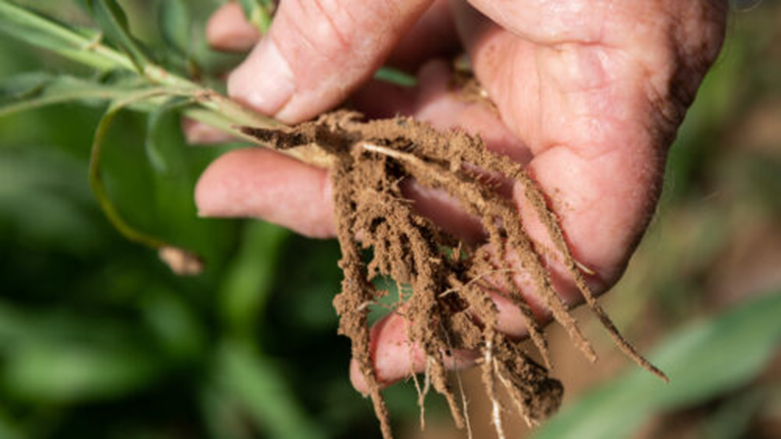
We addressed Living Roots in the Winter issue where we discussed plants as a ‘Soil Symbiote’ — ‘farming’ microbes through carbon rich root exudates in exchange for minerals. But there is more to say about the essential role living roots play to ensure soil stable-aggregates, increased organic matter and a biodiverse soil food web.
Let’s dig a bit deeper to compare perennial and annual cropping systems, explore reasons for maintaining living roots year-round, and examine the soil health benefits of doing so.
Perennial ecosystems — whether grasslands, forests, orchards, or hay fields — typically include a mix of cool- and warm-season grasses and forbs. These plants are adapted to spring and fall growth as well as intense summer heat, resulting in nearly continuous photosynthesis. Sunlight is converted into carbohydrates through what is often called the “liquid carbon pathway,” feeding both the plant and the soil microbial community throughout the year.
By contrast, annual cropping systems grow either cool- or warm-season crops that remain in the soil for only a few months. They are often followed by extended fallow periods before the next rotation. In many cases, the fallow window (~8 months) is significantly longer than the active growing season (~4 months). As discussed previously, leaving soil exposed during these periods can starve microbes of carbohydrates, leaving the microbial community no choice but to digest and breakdown organic matter, increasing the risk of wind and water erosion.
Cover crops — along with more diverse crop rotations (addressed in the next article) — are among the most effective tools to “close the gap” during fallow or dormant seasons. They provide a continuous supply of root exudates — or “liquid carbon” — the primary food supply for the soil food web...
| | |
Spring Planning for Fall Kaw Valley Farm Tour
Hilary K., Kaw Valley Farm Tour Coordinator
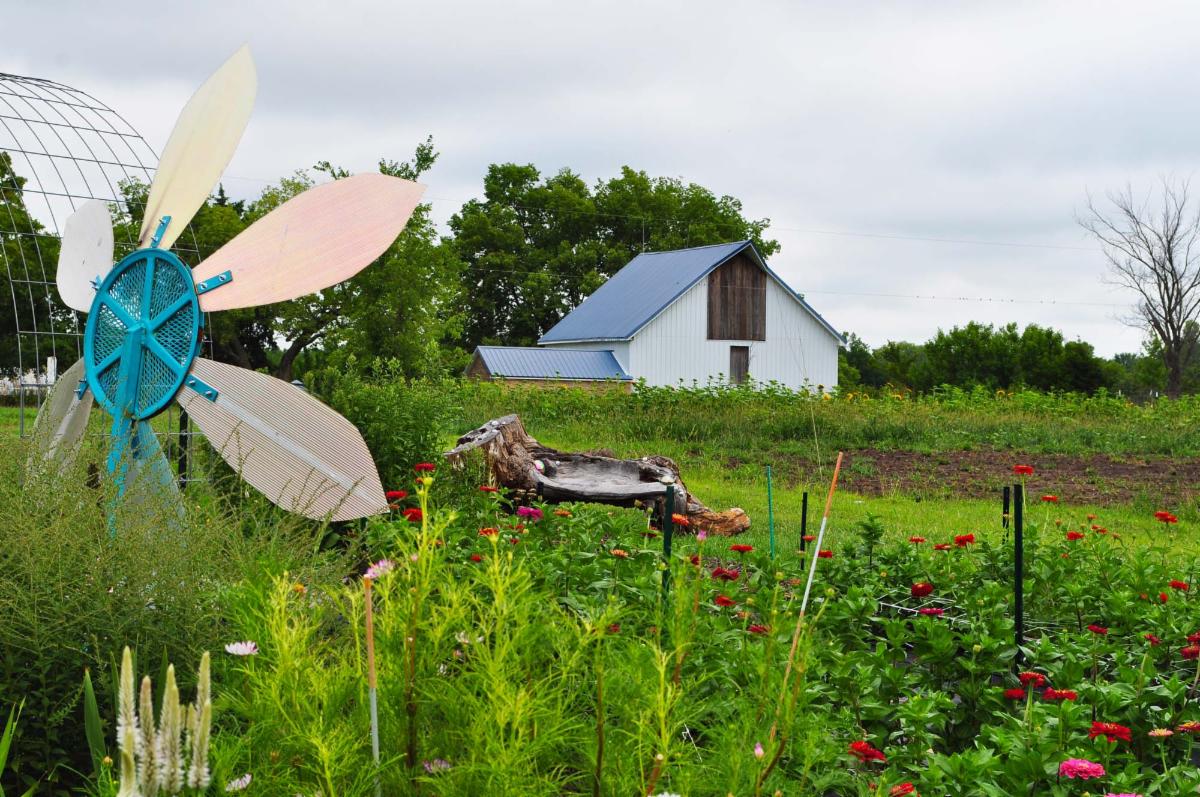
Applications are now open for family farms that want to participate in the annual Kaw Valley Farm Tour. Always the first full weekend in October, this years’ tour will be October 3rd and 4th. For over 20 years, this popular event opens the gates to a variety of farms throughout the Kaw River Valley and welcomes people of all ages to experience the bounty and the variety of our rich agricultural life.
Designed to support economic viability for local farms, encourage agritourism in the Kaw Valley and be an educational experience for visitors, the Kaw Valley Farm Tour continues to thrive and grow. Each year new farms are added to the list of farms that have participated in the past. Visitors get to visit old favorites as well as new.
Supporters of all types are needed!
🌻Want to be a financial sponsor and highlight your business through our broad reach and beautiful printed ticket?
🌻Want to volunteer at the event?
To learn more, check out our website: kawvalleyfarmtour.org.
Then reach out to Hilary Kass, Farm Tour Coordinator at hilarykass@ksu.edu or 785-843-7058 Ext. 106
| | |
Community Food Systems Updates
2026 Summits, Peer Networks, & World Cup Preparations
Quinlan C., Food Business Resource Navigator
| | The K-State Extension Community Food Systems team is looking ahead to a dynamic 2026, with expanded opportunities for food and farm businesses to learn, connect, and grow. From hands-on business intensives to peer learning networks and community-wide preparations for international visitors, several new initiatives are underway across Kansas. | | |
Two Food Business Start-Up Summits Scheduled for 2026
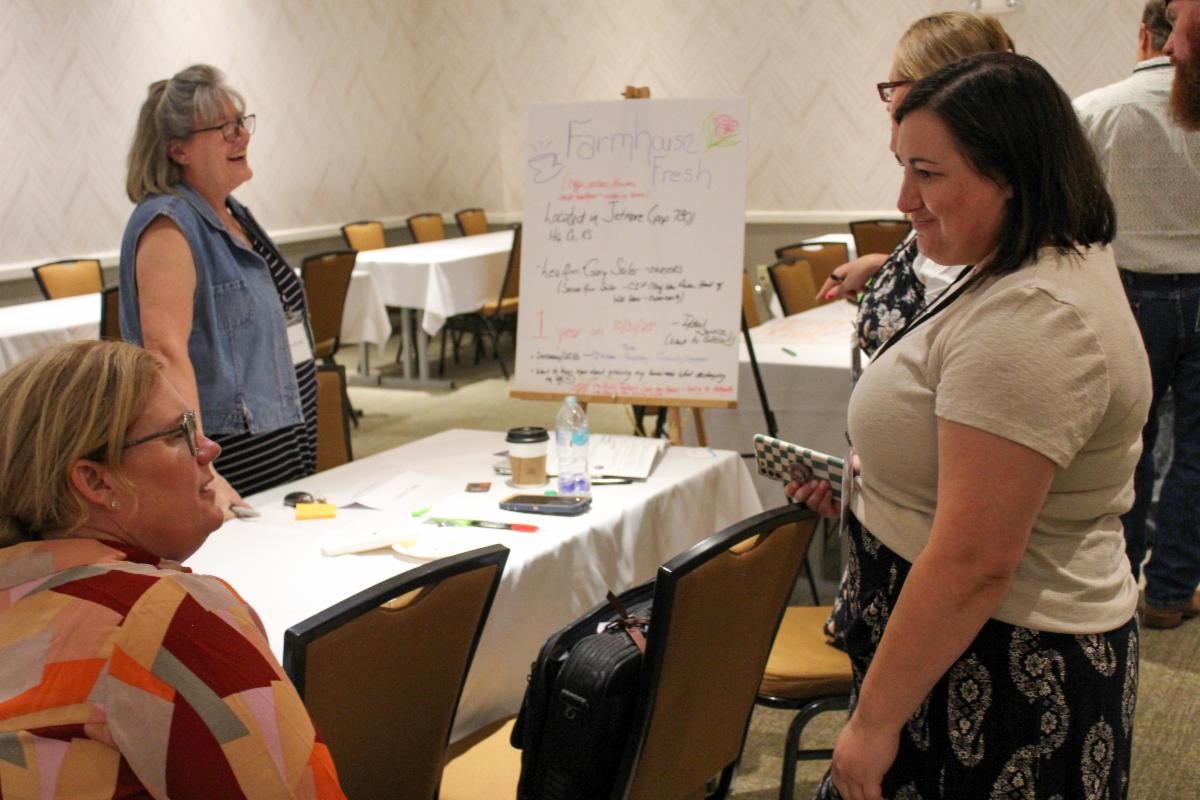
Following the strong response to the inaugural Food Business Start-Up Summit in 2025, two Summits will be offered in 2026: June 9–10 in Hays and August 4–5 in Lawrence. These two-day working retreats are designed for early-stage food and farm businesses seeking focused time away from day-to-day operations to clarify goals, strengthen business models, and address real-world challenges.
| | | |
Participants attend with up to two key partners and engage in structured work sessions alongside expert consultations in areas such as licensing, finance, production, and market readiness. The Summit model emphasizes practical, Kansas-specific guidance paired with peer-to-peer learning, helping entrepreneurs leave with concrete next steps and renewed confidence. Applications for both 2026 Summits will open on February 24 – stay tuned!
Peer Learning Groups for Farmers Market Managers and Shared Kitchen Operators
The Community Food Systems team is also launching two new peer learning networks in 2026: one for farmers market managers and one for shared-use kitchen operators. These groups are being developed in response to growing interest from local leaders seeking ongoing spaces to exchange ideas, troubleshoot challenges, and share resources with peers in similar roles.
Each cohort will convene regularly in a facilitated, collaborative format focused on practical topics such as operations, partnerships, financial sustainability, and community impact. The networks are intended to complement existing technical assistance by strengthening connections among practitioners statewide. Interest forms are currently open, with cohorts expected to begin in April 2026. Interested in joining? Apply here for Farmers Market Managers, and here for Shared Kitchen Operators.
Lawrence Named Official World Cup Base Camp for Algeria
As of February 19, it was officially confirmed that Algeria’s national soccer team will use Lawrence as its World Cup base camp, bringing international visitors and global attention to the community this summer. In preparation, the Community Food Systems team is partnering with the Kansas Department of Agriculture and K-State’s Department of Animal Sciences and Industry to develop an official guide to Halal food preparation for Kansas restaurants and food producers...
| | |
|
It's Kitchen Sale Season!
Clear the Clutter and Support a Cause!
Kaitlyn P., Community Health and Wellness Agent
| |
Winter has a way of keeping us indoors—and often, that means we finally notice the overstuffed cabinet, the duplicate measuring cups, or the small appliance we haven’t used in years. If you’ve discovered a few kitchen items ready for a new home, we have the perfect solution.
The annual Extension Master Food Volunteer Kitchen Sale is just around the corner, and it’s your opportunity to declutter with purpose. By donating gently used kitchen items, you’re helping extend the life of useful tools while supporting meaningful community work.
Why Donate?
The Kitchen Sale is more than a great bargain event—it’s a community effort rooted in generosity and impact.
- Give new life to quality kitchen items
- Reduce clutter in your home
- Support local efforts to improve food security
- Invest in continued training for Extension Master Food Volunteers
If you would still use the item in your own kitchen, it’s likely suitable for donation. We welcome clean, well-maintained, working kitchen items and small appliances (please note: knives cannot be accepted).
Over the years, donations have included everything from high-end electric mixers to stainless steel cookware and specialty gadgets. You truly never know what kitchen treasure might appear on the sale floor.
What Shoppers Can Expect
Mark your calendar—this is a bargain hunter’s dream.
- Items priced at $10 or less
- Many smaller items offered multiple for $1
- A wide variety of cookware, bakeware, gadgets, and small appliances
Half of the proceeds from the sale are donated to community partners working to improve food security in Douglas County. The remaining funds support volunteer development and training, ensuring high-quality educational programming continues throughout the year
| Whether you’re donating, shopping, or both, we invite you to be part of this annual tradition. It’s a simple way to refresh your kitchen, find a few hidden gems, and make a meaningful impact in our community. | |
Event Details
Donation Drop-Off
📍 Extension Office
🗓 March 2–March 20
⏰ Monday–Friday, 9:00 a.m.–4:00 p.m.
Kitchen Sale
📍 Flory Meeting Hall, Douglas County Fairgrounds
2110 Harper Street, Lawrence, KS 66046
🗓 Saturday, March 28
⏰ 10:00 a.m.–2:00 p.m.
| | |
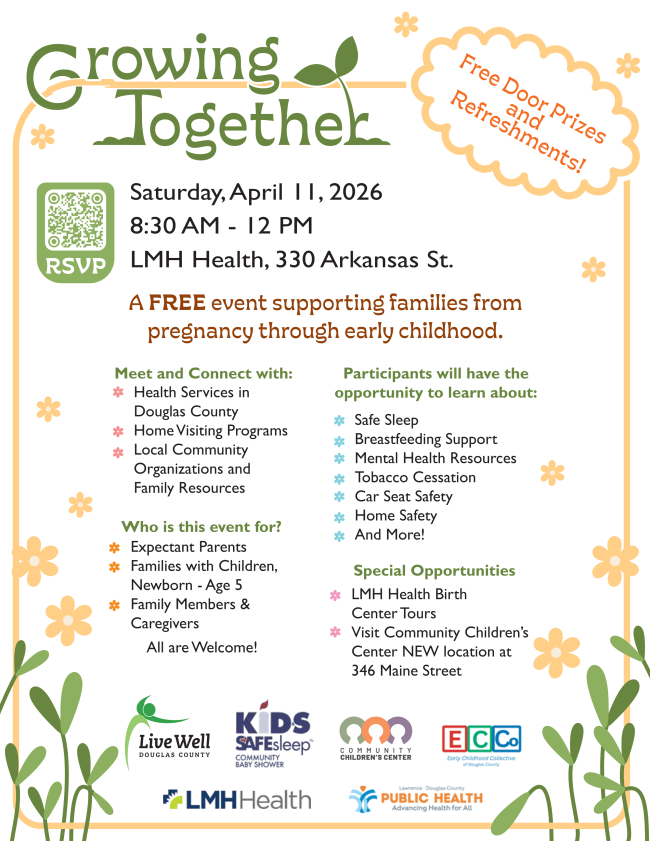
Growing Together
A Community Event Supporting Families from Pregnancy Through Early Childhood
Ginny B., LiveWell of Douglas County Executive Director
| |
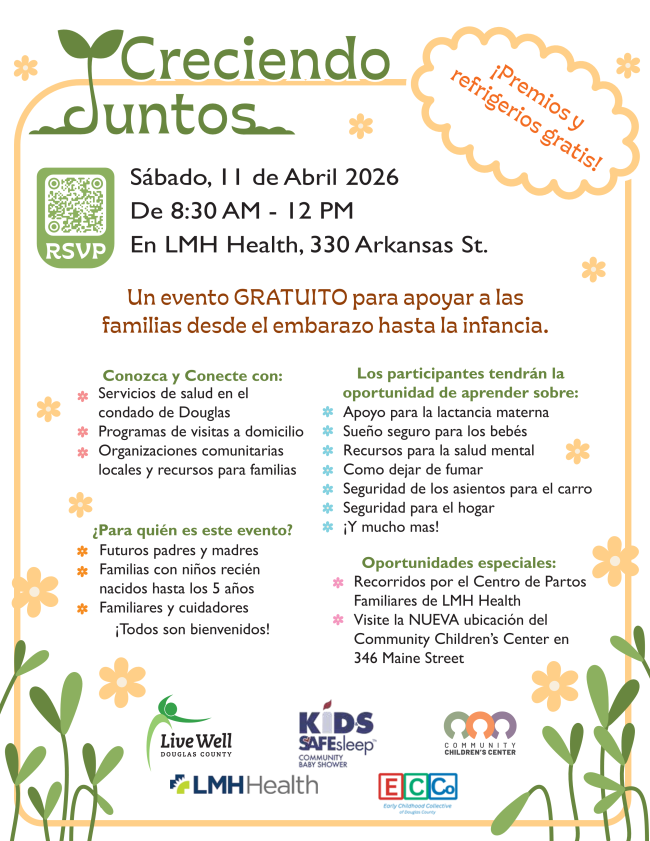
Families are invited to attend Growing Together – Creciendo Juntos, a FREE community event supporting families from pregnancy through early childhood, on Saturday, April 11 from 8:30 AM to 12:00 PM at LMHHealth (330 Arkansas Street, Lawrence, KS).
Growing Together is a safe sleep community baby shower and early childhood resource fair designed to connect families with trusted local community organizations, healthcare providers, and family support resources. This welcoming, come-and-go event is open to all.
| |
Participants will have the opportunity to learn about:
- The ABCs of Safe Sleep
- Breastfeeding support
- Tobacco cessation resources
- Maternal mental health
- Car seat safety
- Home safety
- Prenatal health
- Accessing medical insurance for parents and babies
- Local maternal and child health services
Registration is encouraged, though not required, and will help reduce wait time at check-in. Families can register at: https://bit.ly/growing-together-dgco
Supporting Safe Sleep & Preventing Infant Mortality
Growing Together aims to increase awareness of infant mortality in Kansas and address the disparities that exist. Each year, approximately 3,500 babies in the United States die suddenly and unexpectedly during sleep. Most of these deaths are due to Sudden Infant Death Syndrome (SIDS) or accidental suffocation, entrapment, or strangulation.
Participants will leave the event understanding the ABCs of infant safe sleep:
| | | HORTICULTURE AND NATURAL RESOURCES | |
Cultivating Sustainable, Adaptive, and Resilient Kansas Landscapes
Sharon A., Horticulture and Natural Resources Agent
| |
K-State Extension - Douglas County is committed to helping residents adapt their landscapes to extreme weather conditions, improve water conservation practices, manage soil health, and sustain food production at both household and community levels. These needs are crucial in addressing the environmental challenges of prolonged drought, intense rainfall, and rising temperatures.
Compounding the effects of drought are higher spring and summer temperatures, elevated nighttime temperatures, intensified windstorms, soil degradation, and reduced landscape resilience to heavy rainfall. Growing food and sustaining ornamental landscapes is challenging in the best of circumstances, so Kansans are turning to K-State Extension for expertise in cultivating resilient landscapes.
Our goal is for Kansans to …
- irrigate plants to maximize plant health and minimize water use
- select hardy and resilient plant materials
- manage for extreme weather events
- enhance soil health
- sustain food production despite prolonged drought conditions
You can attain these goals by …
| | |
Native Plants!
Niki K., Agriculture and Horticulture
Program Assistant
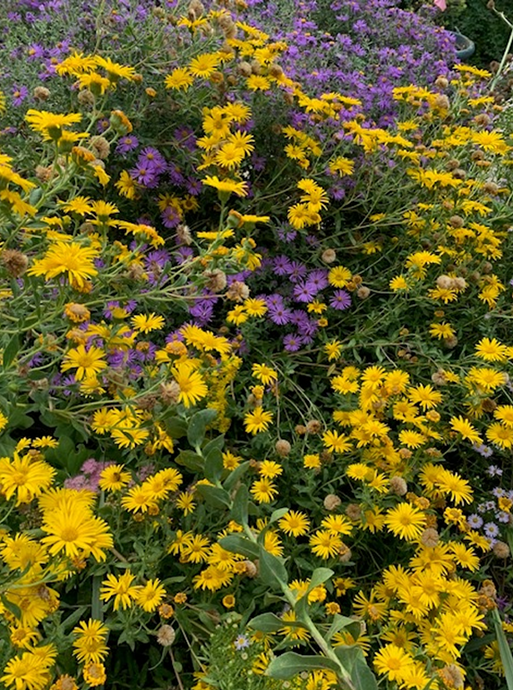
There is much talk in the gardening world these days about native plants. We may know or have a vague idea of what they are, but why should we plant them?
Let’s start with a definition of ‘native plants’, which turns out is more complex than one might expect. The short answer is that a native plant is one that occurs naturally in the place where it evolved without human interaction.
The benefits of adding native plants to your gardens are many. Native plants are species that have existed in a region for thousands of years, typically long before European settlement. These plants have evolved with the local environment, adapting to the specific soils, climate, and biomes of the area. Native plants minimize water and fertilizer input after establishment, build habitats, support dynamic relationships with animals, provide erosion control, ground water recharge, and support a strong sense of place. Their adaptations make them suitable to the region’s temperatures and weather.
The Douglas County Extension Master Gardeners will be hosting the Annual Native Plant Sale again this spring. It will be held on Saturday, May 30th from 9 AM until 3 PM in the Open Pavilion at the Douglas County Fairgrounds, 2120 Harper Street in Lawrence, Kansas. Last year, we sold nearly 10,000 plants! We are expecting a great turnout again this year..
| |
|
K-State Horticulture Newsletter
Reminder: Subscribe to the K-State Horticulture Newsletter for timely information on caring for your landscapes and vegetable gardens.
K-State Horticulture Newsletter Website
| | | | |
Douglas County 4-H Ambassadors
Youth Leadership in Action
Nickie H., 4-H Youth Development Agent
| | |
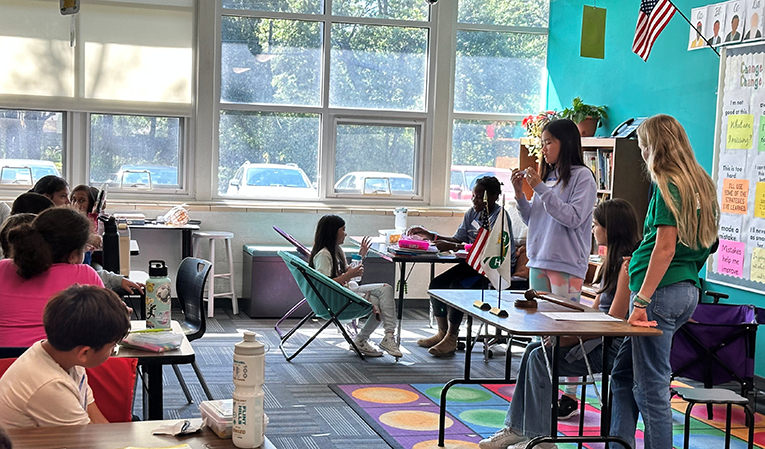
The Douglas County 4-H Ambassadors are an integral part of our local 4-H program and play a vital role in strengthening and promoting 4-H throughout our community. We rely on their leadership, communication skills, project knowledge, and passion to support outreach, program implementation, and meaningful service across Douglas County.
At the heart of our program is a strong belief in the benefits 4-H provides young people. Through hands-on learning, community engagement, and leadership opportunities, 4-H helps youth grow into confident, capable individuals who are Beyond Ready. Ready for college, careers, military service, entrepreneurship, and community leadership. Over time, many members develop a deep appreciation for the program and look for meaningful ways to give back. Serving as a 4-H Ambassador is one of the most impactful ways to do just that.
Douglas County 4-H Ambassadors are youth in grades 9–12 who have chosen to take their growth to the next level. They serve as representatives of 4-H at county events, community programs, and promotional activities. Throughout the year, you will see them at the Douglas County Fair, 4-H Club Day, and other county-wide events where they assist with coordination, welcome participants, and help ensure activities run smoothly. In the spring, they support Project Skill-a-Thon, and during the summer months, they lead enrichment programs with local youth organizations and assist with day camps designed to help younger members build project knowledge and confidence.
| | |
The 4-H Conundrum
Balancing Tradition & Innovation
Nancy N.ancy N., 4-H Youth Development Program Assistant
| | |
We strive to keep our Douglas County 4-H Program innovative and challenging. We do a balancing act of what has been a traditional baseline for our members and ensuring the programming that interfaces with the state contests and goals, yet we strive for unique and innovative programs tailored to create and nurture the “spark” in our youth audience.
A spark is a passion for a self-identified interest or skill; something that metaphorically lights a fire in young people. It fuels their positive energy and joy and motivates them towards skill-building.
One particular key to identifying the “sparks” within our county membership is the feedback we get from the county club leaders, the parents and the 4-H members. We spend time listening to these groups and observing what they are giving energy to, what is motivating them. As 4-H professionals, supporting our membership, our role is to champion their passions; be it collecting rocks, painting a mural, or training a dog to compete at the KS State Fair.
When we nurture and support youth-led interests, we all benefit. Our county 4-H program grows; youth remain engaged and develop life-skills and competencies, and our community is strengthened through cooperative and productive relationships...
| | NEWS, UPDATES, AND UPCOMING EVENTS. | | |
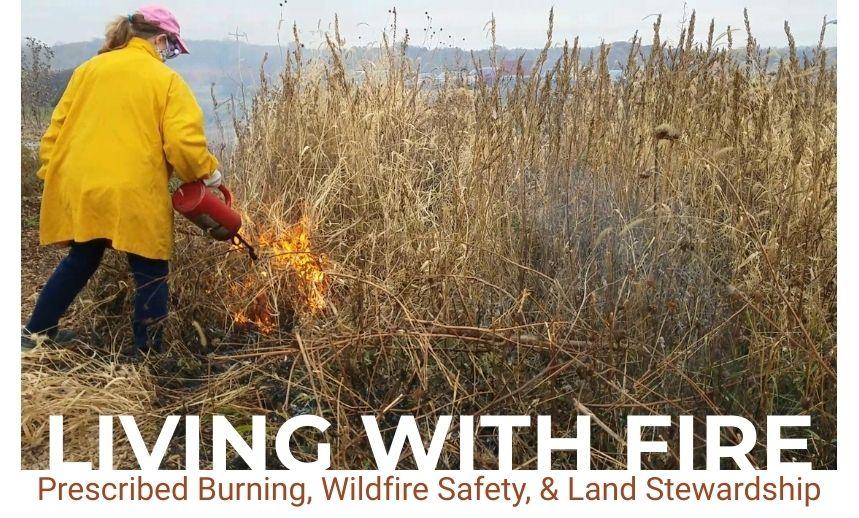
Saturday, March 14 - Living with Fire: Prescribed Burning, Wildfire Safety, & Land Stewardship
Fire has shaped our landscapes for centuries—with both beneficial and destructive outcomes. This program explores fire as a management tool, covering prescribed burning, wildfire risk reduction, and practical steps homeowners can take to live more safely with fire. Participants will gain a better understanding of when fire helps, when it threatens, and how thoughtful planning can protect people, property, and ecosystems
| | |
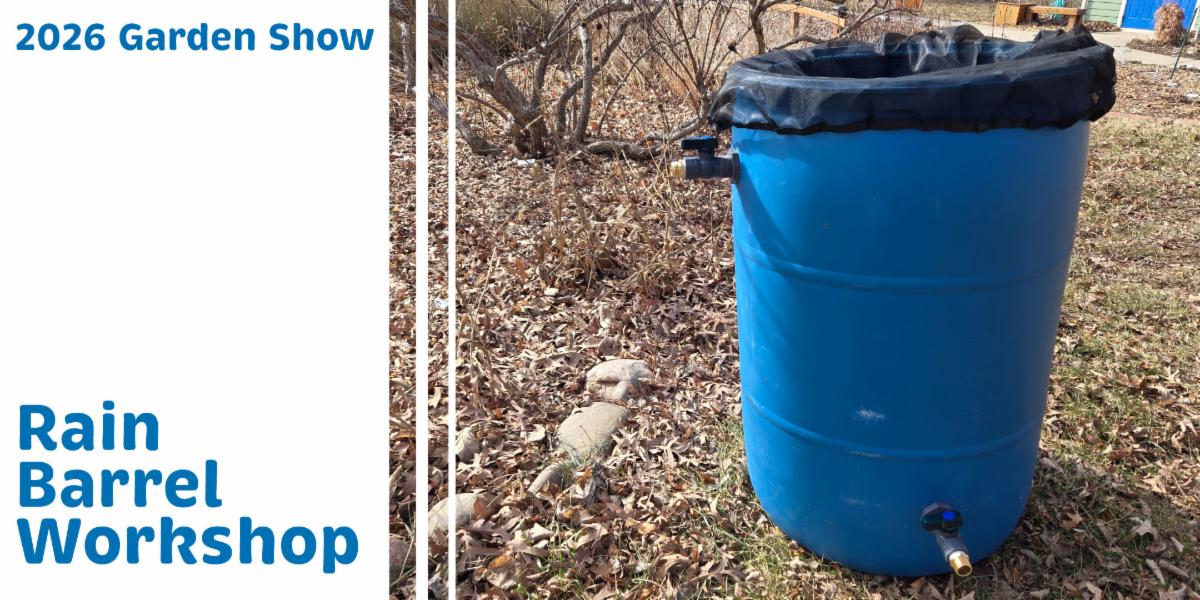
Saturday, March 21 - Rain Barrel Workshop at the Garden Show
Douglas County Extension Master Gardeners will assemble your own rain barrel following a short public education program. EMGs will provide the barrel, the parts, and the know-how. Note: The barrels were donated, emptied of amorphous silica, and rinsed. However, there will be some residue. Collected water is not potable and is recommended for ornamental plantings.
| |
| |
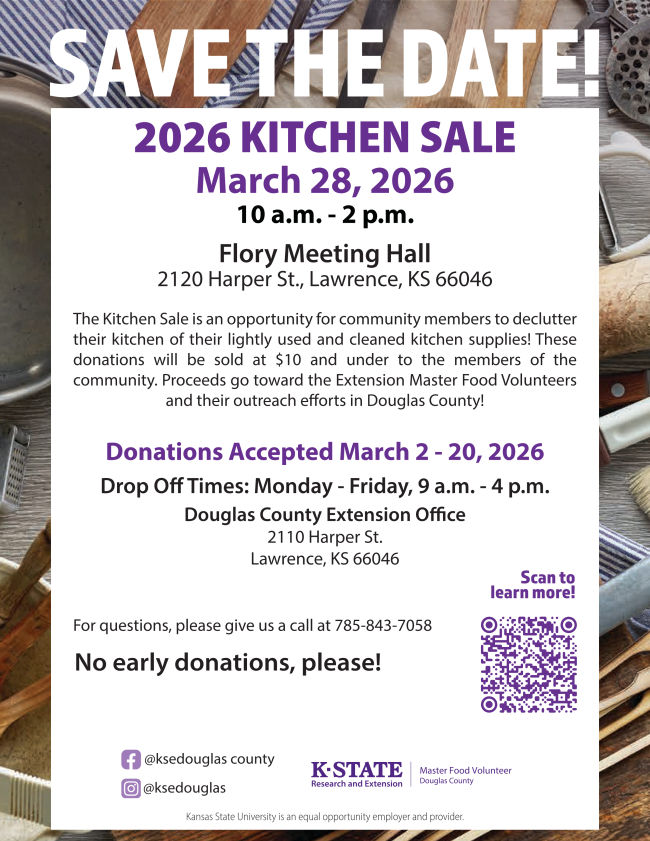
2026 Kitchen Sale
March 28, 2026
10am-2pm, Flory Meeting Hall
The Kitchen Sale is an opportunity for community members to declutter their kitchen of their lightly used and cleaned kitchen supplies! These donations will be sold at $10 and under to the members of the community. Proceeds go toward the Extension Master Food Volunteers and their outreach efforts in Douglas County!
Donations are being accepted at our office March 2-20, 2026
No Knives, please.
| | | |
| Are you enjoying our Newsletter? | | | | Stay up-to-date by following and subscribing! | | |
K-State Extension is committed to providing equal opportunity for participation in all programs, services, and activities. Program information may be available in languages other than English. Reasonable accommodations for persons with disabilities, including alternative means for communication (e.g., Braille, large print, audiotape, and American Sign Language) may be requested by contacting the event contact our main office or the event's program leader four weeks prior to the start of the event at 785-843-7058. Please see the full Douglas County staff list for detailed contact information. Requests received after programs' deadline dates will be honored when it is feasible to do so. Language access services, such as interpretation or translation of vital information will be provided free of charge to limited English proficient individuals upon request.
Kansas State University Agricultural Experiment Station and Cooperative Extension Service
K-State Extension is an equal opportunity provider and employer.
| | | | |