|
As 2026 enters its final quarter, mortgage lenders face two significant industry transformations: VantageScore 4.0 and the Uniform Appraisal Dataset (UAD) 3.6. I went to the MBA Conference with a few assumptions about these changes, and discussions with Clients and vendors confirmed them.
At first glance, both can look like technical projects: a credit model update, an appraisal integration, or a vendor configuration upgrade.
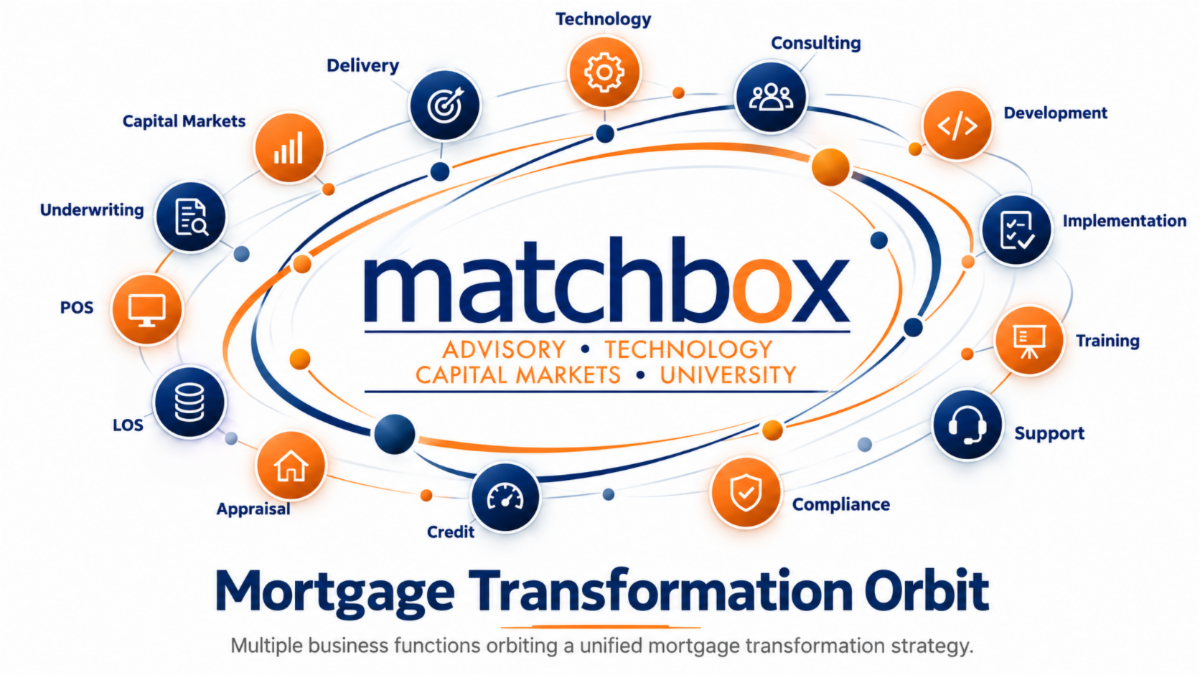
But technology is only one component of the journey. Imagine your mortgage business as an orbit. At the center are your goals—efficient operations, responsible risk management, better borrower experiences, and profitability. Around that center move the interconnected teams, systems, policies, and partners needed to achieve them.
Change one component, and the effects ripple through the rest. Successful modernization means bringing the entire orbit into alignment.
VantageScore 4.0: Changing the Score Changes Everything
In September, Fannie Mae and Freddie Mac made VantageScore 4.0 available to all approved lenders for eligible loans. FHFA also reported aligning upfront fees across Classic FICO and VantageScore 4.0. This gives lenders more room to evaluate how credit model selection fits their Secondary execution and business strategies.
Yet, the true impact of using multiple credit models stretches from borrower acquisition to loan delivery.
- Point-of-sale and credit workflows must clearly identify the model being requested and returned.
- Loan origination systems need appropriate data mapping, business rules, and decision points.
- Pricing engines and investor eligibility logic must be checked.
- Underwriters, lock desks, and capital markets teams need procedures that account for the selected model.
- Fair lending reviews, reporting, quality control, borrower communications, pipeline tracking, and post-closing delivery all deserve attention.
A system can technically accept a VantageScore 4.0 result while the organization remains unprepared to use it consistently.
The real question isn't simply, “Does our LOS support the new score?” It's, “Can our entire business originate, price, underwrite, execute, and manage loans across different scoring models?”
Vantage Score/multiple credit models is the topic, but several factors that create the orbit around it and determine its impact, value, and exposure.
UAD 3.6: More Than a New Appraisal Format
UAD 3.6 and the redesigned Uniform Residential Appraisal Report represent another far-reaching modernization effort. The GSEs' November mandate has been given a temporary stay for now. An exception process is available for lenders requiring more time, potentially allowing approved lenders to continue submitting UAD 2.6 reports through May 2027, but Reps and Warrants are voided by March 1st, which puts the onus of transitioning on the Lender while they actively transition.
That transition is not simply about an appraisal vendor delivering a different file. Appraisal ordering, appraisal management companies, vendor readiness, LOS fields, collateral review, underwriting, data validation, submission feedback, quality control, and post-closing operations are interconnected parts of the process.
Lenders also need to consider pipeline management during the cutover, changes to review and exception handling, staff training, and the experience of teams consuming the redesigned report. When the technical connection works but operational workflows do not, delays and rework can follow.
UAD 3.6 readiness depends on the full path of appraisal information—from the appraiser and service providers to the lender, its operational teams, and the GSEs.
One Mortgage Transformation Orbit
These initiatives touch different data and processes, but they share a critical lesson: successful implementation requires more than a collection of individual vendor commitments.
It requires an enterprise view of the dependencies between technology, operations, credit policy, compliance, secondary marketing, vendor management, and training.
That view helps lenders prioritize changes, document accountable owners, coordinate testing, evaluate operational risks, and connect implementation decisions to measurable outcomes.
It also turns a deadline-driven exercise into an opportunity to improve efficiency and strengthen business performance.
How Matchbox LLC Helps
Matchbox is an independent mortgage transformation partner, helping lenders understand the organizational impact of industry changes—not merely whether a vendor's software is ready. Our five connected disciplines work together throughout the transformation journey:
-
Consulting and readiness: Enterprise impact assessments, departmental interviews, gap analysis, vendor alignment, business requirements, and prioritized roadmaps.
-
Development: LOS configuration, rules, workflow design, integration requirements, field mapping, and technical enhancements.
-
Implementation: Project coordination, testing strategy, user acceptance testing, defect resolution, cutover planning, and deployment.
-
Training: Role-specific education, revised procedures, job aids, workflow walkthroughs, and change management.
-
Support: Production stabilization, issue resolution, vendor follow-through, process optimization, and ongoing assistance.
For VantageScore 4.0, Matchbox's credit model transformation approach considers the full origination-to-delivery lifecycle, including POS, LOS, PPE, underwriting, secondary marketing, hedging, and investor execution. Our structured readiness questionnaire helps identify areas that need attention before implementation.
For UAD 3.6, we can help map the current appraisal process, assess vendor and integration dependencies, review changes to operational procedures, define testing scenarios, and prepare the people who will use the new data and reports every day.
Make the Balance of 2026 Count
Whether you are still assessing your readiness, coordinating vendors, testing new configurations, managing a phased rollout, or seeking help after deployment, the time to align your orbit is now.
Matchbox helps lenders move from technical achievement of compliance toward an organized, business-wide transformation—connecting strategy, systems, people, and execution. The goal is not just to meet an industry requirement. It is to leave your organization better prepared for the next one.
|