Trouble viewing this email? View as Webpage


Senate Checkup Newsletter // October 26, 2026

 
reaching_hands.jpg
 

Newsletter Topics


Message from the Chair: 
Shared Governance's
Impact on Campus and Beyond


Call for Nominations: 
Clinical Excellence Awards (10/31)

AND

Distinction in Mentoring / 
Distinction in Teaching Awards (12/11)


Clinical Representation 
in Systemwide Governance

Presidential Task Force Examines 

Health Sciences Clinical Faculty Voice
in Shared Governance
Faculty Input Sought
(11/9)


Announcements

  • Systemwide Senate Newsletter (link)
  • Bike, E-bike, & E-scooter Subscriptions
  • UCHealth Milk Bank Drive: Supporting 
    Premature Infants Through Milk Donation
  • Science & Healthcare Advocates for Research 
    Policy (SHARP) Application Window Open (10/30)


Message from the Chair:
Shared Governance - Impact on Campus and Beyond

 
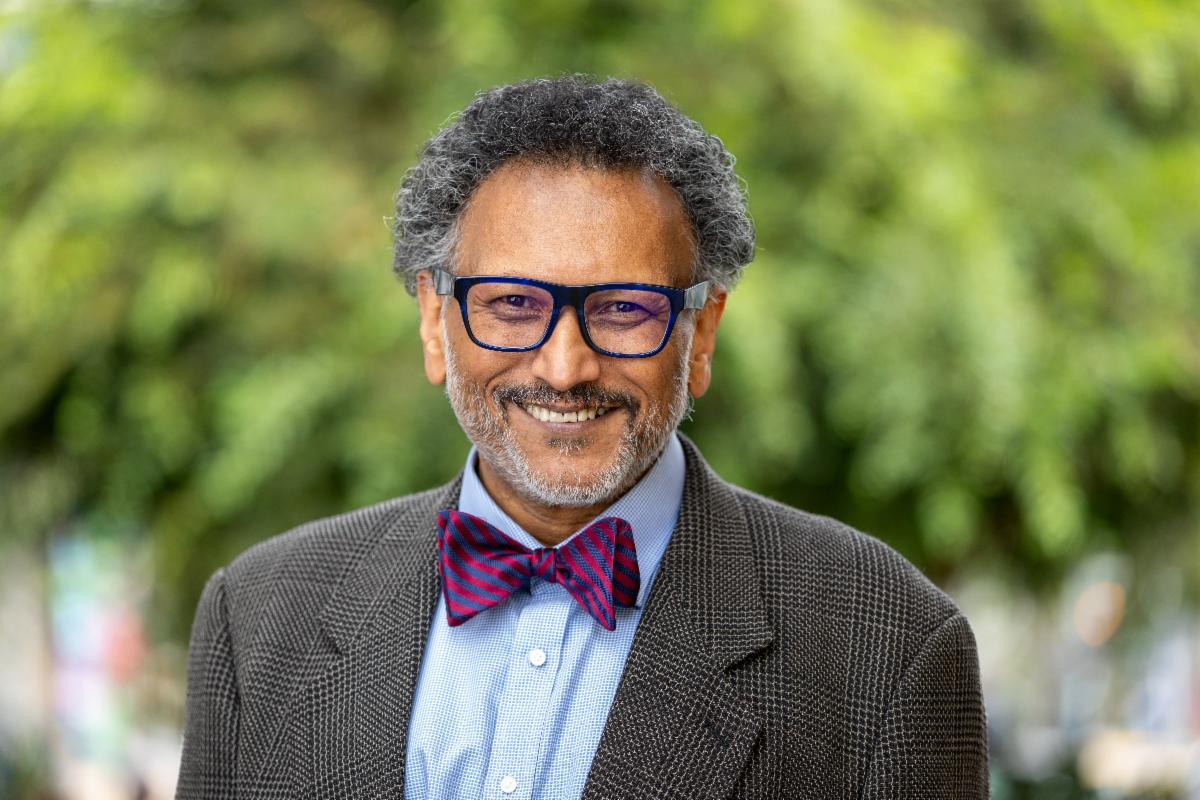
Errol Lobo Headshot

Shared governance in higher education rests on a straightforward principle: institutions make better decisions when the people who comprise them have meaningful opportunities to participate in the conversation. Faculty, staff, administrators, students, trustees, and community partners bring different perspectives and responsibilities to the table. Those differences are not obstacles to effective governance; they are part of what makes thoughtful governance possible.


In early October 2026, the UCSF Academic Senate held its annual Leadership Retreat for new committee and council chairs to discuss issues facing them this academic year and to collaborate on core discussion and action points across the committees and councils. UCSF hosted John Aubrey Douglass, PhD, MA, Senior Research Fellow – Public Policy and Higher Education, Center for Studies in Higher Education (CSHE) and Professor, Goldman School of Public Policy, UC Berkeley as a guest speaker.


The University of California offers a particularly instructive example of shared governance. Historian John Aubrey Douglass has traced the history of the UC model – in which faculty and administration share responsibility for guiding the University, while the Board of Regents retains ultimate authority over policy. This arrangement developed through both formal delegation and the less formal practices that brought faculty into university decision-making. Shared governance is not simply a matter of inviting comment; it is a structure of responsibility in which distinct participants contribute their expertise. Guest Speaker Douglass credited shared governance itself as contributing to the quality of the UC campuses globally.


The concept of shared governance at UCSF, a campus that comprises of professionals schools, academic endeavors and a health care system, is somewhat more complex to achieve as compared to other UC campuses that may not have as many or any professional schools, or more specifically professional schools related to health care. It is imperative that the Academic Senate, the Academic Leadership, and the Health Care System work together to achieve a system of “shared governance”. Paramount to achieving this goal is to develop a system inclusive of our clinical faculty.


The most robust discussion at the Retreat was on the Report and Recommendations put forth by the UC Presidential Task Force advocating for clinical faculty representation in shared governance. This has long been the practice at UCSF, but not so readily at the undergraduate campuses. This fall 2026 the Academic Senate on all campuses is reviewing the Report and Recommendations of the Presidential Task Force on Clinical Faculty Representation in Governance. Executive Vice Chancellor & Provost Catherine Lucey led this discussion at the retreat and summarized the report’s five recommendations to bolster inclusion of clinical faculty:


  • Remove the 1/6 cap on appointments in the Professor of Clinical X Series
  • Allow for 80-100% full professional effort appointments in the Professor of Clinical X Series
  • Engagement with the Academic Senate Committees on Academic Personnel on the review criteria for the different disciplines and different faculty series
  • Develop a reclassification pathway for faculty – clinical and non-clinical – who are currently misclassified
  • Implement the Formation of a Special Committee of the Academic Council
    

Three of the above five recommendations UC San Francisco enacted years ago; the UCSF Academic Senate looks forward to commenting on the success the campus has already had by incorporating clinical faculty and their concerns in Senate actions. The Senate itself continues to be an environment in which ideas can be examined, challenged, and responses refined through informed and respectful exchange.


Other topics discussed at the Leadership Retreat were the launch of two faculty surveys: one this fall and another that remains in development during 2026-2027.


  • The first is a brief survey on Academic Freedom put forth by that committee as part of the Committee’s bylaws; it currently sits with IRB awaiting approval.
    
  • The second survey is awaiting conceptual approval by the Senate’s Executive Council. The primary objective of this one is to delineate current faculty priorities and how these issues affect faculty well-being. It is hoped through dialogue and shared governance, the Academic Administration and the Health Care System Leadership, can navigate solutions that can be acceptable to all. The survey aims to draw out more detailed information about faculty priorities in common and those within the different schools. The Senate is facilitating discussion at a committee and council level to narrow the survey’s focus to ensure it is worth faculty’s time and productive use of survey results.  


For an institution entrusted with providing educational opportunity to the people of California, maintaining those channels of participation is essential to ensuring that decisions about access and academic standards receive careful consideration from the many perspectives that sustain the University. The same principle has value beyond our campuses. Hearing all voices does not require agreement, nor does shared governance mean that every participant has the same role in every decision. It does require that dialogue remain open, disagreement be treated seriously, and that individuals have a genuine opportunity to contribute. When we preserve space for differing voices while maintaining rigorous standards and a commitment to constructive dialogue, we strengthen both our institutions and the broader communities they serve.


CALL FOR NOMINATIONS


Clinical Excellence Awards

Deadline: October 31, 2026


The Academic Senate Clinical Affairs Committee is now accepting nominations for the third Senate Clinical Excellence Awards.  


The Senate will recognize 12 faculty members for their outstanding contributions to clinical care. An Assistant, Associate, and Full Professor will be honored from each of the four schools.   


Nominations are due by October 31, 2026.  


To nominate your colleagues, please visit https://senate.ucsf.edu/clinical-excellence-awards. The nomination details and the text of the short nomination form are also below.   


You can learn about previous winners here: 

2024-2025: https://senate.ucsf.edu/Clinical-Excellence-Awards-2024   

2025-2026: https://senate.ucsf.edu/Clinical-Excellence-Awards-2026  


CALL FOR NOMINATIONS


Distinction in Mentoring & Distinction in Teaching Awards

Deadline: Friday, December 11, 2026, 4pm


Nominations for the Academic Senate’s Distinction in Mentoring and Distinction in Teaching Awards are now open. More details and the nomination form can be found on the Senate webpage. 


Nominators for either award should plan to submit a complete nomination packet electronically via the Academic Senate Service Portal no later than 4:00 p.m. Friday, December 11, 2026. Please review the nomination requirements on the Senate webpage well before the deadline so that you have time to prepare a nomination packet.


The Distinction In Mentoring Awards recognize exceptional mentoring by faculty to faculty and clinical and/or postdoctoral fellows. They are given in two categories: Category One includes faculty at the rank of Associate Professor, and Category Two includes faculty at the rank of Full Professor. UCSF faculty and fellows may nominate faculty for these awards. 


The Distinction in Teaching Awards recognize exceptional faculty members who have demonstrated excellence in teaching. Category One includes faculty who have been at UCSF for ten years or fewer, and Category Two includes faculty who have been at UCSF for more than ten years. UCSF trainees (including residents) and faculty may nominate faculty for these Awards.


All faculty in the Ladder Rank, In Residence, Clinical X, Health Sciences Clinical, and Adjunct series with appointments at 50% or more time (at UCSF or its affiliates, such as Fresno, the VA, or SFGH) are eligible for nomination. 


Lists of prior winners can be found here (Distinction in Mentoring) and here (Distinction in Teaching). These awards are only given once in each category, so please check to ensure your candidate has not already received the award.


The nomination form and full details about the requirements for nominations may be found at the Senate webpage. Questions may be addressed to Liz Greenwood, Academic Senate Analyst, at liz.greenwood@ucsf.edu.


Clinical Faculty Representation in Shared Governance:
Presidential Task Force Examines Health Sciences 
Clinical Faculty Voice in Shared Governance


After the unsuccessful 2025 Senate Memorial to have both Health Sciences Clinical and Adjunct faculty included in the Academic Senate, the systemwide Senate established a Presidential task force to review the situation.


They have concluded with five recommendations which will impact the other UC campuses quite a bit, but are largely already in-action at UCSF, and which for now focus on the Health Sciences Clinical faculty series only. The divisional UCSF Academic Senate looks forward to advocating strongly for the recommendations and requesting more should be done by systemwide.


UCSF Executive Vice Chancellor & Provost (EVCP) Catherine Lucey was a member of the Presidential Task Force along with Pamela Ling, MD, MPH, Professor of Medicine, Dept of Medicine. EVCP Lucey presented on the topic at the October 2026 Senate Leadership Retreat. The five recommendations of the task force were:


  • Remove the 1/6 cap on appointments in the Professor of Clinical X Series
  • Allow for 80-100% full professional effort appointments in the Professor of Clinical X Series
  • Engagement with the Academic Senate Committees on Academic Personnel on the review criteria for the different disciplines and different faculty series
  • Develop a reclassification pathway for faculty – clinical and non-clinical – who are currently misclassified
  • Implement the Formation of a Special Committee of the systemwide Academic Council


UCSF strongly supports the Task Force’s recommendation to establish a systemwide Special Committee of the Academic Council and campus counterparts.


The proposal recognizes a challenge of particular importance at an academic health sciences campus: faculty whose work is fundamental to the University’s missions of education, research, public service, and patient care should have meaningful opportunities to inform decisions affecting those missions—even when their appointment series does not confer Academic Senate membership.


The Task Force’s conclusions reinforce this principle. While recognizing distinctions among faculty series and their respective requirements for Academic Senate membership, the report emphasizes that all clinical faculty make significant contributions to UC’s academic mission and should have opportunities to participate in campus and systemwide shared governance.


For UCSF, the recommendations offer a path forward that recognizes both the distinct expectations of UC’s faculty series and the increasingly important role of clinical faculty across the University’s missions. Many of the proposed changes would formalize or expand approaches already familiar at UCSF. The creation of a systemwide Special Committee, however, would add something particularly valuable: a durable UC-wide forum in which the expertise and perspectives of clinical faculty can directly inform the policies and decisions that shape academic health.


The comment period on the Task Force Report & Recommendations goes until November 9, 2026. Faculty can send comments to the Academic.Senate@ucsf.edu general email and comments will be included anonymously.


Announcements


Systemwide Academic Senate Newsletter


On behalf of Systemwide Academic Senate Chair Susannah Scott, I’m pleased to share the Fall 2026 Systemwide Academic Senate Newsletter, which highlights current Senate priorities and other issues of broad interest to UC faculty. This issue highlights several timely topics, including standardized testing and college readiness, faculty expressive activities and clinical faculty governance, UC budget issues, developments in California, and rapidly evolving federal policies affecting higher education.


Bike, E-bike, & E-scooter Subscriptions


UCSF has partnered with
Ridepanda to offer students, trainees, postdoctoral scholars, faculty, and staff access to month-to-month bike, e-bike, and e-scooter subscriptions. The program is designed to lower the barriers to trying active and sustainable transportation, particularly for those interested in an e-bike but hesitant to make the upfront investment of purchasing one.


UCHealth Milk Bank Drive: 
Supporting Premature Infants Through Milk Donation


Each year in the United States, approximately 1 in 10 babies is born prematurely. Prematurity Awareness Month in November provides an important opportunity to raise awareness about preterm birth and to support efforts that improve outcomes for these vulnerable infants. 


Human milk is the recommended source of nutrition for all infants and is especially critical for those born premature or medically fragile. When a mother’s own milk is not available, pasteurized donor human milk plays a vital role in filling this gap. Donor milk has been shown to improve health outcomes and significantly reduce the risk of necrotizing enterocolitis (NEC), a serious and potentially life-threatening intestinal condition. 


To support infants in need, University of California Health Milk Bank is partnering with UCSF to host a Milk Drive this November. Even small contributions can make a meaningful difference – just one bag of donated milk can help nourish a premature infant for an entire day. 


In-person Milk Drive Event 

Register to become a donor for the in-person Milk Drive

Virtual Milk Drive Event

Participate in our month-long Virtual Milk Drive throughout November by following this link:


Milk Giving: Virtual Milk Drive

Join us this November in supporting premature and medically fragile infants - because there truly is love in every drop 


Science & Healthcare Advocates for Research Policy (SHARP) Application Window Open


Deadline: October 30, 2026


UCSF’s Office of Community & Government Relations and Office of Research present a professional development program for faculty to develop science policy and advocacy skills to become health and biomedical research policy leaders.


The Science and Healthcare Advocates for Research Policy (SHARP) program will provide participants with the hands-on experience and training needed to explain the significance of federal investments in biomedical research to shape federal regulations and legislation. This one-year program includes a high-level education on the federal policymaking process and strategies for influencing federal legislation and regulations impacting biomedical research. The training component of the program will also include case studies with seasoned UCSF advocates.


Throughout the year, participants will engage directly with policymakers in Congress and the Executive Branch with at least two visits to Washington, DC. The program timeline is from November 2026 to Fall 2027. 


Travel expenses associated with this program in compliance UC travel limits will be covered by the Offices of Community & Government Relations and Research.


Read the Program Overview and FAQs


Selection Criteria

·    Early- to mid-career faculty.

·    Demonstrated interest in health or science policy.

·    Ability to communicate the impact of research and other complex subjects to lay audiences.


Required Materials

·    CV

·    250-word response explaining your research, its significance, and its potential impact on public policy, in language that would be easily understandable to a lay audience.


We are excited for you to join UCSF’s Science and Healthcare Advocates for Research Policy Program.


UCSF does not use race, gender, sex, or other protected categories or proxies for protected categories in the selection process.


Want More Senate News?

For more on how your Senate committee members and leaders are advancing the academic mission and supporting faculty life at UCSF and systemwide, check out the Senate Check Up Newsletter.