|
In this issue:
- Happy 23rd Anniversary, EIC!
- Ticked OFF!!
- Evening Lecture Series
- Upcoming Programs
- Programs for Young Children
- Tales From the Trails: Lakefront Living
- Greenways: Hold On to Those Balloons!
| |
The EIC Turns 23 Years Old!
Our doors opened on May 25, 2001, in the company of community friends and dignitaries alike! Please enjoy this video that tells a small part of our story, created for our grand opening. Thank you for being a part of it!
| |
|
|
Ticked OFF!
A heightened awareness of ticks has permeated our outdoor experiences. Many places previously not known for ticks are now receiving reports of ticks from visitors. For my first twenty years or so in the campus’ Environmental Study Area (ESA), I could confidently say ticks were not an issue. That is not the case at this time.
The prevalence of ticks in Michigan has increased over the years and climate change is a factor. Warmer winters have resulted in more active ticks, potentially extending the typical April-September season through some of the winter, according to the Michigan Department of Health and Human Services (MDHHS).
Ticks are external parasites that survive by attaching themselves to humans, birds and reptiles and feeding off their blood. Some ticks carry diseases, the most harmful being the bacterium borrelia burgdorferi which can cause Lyme disease if a person is bitten by an infected tick.
| |
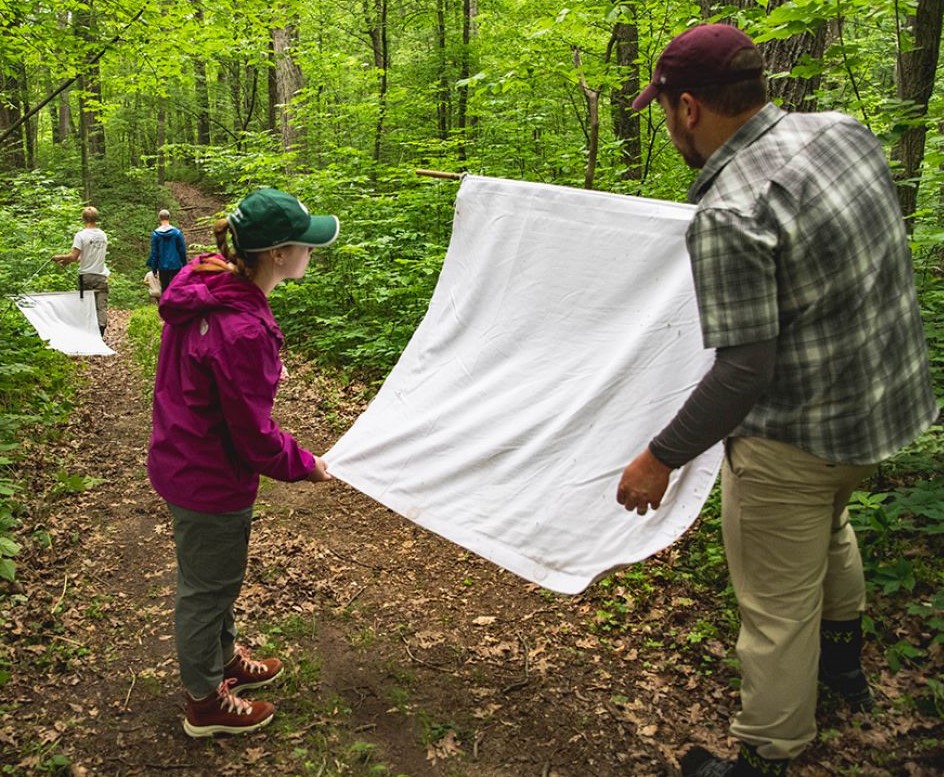
Researchers from Michigan State University have conducted "drag surveys" (pictured right) in the ESA in both summer and fall of 2023, which confirmed their presence, including Black-legged Ticks, known as a vector for Lyme disease. Researchers at Calvin University are also studying and mapping the presence of ticks in Michigan. That surveillance can help better identify “hot spots” for ticks, said Calvin’s Will Miller, an assistant biology professor and researcher. | |
|
|
Signs of Lyme disease can present as achy flu-like symptoms such as fever, fatigue, chills and rashes between three and 30 days after a tick bite, according to the Center for Disease Control (CDC). Ticks that can carry borrelia bacteria live throughout most of the United States. But Lyme disease is most common in the upper Midwest and the northeastern and mid-Atlantic states. It's also common in Europe and in south central and southeastern Canada.
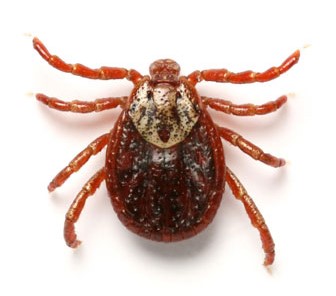
The blacklegged tick (pictured above) is well-established in parts of Michigan’s Upper and Lower Peninsulas and has been found in new regions over the past few years. In 2021, there were 878 confirmed and probable reported cases of Lyme disease in Michigan, nearly double the 451 cases reported in 2020, according to MDHHS. Information about Lyme disease risk by county is available at Michigan.gov/Lyme.
| |
|
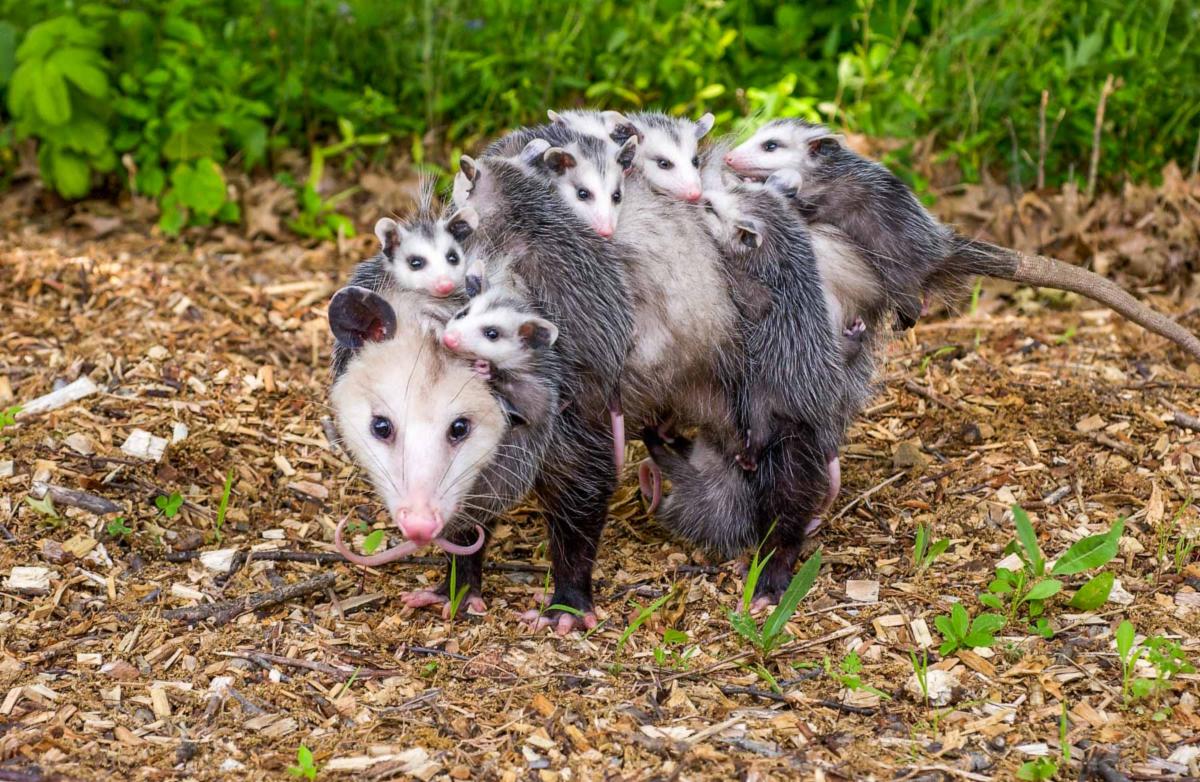
Unfortunately, we can’t count on the toothy grin of Virginia opossums for tick control. Once thought to be a tick consumer, research on opossum stomach contents do not bear this out. However, reducing non-native honeysuckle shrubs can mitigate the abundance in tick populations.
(Opossum photo courtesy of the National Park Service)
A 2010 study conducted in the St. Louis, Missouri, region “found that white-tailed deer (Odocoileus virginianus), a preeminent tick host and pathogen reservoir, more frequently used areas invaded by honeysuckle. Since white-tails prefer honeysuckle and its habitat as a food source and safe cover, these areas contained a greater number of ticks infected with pathogens than those with fewer honeysuckle shrubs. The researchers report, “We confirmed this biotic mechanism using an experimental removal of honeysuckle, which caused a decrease in deer activity and infected tick numbers, as well as a proportional shift in the blood meals of ticks away from deer.” Another good reason to promote native plant species and remove nonnative invasives!
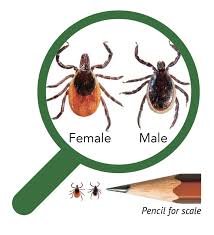
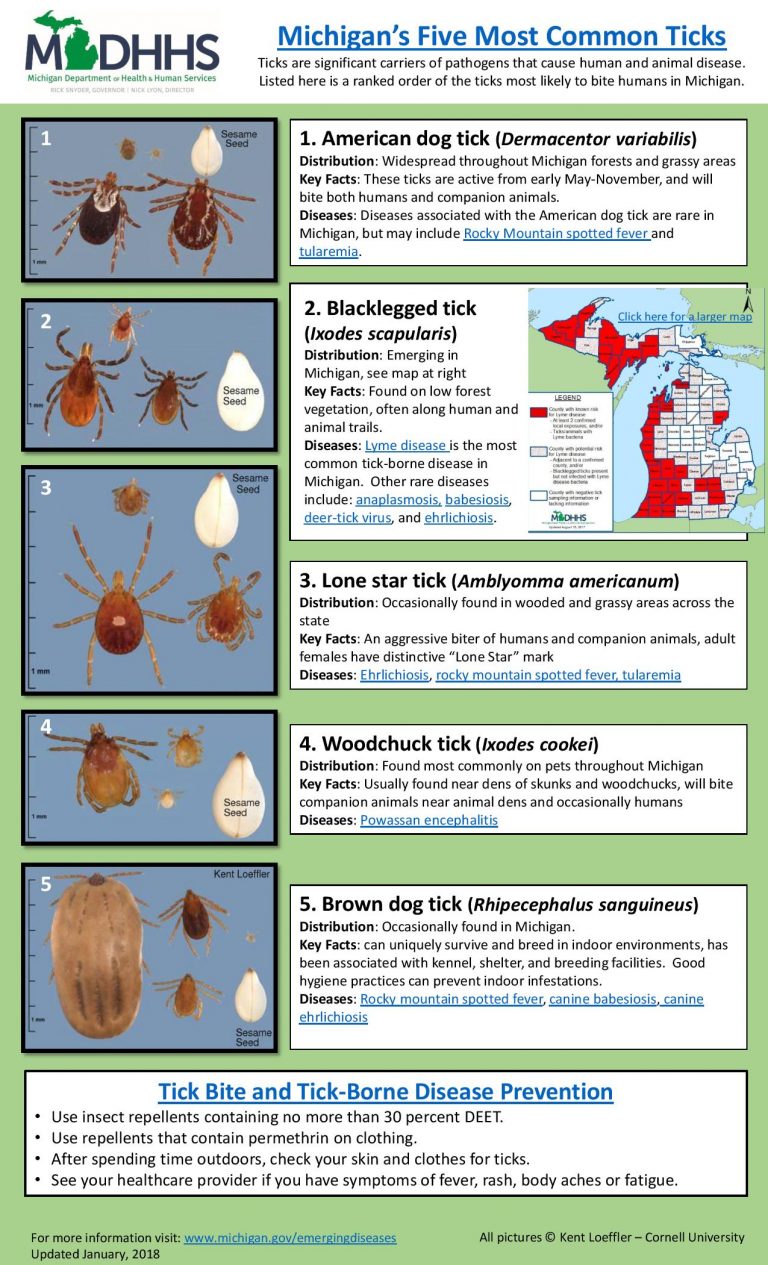
The MDHHS offers extensive information about tick issues, including on the image below, as well as preventive measures to help reduce your chances to "pick up" a new friend on your outdoor adventures.
Hope to see you on the trails!
Dorothy McLeer, Program Manager
| |
|
Mushroom Identification 101
Speaker – Mike Solomon, EIC Staff Naturalist
Date – Thursday, May 23 (the EIC's 23rd anniversary!)
Time – 5:00-6:00 p.m.*
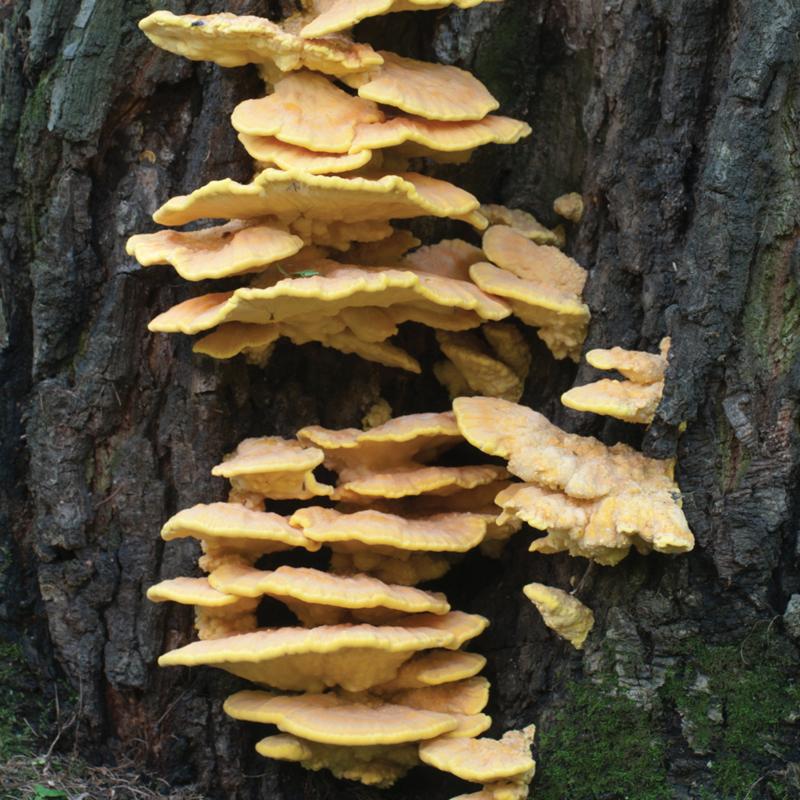
EIC Naturalist Mike Solomon will share some of the basic techniques of mushroom identification, as well as showcasing some of the incredible diversity and adaptations of fungi!
Mike is a 2023 graduate of University of Michigan- Dearborn, as the Honors Scholar in Environmental Studies (Naturalist Concentration). Mike is a Certified Interpretive Guide (CIG) through the National Association for Interpretation (NAI). He spends much of his free time outdoors, hiking, fishing, and exploring.
*Lecture will be followed by a short walk to attempt to locate and identify some mushrooms! (Foraging is not permitted in the Environmental Study Area.)
(Chicken of the Woods photo by Alexander 62)
Please register for this program.
| |
|
Summer Young Naturalist Program
Monday - Thursday
9:30 am -12 noon
Ages 7-9: July 8-12
Ages 10-11: July 15-18
Get your child outdoors and learning about nature! Led by EIC staff and UM-Dearborn student interpreters, this science-oriented program provides direct, hands-on learning in a beautiful natural setting. Session topics will include pond life, birds, insects and spiders, and frogs and turtles.
The program fee is $60. Registration is required.
| |
|
They're Baaack...The Birds AND
Public Bird Walks
Saturday, May 11, 18, and 25
9-11 a.m.
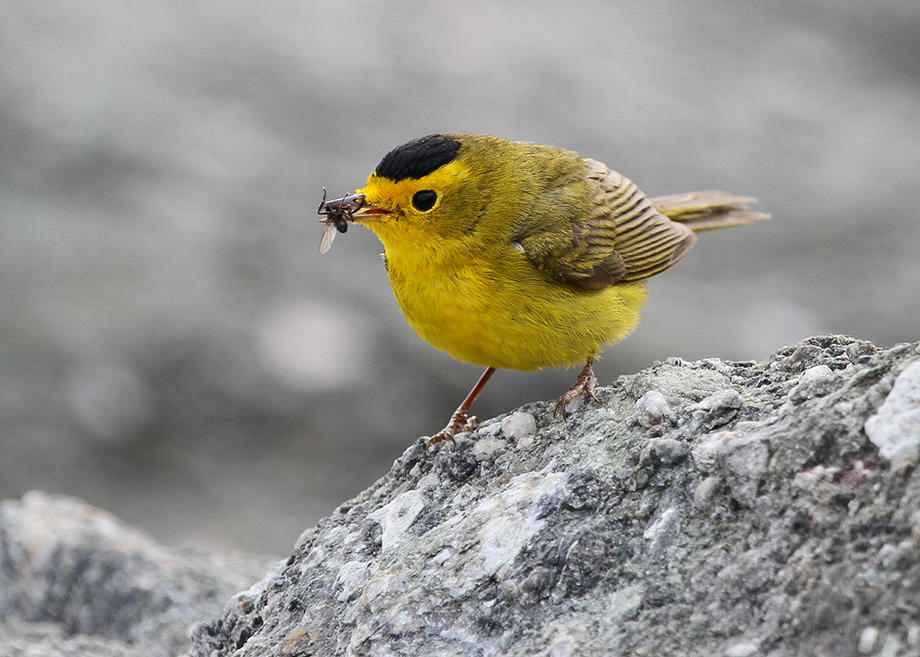
Join Rick Simek on the trails to welcome the spring migrant back to the Environmental Study Area. Whether just passing through on migration or raising a "brood" or two here, this is an important bird habitat. (Male Wilson's Warbler photo by Alexander Viduetsky)
Crepuscular Caper*
Friday, May 24
8:00-9:30 p.m.
Join EIC Naturalists for a casual walk in the Natural Area at twilight. Crepuscular is derived from the Latin word Crepusculum, meaning “twilight”. Crepuscular wildlife are animals that are mostly active at dawn and dusk! Dress for the weather, whatever it may be...
Please register for this program.
*We will be taking a break from this program until the daylight hours become shorter again.
| |
|
Photography Walks Spring 2024
Thursday, May 30
2:30-3:30 p.m.
Take a hike with an EIC Naturalist and Nature Photographer! Bring your own cameras and accessories, we supply the scenery. Please dress appropriately for walking outdoors. This event is free and open to the public. Please register for this program.
Nature Walks for Mental Health
Wednesday, May 22, June 5 & 19
1:30-2:15 p.m.
Relax, unwind, and get outside; with brief guided meditations, and 45-minute nature walks. You will be entered into a raffle for each event you attend, where winners will be announced at the final walk and celebration. Please dress appropriately for walking outdoors. This event is free and open to the public. Please register for this program.
| |
Programs for Young Children | |
|
Join us for an hour of fun!
Free & open to the public. Best for children 7 and under. Meet in the EIC Exhibit Area.
Music & Bubbles, Observe Wildlife, Nature Themed Books, Crafts or Activities
Wednesdays from 4:00-5:00 p.m.,
May 29 and June 13.
For adults bringing children of various ages, there is an option for older kids (7+) to enjoy a nature walk with an EIC naturalist while younger kids. Please register for this program.
| |
Lakefront Living
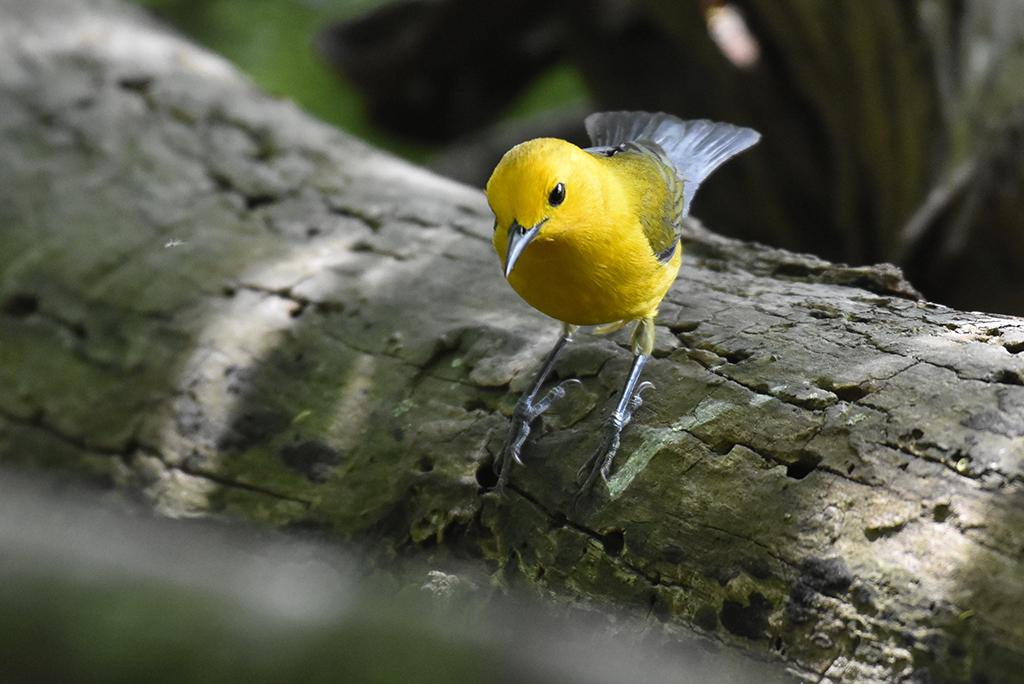
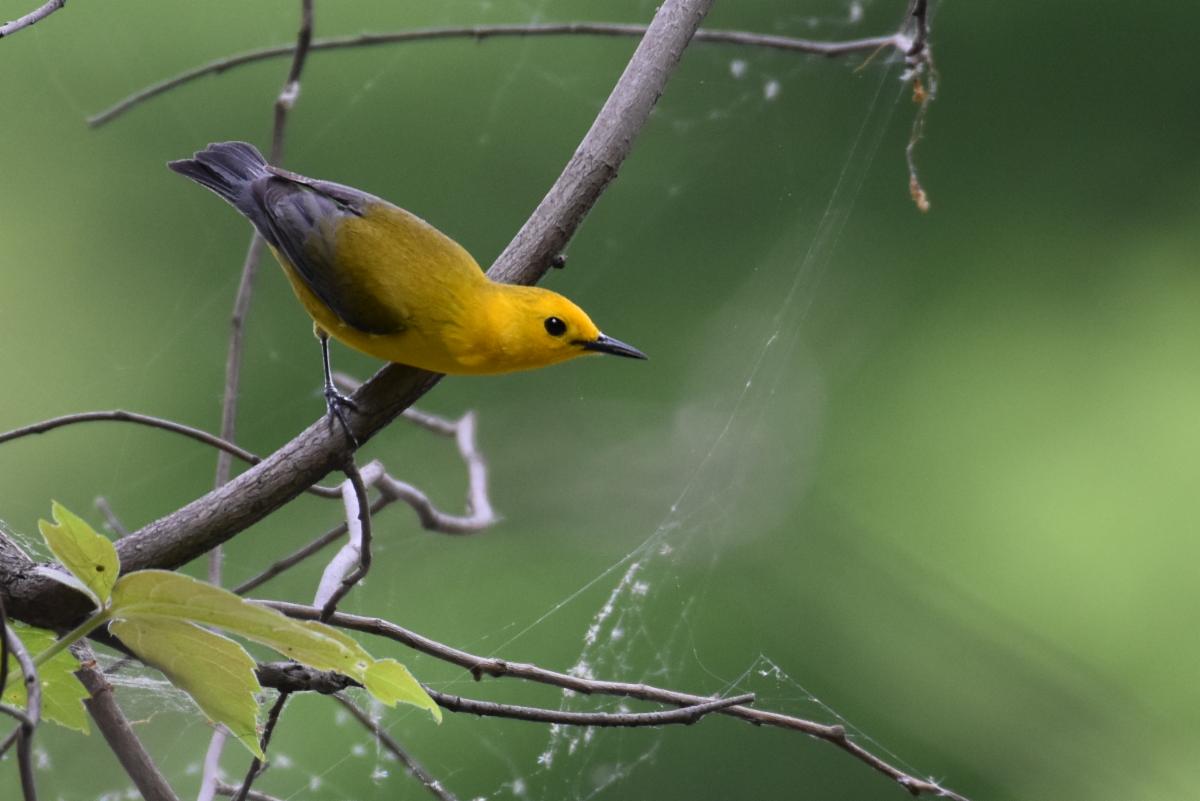
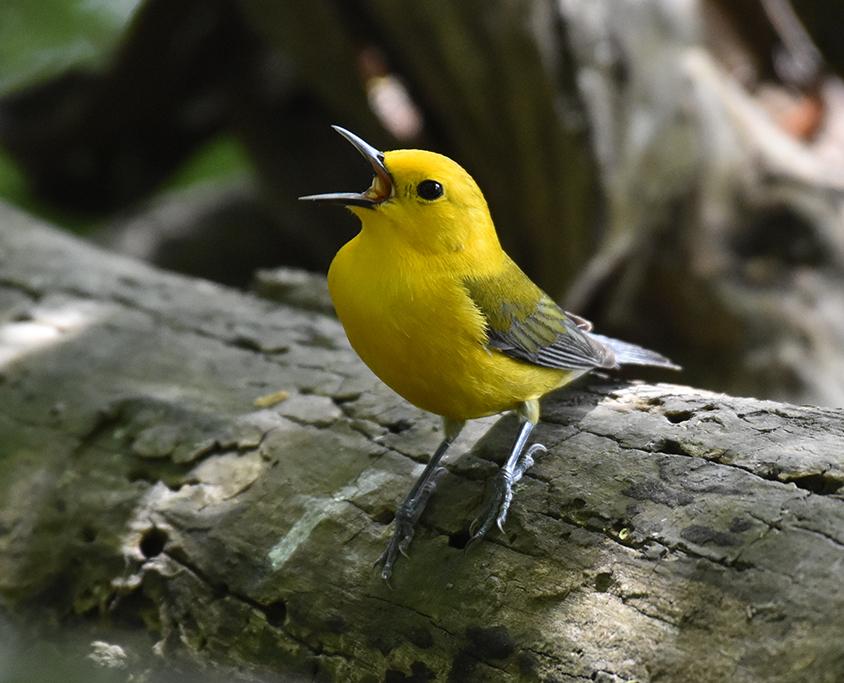
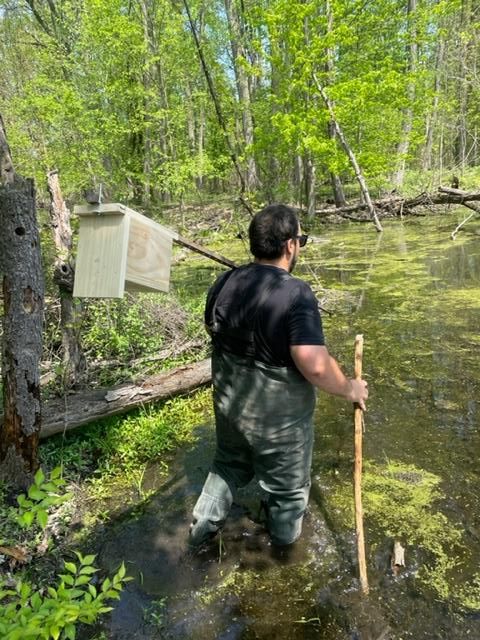
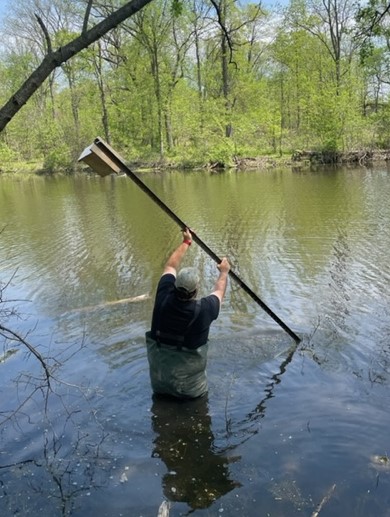
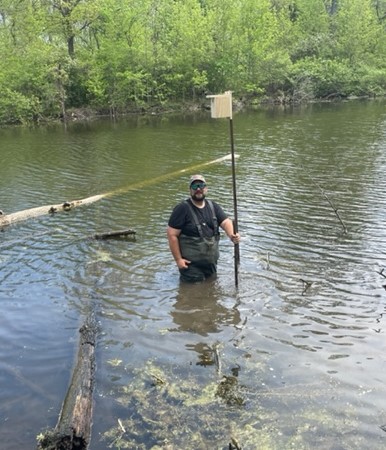
The Environmental Study Area (ESA) has become the site of a new bird conservation housing project, inspired by a local birder. We recently installed four Prothonotary Warbler nest boxes along the west side of Fair Lane Lake. Mounted onto tall metal posts that are set into the lake bottom of the lake, the boxes are placed about 10 feet from the shore. Each box stands about 5 feet above the water’s surface. (Prothonotary photos by Geoffrey Clarke)
| |
Named for its plumage which resembles the yellow robes once worn by papal clerks (named prothonotaries), the Prothonotary Warbler is a species in decline. It is estimated that their populations have decreased by about 30 percent since the mid-1960s, with a Conservation Concern Score of 14, indicating a status of high conservation concern. | |
|
|
Prothonotary Warblers occasionally show up in the ESA during spring migration, usually in late April or early May. Most often, they leave after a brief stopover, but last year a male Prothonotary Warbler stuck around and clearly exhibited territorial behavior. It sang frequently from a location next to the lake, and was observed putting bits of moss into a small cavity in a dead tree along the lake edge. It discontinued this effort after about a week and disappeared soon after.
Unusual for a warbler, Prothonotary Warblers nest in cavities made by woodpeckers, often in dead standing trees near water. They also use nest boxes of specific dimensions.
To enhance the nesting site options for Prothonotary Warblers in the ESA, Mike O’Leary, a local birder who regularly frequents the ESA, recommended that we put out some nest boxes for them. We were happy to take him up on his suggestion. Mike kindly offered to build the boxes, and we installed them on May 4. EIC staff member Mike Solomon donned waders and did the work of setting the boxes out. (Photos by Rick Simek)
| |
|
Let’s hope that these lively and beautiful birds will take us up on our invitation to stick around and do some house hunting in response to the new "lakeside living" options offered to them.
Rick Simek, Natural Areas Manager
| |
|
Hold On to Those Balloons!
Calling all celebrants! 'Tis the season to recognize and honor rites of passage and accomplishments, but sometimes the after effects are nothing to celebrate.
| |
|
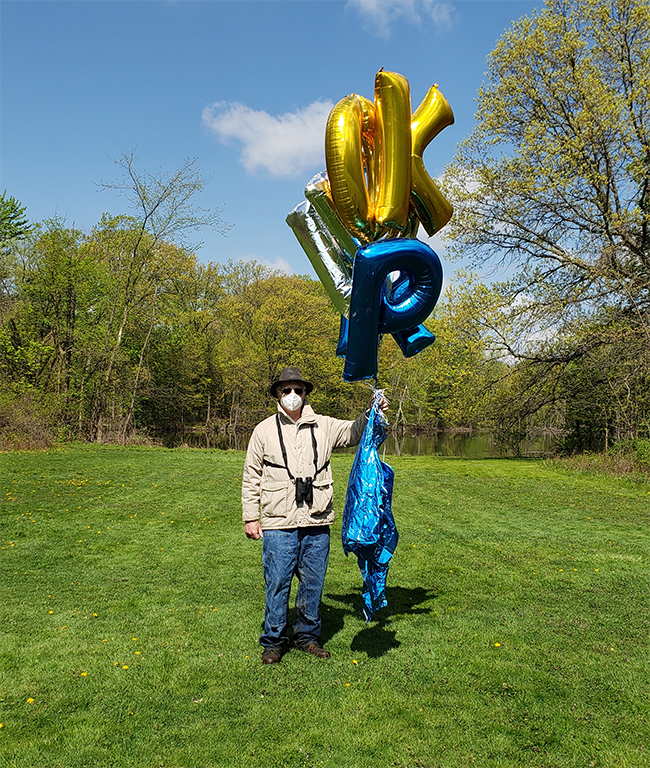
Typical latex or mylar balloons filled with helium, whether released on purpose or by accident, will eventually land back on the surface and wreak havoc on the environment. In Michigan, balloons will often land in a lake or other body of water, where aquatic animals eventually become entangled, trapped, or poisoned by the balloons. Rick Simek fished this "balloon bouquet" out of the marsh in 2021, right around graduation time.
(Photo by Valerie Osowski)
On land, the balloons act as unattractive litter that discourages both human and animal activity in the area. In every environment, balloons remain in the ecosystem for a very, very long time, depositing harmful chemicals and plastics into the soil, water, plants, and animals nearby.
| |
So, even though having or releasing balloons is a colorful and exciting addition to your graduation celebration, they may not be the most sustainable way to decorate for your party. Instead, you can use a variety of other alternatives, including lights, lanterns, paper chains, streamers, and garlands. | |
If you want your party to be even more environmentally friendly, you can buy various shades and colors of plantable seed confetti for your guests to toss! These plantable hearts are handmade, using 100% recycled paper embedded with flower seeds for a greener, more sustainable bouquet.
Celebrate Well!
Valerie Osowski
Student Sustainability Coalition President
| |
|
Venturing outdoors and encountering nature is good for your health. Our trails are accessible, so please visit our Environmental Study Area. Stay engaged in learning activities and check out our Remote Learning Activities & Resources page for ideas to create a “Neighborhood Nature Journal” and “Family Nature Walk” activities!
We also hope to see you in person at our upcoming programs!
| | |
Please remember...
The EIC Environmental Study Area is open daily from sunrise to sunset. We would like to remind nature-goers that fishing on site is prohibited and to leave bikes and dogs at home because they cause disruption and stress to the EIC wildlife.
| |
| | | |