|
NEMWI, NMSF Hold Congressional Briefing on Great Lakes Marine Sanctuaries
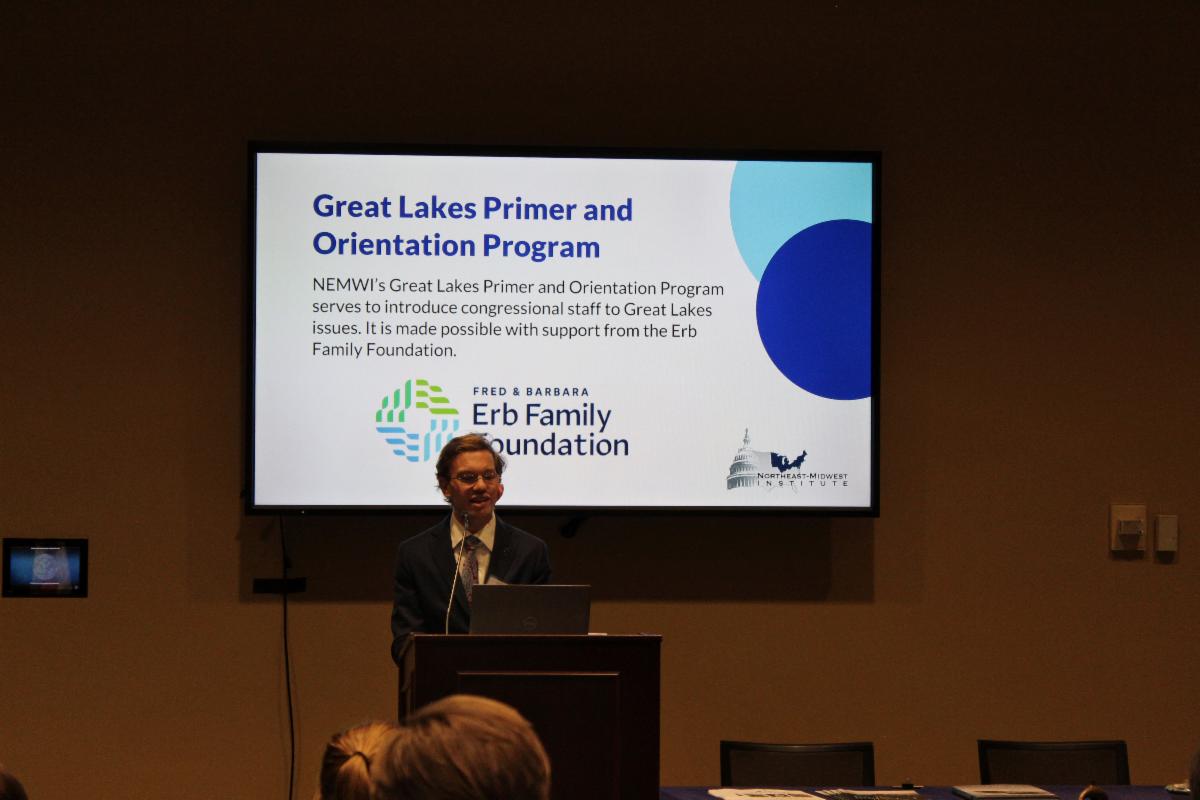
NEMWI and the National Marine Sanctuary Foundation (NMSF) held a briefing last week for Congressional staff on Great Lakes Marine Sanctuaries. The briefing was the last of six sessions of the Great Lakes Primer and Orientation Program, generously supported by the Erb Family Foundation, which serves to introduce Great Lakes Congressional offices to critical issues.
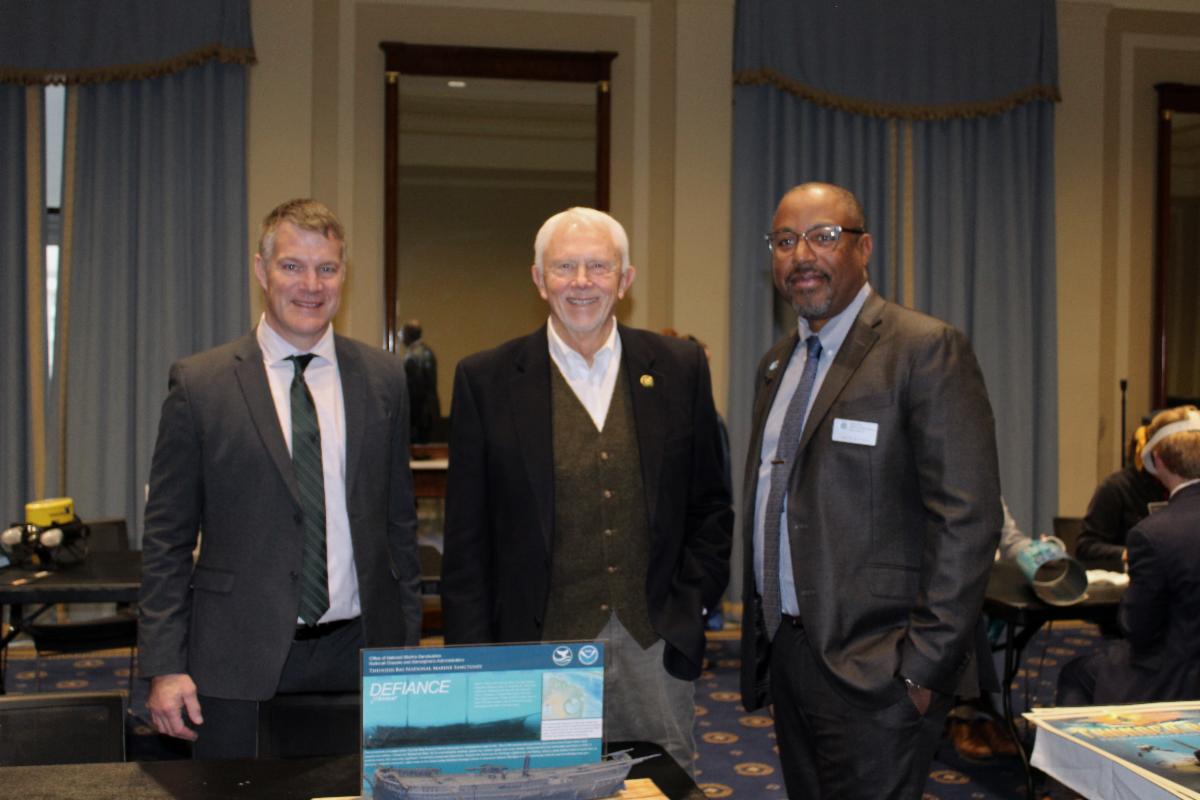
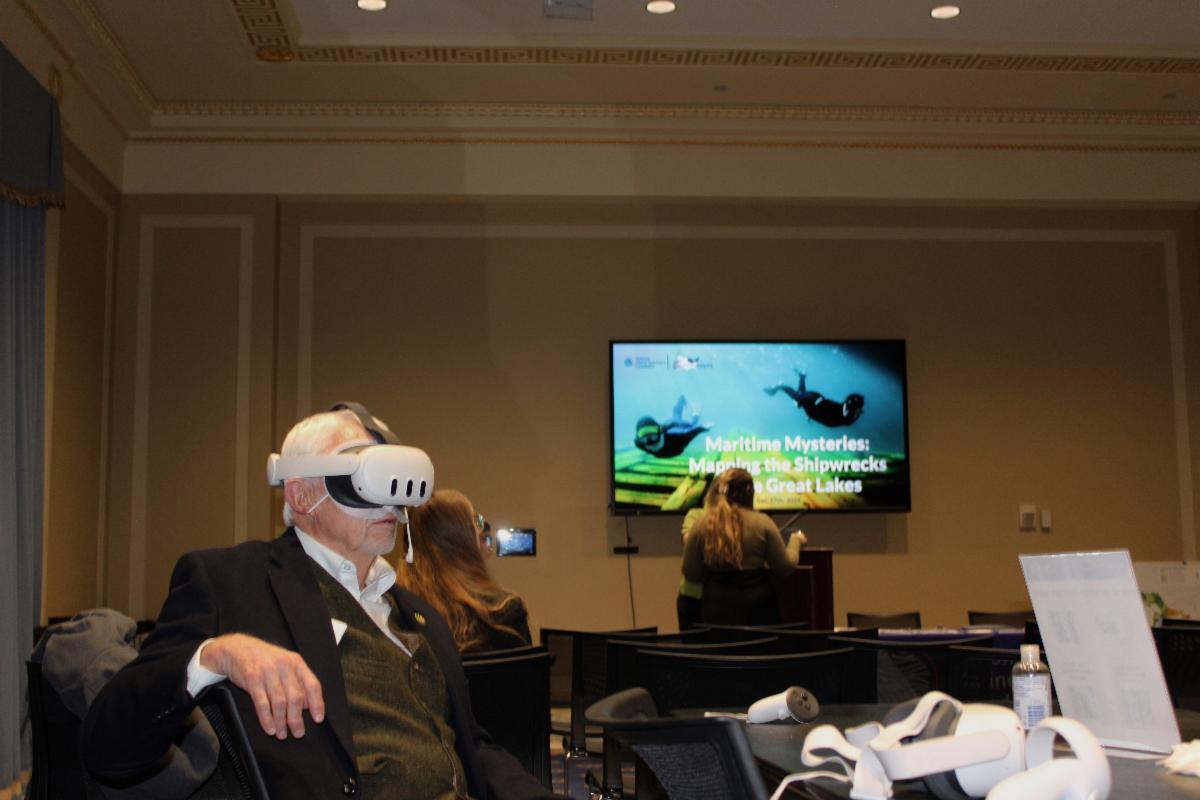
These underwater parks are drivers of scientific discovery and tourism revenues for local communities across the country, and increasingly, in the Great Lakes. Thunder Bay in the upper peninsula of Michigan has been a marine sanctuary for a quarter-century, and has been joined in the past five years by Wisconsin’s Shipwreck Coast (designated in 2021) and New York’s Lake Ontario sanctuaries (designated in 2024). A site on Pennsylvania’s Lake Erie coast is currently seeking a marine sanctuary designation. Attendees heard from an array of speakers and got a chance to see 3D shipwreck models and take a “dive” underwater to explore shipwrecks in virtual reality.
Congressman Jack Bergman (R-MI), co-chair of the National Marine Sanctuary Caucus and member of the Great Lakes Task Force, opened the briefing with a call to action for those in the room to engage members of Congress in the effort to raise awareness of marine sanctuaries and promote policy that funds and supports their work. He spoke on the impact of Thunder Bay Marine Sanctuary in his district, and the transformative potential of sanctuaries across America.
As the program continued, Joel Johnson, President and CEO of the NMSF, drew attention to the importance of the Great Lakes as an immense freshwater resource, economic engine, and cultural treasure. The expansion of marine sanctuaries in the Great Lakes brings even more of those benefits to the region.
NEMWI Great Lakes Program Manager Alex Eastman highlighted the work of the Great Lakes Task Force and discussed the overlap in the issues critical to the ocean and Great Lakes coasts, especially tourism and environmental protection.
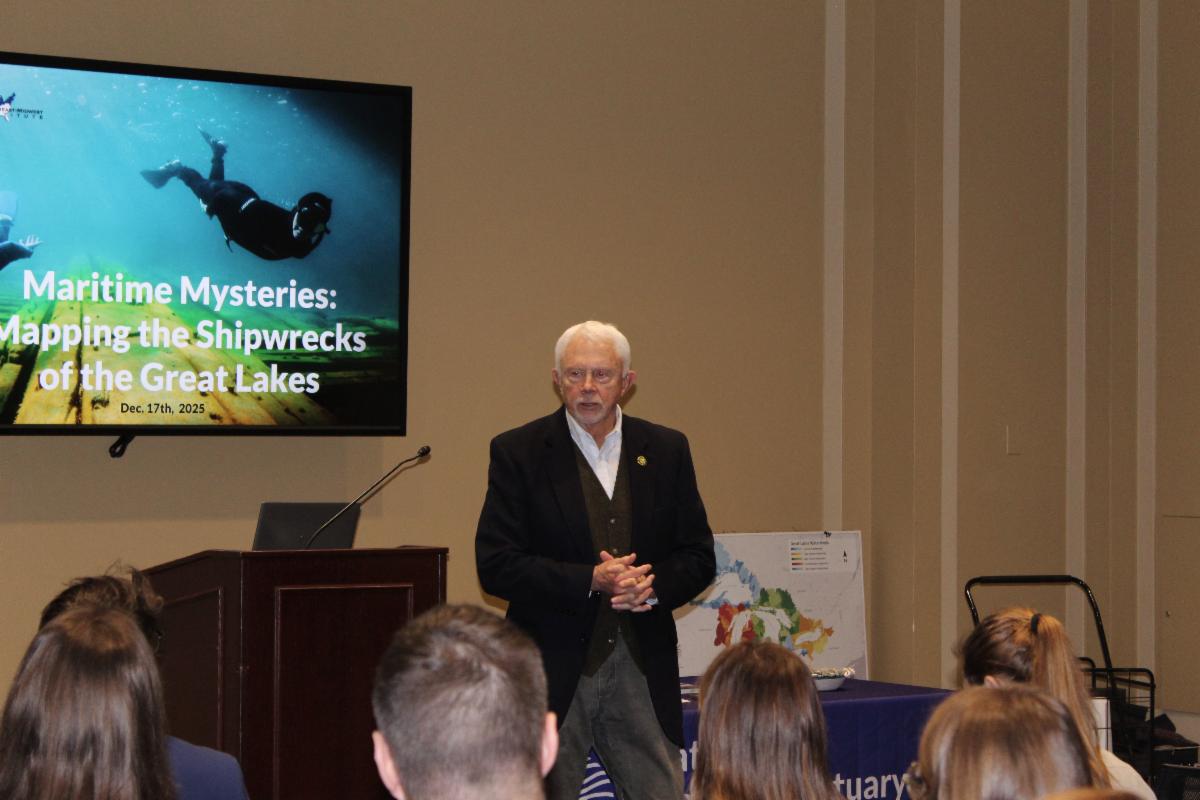
Finally, Jeff Gray, Superintendent of Thunder Bay and Lake Ontario Marine Sanctuaries, gave a deep dive on the sanctuaries in the Great Lakes. Gray focused on lakebed mapping efforts, to which sanctuaries have greatly contributed. For instance, while only 15% of the Great Lakes have been mapped to modern standards, 90% of Shipwreck Coast in Wisconsin has been mapped, thanks to the work of that marine sanctuary. This has enabled researchers to find shipwrecks that had been lost to time and uncover critical features about the lakebeds that can inform fisheries management.
|