|
|
Defending wildlife and habitat through:
Advocacy
Conservation
Education
|
|
|
News & Updates: August 2022 |
|
In this issue:
-
Prairie Dogs win a battle; still losing the war
- Hutton Updates
- Experts double the number of recorded species at Hutton
- Easement at Hutton receives regional attention
-
Chickadee Checkoff grant awarded to AOK to encourage people to connect more deeply with nature
- Upcoming AOK events
-
In-Person Chapter Meetup allows chapters to share successes and challenges
- AOK Nature Walk Recommendations
|
|
|
Prairie Dogs win a battle;
Still losing the war...
|
|
Prairie dogs on Greg Greenwald's property in Lane County are once again protected from poisoning designed to eliminate the colony. However, it is only one successful battle in the midst of a siege on prairie dogs throughout Kansas.
Prairie dogs are described as 'Ecosystem Engineers' because they modify shortgrass prairie habitat in such a way as to create more opportunities for other species. Black-footed Ferrets are endemic predators that feed almost exclusively on prairie dogs. Ferruginous Hawks, Golden Eagles, coyotes, foxes, and badgers also eat prairie dogs. Abandoned prairie dog burrows are used by Burrowing Owls, rabbits, insects, and other small mammals. The short grass around their burrows attracts meadowlarks, Grasshopper Sparrows, and Mountain Plovers; but it is also a source of frustration for many cattle grazers. It is estimated that 250 prairie dogs eat as much grass as one steer. For this reason, and the belief that their burrows cause cattle to break their legs, prairie dogs are often loathed by ranchers.
The prairie dog wars started in 1901, when legislation was passed to eliminate prairie dogs on the estimated 2.5 million acres they inhabited in Kansas. A more stringent law was passed in 1903, and has had modifications since (the most recent was 2019). These laws that are still in effect today enable County Commissioners (or their contractors) to enter private land, poison entire towns of prairie dogs, and bill the landowner for the 'service'. If the landowner doesn't pay, the commissioners can put a lien on the property. Landowners who wish to protect prairie dogs on their properties can plea for exceptions to the County Commissioners, but their pleas often fall on deaf ears. These wars have been largely successful: only 130,000 acres are inhabited by prairie dogs in Kansas today (95% decline).
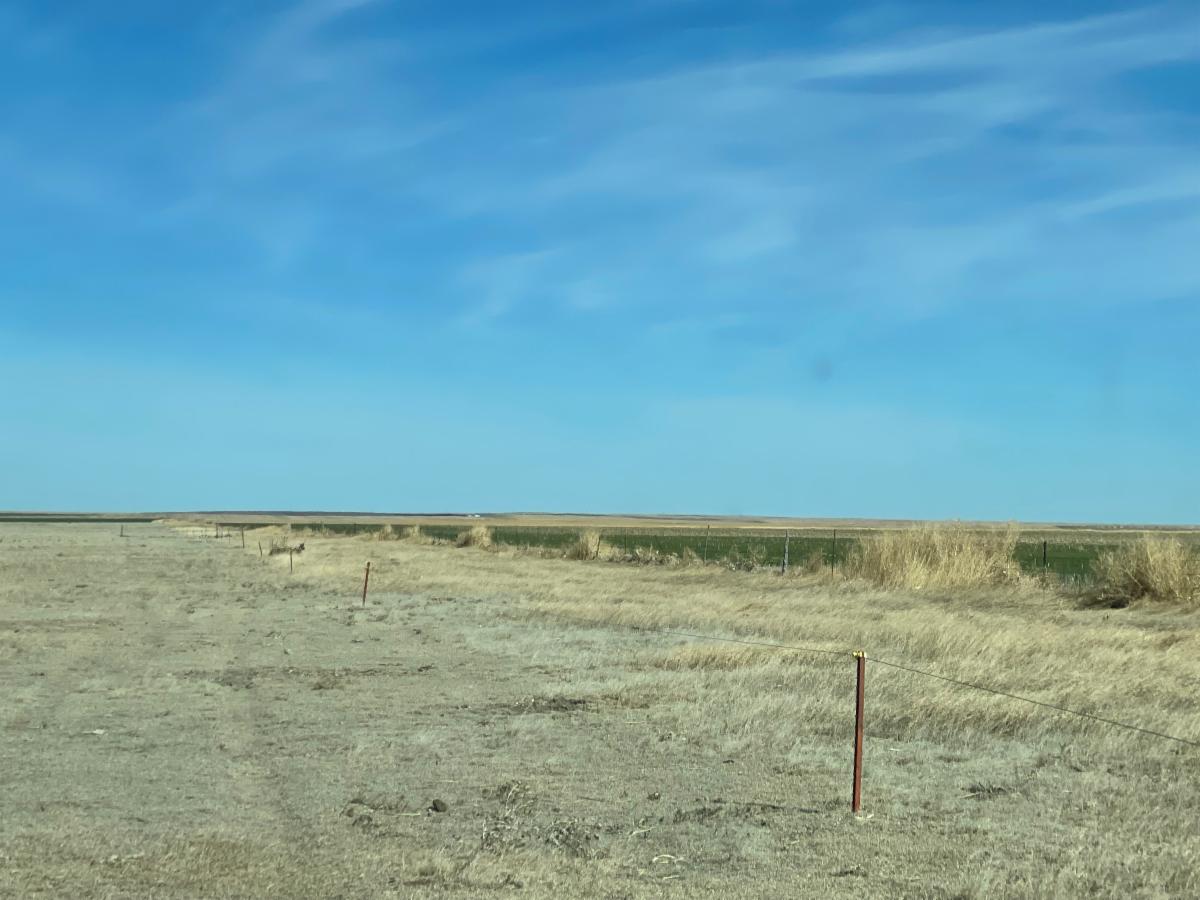
A pleasant exception to this onslaught was reaffirmed recently. In 2018, Greg Greenwald and Lane County Commissioners developed a prairie dog management plan for the prairie dog town on Greg's property. It included erecting double-fencing along the edge of the property. By excluding cattle grazing along a 30-foot or so buffer, the grass grows taller than the rest of the property. Prairie dogs avoid being near tall vegetation so they avoid the property boundaries. He also erected perches for Ferruginous Hawks, Bald Eagles, and Golden Eagles that naturally feed on prairie dogs.
For Greg, the prairie dogs are not only part of the natural ecosystem, they are also a supplemental source of income. Hunters, mainly from out-of-state, reserve the opportunity to hunt prairie dogs on the property, and offer another way to manage the population. Hunters also contribute through the local economy through the purchase of hunting licenses, lodging, and food.
If these control methods fail, Greg poisons prairie dogs that take up residence on the neighbor's property.
Recently, Greg's neighbors complained to the Lane County Commissioners about the prairie dogs that 'escaped' onto their property causing some damage to crops. None of the commissioners in office today were present when the 2018 agreement was drafted. They asked Greg to visit with him, see his control measures, and the damage done to the adjacent property. Greg also invited Lane County Game Warden, Angie Reisch, to be present during the visit.
Greg showed the commissioners around the property pointing out the double fencing and other control measures. Angie warned that if the county exercised their right to use poison to eliminate the prairie dog town, she would be looking for dead Bald and Golden Eagles. These eagles often eat the dead or dying prairie dogs and become poisoned themselves. As eagles have federal protection, she said that she would enforce the law, opening up the county for prosecution.
At the end of the tour, all three County Commissioners were convinced that Greg was keeping up his end of the agreement. The prairie dog town on Greg's property would not be condemned to elimination like so many prairie dog towns in Kansas. The prairie dog wars continue, but we can take hope that winning this battle shows a possible path to preserving more prairie dogs.
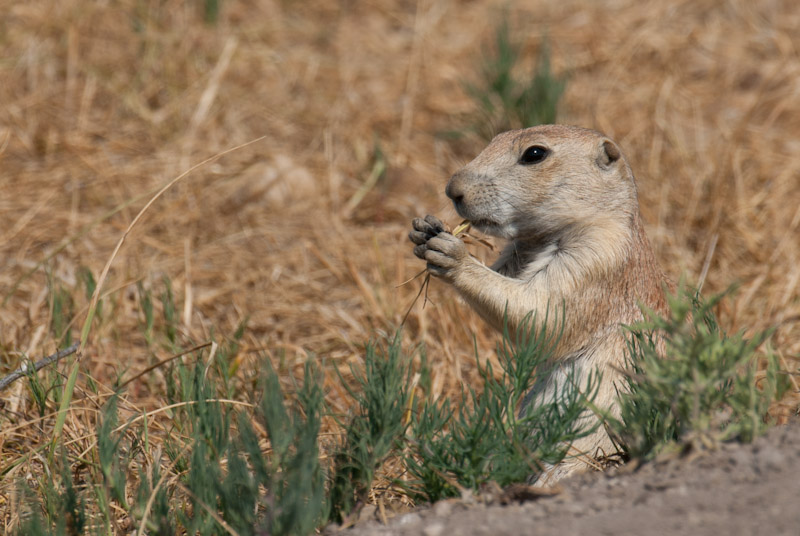
Photo Above Left: A Prairie Dog eats some vegetation outside of its burrow
Below: An example of a double-fencing. Notice that cattle grazing is allowed to the left of the of the electric wire fence, but excluded to the right of it thereby allowing native grasses to grow taller. You can see the neighbor's green wheat field to the right of the barbed wire fence. Photo by Jackie Augustine in Logan County.
|
|
Experts not only double the number of species recorded at Hutton, but also improve facilities |
|
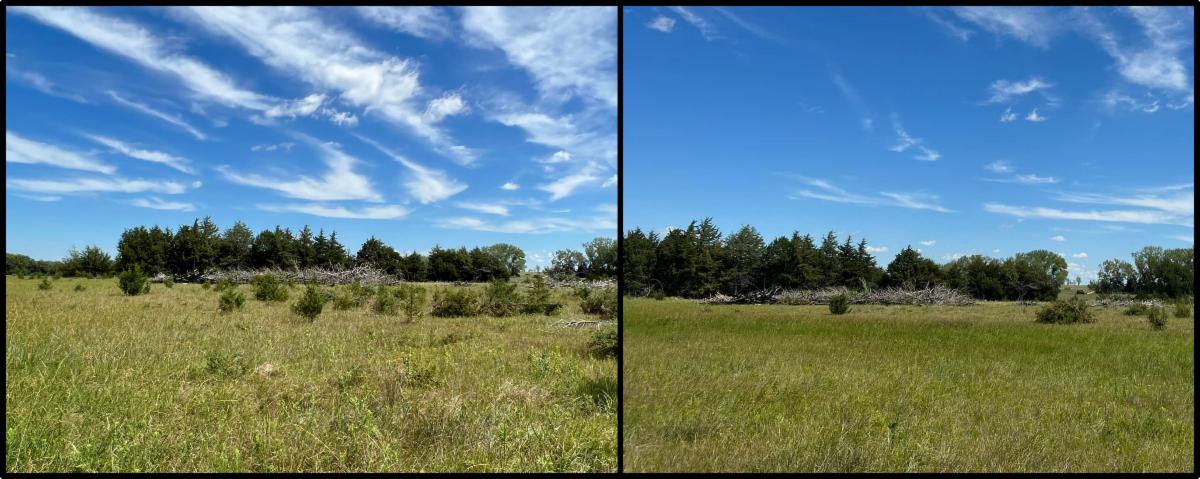
Kelly Walker and Tom Willard visited the Hutton Niobrara Ranch Wildlife Sanctuary as part of a Sharp-tailed Grouse viewing trip associated with the 2022 Kansas Lek Treks Prairie-Chicken Festival. They fell in love with the property and vowed to come back to help combat cedar encroachment. Not only did they make good on their promise, they also recruited three insect experts to contribute their labor and expertise during a work week at the sanctuary that took place during the last week of July.
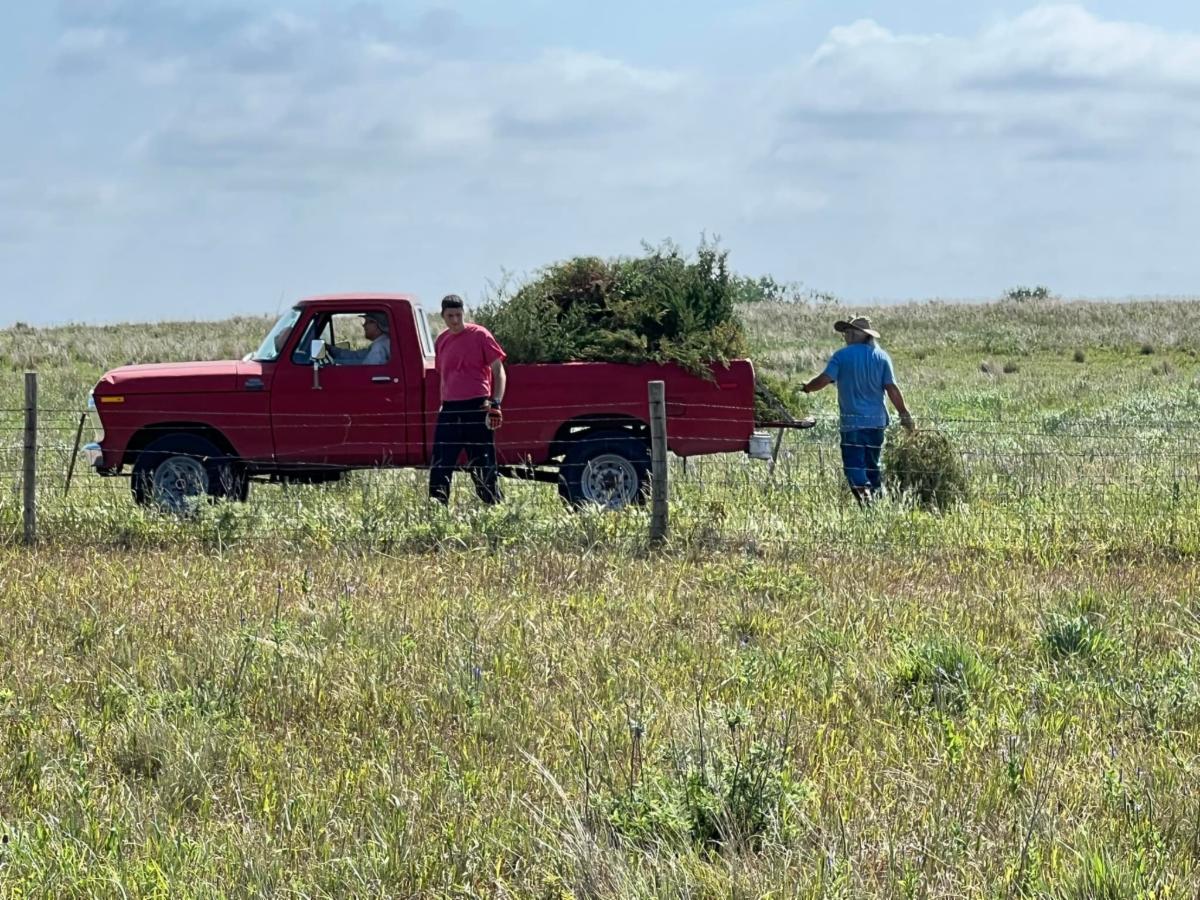
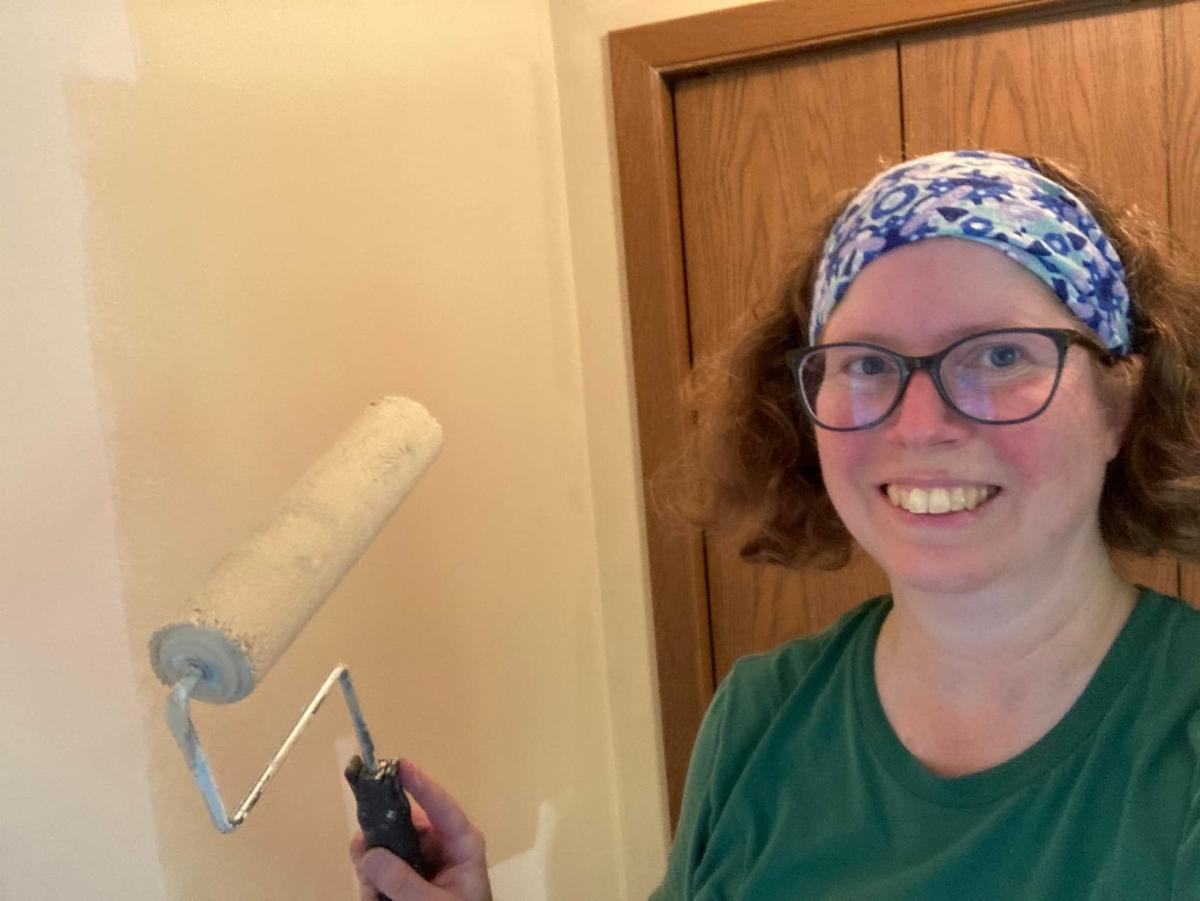
During the morning, one work crew removed cedars in areas where burning is not feasible; whereas, the other crew painted two bedrooms at the Lazy Easy. In the afternoon during the heat of the day, we did other tasks. One day, we met with a regional forester to discuss options for improving riparian forest. Another day, we examined a non-functioning windmill to see if it could be modified to hold a MOTUS tower. Volunteers were free to spend their evenings as they wished. For arthropod enthusiasts (arthropods include spiders, insects, and others), Eric and Heidi Eaton, that meant setting up lights that attracted insects. They photographed the arthropods and uploaded their observations to iNaturalist.
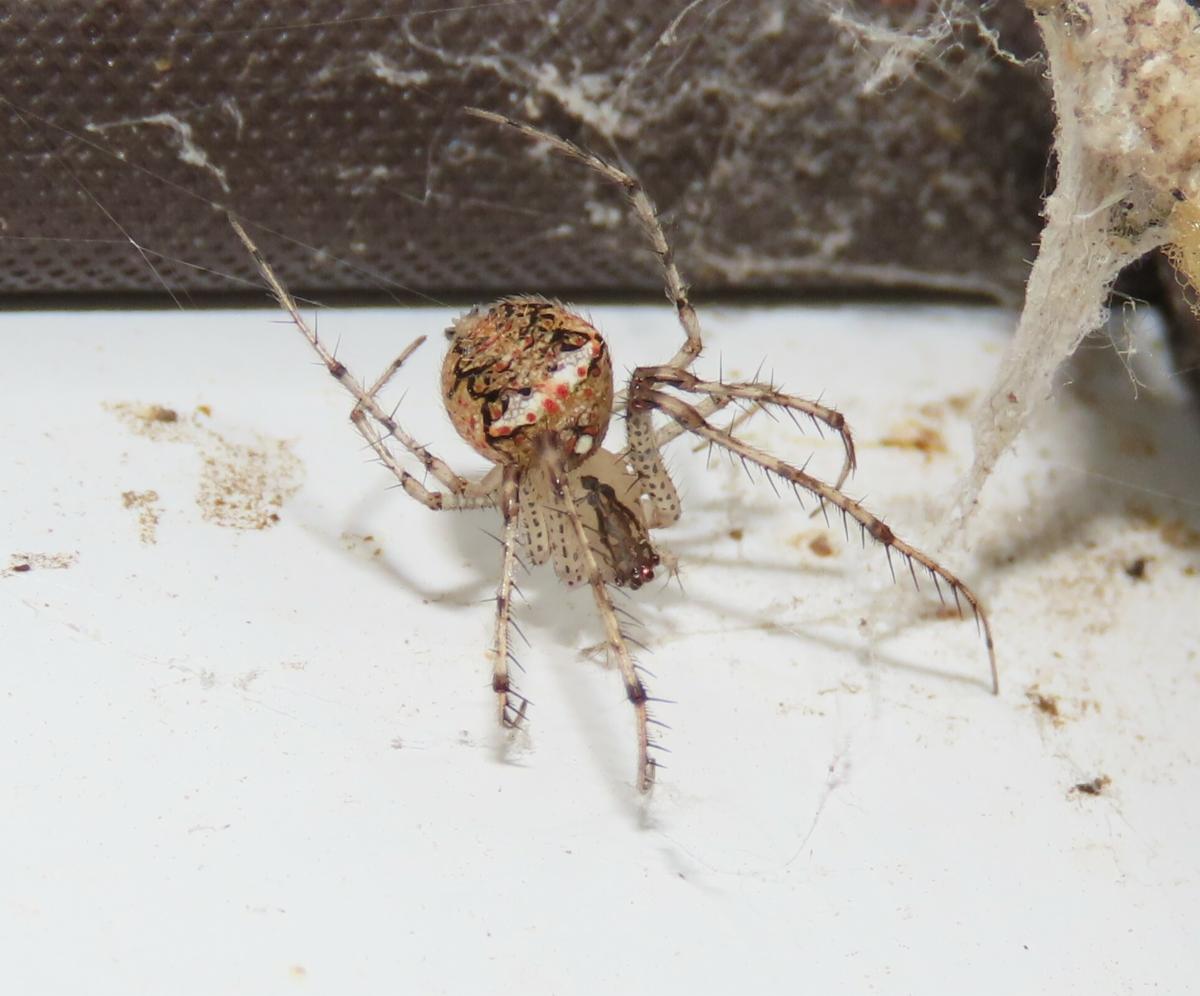
One interesting arthropod they found was a 'pirate spider'. No, they aren't named that because they have a patch over one of their eight eyes. They are named pirate spider due to their unique feeding method - they eat cobweb and orb-weaving spiders and take over their victim's web eating any egg sacs or other prey that has been caught. They have a unique venom which quickly kills other spiders, but their fused mouthparts prevent them from opening their mouth wide. Therefore, they feed by sucking the fluid from the other spider's legs. Ahoy! Be on the lookout for this terror of the spider world.
The pirate spider was only one of 227 observations uploaded to iNaturalist by Eric and 141 observations shared by Heidi (they tried to avoid overlap). Before their visit, 188 species of plants and animals had been identified at Hutton. After their visit, that total is now up to 448 species! Given that insects represent 40% of all known species, we expected a big jump in the number of species reported at Hutton, but adding over 250 species is phenomenal.
To learn more about the fascinating world of insects, we recommend Eric Eaton's blog, Bug Eric, and book, Insectopedia. Eric was kind enough to donate a copy of Insectopedia to Hutton so guests can appreciate insect diversity and behavior.
We also want to thank Kelly Walker. Without her recruiting others to participate in the work week, it would not have been such a large success. We encourage everyone to share the good work of AOK with others and to recruit relatives, friends, co-workers, and others to AOK events and projects. We can accomplish so much more if we have your support, as Kelly wonderfully demonstrated.
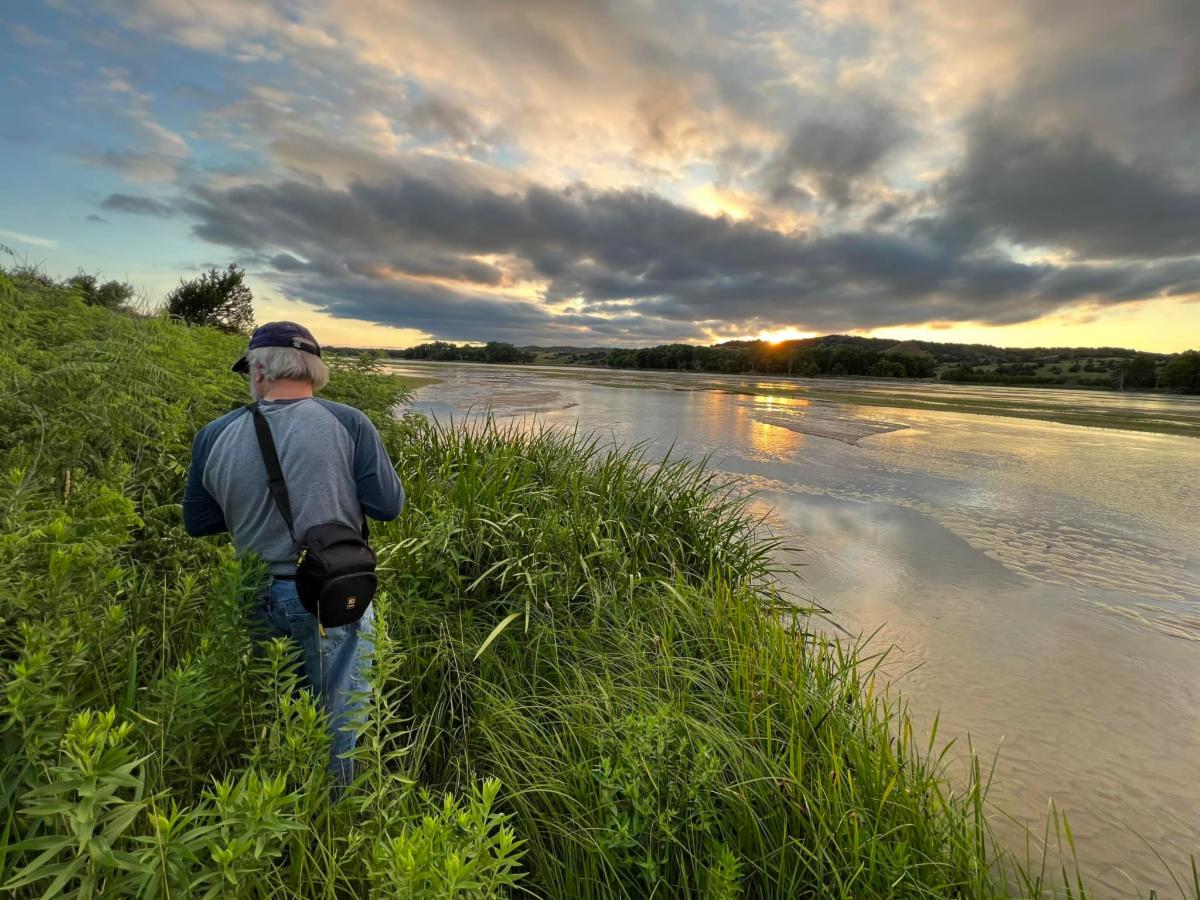
Photo above: Eric Eaton searches for insects to photograph. Photo by Kelly Walker.
Photo above right: Pirate spider photographed by Eric Eaton and uploaded to iNaturalist
Photo below: Before (left) and after (right) cedar clearing. Photos by Kelly Walker.
|
|
Photo above left: Cedar is gathered to form a burn pile. Photo by Kelly Walker.
Photo above right: Heidi Eaton shows off her painting skills at the Lazy Easy. Photo by Heidi Eaton.
|
|
Easement at Hutton receives regional attention |
|
This month, Audubon of Kansas was able to finalize a wetland easement on 300 acres at Hutton Niobrara Ranch Wildlife Sanctuary, near Bassett, Nebraska. The federal government is now our partner in managing that land and will make wetland improvements. The federal government is currently getting bids to do the dirt work to make a berm to retain water longer and create larger wetlands. By expanding the marsh habitat, we hope to increase the population of secretive marsh birds like Virginia Rail and Sora (See July's newsletter). They hope to do the actual work next summer.
Ron Klataske, the former Executive Director, started this process and should receive the credit. There were numerous hurdles along the way. The most recent was Nebraska Governor Pete Ricketts issuing an Executive Order placing restrictions on conservation easements. Paul Hammel, reporter for the Nebraska Examiner, wrote a wonderful piece detailing the process and why Audubon of Kansas was able to obtain an easement when easements sought by other private landowners in the area have not been successful.
|
|
Chickadee Checkoff grant awarded to AOK to encourage people to connect more deeply with nature |
|
The excitement is building for AOK's binocular backpack initiative! Backpacks will be available at Kansas public libraries and include one adult pair of binoculars, two children’s pairs of binoculars, guides for identifying birds and butterflies, and a map showing where to find wildlife in the library's county.
A $10,000 grant from Chickadee Checkoff supports the dissemination of backpacks in southwest Kansas (Barber, Clark, Comanche, Finney, Grant, Gray, Greeley, Hamilton, Haskell, Kearney, Lane, Meade, Morton, Scott, Seward, Stanton, Stevens, and Wichita Counties). Audubon Chapters throughout the state are teaming up with AOK to bring backpacks to their areas.
However, with 328 libraries throughout Kansas, and many being outside chapter boundaries, we need your support! In the coming weeks, watch your email, social media, and mail for how you can make a contribution.
|
|
We could also use help with preparing and distributing backpacks, and in-person programming associated with the kick-off of a backpack becoming available in a particular library. Contact Jackie if you are interested in sharing your passion for watching birds or butterflies and other ways you can make this project a success.
|
|
|
Quail Management Work Day and Talk
Sunday, September 11
9am-5pm
|
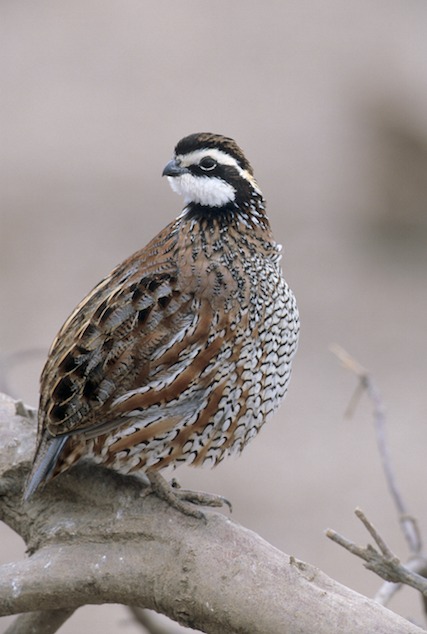
Birders and hunters love seeing quail. Their cheerful 'bob-white' call indicates a sign of hopefulness that people and wildlife can coexist. Unlike much of the country, bobwhite quail are increasing in population size in Kansas. Join Audubon of Kansas (AOK) and Pheasants Forever/Quail Forever 'Women on the Wing' on September 11 to learn more about these interesting gamebirds and to help improve quail habitat. A covey is regularly seen and heard at Audubon of Kansas' Achterberg Wildlife-friendly Demonstration Farm, but elm encroachment threatens to overwhelm the grassland/shrub/forest mosaic that quail require.
You are welcome to just attend the talk and walk starting at 12:30, or come early and stay after to provide some much-needed physical labor to enhance quail habitat and establish a trail increase the enjoyment of nature.
Here is the schedule:
9-noon: Work removing invasive elm and establishing a nature trail
noon: break for lunch (provided by AOK)
12:30-1pm: Talk by Executive Director, Jackie Augustine, on quail biology and habitat management; Hannah Pippert, Pheasants Forever/Quail Forever Farm Bill Biologist on their conservation efforts.
1-2:30pm: Hike and discussion of quail habitat needs
2:30-5pm: Continued work removing invasive elm and establishing a nature trail
Bring a lawn chair for the talk.
For the work day, bring work gloves, loppers, bug spray, chain saws, shovel/post hole digger, weed eaters if you have them, but AOK will also supply these items if you don't have them. We will be cutting up to 10-foot tall 5-inch diameter trees with many being much smaller, establishing a trail with weed eaters and removal of larger limbs, and placing signage.
Water and snacks will be provided.
RSVP requested, but not required. Please email Jackie or call at 537 4385 (area code 785).
Directions to
Achterberg Wildlife-Friendly Demonstration Farm
38.9873, -98.1887
The overlook is at the intersection of 170th Ave and Iron Dr. in Lincoln County.
Directions from Lincoln, KS
*Take KS-14 south from Lincoln, KS approximately 1.5 miles
*Turn right (west) onto Kiowa. Proceed 2 miles.
*Turn left (south) onto 170th Rd. Proceed 2 miles to the intersection of 170th and E Iron Dr.
Directions from I-70
*Take KS-14 north from I-70. Continue about 9 miles. Follow the road as it curves east (right) and north (left).
Turn west (left) onto Hawk Dr. Continue 2 miles.
*Turn north (right) onto 170th Ave. Continue 1 mile to the intersection of 170th and E Iron Dr.
Note: Iron Dr. does connect with KS-14. However this road is pretty rough and may not be passible after a heavy rain. Access to 170th from Hawk, Kiowa, or KS-18 is recommended.
Photo: Northern Bobwhite quail provided by Bob Gress
|
|
|
 |
Audubon of Kansas will join Shawnee County Parks + Recreation at:
the 20th Annual
Outdoor Kansas for Kids Day
September 10
9am-noon
at Shawnee North Trails
There will be a day full of family-friendly activities like nature art, creek exploration, archery, cast practice, and more. All activities are free. Raffle prizes. Plan an hour and a half to explore.
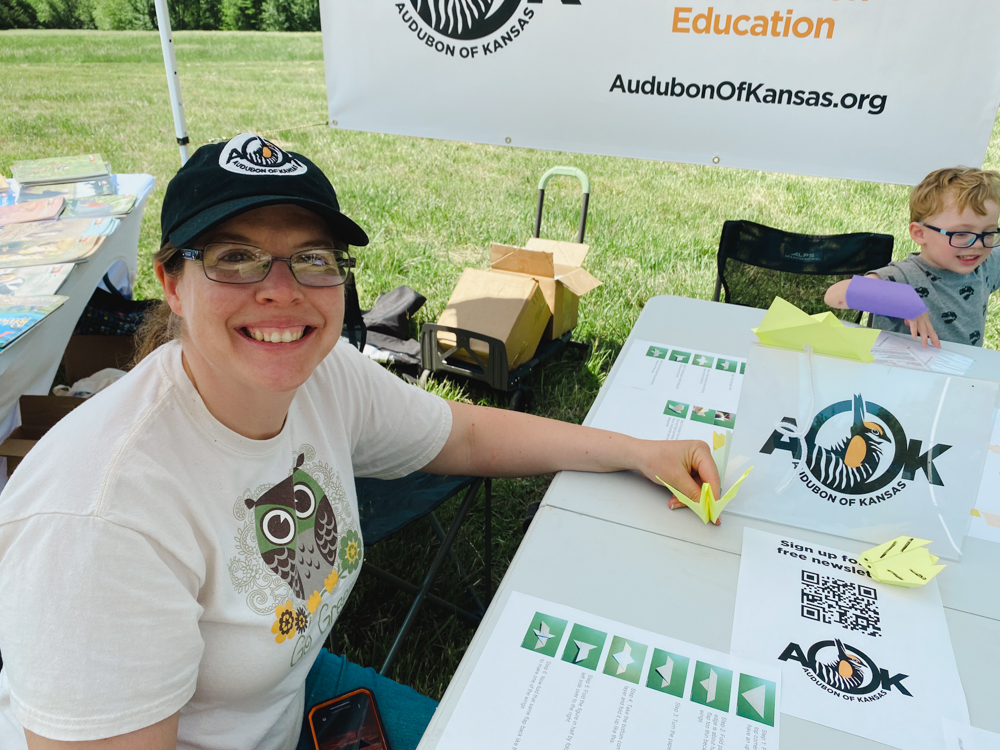
Audubon of Kansas will be doing flower, bug, and bird origami. While the kids (and adults) fold origami, we will talk about why native plants, support many native insects, and that birds need native insects to feed their young.
|
|
|
|
Audubon of Kansas will also have a booth at
the Walnut Valley Festival
September 14-18
Winfield, KS
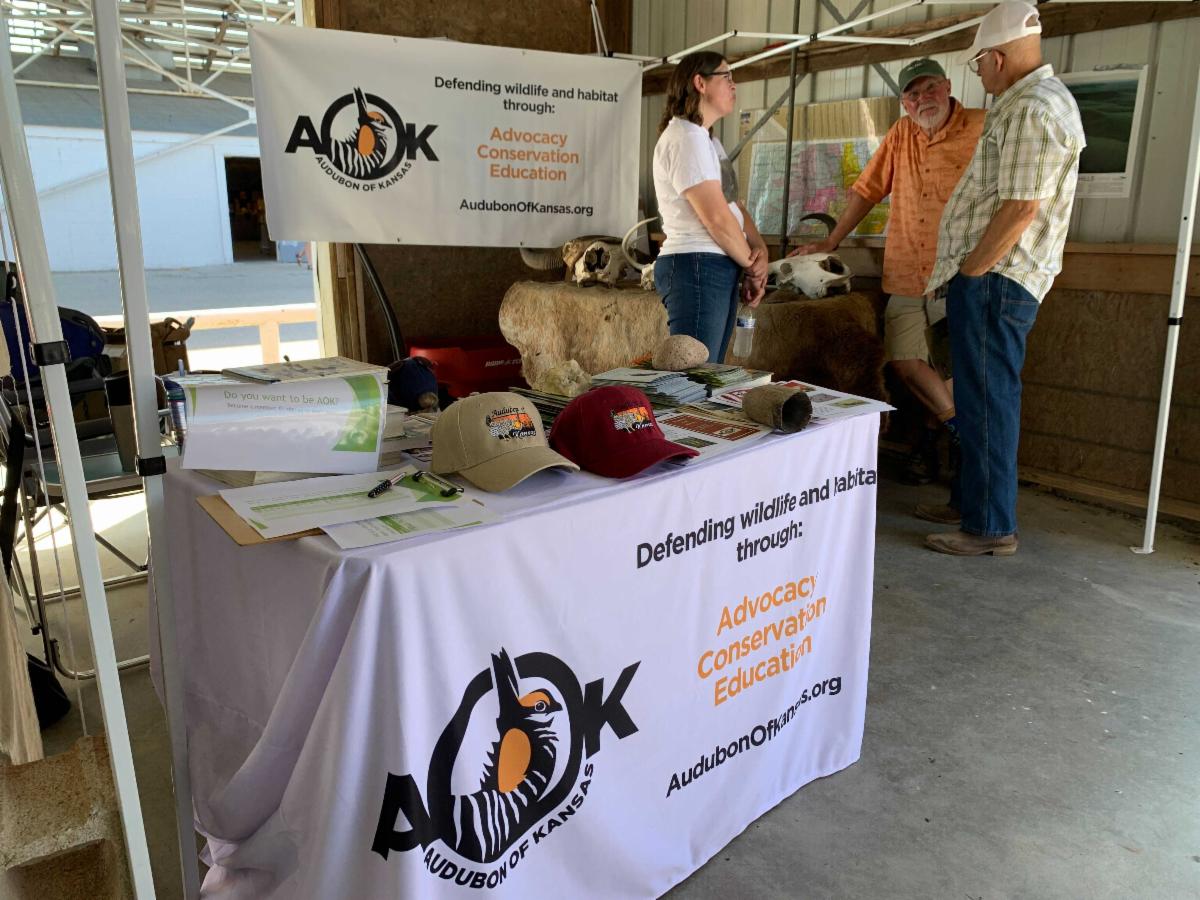
Kelley Hurst, Director of Philanthropy, will be at the booth on Thursday, Friday, Saturday, and Sunday. Jackie Augustine will be there Friday, Sept 16. If you are a bluegrasser, stop by and see us at the Pavilion, Building 6, next to stage 3.
|
|
|
|
Kansas Audubon Chapters met in person to share successes |
|
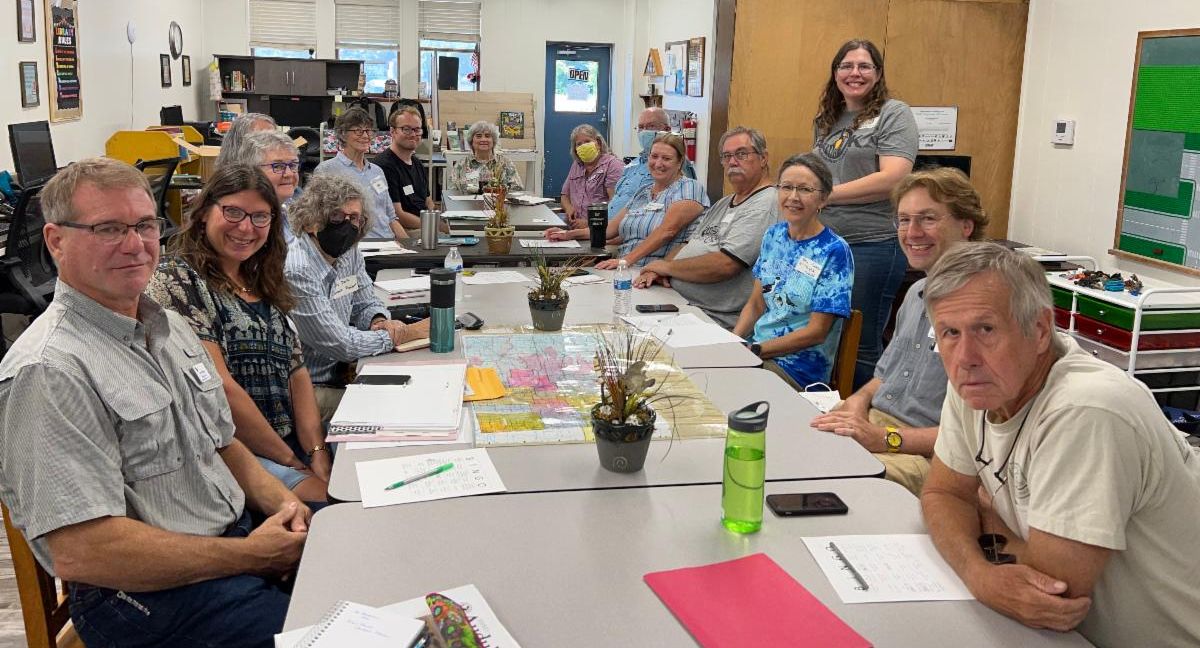
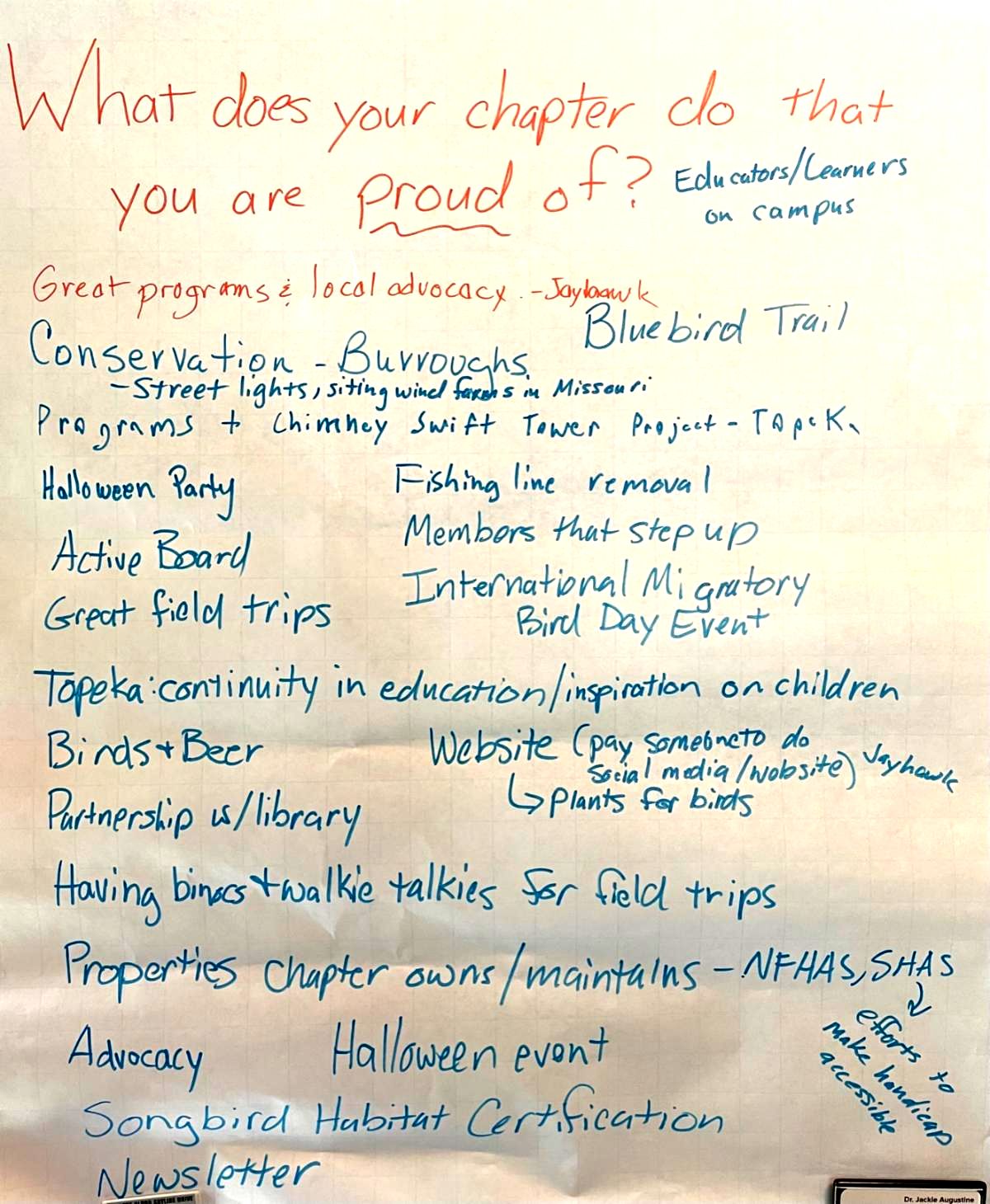
Representatives from AOK and seven Audubon chapters in Kansas met to discuss successes and brainstorm solutions to issues at a recent 'Meetup' in Hartford, Kansas. Chapters were proud of the programming and newsletters they provide to share natural history information and the field trips they have to connect experienced bird watchers with new birders. Several chapters also manage property where native plants allow people to connect with nature. Before the official meeting, about a dozen people went bird watching in the nearby Flint Hills National Wildlife Refuge. Chapters are eager to continue conversations to strengthen their chapters and protect wildlife and wild places in Kansas. One person attended who wants to start a chapter in their area!
Get involved in a local chapter!
|
|
|
AOK shares favorite walks,
hikes and birding spots!
|
|
|
|
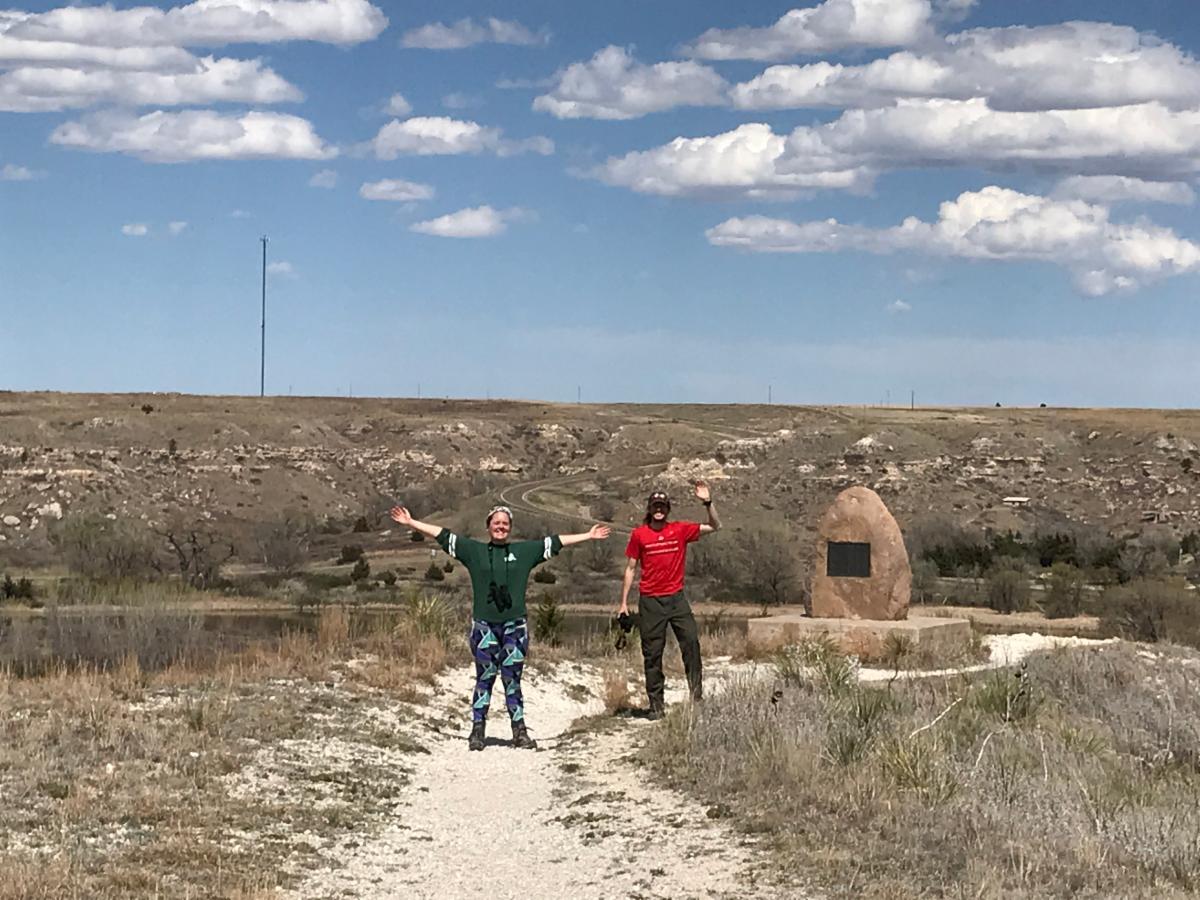
Lake Scott State Park
Situated in the High Plains, this park has it all! Namely, bluffs topped with shortgrass prairie, wooded canyons and rivers, and Lake Scott. All these habitats attract a wide variety of birds, often including rarities, like a Yellow-eyed Junco that spent the winter in 2020-2021.
I enjoy the strenuous, but short hike up the bluff to the Steele Monument (pictured to the left). There is also a 6.2 mile trail that goes around the lake.
|
|
|
|
Lana Arrowsmith - Hutton Niobrara Coordinator - Hutton Sanctuary Management & Reservations lanamicheel@gmail.com
Audubon of Kansas
PO Box 1106 - Manhattan, KS 66505
785-537-4385
|
|
|
|
|
|
|