|
Hello Thomas,
Greetings, This week, our favorite less-biased news source The Week magazine reports that, excluding the Los Angeles fires, the ten most expensive natural disasters in the US have occurred just in the past decade, while at least three billionaires are expected to become trillionaires in the next decade coming up. This brings us to my new climate book, which I will talk about next time. However, these two opposing factoids above remind me of a very recent UK captivating and disturbing docudrama, just released to the US on Prime video, “2073” which warranted a full-page review in New Scientist. We highly recommend it.
Story #1 is quite ambitious, involving perovskite solar cells (PSC), for “Japan aims to develop PSC sections generating 20 gigawatts of electricity equivalent to 20 nuclear reactors by fiscal 2040.” Lightweight and bendable, PSCs can be integrated with urban environments easily. They can be installed on walls of buildings and windows, on car roofs, and on streetlights, allowing these surfaces to be utilized for energy harvesting.
Story $2 includes a good diagram showing a double stage osmosis process, where boron is removed in the second stage inexpensively. Large desalination plants—such as San Diego's Claude "Bud" Lewis Carlsbad Desalination Plant—could save millions of dollars in a year, according to the source, Techexplore.com, and published this month in Nature: “A highly selective and energy efficient approach to boron removal overcomes the Achilles heel of seawater desalination,” Nature Water (2025). DOI: 10.1038/s44221-024-00362-y.
Story #3 describes a new type of rechargeable battery using an inert aluminum fluoride added to an Al-ion battery. “The solid-state Al-ion battery also had an exceptionally long life, lasting 10,000 charge-discharge cycles while losing less than 1% of its original capacity.” Published by the American Chemical Society: ACS Central Science (2024). DOI: 10.1021/acscentsci.4c01615.
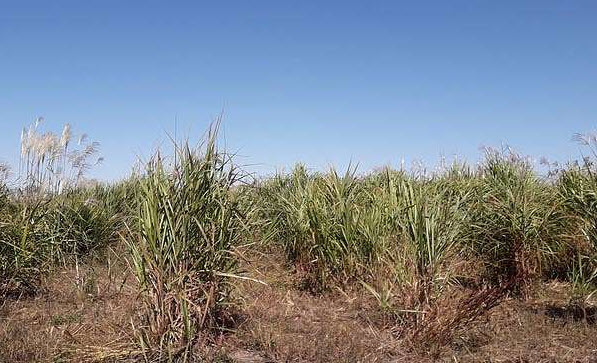
Story #4 is credited to the University of Nebraska which developed a new renewable energy vegetable oil rich in triacylglycerols (TAG) that can be used for sustainable aviation and diesel fuel. They engineered high-biomass grasses like sorghum to produce oil. “These grasses are highly efficient at photosynthesis, produce large amounts of biomass, can grow in tough climates… and provide about 1.4 times more oil per hectare than soybeans, making this a promising new feedstock for renewable fuels.” See their Research Report: Development of vegetative oil sorghum: From lab-to-field.
Story #5 has a fascinating development based the structure of a Venus flower basket sponge. The design mimics nature forming a synthetic version of the skeleton so that the new filter can grab 97% of an oil spill even in turbulent waters. Researchers from Harbin Institute of Technology in China have come up with a new approach to oil cleanup using a vortex-anchored filter (VAF). When the Trump administration intends to overturn the ban on offshore drilling, even off of Florida’s coast, we certainly need such an insurance policy for the inevitable accident waiting to happen. The research is published in Nature Communications.
Sincerely,
Thomas Valone, PhD,
Editor
|