PacIOOS Got Re-certified! |
|
The U.S. Integrated Ocean Observing System re-certified PacIOOS as a Regional Information Coordination Entity (RICE) on October 23, 2020. RICE certification means that PacIOOS is providing high-quality observations that meet National-level standards, extending the reach and ability of federal programs. Certification is a rigorous and formal process, ensuring consistency across ocean observing organizations with regards to data collection, governance, and management.
In 2015, PacIOOS was the first regional association to be certified within the IOOS system. Every five years, existing practices and protocols undergo a review process to maintain the certification status. Certification is key to the establishment of the full IOOS system and is mandated by the Integrated Coastal and Ocean Observation System (ICOOS) Act. |
|
2020 Virtual Governing Council Meeting |
|
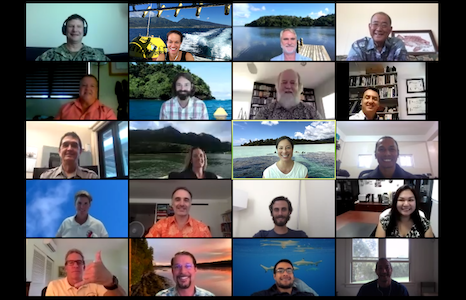
PacIOOS Governing Council members and PacIOOS staff came together virtually this year for the annual council meeting. The focus of the 2-day video conference was to provide program updates, and to discuss the proposed scope of PacIOOS' 5-year proposal and 10-year outlook. Throughout the summer, PacIOOS reached out to more than 500 partners individually across the region, and solicited feedback through newsletters and listservs to collect input on coastal and ocean observing needs, priorities, and potential collaborations. Feedback from the Governing Council, stakeholders, and partners helps guide PacIOOS' future direction for the upcoming 5 to 10 years. The PacIOOS Governing Council consists of members from various sectors across the region, including the U.S. Freely Associated States, the U.S. territories, and Hawaiʻi. |
|
PacIOOS Tools and Instruments |
|
Hanalei Wave Buoy Redeployed |
|
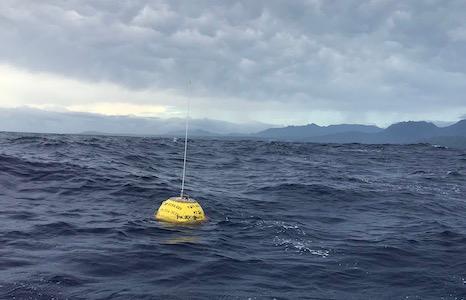
The PacIOOS wave buoy off Hanalei, Kauaʻi, was redeployed this month. The wave buoy is located approximately 4 miles offshore of Hāʻena on the North Shore of Kauaʻi. The buoy is part of PacIOOS' network of 15 real-time wave buoys across the U.S. Pacific Islands region, collecting information on wave height, period, and direction, as well as sea surface temperature. Data are transmitted in 30-min intervals to the PacIOOS website and PacIOOS Voyager. Redeployment was delayed due to COVID-19 related travel restrictions. Data management for the PacIOOS wave buoys is made possible through long-term partnerships with the U.S. Army Corps of Engineers and the Coastal Data Information Program ( CDIP). [Photo Credit: PacIOOS/Andreia Queima] |
|
Virtual Presentation on Modeling Coastal Dynamics |
|
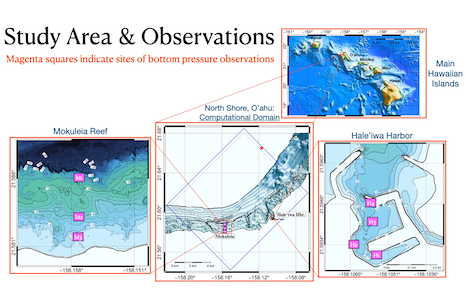
At the beginning of October, Dr. Assaf Azouri, researcher in the PacIOOS Coastal Modeling group under the supervision of co-investigator Professor Douglas Luther, presented remotely at the Virtual International Conference on Coastal Engineering. Dr. Azouri discussed how three phase-resolving numerical models (XBeach, FUNWAVE, and BOSZ) can be used to replicate wave dynamics over a complex reef environment. The model simulations, which were implemented over a large portion of Oʻahu's North Shore, including Haleʻiwa Harbor, reveal good qualitative agreement among the models and field observations. It is shown that when such models are implemented over sufficiently large domains, they can be used as forecasting tools to predict wave variability at the coast, and in semi-closed basins such as harbors. Conference proceedings presentations will be made available online. |
|
Lightning Talk at SACNAS Conference |
|
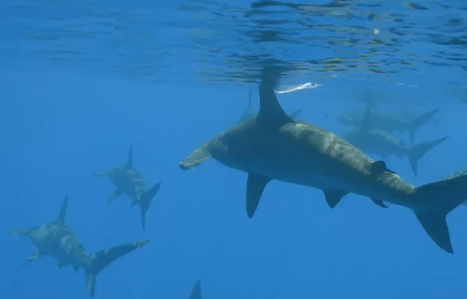
The Society for Advancement of Chicanos/Hispanics and Native Americans in Science ( SACNAS) hosts the largest multidisciplinary and multicultural STEM diversity conference in the country. The 2020 National Diversity in STEM Conference was held virtually, striving to equip, empower, and energize participants for their academic and professional paths in STEM. PacIOOS collaborator Dr. Carl Meyer, researcher at the Hawaiʻi Institute of Marine Biology ( HIMB), participated as a NOAA partner in the NOAA Virtual Booth Lightning Talks. The 7-min presentations in the NOAA Virtual Booth included various topics, covering ocean and atmospheric sciences. Dr. Meyer shared cutting edge shark research being conducted by female graduate students at the University of Hawaiʻi. [Photo Credit: Cory Fults] |
|
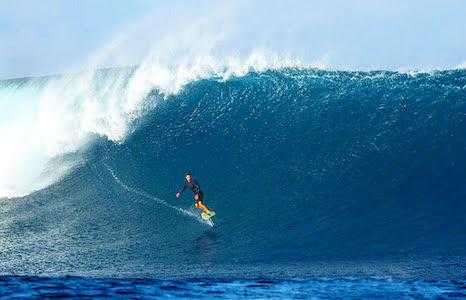
Benny Ferris, a firefighter, surfer, and farmer on the island of Kauaʻi, has grown up spending lots of time in and around the ocean. Checking wave conditions and wave forecasts has always been fascinating to Benny and a part of his daily routine. " PacIOOS' forecast is by far the most accurate and detailed I have ever seen. Many forecasts only give expected wave size and there is so much more to know than that," says Benny. The PacIOOS forecast provides details on the expected wave height, direction, and period of an upcoming swell. "This not only tells size but also gives insight to the expected power and consistency of the swell, which is key information when planning for work and surf." Both the real-time data from the PacIOOS Hanalei wave buoy, as well as the forecast, help Benny to get the most out of his surf and ocean sessions. More importantly, it allows him and his rescue team to be more aware, prepared, and safe when responding to emergencies in and around the ocean. [Photo Credit: Scott Winer] |
|
|
|
|
|
|