Welcome to The Gardeners' Dirt, a new monthly email publication of Victoria County Master Gardener Association. Feel welcome to forward our newsletter to all your gardening friends with the request that they sign up for future issues of the newsletter. | | |
Contents of this Issue
- Winter Plant Sale
- Master Gardener Training Class
- Meet and Greet
- Becoming a Certified Master Gardener
-
All gardeners and friends are invited to sign up for The Gardeners' Dirt, our new monthly newsletter
- Frost vs. Freeze: Is There a Difference?
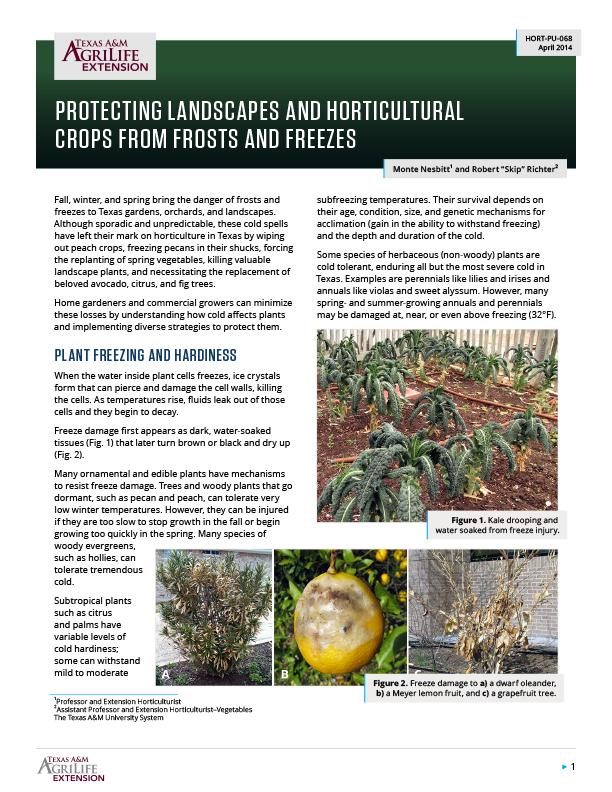
- Protecting Landscapes and Horticultural Crops from Frosts and Freezes (Official Texas A&M AgriLife Fact Sheet)
- Vegetable Gardening Chores
- Growing Holiday Gift Plants in the New Year
- A Daylily Whose Name Says It All
- Victoria County Master Gardener Association Officers
| | |
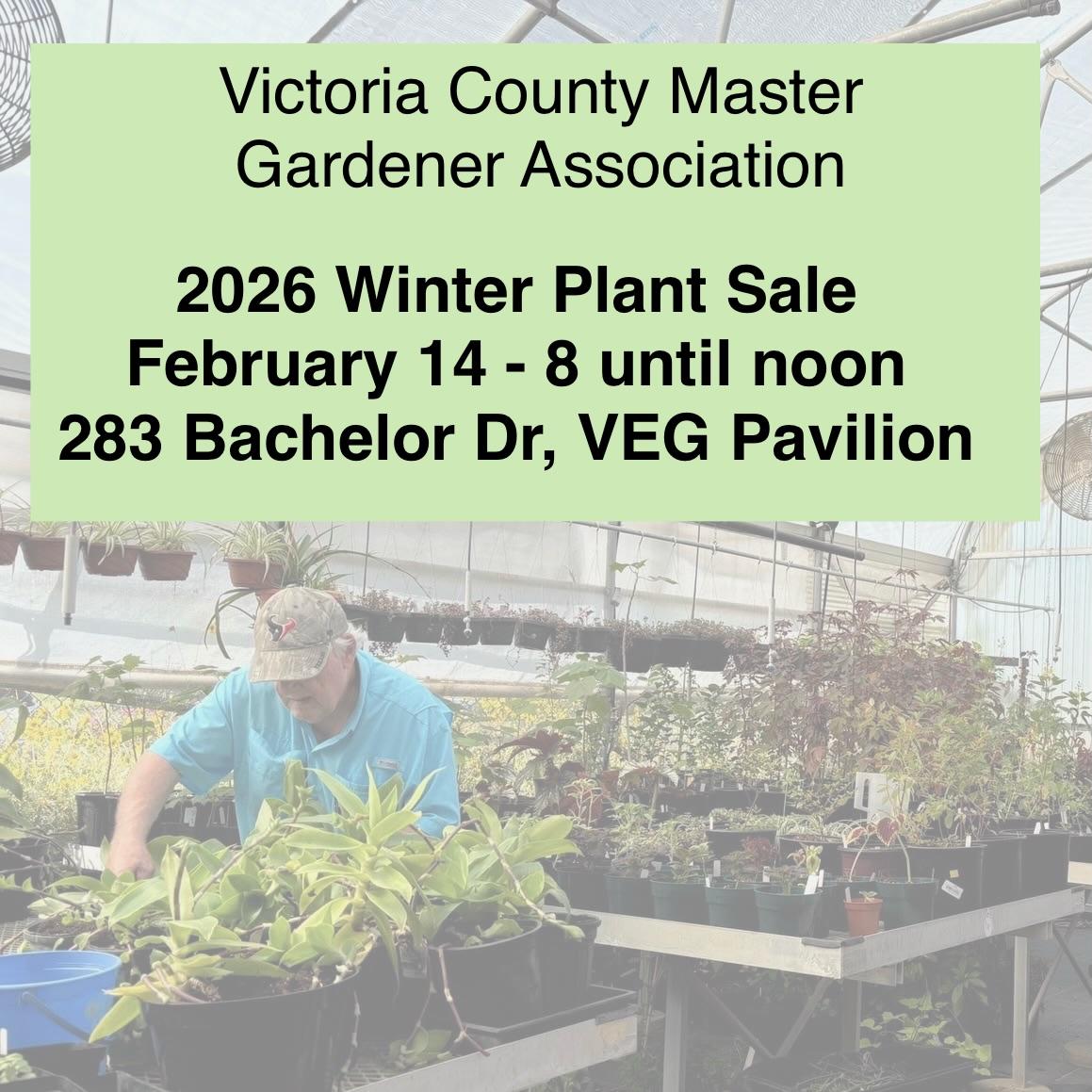
VCMGA 2026 Winter Plant Sale
Feb. 14 - 8 a.m. until noon
It’s time to plant some winter plants to last thru spring and some beyond. Plant Sale will be at VEG Pavilion at 283 Bachelor Drive
The greenhouse is filled with over 1500 cool weather flowering plants: Calendula, Snapdragon, Nasturtium, Viola, Blue and Maroon Blue Bonnets, Lupine, Sweet Pea, Poppy, Alyssum, Yarrow, Hollyhocks, Forget Me Nots. (4 inch pots)
We are also growing out 180, 4 packs of a variety of tomatoes and planting another 80-100 4 packs of leafy green vegetables!
At the sale, we will also include a variety of succulents/cacti and indoor plants: Pothos ivy, spider plants, and turtle vine.
We also have: Roses (Cascade, Peggy Martin, Drift), Aggie Hibiscus, ginger plants, longevity spinach, chives, and multiplying onions.
Come and shop for great buys at our Winter Plant Sale.
| | |
Becoming a Certified
Master Gardener
By Jennie Pritchett
Victoria County Master Gardener
There are two types of gardeners. The first kind are the ones who can bury a broomstick handle and grow a tree. Then there is the rest of us. Through no fault of our own, we buy plants that struggle and die, leaving us frustrated. This vicious cycle of buying and re-buying plants that end up dying is very frustrating.
I was in the latter group of gardeners until a new friend convinced me to join a garden club. This urging was pure peer pressure at its worse. What if they found out that plants would not survive in my care? After joining the garden club, I realized I wasn’t a bad gardener after all but lacked knowledge on how to properly take care of my plants.
That’s when I enrolled in the Victoria County Master Gardener Association program. The classroom and speakers were excellent and expanded my knowledge on a variety of topics. The best part of the program for me was working side by side with the experienced master gardeners. They patiently showed me plant propagation processes for different plants and how and when to prune shrubs and how to harvest vegetables.
I graduated in December 2023. For me, it was a life-changing event. While not all my plants survive, I now have resources to quickly assess what the problems are. Often, I have been able to save the troubled plants.
My story is to encourage other wanna-be gardeners to invest in yourself so you can create your own dream garden. We do, however, have a choice. We can throw in the towel, or we can armor ourselves with knowledge. The solution is right in Victoria County, near the Victoria Regional Airport. I’m talking about the 2026 Master Gardener Training Program.
The Master Gardener Training Program provides a unique opportunity for individuals who are interested in horticulture to have both classroom and hands-on experience working in the Victoria Educational Gardens.
To check out this opportunity you are invited to come to the “Meet and Greet” event on Saturday, January 31, 2026, from 10 a.m.to 12 noon at the Victoria Educational Gardens (VEG) Pavilion, located at 283 Bachelor Drive, Victoria, TX 77904. Several Victoria County master gardeners will be on hand to explain more about our many projects and to entice you to join the 2026 class.
The training class will begin Thursday, February 5, 2026 – May 21, 2026. We meet every Thursday from 9:00 a.m. to 1:00 p.m. We will have a 2-week spring break. When the class ends, trainees will have completed 50 hours of classroom instruction. From May 21 to November 30, 2026, the trainees become interns and complete 50 hours of approved projects and working in the Victoria Educational Gardens and Greenhouse. Graduation will be December 10, 2026.
The class fee is $200 which includes 50 hours of classroom instruction and your book. Your book is a 400 plus color gardening manual, and 50 hours includes instructions from experts in numerous horticultural fields, and hands-on experiences with field trips and class activities throughout the training. Class size is limited, and students will be enrolled based on when applications and payments are received.
The instruction part of the course includes the following topics: Earth Kind Landscaping, Freeze Preparations, Fruits, Insects, Integrated Pest Management, Irrigation, Lawn/Weeds, Plant Development, Propagation, Plant Pathology, Soil, Trees, and Water. Faculty from Texas A&M University teach many of the course modules.
Our class activities will include soil samples to be taken from each student’s yard. Samples will be sent off to Texas A &M. The results will be emailed back to class coordinator, and we will learn to read results in class. Trainees will assist Master Gardeners with projects which may include setting up an irrigation system, propagation in our greenhouse, and other noteworthy projects. One field trip will be planned.
To register visit our website, https://txmg.org/victoria for more information including an application form. Click on the 2026 VCMGA Training Class on the top left side of the page. Find a link to download the application and instructions for submitting.
Master Gardener Class- Thursday, February 5-May 21, 9:00 am to 1:00 pm at VEG Pavilion, 283 Bachelor Drive, Victoria 77904.
During the Meet & Greet on Saturday, January 31 from 10 until noon, anyone interested can come and meet in Victoria Educational Gardens Pavilion. Come see what soil testing is all about and other facets of gardening.
Application may be filled out now and submitted to Extension Agent, Kara Matheney at 528 Waco Circle, Victoria, TX 77904.
You may email your fillable form to Extension Agent Kara Matheney & Jennie Pritchett at the link below.
| | |
An Invitation to receive
'The Gardeners' Dirt' in your Email
All gardeners and friends are invited to subscribe (free, of course) to The Gardeners' Dirt, published monthly by Victoria County Master Gardener Association. You may have already seen some of the information on social media in this, our first issue. Our February issue will have lots of new information. You will receive educational gardening information and notification of VCMGA events and activities. (A note to members, you are already signed up, so you do not need to sign up again.)
| | |
Frost vs. Freeze: Is There a Difference?
By Charlie Neumeyer, Victoria County Master Gardener
We have been blessed so far this year with an extended growing season. No freezes and only a brief bout with frost. I am, in fact, still harvesting tomatoes that I planted in August from my garden. But our luck cannot hold out and eventually winter weather will appear.
Although both will kill plants, frost and freeze are different temperature-related events. According to Texas A&M AgriLife Extension Agent Daphne Richards, frost typically “forms on a still night when the temperature drops near or below freezing. A freeze on the other hand … is a more extended period below freezing and may include wind.” The result of both events, however, is the same: dead plants.
Mitigating the Risks
While we can’t control the weather, we can take steps that will help our plants that are not freeze-hardy. Some of the things we can do are obvious, but there are other things we can do that will also help:
Watering: Stressed plants are more susceptible to cold damage. Texas A&M AgriLife Extension suggests watering the plants before the cold weather can reduce stress and the water will act as a “heat sink,” that is, it will hold and slowly release heat. This watering alone will not protect plants, but if used in conjunction with plant covers, it will help.
Mulching: Tender perennials can benefit from this tactic. Mulch helps hold in the warmth of the soil and can keep the ground from freezing and protect the root system. You can also spread a thick layer over the crown of the plant for protection. Instead of buying mulch, consider using the leaves that you have gathered instead of bagging them.
Adding Heat: Used in conjunction with plant covers, adding heat sources beneath the cover will make a big difference. Low-wattage light bulbs are the easiest source to add, but you need to find the old-fashioned incandescent ones as the newer LED bulbs do not produce heat. Soil heating cables and mats are made to keep the soil warm. However, the expense of buying, electricity usage and installation may be issues.
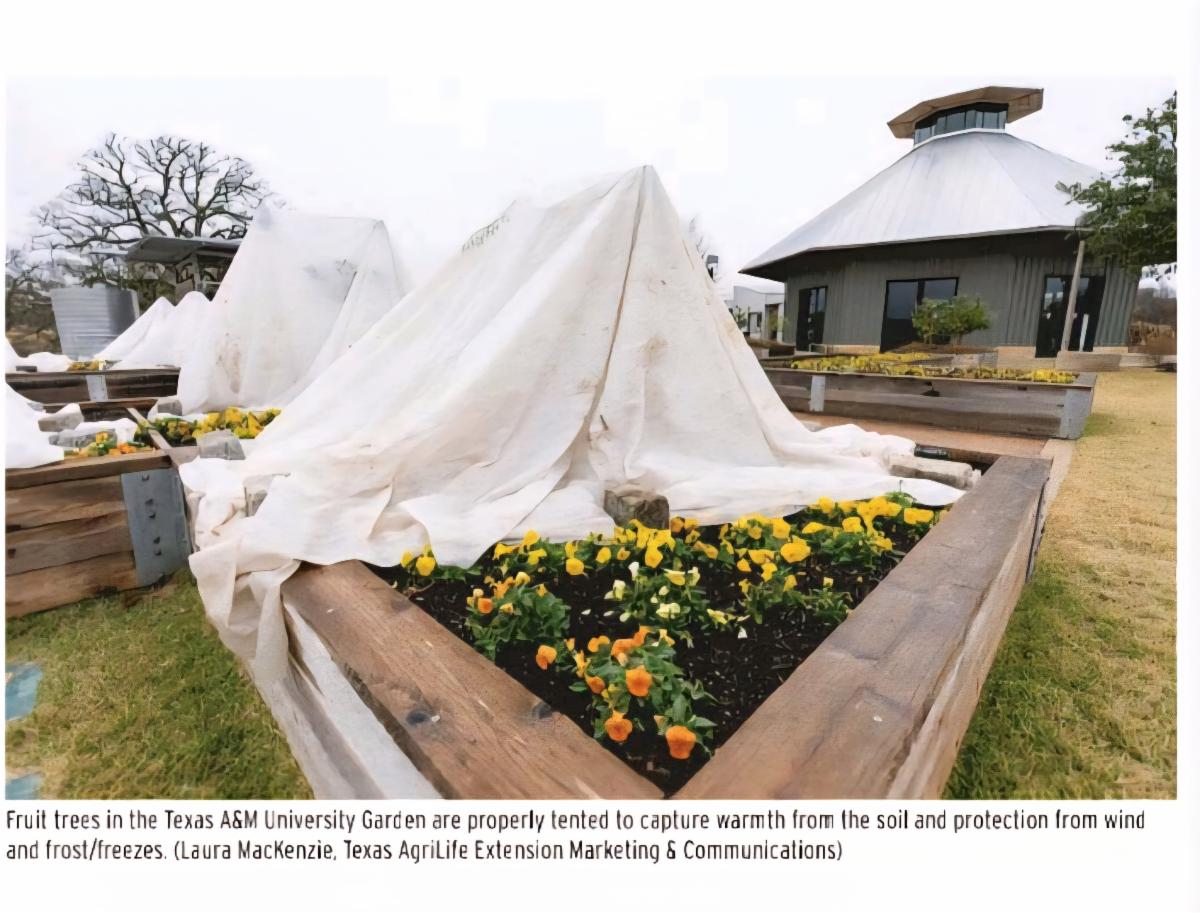
Covering: Covering plants is by far the most common and often the simplest solution. The covering will keep the frost off the plant. But if a hard or prolonged freeze (think polar vortex) is forecast, you need to cover the plant correctly.
In her “Frosts and Freezes” article, Ms. Richards points out that it is not the blanket or frost cloth that keeps the plant warm, it is the heat in the soil that rises around the plant. Keep that in mind, you should drape the cover over the plant or over a frame constructed around the plant and “secure it with boards, bricks, rocks or soil to hold in the air.” If possible, remove the cover during the day so that the sun can warm up the soil, then replace the cover before nightfall.
In addition to cloth, card board boxes, large garbage cans, molasses tubs and hoop tunnels can be used. If you are using plastic, be sure to cover the plant with a blanket or cloth and put the plastic sheeting over that. A bonus in using the plastic is that it will help hold in the air, especially on a windy night.
Potted Plants
If a greenhouse isn’t an option, clustering the pot plants in an area protected from the wind will help. In our area that would be the south side of the house. I usually put the plants on my front porch which faces east and that has been effective. I do cover as needed.
Plants have become expensive and it makes economic sense to try and save them. However, if you have some plants that no longer bring you joy…well, you get the idea.
| | |
Protecting Landscapes
and Horticultural
Crops from Frosts and Freezes
(Official Texas A&M AgriLife Fact Sheet)
Click the link below (below the photo of the first page), then furnish name and email address, to immediately receive a link to download the multi-page detailed document.
| | |
Vegetable Gardening Chores
By Sandi Coleman, Victoria County Master Gardener
(Vegetable Gardening, Advanced Training)
January Gardening things to do:
Look around your garden.
Weed.
Check to see if you need to build up soil in raised beds.
Purchase seeds for spring planting.
Plant the last of your transplants of cabbage, broccoli, Brussel sprouts, kohlrabi, kale, mustard and collards.
February Gardening things to do:
Plant root crops - carrots, radishes, beets, and turnips.
Plant snap, snow and English peas now.
Plant warm season vegetables inside.
Around the middle of the month plant seed potatoes.
Prune fruit trees, berry vines and rose bushes.
| | |
Growing Holiday Gift
Plants in the New Year
From the archives -January 7, 2022
by Debbie Hopper
Victoria County Master Gardener
Edited by Victoria County Master Gardener,
Suzanne LaBrecque
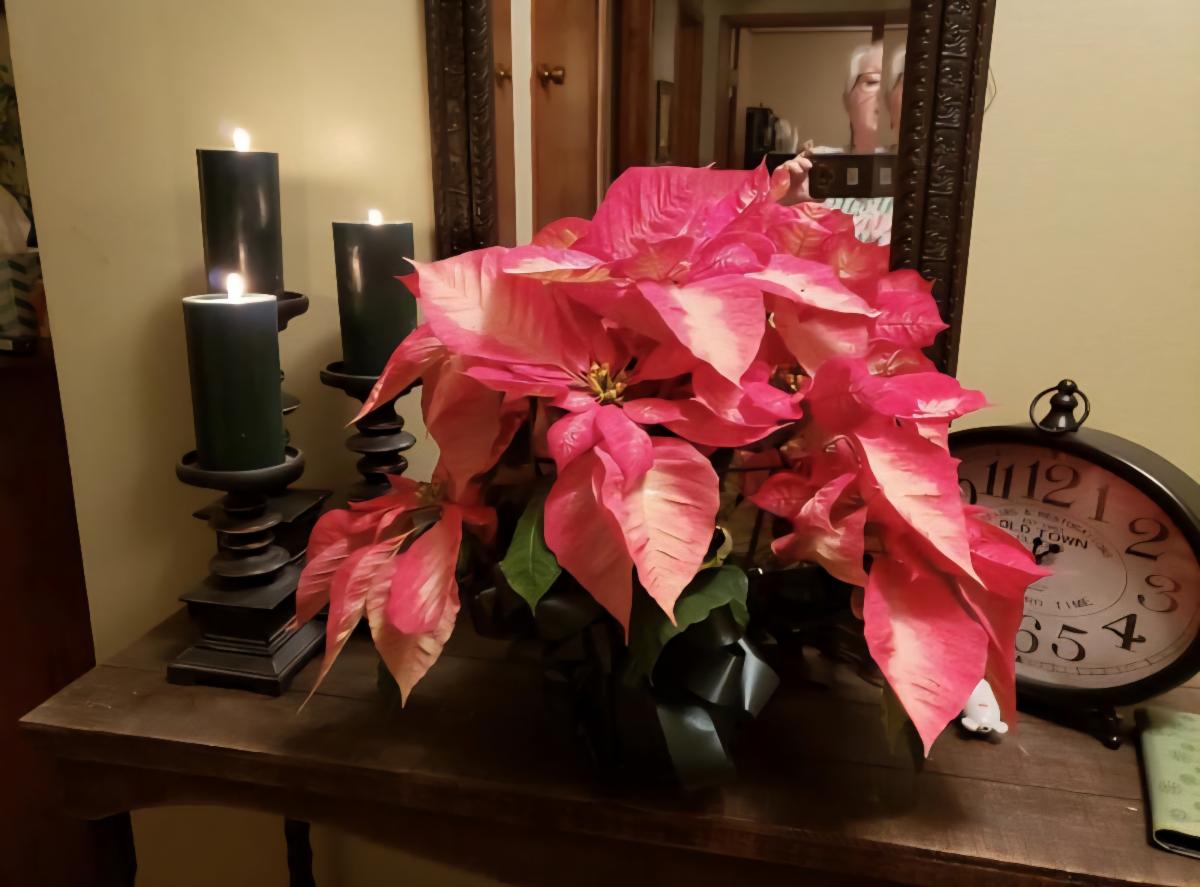
Christmas is over and many of us received poinsettia (Euphorbia pulcherrima) and/or Christmas cactus (Schlumbergera truncata) as holiday gifts.
Many gift plants arrive wrapped in green, red, silver or gold foil around the container with a big beautiful bow. Florists use the foil to dress up the plants, especially around the holidays.
Have you noticed your plant is starting to look unhealthy, or leaves yellowing or dropping? Should you take that pretty foil off? Probably. Many of these foil-wrapped plants can die within weeks because the roots rot and can’t breathe when they sit in water. The foil wrapping traps the water, and it has no place to go.
There are two other alternatives if you wish to keep the foil. You can poke tiny holes into the bottom of the foil and put the container where excess water can drain out.
The other alternative is to take the plant out of the foil wrapping and water the plant at the sink and let the water drain through. Once the container has drained, place the container back into the foil wrapper.
The poinsettia is the most popular holiday plant. Poinsettias come in a variety of colors such as red, white, pink, bicolored and red with white specks. You can find new colored poinsettias in salmon, mauve and purple.
Some say poinsettias are picky plants. They like semi-cool, but humid locations in bright but indirect light.
They do not like to sit in standing water. It is best to let poinsettias dry out before watering. Once the bracts, the brightly colored leaf-like structure that is slightly different from the other leaves fall, you can throw out the plant or keep it and relocate it to a cool, dark area until spring.
Some people in our area grow poinsettias outside. Until the temperature gets above 60 degrees, it is best to keep them indoors. After the last frost around March 1, you can plant them outside.
Christmas cactus is a popular succulent and very pretty when covered in blooms. They are easy to care for and to propagate. They like to be somewhat root bound and have small root systems.
Christmas cactus likes living in the average home. It will adapt to low light, but will produce better blooms if it is exposed to brighter light. Do avoid too much bright sunlight as it can burn its leaves.
It will need frequent, thorough watering during its active growth in the spring and summer, but do not let the plant sit in water. This cactus needs to almost dry out between watering. A houseplant fertilizer solution can be used every other week if desired. You can use a tray of pebbles filled with water beneath the Christmas cactus container to add humidity to the home.
When the Christmas cactus stops flowering or about six to eight weeks before you want it to re-bloom, cut back on water, light and temperature. It will need 12-14 hours of uninterrupted darkness to go dormant. They normally bloom December through January.
Christmas cactus comes in several colors such as salmon, white, red-orange, lilac and a deep rose. Christmas cactus can grow up to 8 feet in diameter and 3 to 4 feet high.
Next year during the holiday, when considering what gift to buy or how to decorate the interior of your home, consider one of these plants. They are an excellent way to add bright color and cheer to your home. Also, they are easy-care, provided you keep them properly watered and in the right light. Both these plants can extend the holiday season into the New Year.
More pictures –
https://vcmga.org/gardeners_dirt/2022_jan_07
| | |
A Daylily Whose Name Says It All
Brenda Heinold, Victoria County Master Gardener
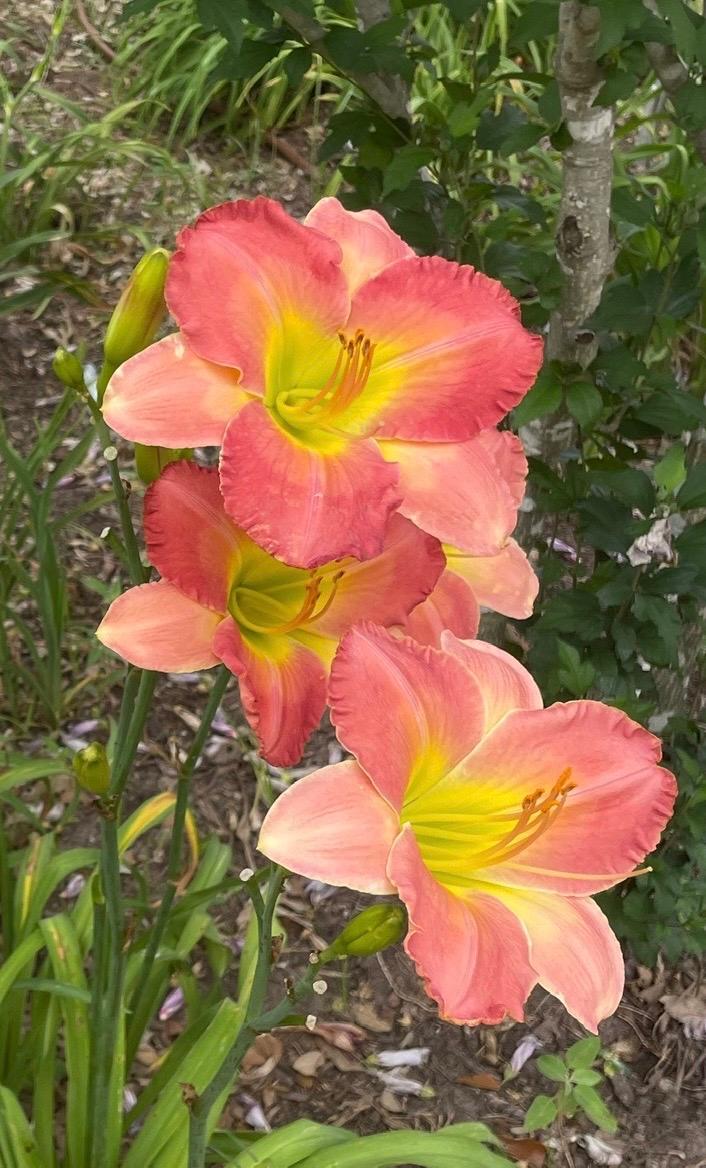
Victoria Educational Gardens (the VEG) has been described as “Victoria’s Best Kept Secret.” And guess what! We even have a daylily that illustrates just how lovely the VEG is.
Meet Best Kept Secret, a daylily registered by David Kirchhoff in 1990. Known botanically as Hemerocallis ‘Best Kept Secret”, you can find it blooming at the VEG beginning in May. Some of our earlier daylilies will begin blooming in March, and the display will be spectacular from mid-April through the summer. To read about growing daylilies and to see pictures of daylily cultivars on display at the VEG, visit our website at Daylilies - Victoria County Master Gardener Association. Better yet, visit Victoria Educational Gardens and be prepared to be inspired.
| | |
Officers 2026
President: Brynn Lee - cbrynnlee@yahoo.com
President Elect: Phyllis Elmore
Vice President: Carla Rodriguez
Treasurer: Bea Flores
Treasurer Elect: Barbara David
Secretary: Brenda Heinold
State Director 2026-2027 - Sandy Knief
Alternate State Director 2026-2027: JoAnn Orsak
State Director 2025-2026: Janet McCrea
Alternate State Director 2025-2026: Cheryl Clark
| |
Texas A&M AgriLife Extension, Victoria County
Kara Matheney, County Extension Agent - Agriculture and Natural Resources
528 Waco Circle
Victoria, TX 77904
http://victoria.agrilife.org
Phone: 361-575-4581 Fax: 361-572-0798
Email: victoria@ag.tamu.edu
kara.matheney@ag.tamu.edu
(Victoria County Master Gardener Advisor)
| | |
Texas A&M AgriLife Extension provides equal opportunity in its programs and employment to all persons, regardless of race, color, sex, religion, national origin, disability, age, genetic information, veteran status, sexual orientation, or gender identity.
The Texas A&M University System, U.S. Department of Agriculture, and the County Commissioners Court of Texas Cooperating.
| |
| |
Contact Us:
VCMGA
P. O. Box 3822
Victoria, TX 77903
| | | | | | |