The Real Cost of EV vs. ICE Ownership in Colorado
Making the switch from an internal combustion engine (ICE) vehicle to an electric vehicle (EV) in Colorado involves weighing higher upfront sticker prices against significantly lower ongoing operating expenses.
While new and used ICE vehicles often feature lower initial purchase costs, Colorado remains one of the most supportive states in the nation for EV adoption, closing that upfront gap through financial incentives.
Coloradans can leverage the state’s Innovative Motor Vehicle Tax Credit (IMVC) alongside local utility incentives—such as Xcel Energy's EV purchase rebates (up to $5,500 for eligible income-qualified buyers) and up to $1,300 in home charger installation rebates.
Income-qualifying residents taking advantage of the Vehicle Exchange Colorado (VXC) trade-in program can secure up to $9,000 off a new EV or $6,000 off a pre-owned EV, drastically reducing or completely eliminating the purchase price differential. Furthermore, pre-owned EVs offer exceptional entry points as initial depreciation lowers purchase prices, allowing buyers to capture low operating costs at a fraction of the original sticker price.
Over the vehicle's lifespan, fuel and routine maintenance result in the largest difference between EV and ICE. Gas vehicles require recurring fluid changes, complex drivetrain service, and exposure to fluctuating pump prices, whereas EVs require approximately 40% to 50% less routine maintenance due to regenerative braking and fewer moving parts.
Fueling costs depend heavily on how and when you charge: public DC fast charging can approach or equal the per-mile price of gasoline, but residential charging offers dramatic savings.
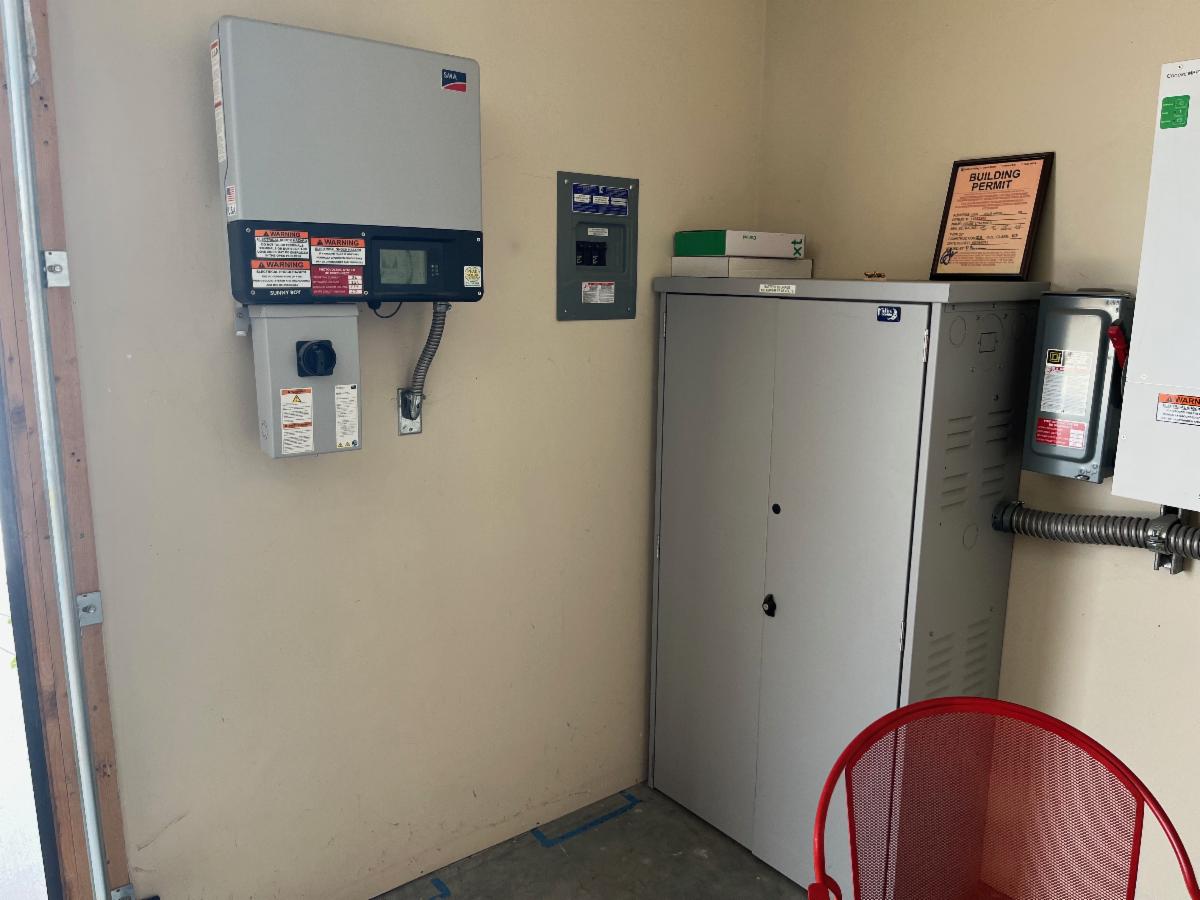
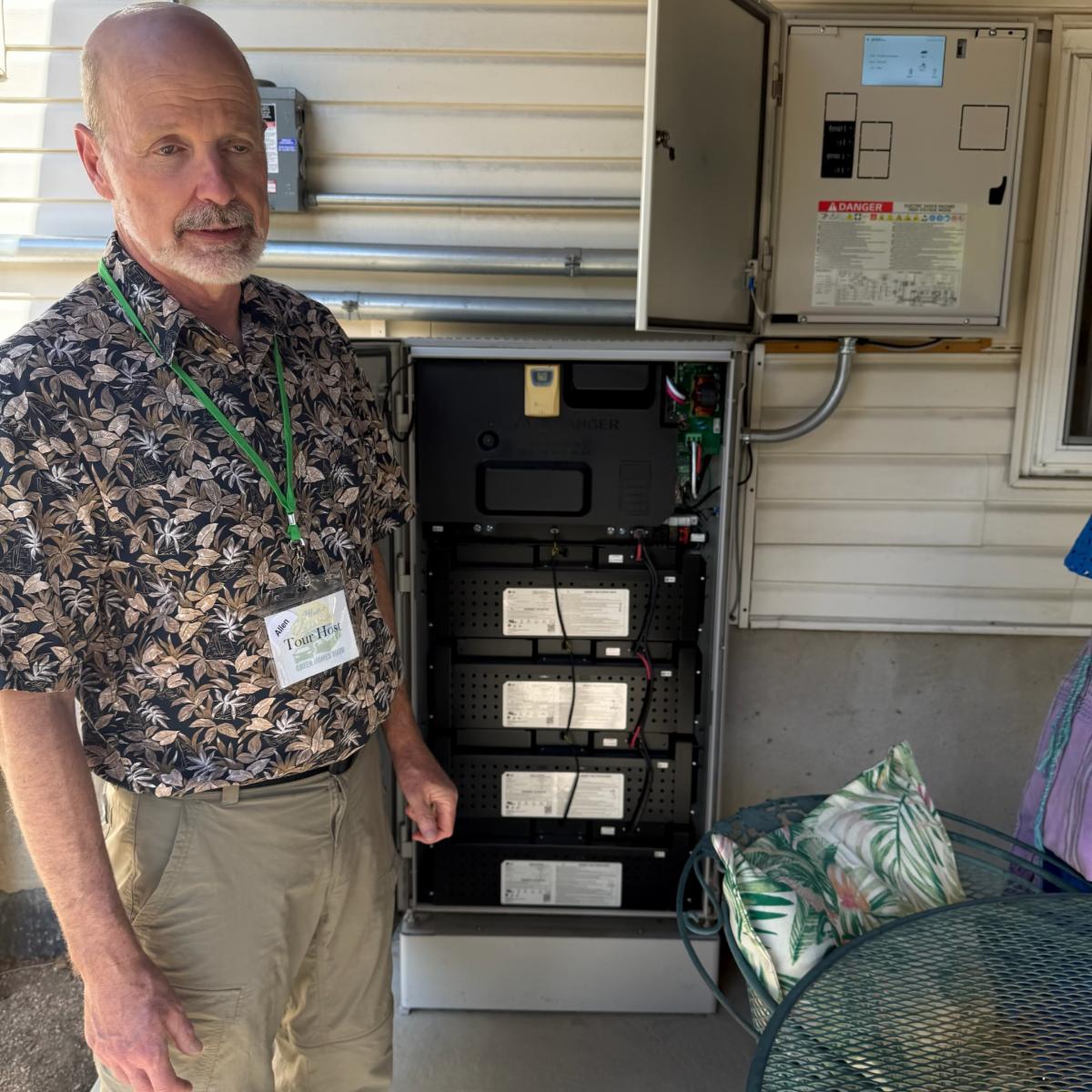
By taking advantage of Time-of-Use (TOU) utility rates, charging during overnight off-peak hours cuts electricity costs to a roughly a third of peak rates. Pairing home charging with rooftop solar or community solar lowers per-mile fuel costs even further, effectively capping charging costs near zero. Adding home battery storage allows drivers to capture solar generation during peak sunlight hours and dispatch that clean energy straight into their EV overnight, insulating households from peak electricity tariffs entirely. While EVs carry slightly higher annual registration fees in Colorado (to offset fuel taxes) and comparable insurance premiums, the large savings in fuel and maintenance ensure EVs yield a lower overall total cost of ownership.
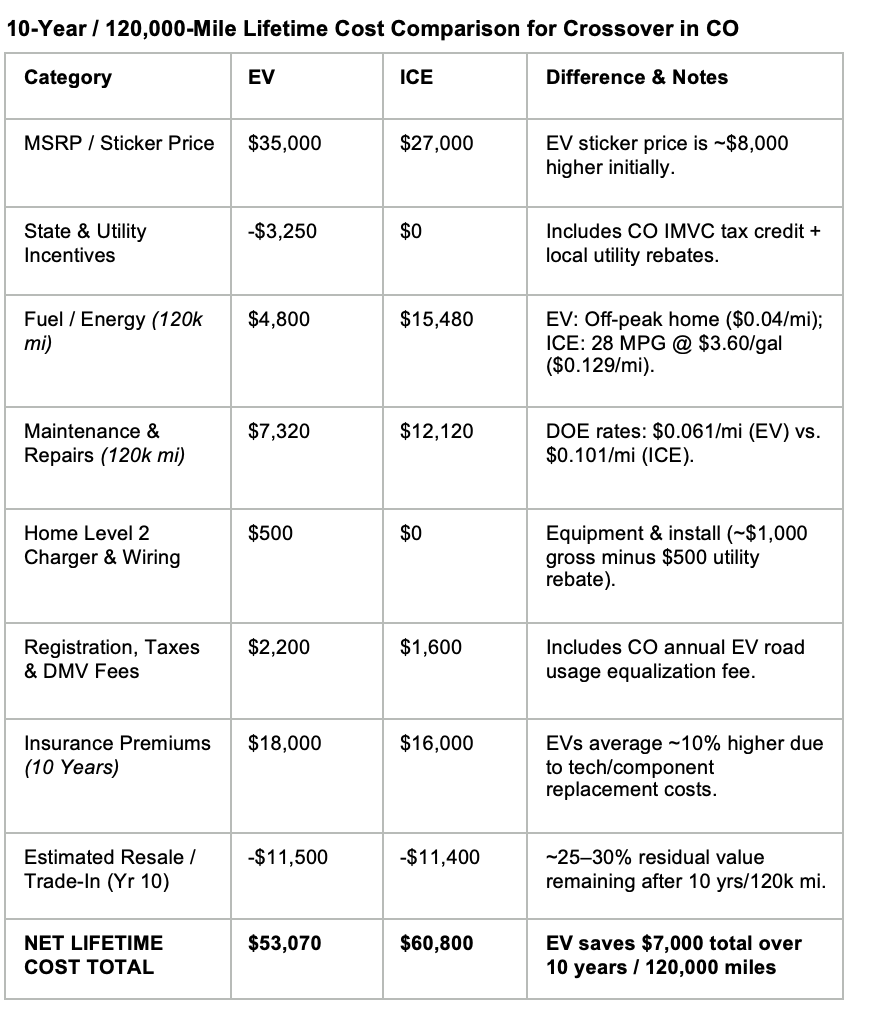
The table below shows a comparison of costs for a typical crossover in CO. The incentives assume that the EV will cost less than $35,000. Additional, income qualified incentives are available from both the State of Colorado and Xcel Energy
|