|
In 1982, while searching for an outlet for the wool from the lambs, Antonio and Molly were founding members of the “wool committee” of Ganados del Valle, a then-fledgling grassroots community non-profit organization whose mission was empowering rural people to create sustainable economies by building on cultural and agricultural resources. Molly remembers that there were only four or five members on the wool committee. One early member, Maria Varela, identified Rachel Brown, a spinner and weaver from Taos. Rachel taught the group how to spin and weave and set the collective on a growth path to the established Tierra Wools, LLC that exists today.
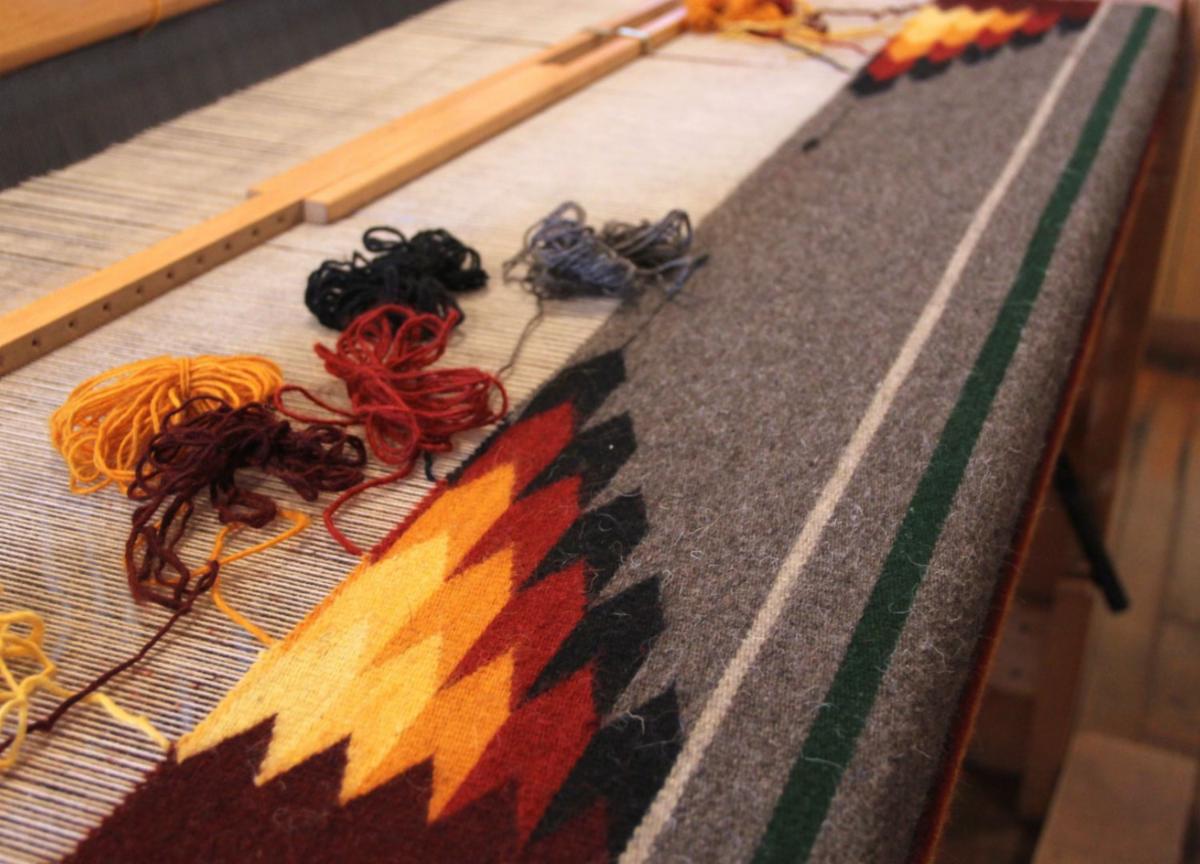
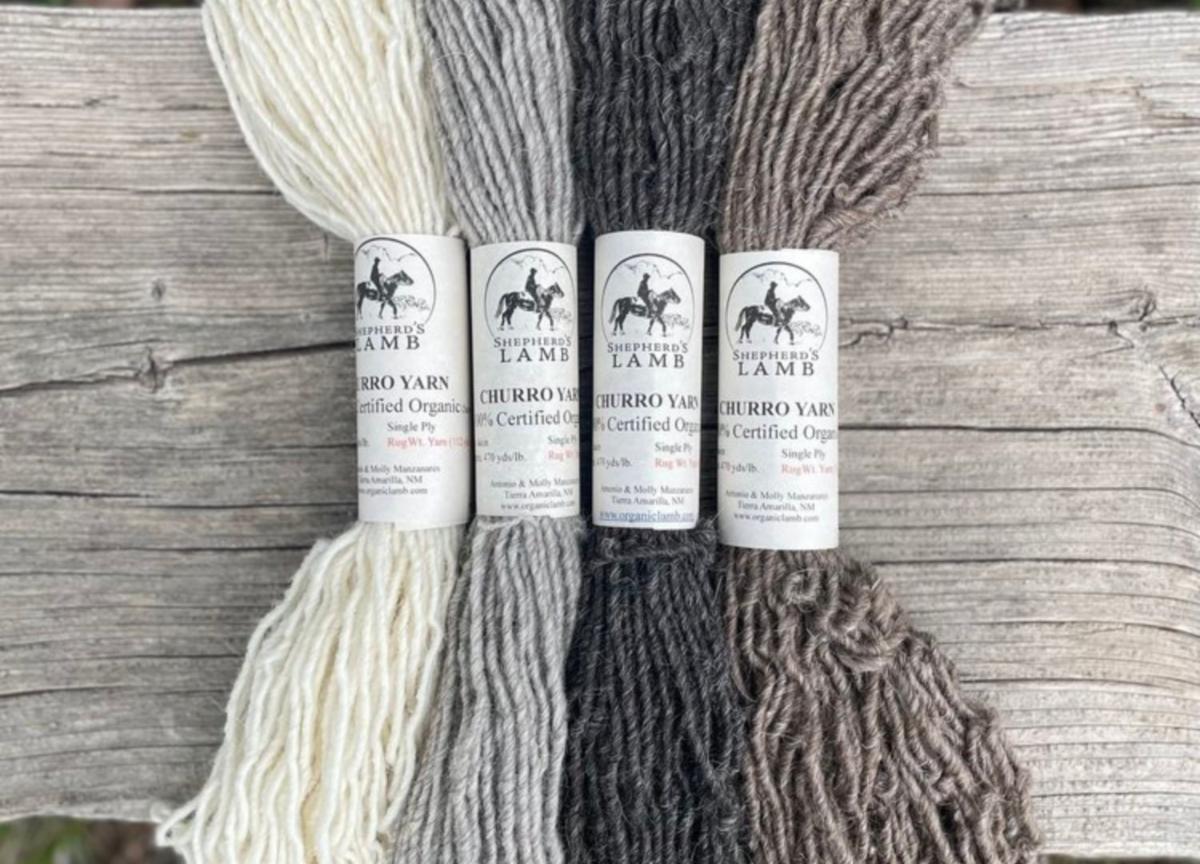
Molly is a Rio Grande-style weaver, practicing a type of weaving that was introduced by the Spaniards and practiced up and down the Rio Grande. The Rio Grande loom is a standing loom modeled after the looms originally designed in Spain. She said that there are “cross influences in the design elements between the Navajo and the Rio Grande-style.” Rio Grande-style is characterized by the use of stripes and bands, Saltillo diamonds (diamond pattern usually located in the center of the weaving), and Vallero stars (six-pointed stars). Another distinguishing feature of the Rio Grande-style is the fringe that appears on the wall hangings and rugs. The wool used for weaving is Churro wool, which is a very durable, strong fiber that has a natural sheen and comes in many natural shades (white, gray, brown, and black), and also takes dye well. “It is our biggest seller,” Molly said. She estimates that they have a yield of 5,000 to 7,000 pounds of wool that they send to the mill each year.
Rambouillet sheep were originally a French breed and are the most common sheep in the Western United States. Fine wool, referred to as Mountain Merino, is derived from these sheep. Mountain Merino is the preferred yarn of knitters and is available in a wide variety of shades.
Dyeing with acid dyes is a progressive process that conserves water. The process starts with three 17-gallon pots of water. The dye and the yarn are placed in the water and through the combination of heat and the pH of the water the dye strikes the wool. If it is done properly, all of the dye is absorbed into the wool, leaving the water clear to be used for the next batch. Molly said they start lighter and go darker with each successive batch. Molly’s sister, Toni Broaddus, oversees the alternative natural dye process, gathering the plants from the natural environment in Northern New Mexico.
Tierra Wools, LLC is now owned by Antonio and Molly, with Molly overseeing the operation. Molly is the public face of the business. As a self-described introvert, she credits her many years as a member of 4H for developing her confidence. “My business skills and sense came from Mom and Dad,” she said.
Two important business decisions were made in the last ten years: In 2016, Tierra Wools created a website and in 2019 they moved the brick and mortar store to a location in Chama, at 2540 Hwy 64/84. The new location is more conveniently reached by visitors and generates much more traffic. The online presence increased sales by more than 50%, especially in the winter months when customers are less likely to stop by the shop. She says that they have shipped orders across America, and internationally to Australia, Canada, and Great Britain. The website is an especially valuable resource for graduates of their many classes on spinning, dyeing, and weaving who want to continue sourcing from Tierra Wools once they return home.
If the weaving bug has bitten you while reading this article, please check out the wide range of classes at Tierra Wools, LLC – the new class list for 2024 will be available later this month!
|