|
NACD is continuing our celebration of 80 years with our 2026 Summer Conservation Forum & Tours! Hosted in partnership with the Michigan Association of Conservation Districts, our meeting will take place on July 17-21, 2026. Join us for meetings, a forum, and conservation tours to continue exploring the theme from Annual Meeting, "Deep Roots, Bold Horizons."
There is still time to register online! Secure your spot by July 10.
Join us to learn from fellow conservation professionals in a series of breakout sessions. You'll have the chance to dive into funding opportunities, conservation challenges and successes, local working groups, and more in the four following sessions offered:
- Learn about the journey to restoring rapids in the Grand River with Grand Rapids Whitewater;
- Explore how strengthening local working groups leads to clear priorities and strategic decisions with the National Conservation District Employees Association;
- Discover the next generation of farmers with Michigan Farm Link and the Iowa State University Beginning Farmer Center, who are connecting retiring farmers and beginning farmers seeking land; and
- Find foundation grants for your district as the Michigan Association of Conservation Districts shares their journey, alongside tips and tricks, to building funding and partnerships through compelling storytelling.
See the full Summer Meeting agenda, including these breakout sessions, tours, the Conservation Forum, and more on NACD's Summer Meeting webpage.
| LITTLE PRICKLY PEAR CREEK PROJECT HIGHLIGHTS POWER OF PARTNERSHIPS | |
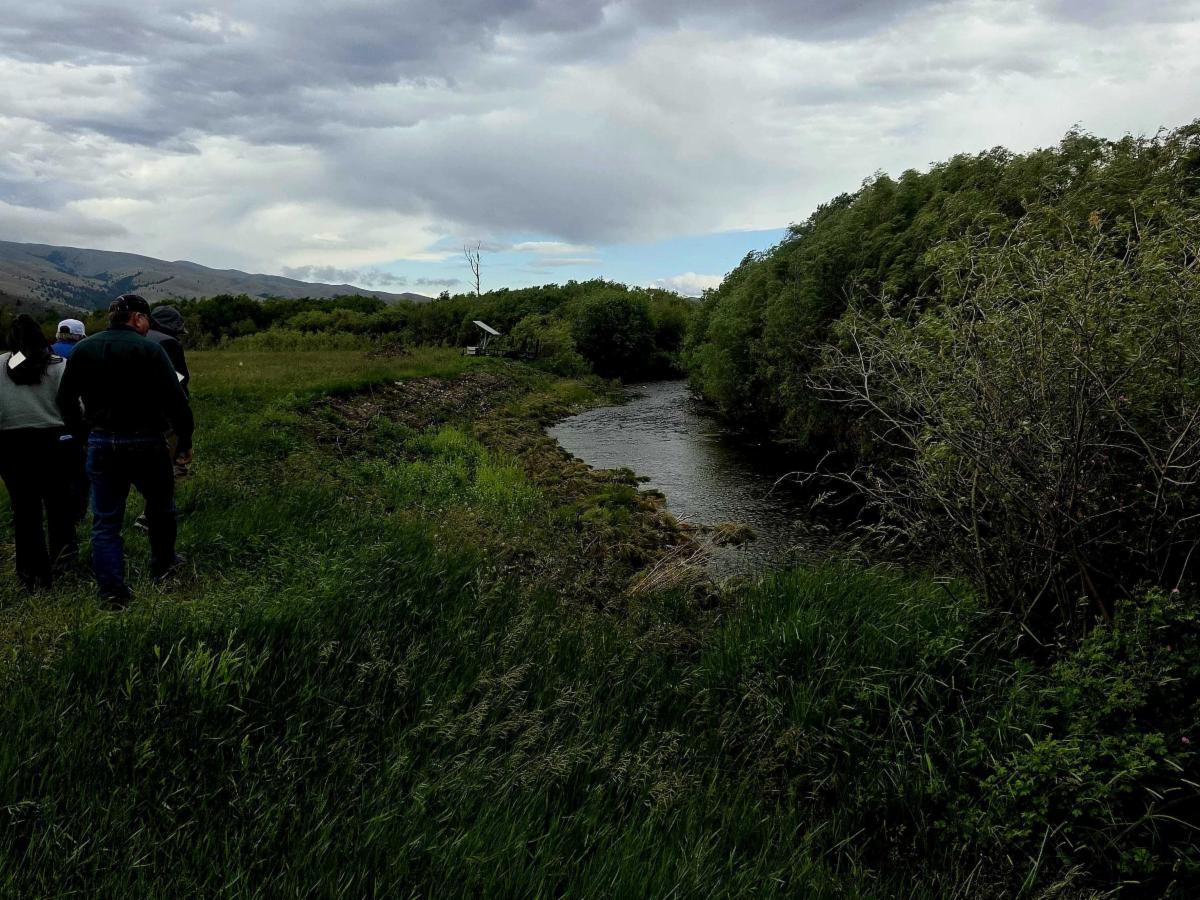
One of the highlights of the Northern Plains Region Meeting this month was visiting the banks of Little Prickly Pear Creek in Lewis and Clark County, Montana. Despite chilly temperatures and off-and-on rain, about 20 attendees joined a site tour led by Lewis and Clark Conservation District Resource Specialist Joe Kremer-Herman to learn about the Little Prickly Pear Creek Brushy Toe Project and see the restoration work firsthand.
Supported in part by a Montana Department of Natural Resources and Conservation (DNRC) grant, the project brought together the Lewis and Clark Conservation District, a local landowner, 16 Carroll College student volunteers, and community partners to restore 210 feet of eroding streambank. Working under the required 124 Permit, the team completed the project in approximately three hours, demonstrating what can be accomplished through strong partnerships and community involvement.
| |
One of the biggest takeaways from the tour was that effective stream restoration doesn't always require expensive solutions. Rather than relying on costly materials, the project focused on using natural materials already available on-site and practical restoration techniques that work with the creek's natural processes. The goal was to keep the project affordable while reducing erosion, improving riparian habitat, and creating a restoration approach that could be replicated in other locations.
Walking the project area gave attendees the opportunity to ask questions, see the restoration up close, and learn how planning, partnerships, and volunteer support contributed to the project's success. The involvement of 16 Carroll College students also highlighted the importance of providing hands-on learning opportunities for the next generation of conservation professionals.
The site visit offered a valuable reminder that successful conservation starts with people working together. The Little Prickly Pear Creek Brushy Toe Project demonstrates how conservation districts, landowners, students, volunteers, and community partners can work together to develop practical, low-cost solutions that create lasting benefits for both natural resources and the communities they serve.
| NACD HOSTS WEBINAR ON TURNING LOCAL WOOD INTO LOCAL VALUE | |
Join NACD on August 5 at 4:00 p.m. ET for an Urban and Community Conservation webinar, titled "Turning Local Wood Into Local Value: A Playbook for Conservation Districts."
Every year, thousands of tons of urban and forest wood are undervalued as a resource. Conservation districts are uniquely positioned to change that. In this webinar, Unified Wood Economy’s Chief Operations Officer, Jennifer Judd, and Project Manager, Leana Mauricette, will present two regional wood utilization projects, from city centers to national forests, and introduce our Urban Wood Utilization Guide: A Municipal Playbook for establishing a wood utilization program in your community. The webinar will cover how districts can get started, what funding pathways exist, and how to align this work with your existing conservation mission. Come ready to ask questions because the presenters will save time for a full discussion!
| |
WHAT'S UP IN WASHINGTON?
GOVERNMENT AFFAIRS UPDATE
| |
Senate Farm Bill Discussion Draft Released
Senate Agriculture Committee Chairman John Boozman released a discussion draft of the Senate version of the Farm Bill on June 23, giving us the first look at the Senate's proposal this Congress. The conservation title differs from the House-passed bill in several places, including incorporating pieces of the Conservation Reserve Program (CRP) Flexibility and Improvement Act and the Increased Technical Service Providers (TSP) Access Act, and addressing PL-566 program delays, among others. The Committee is seeking stakeholder feedback as negotiations continue. Please feel free to contact the NACD Government Affairs team with any questions. You can read the discussion draft here: Senate Agriculture Committee Farm Bill Discussion Draft.
House Ag Committee Reviews USDA Program Implementation
The House Agriculture Committee held a hearing with FPAC Under Secretary Richard Fordyce last week to discuss the implementation of farm safety net, disaster, and conservation programs. Members discussed USDA program delivery, crop insurance, conservation implementation, and ongoing efforts to modernize USDA operations.
White House Issues Regenerative Agriculture Executive Order
President Trump signed an Executive Order focused on regenerative agriculture and its benefits for a healthier food system. The order focuses on researching alternatives to currently used pesticides and highlights soil health as a specific concern for this administration.
NRCS Seeking Feedback on Conservation Practice Standards
NRCS is still accepting feedback on proposed revisions to Conservation Practice Standards. USDA has emphasized that it is looking for stakeholder input, so if your district or partners have comments, now is a good time to review the proposed changes and submit feedback before the July 6 deadline.
| A CLOSER LOOK AT NACD'S CEO JEREMY PETERS | |
No two days look exactly the same for NACD Chief Executive Officer (CEO) Jeremy Peters.
“A day in the life of Jeremy takes me in any number of directions, but never without a focus on my priorities: my family and my work family and making sure that I’m keeping those two things front and center,” said Peters.
Those priorities have guided Peters throughout his career, from his upbringing on a Virginia farm to his current role leading NACD in our nation’s capital. In this month’s Did You Know edition, Peters discusses the experiences that prepared him for the role and the values that continue to guide his work.
What Does the CEO of NACD Do?
| |
NACD’s CEO works closely with our Board of Directors to carry out organizational priorities. The Board establishes NACD’s direction, and the CEO helps ensure staff have the resources they need to support conservation districts and deliver those goals.
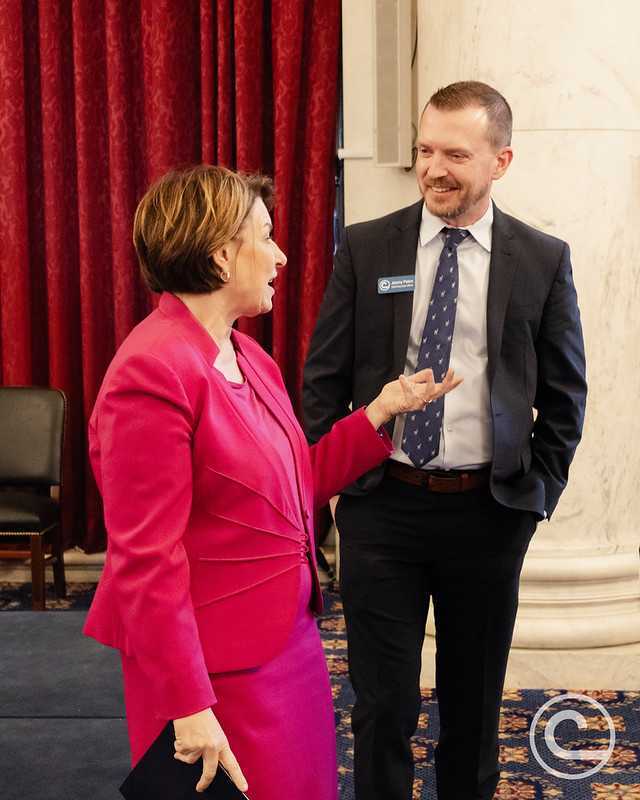
Work ranges from nonprofit management to grassroots advocacy and strategic planning. Some days are spent reviewing budgets and staffing needs. Others involve meetings with congressional offices, federal partners, or NACD leadership. A recent meeting took him to the White House budget office to discuss conservation districts, NACD’s work, and conservation matters in the nation’s food system.
Peters is proud of NACD’s reputation as a trusted, nonpartisan voice for conservation. That reputation has helped NACD maintain relationships across administrations and with policymakers from both parties, while keeping the focus on conservation districts.
How Did Jeremy Become CEO?
Jeremy’s path to NACD leadership began on his family’s farm in southwest Virginia, where he developed an appreciation for the land and natural resources by helping with the family’s cattle operation.
In 2006, he joined NACD’s Government Affairs team, where he worked on policy and advocacy issues important to conservation districts. He later worked for national agricultural organizations, including the National Farms Union, managing climate and energy policies, and the American Farmland Trust as Federal Policy Director, while earning a Master of Public Administration from Virginia Tech.
By the time the NACD CEO position opened in 2015, Jeremy had worked in Washington, D.C., gained experience with national agricultural organizations, and earned his master’s degree. He believed those experiences had prepared him for the role.
| |
What Keeps Jeremy at NACD?
Jeremy’s connection to NACD’s mission began long before he became CEO. Growing up on a family farm sparked an interest in conservation that later drew him toward public policy and a career supporting natural resource conservation.
“What really motivates me is the mission of the organization because it aligns so well with the interests that I have through my life experiences,” said Peters.
Throughout the interview, Jeremy returned to the same theme: the accomplishments he is most proud of are the result of many people working toward a common goal.
“The reward for me is getting to see that success,” he said. “It’s tremendously gratifying for me to see that work come to fruition and to see the results of the work that we produce as a team together.”
Read the full interview on NACD's blog.
| | NACD Closed for Fourth of July | NACD will be closed this Friday, July 3, in celebration of America's 250th Independence Day. We are proud that agriculture and conservation remain a critical part of our country's history and future. | Join Conservation Coffee on Habitat University | |
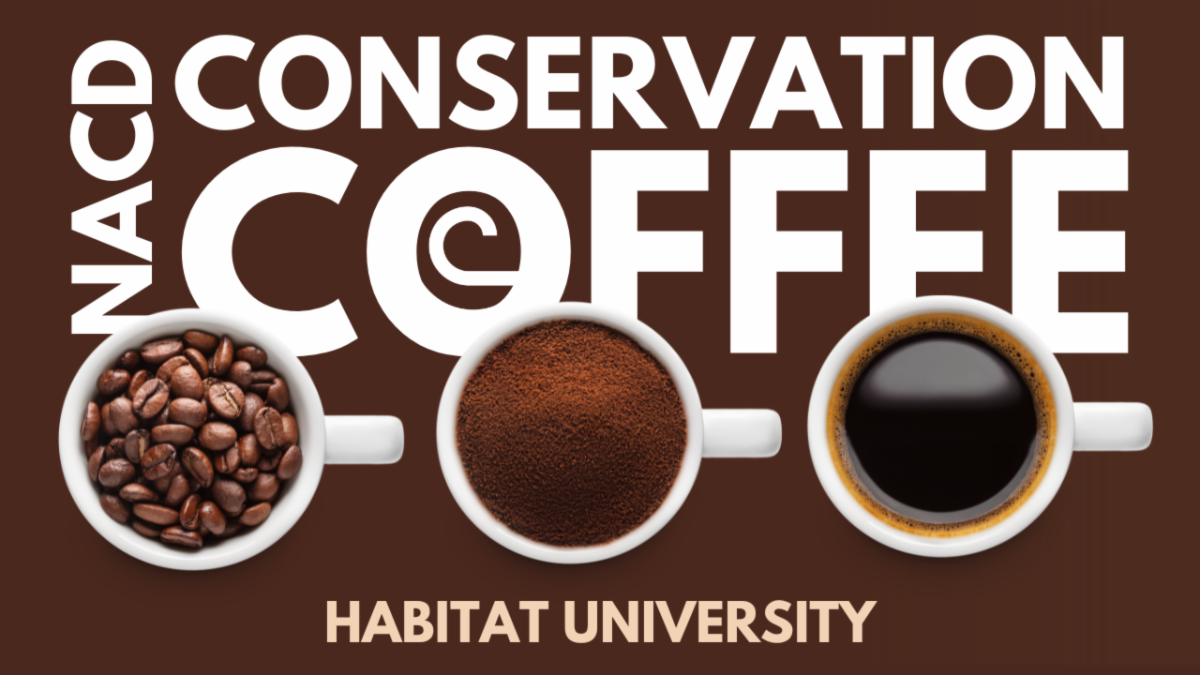
Join NACD for the next Conservation Coffee webinar on July 9 at 3:00 p.m. ET to learn about Pheasants Forever/Quail Forever’s (PF/QF) Habitat University and Habitat University Pro!
Both are free, skills-based habitat and conservation training resources. The Pro version is for conservation professionals—current and aspiring—committed to professional development and delivering conservation technical assistance. Habitat University offers flexible online learning, certificates, hands-on opportunities, and more to help you succeed in your habitat projects.
Come learn from Catherine Beall and Laura Newberg, PF/QF Training Program Coordinators, on how Habitat University can help your district and the land stewards you serve!
| Call for NACD Leadership Candidates | |
NACD’s Nominating Committee is seeking candidates for the association’s officer positions of First Vice-President, Second Vice-President, and Secretary-Treasurer. These positions will be elected during the 2027 NACD Annual Meeting in Las Vegas, NV, in February 2027.
Candidates must serve on their local conservation district board at the time of election. Each position serves NACD for a term of two years.
District officials interested in becoming a candidate are encouraged to submit a letter of intent and resume to the attention of Jeremy Peters by Friday, November 6. The letter of intent must include the position in which the candidate is willing to serve and indicate a clear understanding of the duties and time commitment of the position. If interested, reach out to info@nacdnet.org for a copy of NACD’s bylaws, which describe officer elections, terms of office, and duties.
| |
Join TIF in Iowa
to Learn About Sustainable Fuels Markets
| |
Join NACD partner, Trust In Food (TIF), for a field day in West Union, IA, on Tuesday, August 11.
The field day, titled "Developing Sustainable Fuels Markets Through Conservation: The Low Carbon Intensity Opportunity for Corn," will be a full day of learning, discussion, and demonstration for Iowa row crop farmers. Hosted by award-winning farmers, Brenda and Loran Steinlage, the day will feature live in-field demonstrations, a producer roundtable, and a panel with local agricultural organizations. Topics explored will include: sustainable fuel markets, carbon intensity scoring, a new nitrogen fertilizer application consultation tool, conservation programs, and more.
Lunch will be provided. Register here to secure your free spot.
| Requests for Agroforestry TAPs | |
The Savanna Institute, in partnership with The Nature Conservancy, is seeking qualified Technical Assistance Providers (TAPs) to support producers participating in the Expanding Agroforestry Markets and Production (EAMP) project. This project is funded and supported through the USDA's Advancing Markets for Producers program.
This Request for Qualifications is intended to establish a pool of qualified TAPs who may be contracted as producer demand and regional capacity needs arise. Providers engaged through the project may support up to three producers and will be compensated approximately $5,000 per producer. For Summer 2026 placements, apply by July 8; for Fall 2026 placements, apply by August 24.
Learn more here.
| |
Do you read our Did You Know section on the NACD blog? Once a month we take a deep dive into NACD, our partners, or an aspect of locally led conservation.
If you’re looking to understand more about the structure of NACD's leadership, you should look at our features on NACD committees and subcommittees, our officer team, or our Board of Directors.
Or maybe you’re interested in learning more about the resources we offer you? If that’s the case, read up on our education resources or tools you can use to improve your district’s outreach efforts.
No matter your familiarity with NACD, we bet you’ll learn something new by reading our Did You Know? Column.
| Promote your conservation district or state association's tree sale, annual meeting, webinar, field day, or other events on NACD's Calendar of Events! | |