|
Tell our readers a little bit about you and how you came up with the idea for AirBar?
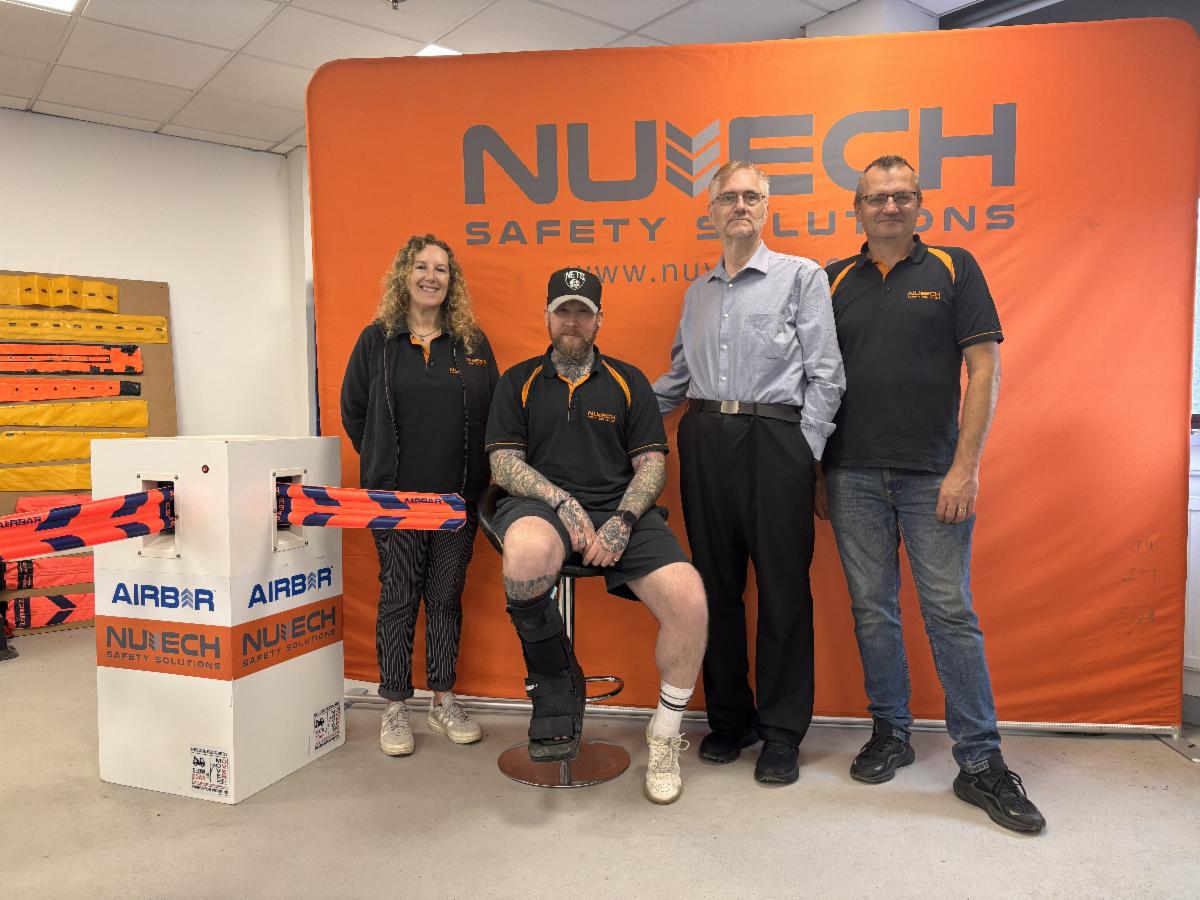
I have always been in the auto transportation sector and moved vehicles all around the UK. One of the dangerous parts of this work is that workers often get struck on the side of the road due to passing traffic with nothing to protect them. After getting hit one times too many, I started to develop AirBar so that people working on our roads could have a safer working area. The nice thing about AirBar is that drivers think it is solid object and we have seen almost 99% change in driver behavior when they come upon a vehicle with the AirBar deployed.
Protecting workers is important, but tell me a little about how you are working to protect vulnerable road users?
Well, we recognize that while sensors and in-cab warnings can be important there is also a chance that the warning buzzers or beeps might not be heard by a truck driver, and with new mobility devices, the technology may not sense them. But with the AirBar, it is the bicyclist or other road user who gets alerted since the AirBar deploys when a turn signal is activated and a truck is going below speeds of 15 miles an hour, it then sticks out, it flashes with the turn signal, and it warns the cyclists or the motorcyclists this vehicle is going to be turning. Once the turn is complete, AirBar just simply rolls back into place.
How will your technology help when it comes to vehicles that are moving slowly? Like a street sweeper, how would this prevent a street sweeper from getting sideswiped or hit by another vehicle?
One issue with street sweepers is that they need to often move slowly, both down the street but also from side to side. At the same time, these drivers are operating the sweeper system and vehicles are coming up behind them. Drivers are often unsure where to pass slow-moving vehicles or gauge how far they should move over. With the AirBar, we can temporarily widen the sweeper or any slow-moving truck, giving other drivers more visibility that a truck is there and a better understanding of where they should pass.
With the protections you are creating for vulnerable road users, have you seen improvements there as well?
The testing we have done with a Transport for London pilot went extremely well with 100% change in behaviors. We were even able to gather before and after video showing a cyclist going by a truck on the inside with no AirBar, legal but dangerous, but staying behind the truck with an AirBar deployed.
As you expand into the United States which fleets do you think you want to focus on?
With my background in vehicle movement logistics, we have already started with towing, and Triple A uses the AirBar on their trucks on the West Coast. We also have a couple of test cases running on a dump truck and a private waste hauling vehicle. But to be honest, AirBar can be installed on anything. We want to make sure workers in the roadway, including fuel deliveries, road crews, towing operations, and emergency services, as well as vulnerable road users are better protected on our streets.
Anything else you wish to tell our readers?
The AirBar is designed to be a simple installation, easy to use (just a switch on the dashboard or connected to a turn signal), and practically maintenance free. With the way we design the AirBar, the only part of it that ever needs replacing is the AirBar itself as it might fade or get dirty over time. But if a replacement is needed, it is simply like taking off your old work jacket that got faded over time and putting on a new one.
|