The voice for pharmacy compounding • June 12, 2020
Enjoy our latest edition. Send your suggestions and questions to info@a4pc.org
Like you, I’ve ached as I watched the news these past two weeks. In the wake of the senseless death of George Floyd and too many others, Americans did what the Constitution allows, they protested. They protested the unjust violence against Mr. Floyd and other African-Americans by a few law enforcement officers who thought they were above the law.

Unlike Mr. Floyd, those few officers who violated their obligations to never betray the public’s trust will be given their day in court to defend themselves. We also witnessed protests turn into riots, in which pharmacies were vandalized and completely destroyed. Some of our fellow pharmacy compounders lost their ability to help their patients, serve their communities, and provide for their families. 

No, the loss of a pharmacy cannot be equated with the loss of a life, but the loss of the ability to care for a community’s very real health needs is definitely a tragedy, too. Now, as Americans, we need to come together to have honest discussions about our prejudices and inequality; and then, as we Americans actually do quite well, we must put those discussions into action to effect positive change. 

Here at APC, we are committed to treating everyone with dignity and equity, and to building communities in which our members can be the caregivers and healers they were trained to be. We pray for justice and we pray for peace, and as an organization, we pledge ourselves to those aims. Please join us both in those prayers and in that essential work.

— Shawn
Shawn Hodges
APC President
I hope this Friday’s Compounding Connections finds you well! As we continue to navigate out of this dark tunnel of Covid-19, many of us are thinking: What’s next? What is going to be the next normal?

As we think about these questions as they relate to our pharmacy practice, it’s fair to say that our referring prescribers and patients are asking the same questions. If there was ever a time to show your talents that are beyond dispensing medications, or even compounding preparations, now would be it.

I suggest taking a moment to survey your referring prescribers on not only their views about your pharmacy practice, but to open the lens a little and assess what they envision for their practice, and how they plan on treating their patients. Some questions I’ve asked that have generated interesting responses were:

About the practice

  1. How has Covid-19 affected your practice (% loss or gain)?
  2. Any changes to your prescribing habits or medications during the pandemic? Biggest factor?
  3. Do you think you will continue to submit the same type of prescription order compounds lines post Covid?
  4. What are your plans to recover and recharge your practice after Covid?
  5. Are you looking to expand services? If so, what?
  6. How can my pharmacy best help you and support your practice?

About the pharmacy

Rate your satisfaction with...

  1. Quality
  2. Price
  3. Availability of needed medications
  4. Variety
  5. Turnaround
  6. Packaging
  7. Customer service
  8. Pharmacist consultations
  9. Clinical materials
  10. Patient health outcomes
  11. Website
  12. Phone tree
  13. Any areas where we could improve? Be honest and open!

Feel free to make this survey your own! Ideally your questions would be open ended, but would only need no more than five to seven minutes of the prescriber's time. I will say, be prepared for some interesting answers to your questions — what’s important to you might not be for them!

Thank you and be safe.

You can reach Shawn at shodges@innovationcompounding.com .

June 24 — APC Advocacy Town Hall Call; 3:00 to 4:00 pm EDT

August 11 — Live CE Webinar: " Putting Safety at the Center of Your Compounding Operation"; 2:00 to 3:00 pm EDT

September 9 - 10: APC's Compo unders on Capitol Hill (Washington, D.C. Fly-In)
2020 OSHA Training:
Bloodborne Pathogens

July 21; 1:00 to 2:00 pm EDT
August 19; 6:00 to 7:00 pm EDT

September 17; 11:00 am to noon EDT

October 13; 1:00 to 2:00 pm EDT
November 18; 3:00 to 4:00 pm EST
1. Associations to OMB: FDA underestimated admin burden in MOU

In a joint letter to the Office of Management and Budget organized by APC, four national pharmacy associations say FDA has underestimated the administrative burden that would be incurred by state boards of pharmacy under the recently released ‘final’ MOU on shipments of out-of-state compounded drugs. The letter was signed by NCPA, APhA, NASPA, and APC.

The associations state that the agency didn't follow the processes laid out clearly in the Paperwork Reduction Act. Rather than survey boards of pharmacy to determine the impact of the MOU, the FDA seems to have relied on old data, anecdotes, or simply guesswork about the amount of time and resources required to meet the MOU’s investigative and reporting requirements.

"The FDA's analysis [...] was inadequate to meet the requirements of the Paperwork Reduction Act," we wrote, "and should therefore be rejected by OMB and sent back to FDA."

Also, this week, seven members of Congress sent a letter to OMB making the same point as the association letter. We’re grateful to congressmen Andy Biggs, Buddy Carter (GA), John R. Carter (TX), Doug Collins (GA), H. Morgan Griffith (VA), Gary Palmer (AL), and Chris Stewart (UT) for their support in calling out the shortcomings of the MOU.

"[W]e believe that the analysis submitted by the FDA underestimates the potential cost to state governments, which are finding their resources strained under the current conditions," they wrote. "This underestimation of burden and cost to the states is perhaps the main reason for FDA overestimating the number of states that will sign the agreement."

2. APC provides support for members on ‘outrageous’ ESI recoupment

"It looks like a shakedown to me." – Jeff Baird, Brown & Fortunato

Many compounders recently have received a recoupment notice from ESI regarding Tricare/CHAMPUS compounded prescriptions. ESI is alleging that the prescriptions are fraudulent because there is no physician/patient relationship indicated. (Based on what we’ve learned, the letters are dated April 7, but postmarked June 1.)

“This issue of Tricare recoupment from ESI is as serious as it was unexpected and sudden,” said APC President Shawn Hodges. “It’s outrageous. But I also know that APC and our sister pharmacy associations are working hard to help our members confront it.”

APC did a quick survey this week of compounders to see how many were affected and to what degree. About 44 percent of respondents received a clawback notice, almost all for 2015 transactions.

Of just the 39 responses we received, members are facing a collective clawback of just under $1 million (or about $25,688 per pharmacy) — again, that’s just 2015 transactions, amounting to about 4,500 prescriptions.

That works out to ESI claiming an average of more than 115 "fraudulent" prescriptions per pharmacy and demanding about $214 per prescription.

APC vice president David Miller of Keystone Pharmacy in Grand Rapids, Mich., pointed out that, in his case, the demand only covered nine months of 2015, and so he suspects that ESI has yet more clawbacks in mind for subsequent years.

(Keep in mind that our survey was not scientific by any stretch – it was simply a quick way of getting at least some baseline data on how these clawbacks are affecting members. The population affected is likely much larger than our 39 respondents.)

The letters have obviously caused a great deal of frustration among compounders. So yesterday APC held a member briefing with attorneys Jeff Baird and Bradley Howard of Brown & Fortunato, and policy expert Ronna Hauser of NCPA. (We hit our Zoom limit of 100 callers, in fact.)

What we know

Purportedly, the directive comes from DoD, not ESI. According to a letter to one pharmacy from Christine Hartman Dunse at DoD Claims Audit, it was the Defense Health Agency that directed ESI to initiate recoupment action for Tricare.

"According to the DHA’s investigation," Dunse wrote, "the drugs dispensed by your pharmacy to Tricare beneficiaries were written by physicians who DHA concluded had not established a physician-patient relationship with the beneficiaries necessary to write a valid prescription."

Pharmacists are being asked, it seems, to verify the physician-patient relationship, which obviously is not their job.

ESI is demanding proof that most pharmacies will have difficulty providing. Pharmacists who have contacted ESI were told they must provide proof of a physician-patient relationship — e.g., medical records (!), and "the records must be accompanied with metadata or similar validating facts that substantiate the records creation date."

Further, ESI wrote, "requirements for medical documentation [...] are not satisfied by letters from prescribers attesting to service(s)."

ESI is already beginning recoupments. Several participants said they were already seeing money withheld from their remittances.

What we're doing

  1. As we gather information and work with our attorneys and other associations, APC already has some plans in the works for the near future.
  2. We are working with attorneys to develop a template letter of response for members to use as a starting point when reaching out to ESI or Tricare.
  3. We are working with associations like NCPA to send a joint letter to ESI and Tricare challenging the substance and process of this recoupment.
  4. We’ll continue to provide recommendations to members on how to address this issue beyond ESI — with patients, legislators, and even the media.
  5. We’re weighing a grassroots effort to engage our members of Congress to intervene with Tricare on this issue.

There were many questions raised during yesterday’s briefing call , from class-action lawsuits to issues of due process, that APC will be discussing with the other stakeholders. Of course we’ll keep our members briefed as we learn more.

What you should do

Don't ignore the letter. "You can't let this thing go and hope it goes away," Baird said, even if you don't think it applies to you.

See your attorney, pronto.

Respond in writing. The letter can come from you or your lawyer, but don't rely on phone calls or e-mail. "As this goes forward,” Baird explained, “you want that response part of the legal record."

Make it, Baird said, "the very best audit response your pharmacy has ever put together." You want a robust response with supporting documentation "that to anyone else, besides a PBM, would be very persuasive."

Where you can, even though we know it's not part of your job nor a legal requirement, provide documentation that these patients did see a physician and there was a valid physician-patient relationship. Consider asking the physician to sign an affidavit, or use prescription records to show you had a solid relationship with that physician and thus had no reason to question the validity. The goal, Baird explained, is fixing the problem more than winning the ethical fight.

Make the broader case. Besides the appropriate records, you can consider including more in your response. The goal, Baird said, is to have this response as a part of the legal record.

  • Point out that there was no prior notice, and this was contrary to the ESI policy manual and standard practice. Tell ESI, "You're not following your own policy."
  • Point out that under your state law, you received prescriptions from practicing physicians, and thus had no reason or obligation to question them in the absence of any kind of red flag. "Make the case that these were valid prescriptions, lawfully filled by me as a pharmacy," Howard said.
  • Protest the recoupment by citing the appeal provision in the ESI contract and simple due process: "Waiting five years and then asking you to prove a negative is not a fair burden to put on a pharmacy," Bradley said. "Had I received this letter back in 2015 or 2016, I would have had a much better chance of being able to find the relevant data in a timely fashion."


* * *

APC understands the concerns of our members — this kind of unwarranted, surprise money grab by a PBM is shocking any time, but particularly in a stressed economy like today’s.

This is why you joined an association — so we can work together when these kinds of issues arise. It may take a few days or weeks for APC and other associations to gather information, reach out to appropriate agencies and people, and gel our response. But that response will be made stronger by members like you. Don’t forget: You aren’t in this alone.


3. Animal compounding draft GFI deadline extended

Good news: After APC and ADVM requested an extension to the public-comments period for FDA's draft GFI #256 ("Compounding Animal Drugs from Bulk Drug Substances") — and congressmen Kurt Schrader and Ted Yoho* also wrote the agency — FDA has agreed to extend the public-comment period an additional 120 days.

The new closing date for public comments is October 15, 2020; you can click here for details and to submit your comments.

* Who is also a veterinarian
4 . A town hall briefing on compounding policy progress

What progress is APC making on compounding advocacy priorities? You need to know — because there are some pretty big issues out there that are going to affect your business and patients.

Join us for a special online APC Advocacy Town Hall Call, June 24 from 3:00 to 4:00 pm EDT. What we'll cover:

  • FDA’s final MOU with states
  • FDA’s draft guidance on animal compounding
  • NASEM compounded pain cream study (and next steps)
  • How the PREP Act affects compounding (or doesn’t)
  • APC’s COVID-related policy accomplishments – and what they mean for future policy

Yes, there will be plenty of time for your questions.

IMPORTANT: The Town Hall is free and open to all APC members, but you MUST register in advance (space is limited). Click here to register.
5. Lloyd's Pharmacy destroyed, Jim Stage to rebuild

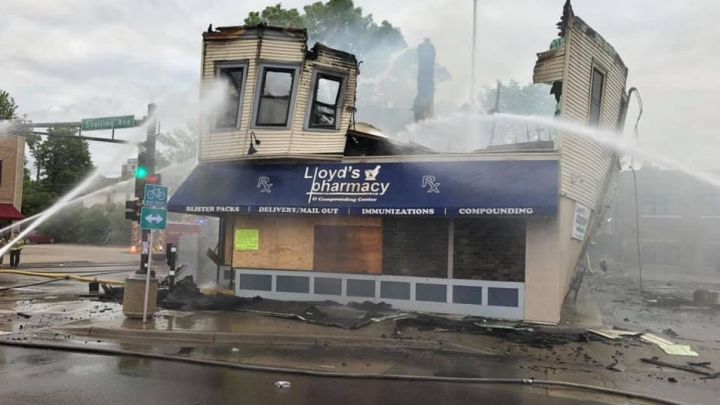
On May 29, Lloyd's Pharmacy in St. Paul, Minnesota, owned by APC member Jim Stage, was destroyed in the early days of the protests. Our thoughts are with Jim, his staff, his patients, and his community — a community, it should be noted, that immediately rallied around Jim with calls, flowers, and donations.

A GoFundMe site has already raised more than $103,000 to help Jim rebuild.
And Jim does plan to rebuild ... when things settle down. Right now he's serving his patients at his nearby pharmacy and hopes to have a temporary facility operating soon on the block where Lloyd's stood.

‌