|
World's Best Car Salesman - Max Hoffman
I like Mercedes-Benz cars from the 1980's and have had a W124 or W126 more-or-less continuously for the last 20 years. In those days the engineers designed the best cars they could, the accountants priced it, and then it was given to the Marketing Department to sell. They were the best cars in the world; the safest, most durable, most reliable, and had the best resale values. They were expensive, but you got what you paid for.
In my mind this was the way to make a good car. If you led the process with the Sales Department and consumer focus groups, you got things like the Pontiac Aztec. When the accountants ran the show it was even more grim - Pintos with gas tanks that exploded and small Cadillacs.
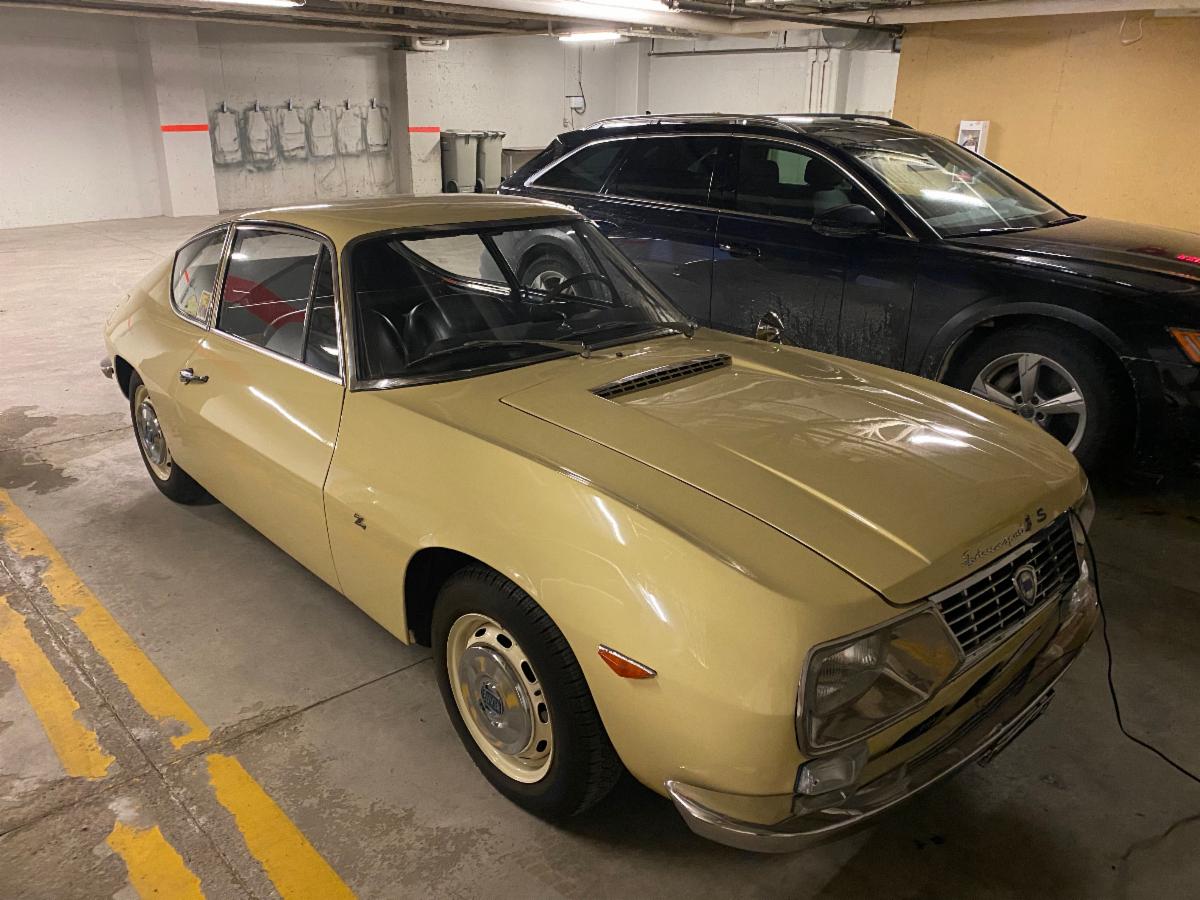
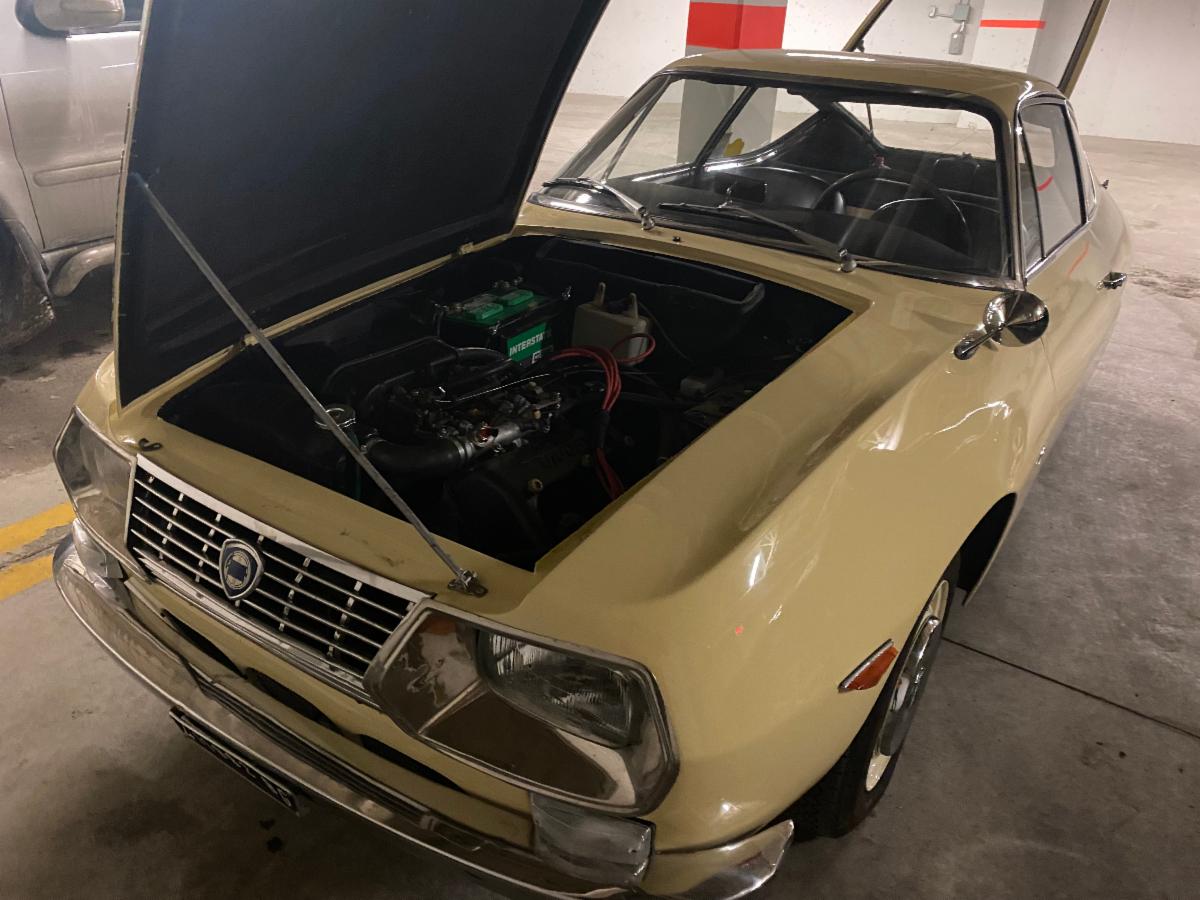
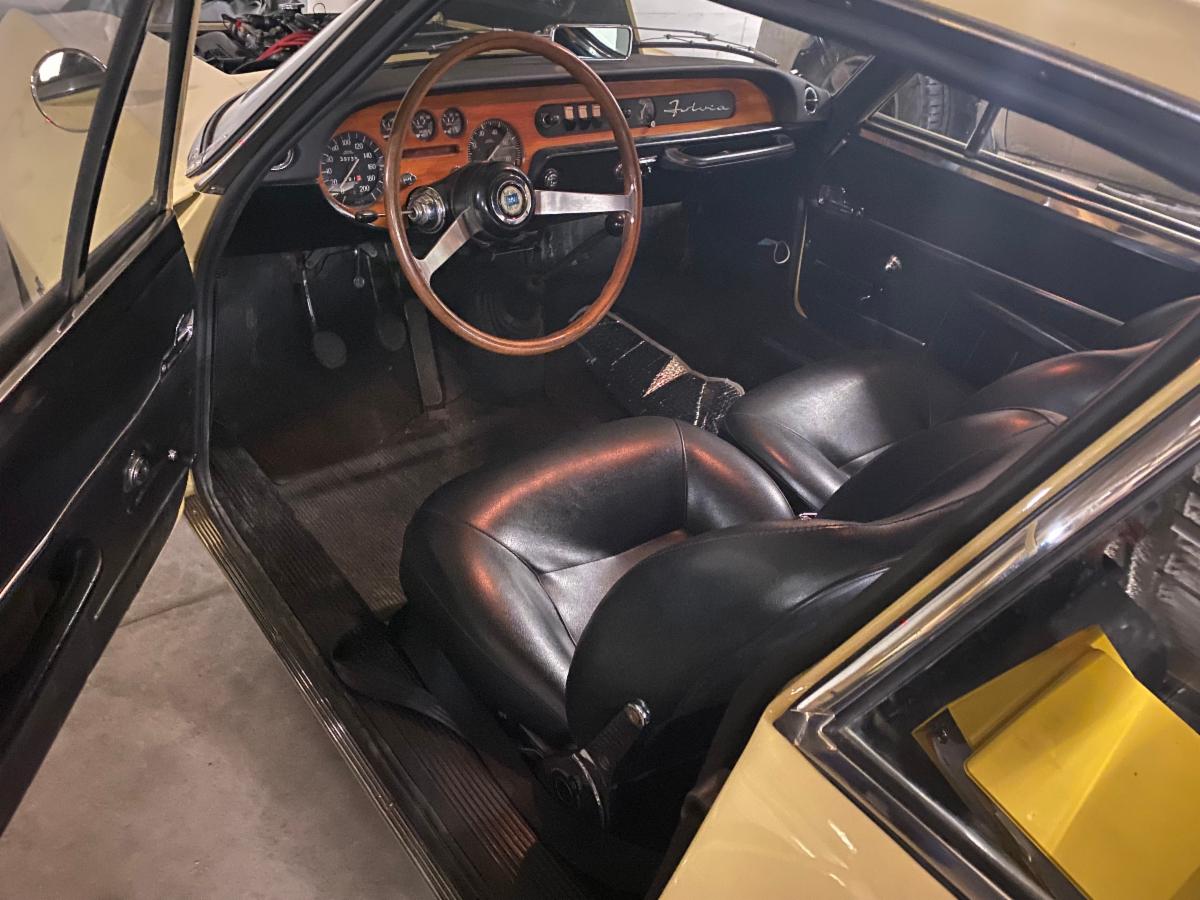
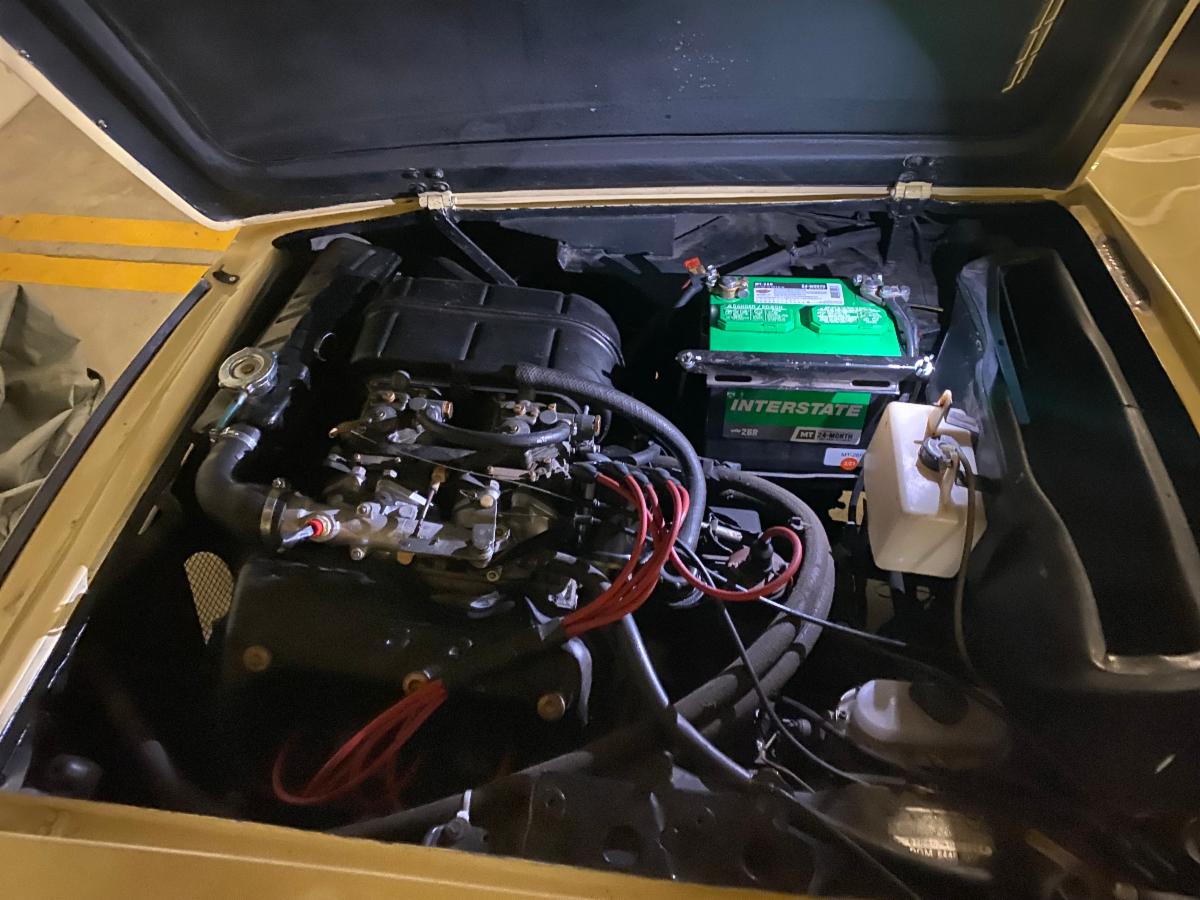
But not every well-engineered car was a sales success. The pre-war British Lanchester was as well-engineered as a Rolls Royce Silver Ghost, but the Lanchester brothers lacked the marketing savvy and social connections of Charles Rolls. Lancia made technically advanced cars with jewel-like engines, but were always too expensive relative to their small size and modest engine displacement. The 1.3 litre Lancia Fulvia Zagato that is pictured on the right was $4,250 new in 1967 when a 3.0 Litre Austin Healey was $3,800.
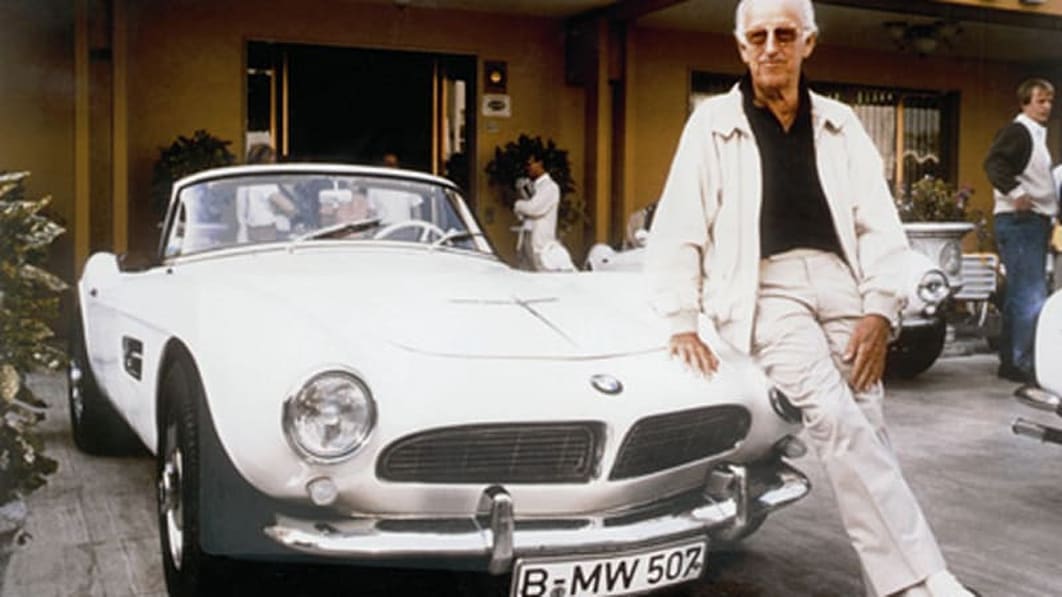
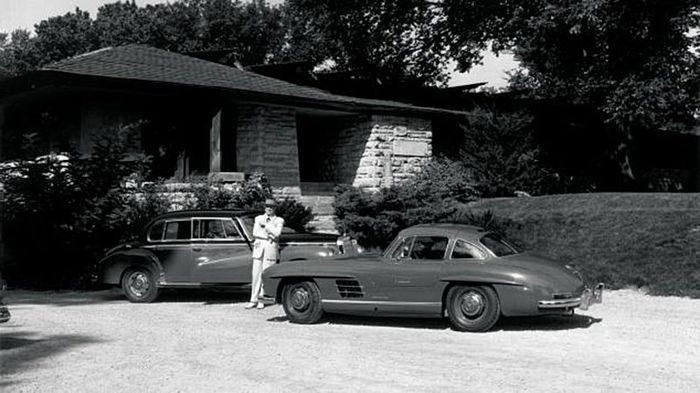
That said, some of the most iconic cars of the post-war era were created by marketing visionaries who had an eye for good design, and for what people could be persuaded to buy - often before they knew they wanted it. Such a person was Max Hoffman, who almost single-handedly was responsible for introducing Americans to European automobiles after WWII. Hoffman's influence grew with his sales orders, and he wasn't shy about telling the European manufacturers what to make for the US Market, and backing it up with orders. Without Max Hoffman there would be no Porsche Speedster, Mercedes-Benz 300sl Gullwing, Alfa Romeo Guiletta Spider, BMW 507 or 2002.
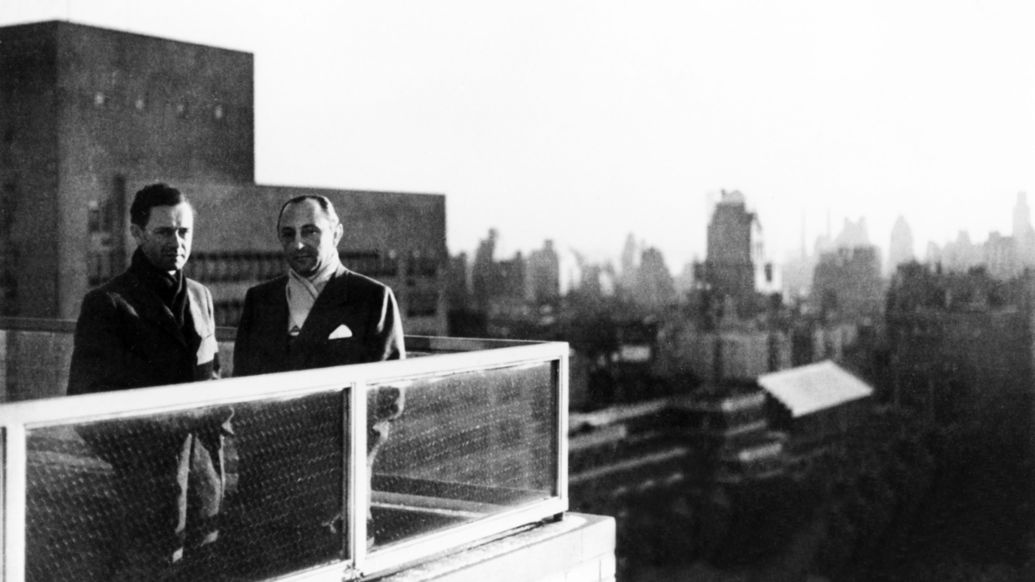
Max was an Austrian who was a successful automobile distributor in Vienna prior to WW2; being the middle-European dealer for Rolls Royce, Bentley, Alfa Romeo, Talbot, Delahaye, Volvo and Hothkiss. Escaping the Nazi regime, he moved first to Paris and then to New York in 1940. He left everything behind, and with no auto business to speak of during the war, he turned to making metalized plastic costume jewellery. He believed (correctly) that the women working during the war would want something to spend their money on. This business ended after the war when raw materials were available again, but had given Max substantial capital with which to invest in the automobile business.
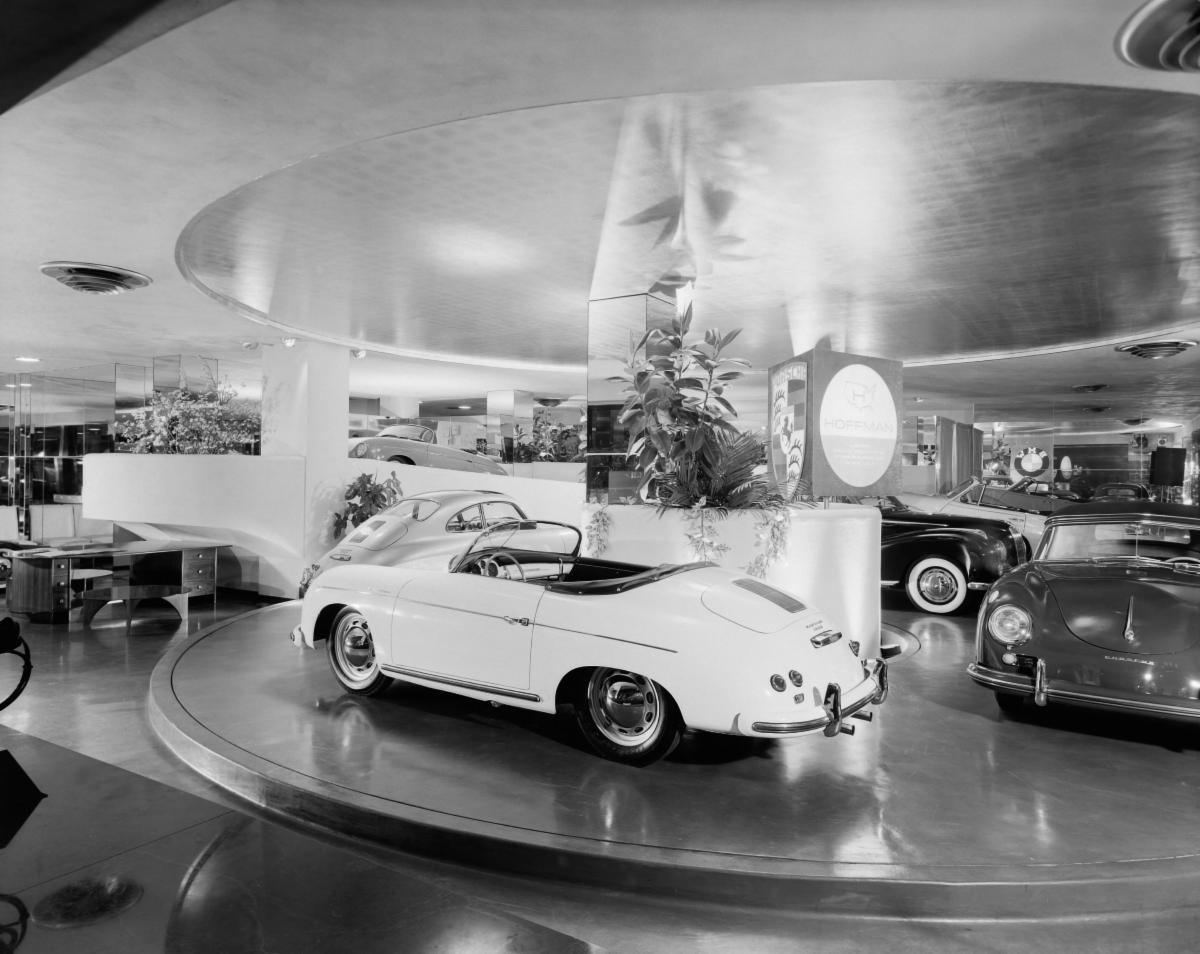
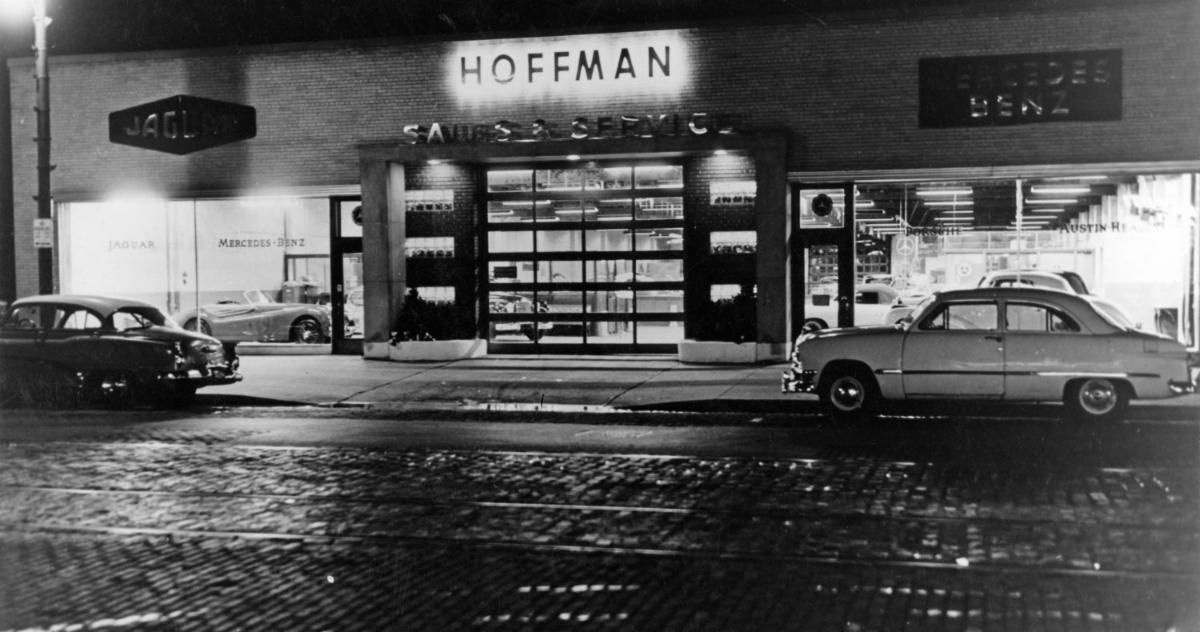
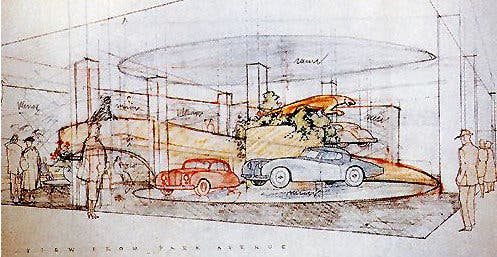
Hoffman Motors was established in 1947 and Max quickly made his rounds in Europe, re-establishing friendships, industry connections and placing orders for cars. He took on the distributorship for Healey, Allard, Jaguar, Lancia, Lagonda, HRG, Lea-Francis, and Daimler. His first showroom opened at 487 Park Ave in New York with just one car - a Figoni et Falaschi coachbuilt Delahaye. His first customer was the Maharaja of Indore.
Knowing the fellow Austrian Porsche and Piech families, he got the distributorship for Volkswagen which nobody else wanted, and whose cars people laughed at. He was even offered the Wolfsburg factory - the world's largest - for $2M after the British declared the Beetle unsaleable.
In 1949, the first VWs appeared in the US arranged by the American Military to encourage trade with West Germany. In 1950 the British (in whose zone Wolfsburg was located) agreed to the export, and in July of that year, the first 20 'Type 1's' were unloaded in Brooklyn for the Hoffman Motor Company. These were among the first Beetles in the US (along with a couple private imports). They had the original 25hp, non-syncro gearbox, mechanical brakes and they were all painted 'Wehnmacht Green". Hoffman's dealers couldn't sell them, and Max gave up the franchise in exchange for a commission on the cars sold for a period of a few years.
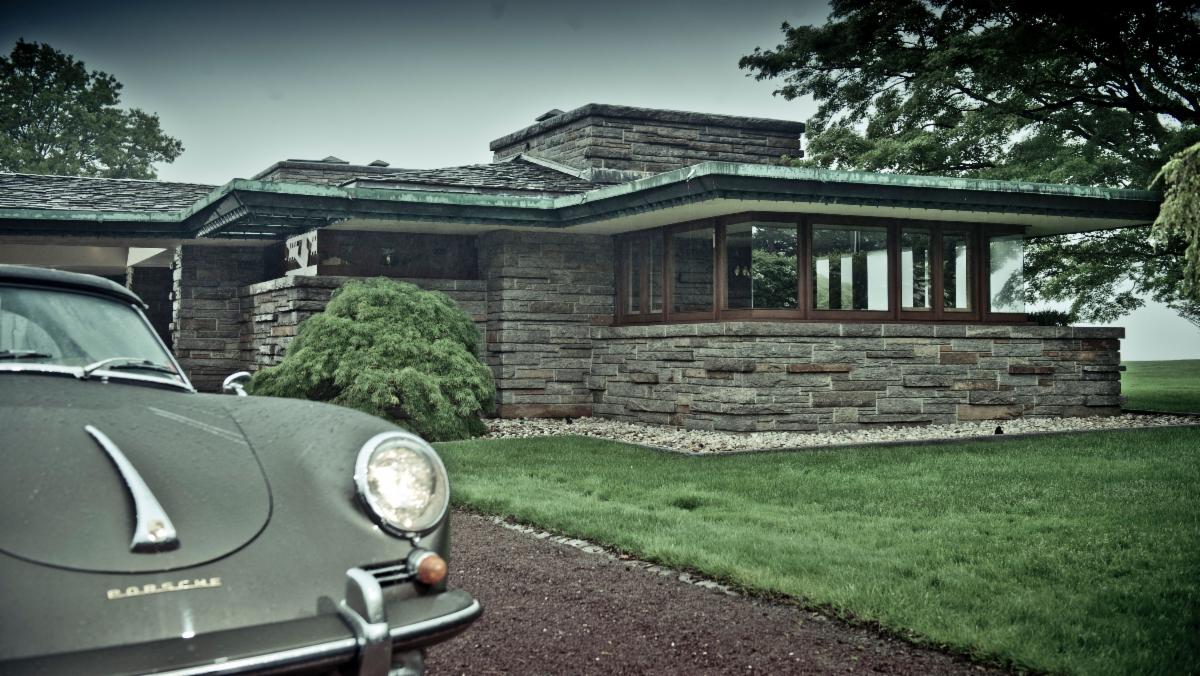
When production of the Porsche 356 started in earnest in 1950, Ferry Porsche figured the world-wide demand for his car was 500 units per year. Max told Ferry that he could sell that many per week... Hoffman Motors was pivotal in Porsche's success, taking 70% of the factory's output. Max convinced Ferry that Porsche should have a badge, and Ferry sketched one out on a cocktail napkin in a New York restaurant.
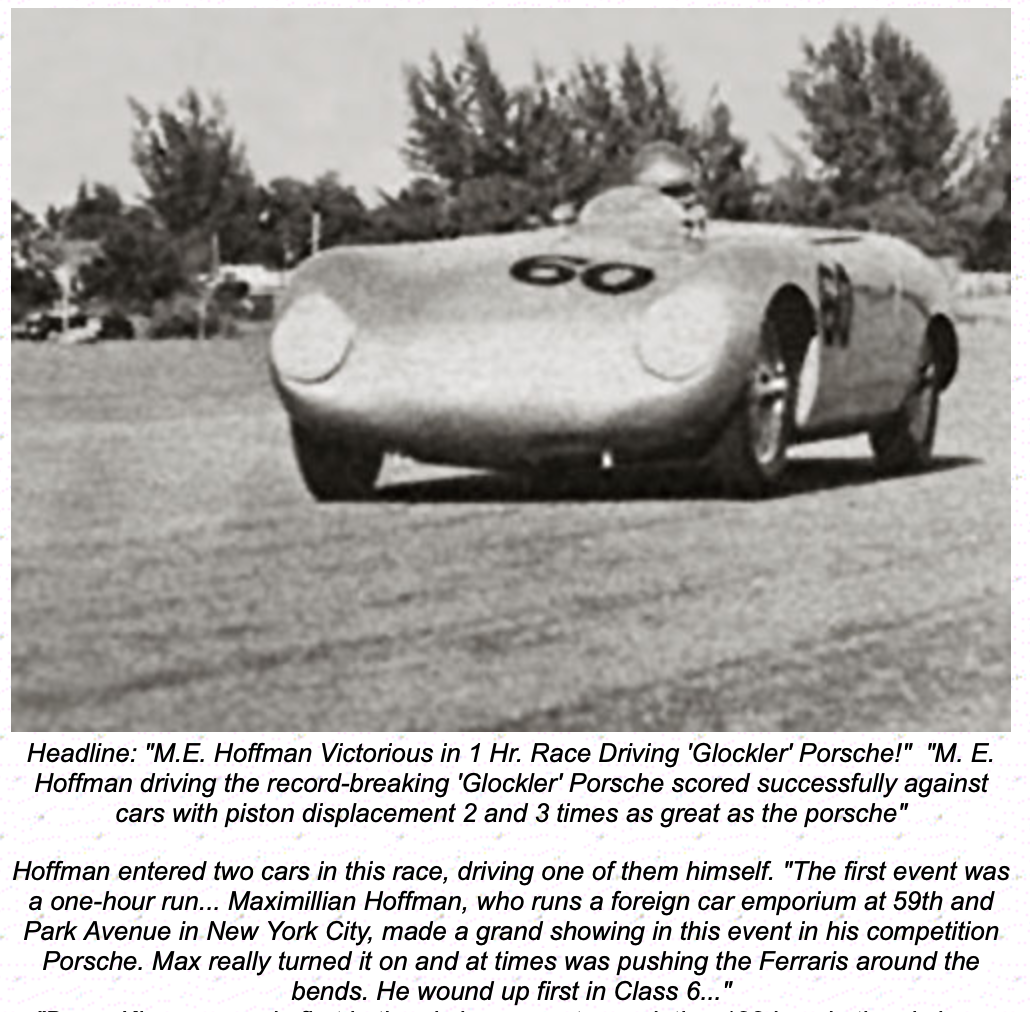
Hoffman was a fierce competitor behind the wheel as well. A motorcycle racer in Europe, it didn't take Max long to start entering Porsches in sporting events where he put in fine performances that helped to establish Porsche in motorsport.
|