| | |
Connecting
Sept. 14, 2026
Click here for the sound of the Teletype
| | |
Colleagues,
Good Monday morning on this Sept. 14, 2026,
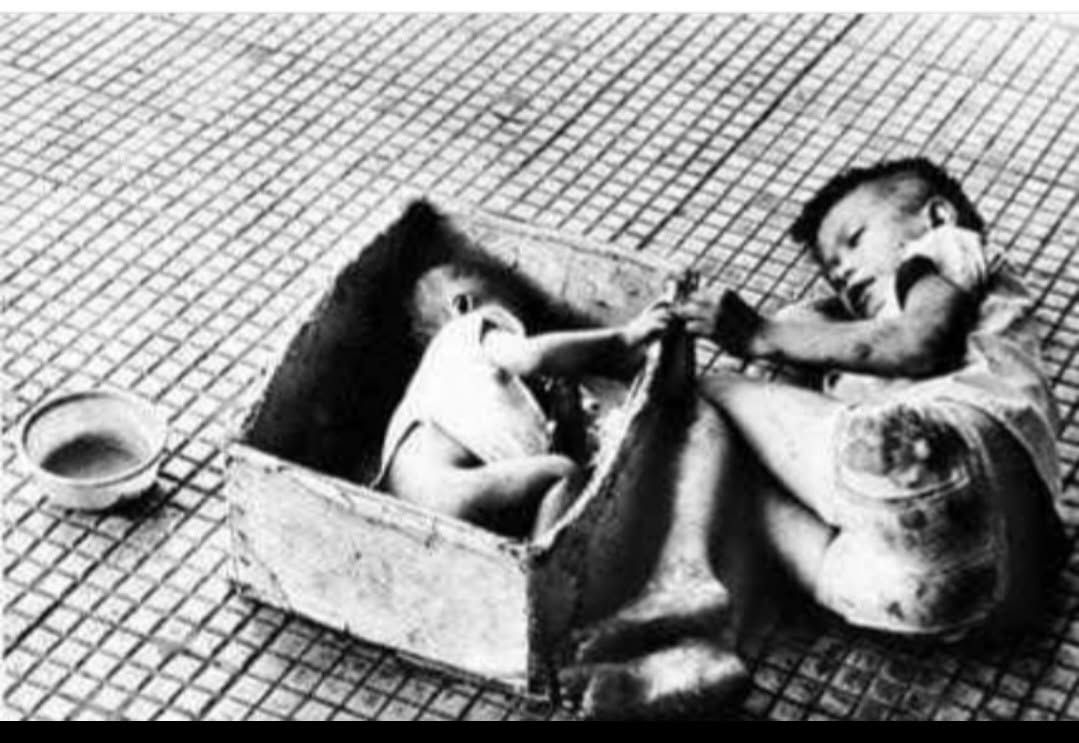
In 1973, AP photographer Chick Harrity took one of the Vietnam War's most memorable images – showing a baby girl, Tran Thie Het Nhanny, lying in a cardboard box with her brother, who begged on the streets of Saigon.
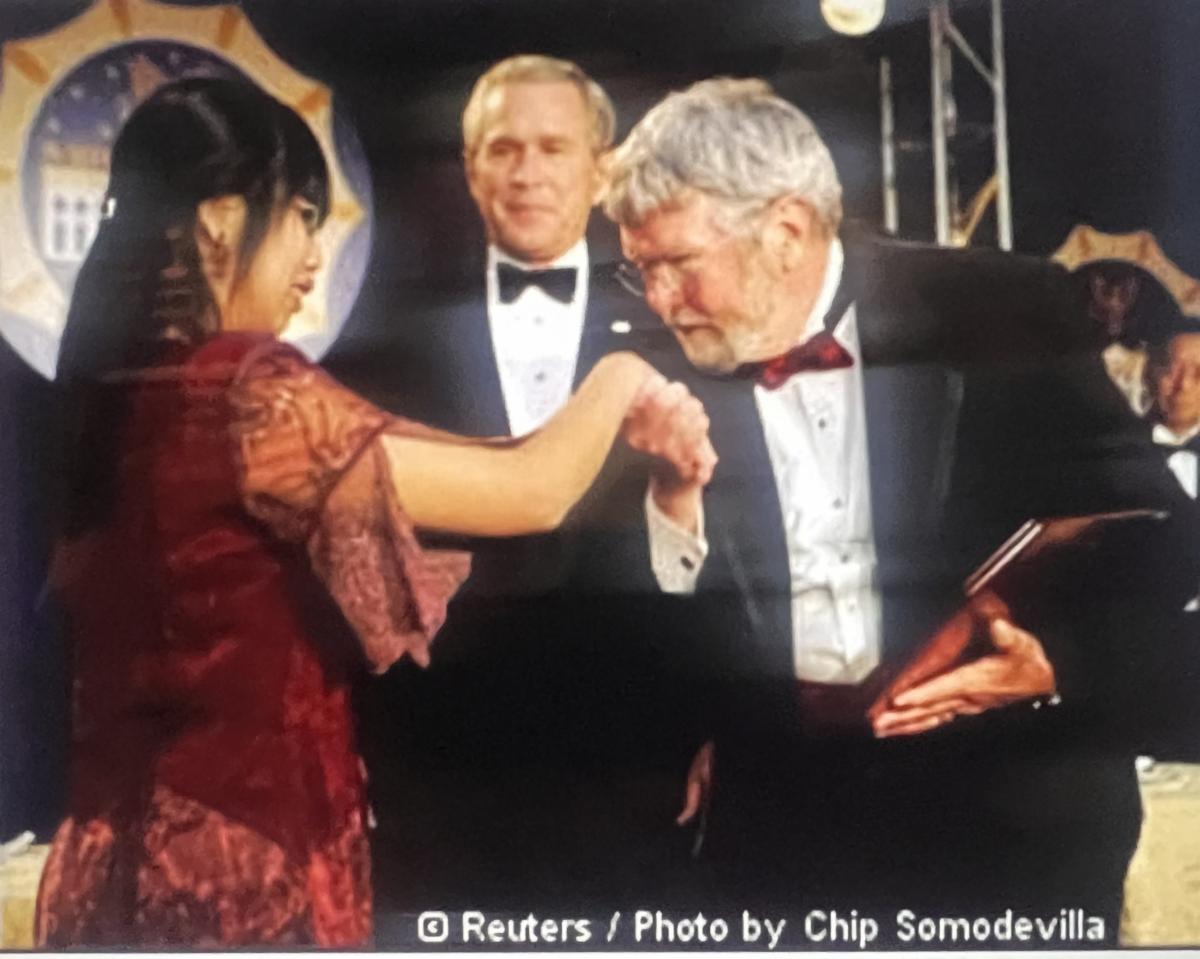
In 2005, when Harrity received the White House National Press Association Lifetime Achievement Award, to his surprise the woman whose image he captured in that famous photograph presented the award with President George W. Bush looking on. (After surgery in the United States, Nhanny was adopted by an American woman.)
Harrity died Sept. 9 at his home in Calistoga, Calif., at the age of 87, and that photograph was one of many highlights of his great 48-year career in photojournalism, 35 of them in Washington.
A portfolio of his work and other memorial information are available at: chickharritymemorial.com – access through the password: f/8andbethere
We lead today’s issue with his obituary provided by his wife, Yvonne Henry. And we bring you a story on that 2005 meeting of Harrity and Nhanny written by Dirck Halstead, editor and publisher of The Digital Journalist, who died in 2022.
If you would like to share a memory of Chick, please send it along.
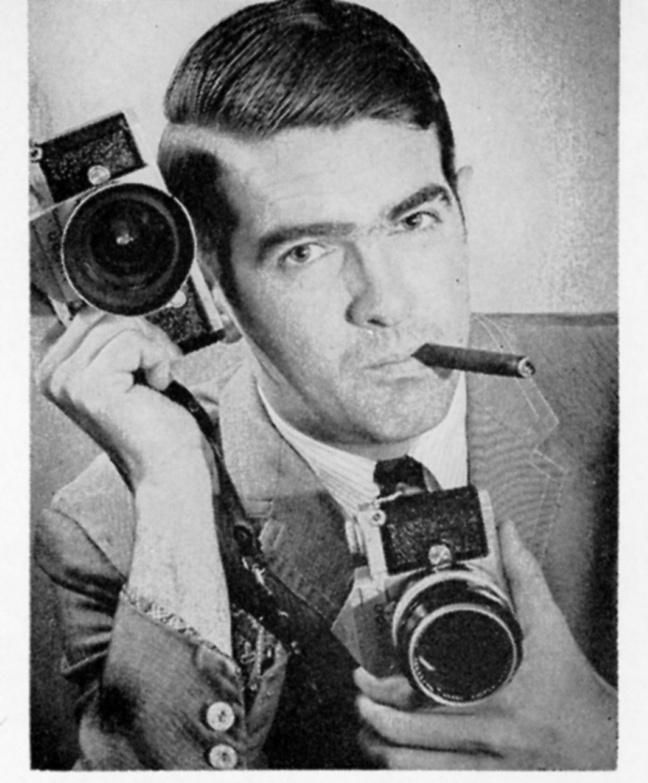
Oh, and how did he get the nickname “Chick”? According to an AP World story, when he was AP's Albany photographer, then AP Chief of Photography Hal Buell explained, “When a guy has a big cigar in his mouth, as he always does, you simply don’t address him as ‘Charles’.”
We bring you more of your colleagues’ memories of 9/11 in the aftermath of the 25th anniversary Friday of the terrorist attacks.
Here’s to a great week – be safe, stay healthy, live each day to your fullest.
Paul
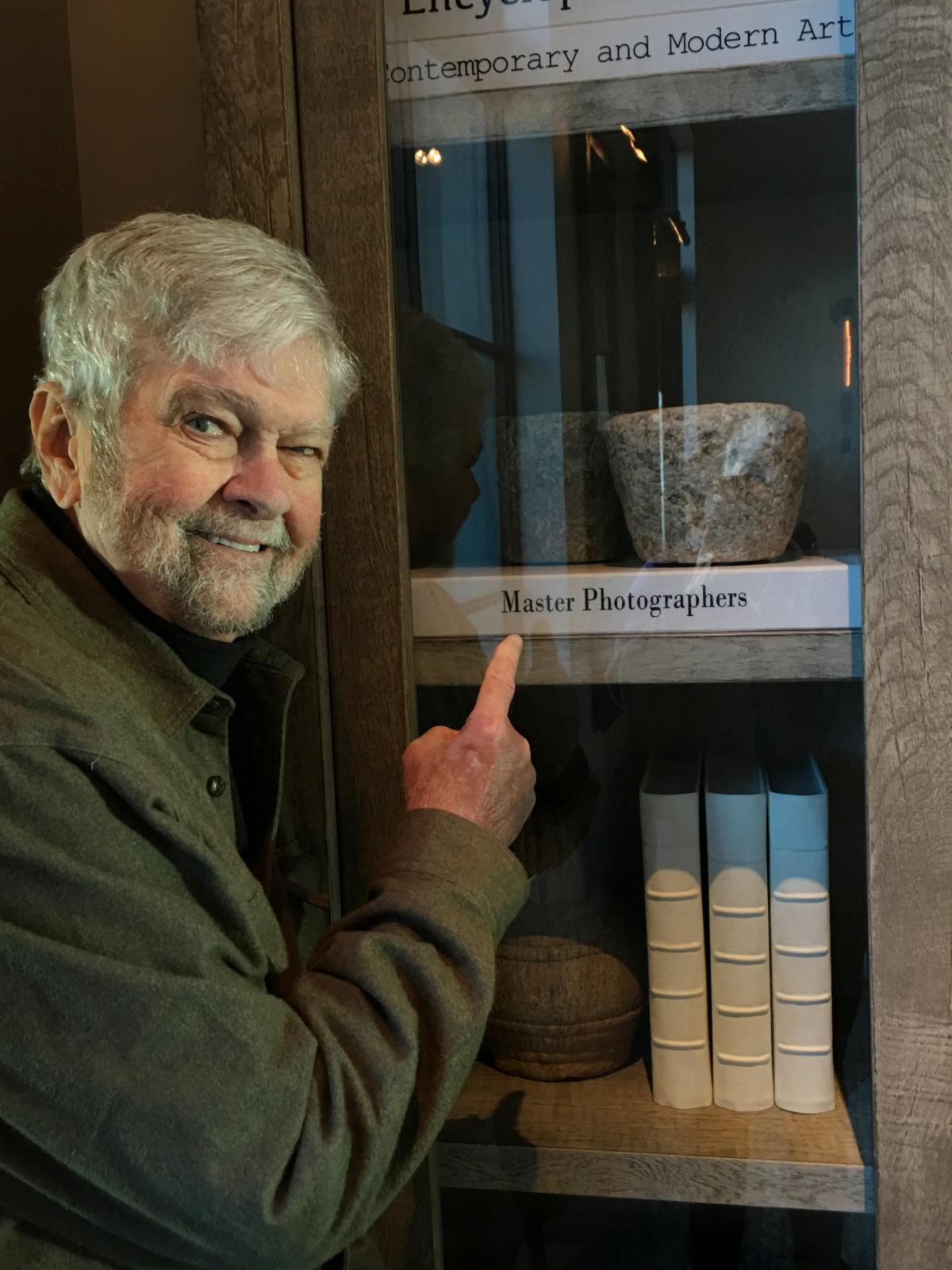
Love for photography, natural curiosity propelled AP career of Chick Harrity
| |
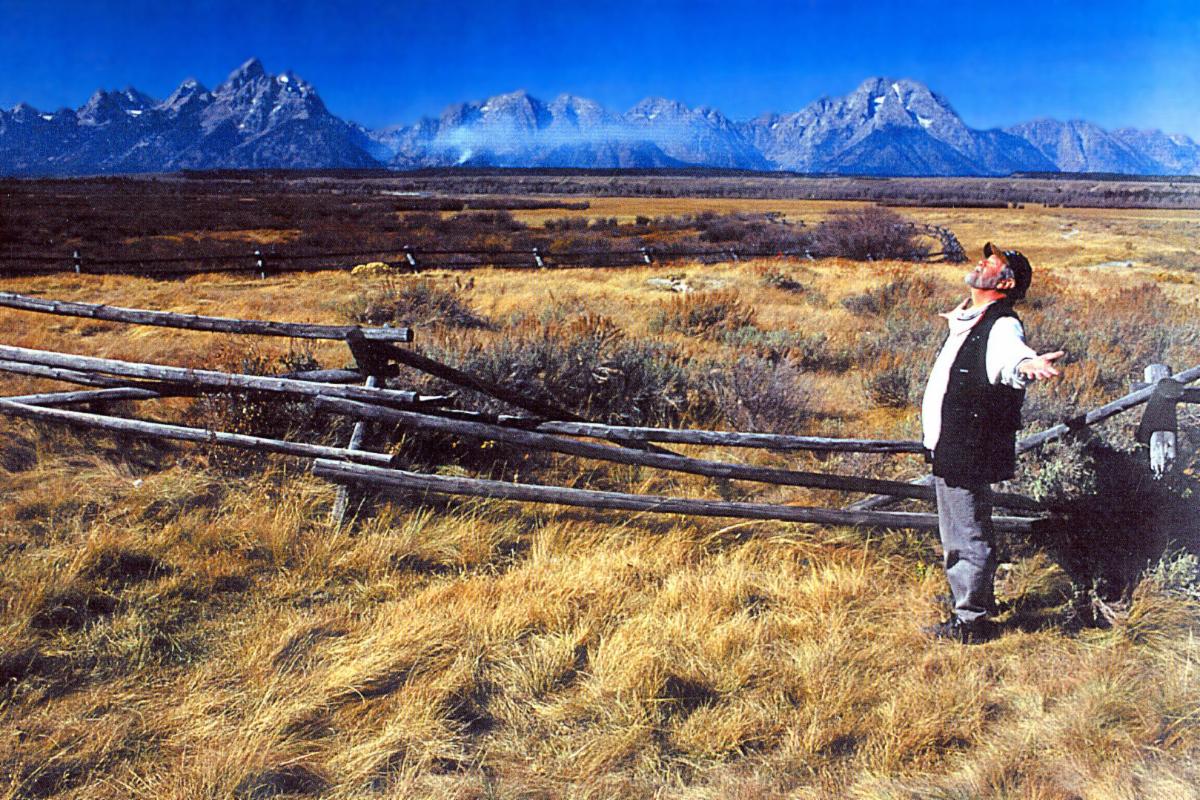
Chick Harrity first picked up a camera at the urging of an eighth-grade teacher in Reading Pa. His instant love for photography and a natural curiosity launched him on a lifelong journey documenting the world around him.
Harrity began his journalism career in 1956 at his hometown newspaper, the Reading Times. He spent 26 years at the Associated Press, 13 of them in the Washington bureau, and later became chief photographer at U.S. News and World Report, where over 20 years he covered a wide range of assignments with grace and style. “I had the chance to run around the world taking pictures of a group of pretty interesting people. I was getting to witness history.”
While a member of the White House press corps for 33 years, Harrity photographed eight sitting presidents from Lyndon B. Johnson to George W. Bush. He photographed civil strife in the 1960s, withdrawal of American troops at the end of at the Vietnam War, and he was at the White House on August 9, 1974, when Richard Nixon resigned the presidency. He covered 17 political conventions from 1968-2000.
| |
Harrity retired from U.S. News on April Fool’s Day of 2001 in a purposeful display of his trademark sense of humor. He then moved to Northern California where he became photo coach and contributing photographer for the Calistoga Tribune, in addition to photographing for Napa Valley Music in the Vineyards and Napa Valley Artists.
A Baby Brownie was his first camera. “In my era I’ve watched still photography go from film to digital. My timing was interesting.” His first professional camera was an Argus then moved on to a 4×5 speed graphic and then to Leica and Nikon, eventually shooting his last photograph with an iPhone.
Harrity was the winner of numerous honors including:
Associated Press Managing Editors’ award for Excellence in Photography, The Joseph Sprague Memorial award for the highest honor in the field of photojournalism by the National Press Photographers’ Association, being named White House News Photographer’s Association Photographer of the Year, being awarded the Leica Medal of Excellence for Photojournalism, and being the recipient of the White House National Press Association Lifetime Achievement Award.
Even in retirement he remained interested in history in the making. He reminisced about his enjoyable years covering Washington politics “…when humor and civility were signs of intelligence and leadership”.
He loved well. He was well loved.
Chick is survived by his wife of 50+ years along with interesting, amusing, and treasured family and friends.
A Surprise From Long Ago and Far Away
by Dirck Halstead
Editor and Publisher of The Digital Journalist
(Washington - May 21, 2005) -- Every year, top photojournalists who cover the President of The United States gather for the White House News Photographers' Association's black-tie dinner in the nation's capital.
Although the star at the dinner was President George W. Bush, who cracked jokes at his own expense that had the photographers rolling in the aisle, especially when he showed a video of Vice President Dick Cheney buzzing around the country on a Segway scooter, the emotional highlight of the evening came when it was time to honor former U.S. News & World Report Chief Photographer (and Digital Journalist "Camera Corner" editor) Chick Harrity with the WHNPA's Lifetime Achievement Award.
Although Chick is best known for his 33 years of covering the White House for The Associated Press and U.S. News, his favorite photograph was a picture he made in 1973 during the Vietnam War, when he was with AP, showing a street child sleeping in a cardboard box on a Saigon street with her brother by her side.
After publication in newspapers around the world, the picture caused a ground swell of support for Vietnamese orphans. Thousands of Vietnamese children were adopted into American homes. The little girl that Harrity had photographed was named Nhanny and she was adopted by Evelyn Heil of Springfield, Ohio, after Heil's long crusade to find her and bring her to the United States.
As he walked to the stage to accept his Lifetime Achievement Award, the spotlight swung to pick out a woman also making her way to the podium. It was Nhanny.
“It was an incredible moment," said Harrity. "I had been to a rehearsal for the presentation that afternoon and there was no mention of her. After I shook hands with the president, I noticed that the other people were not moving into their rehearsed positions. Then I heard WHNPA President Susan Walsh tell the president, "Don't move, stay here!" Since you usually don't talk to the president like that I figured something was happening and then Nhanny appeared."
"That a picture became instrumental in the idea of adopting these children was overwhelming," Harrity added.
According to people who attended the dinner, there wasn't a dry eye in the house as Chick and Nhanny embraced.
"It was one of those drop-dead moments," said Harrity. "It brought home the real aspect of what we do. It can change lives. It certainly changed her life. We can affect the world."
AP journalists reflect on covering 9/11, 25 years later
By Nicole Meir
The Associated Press
On Sept. 11, 2001, AP journalists across New York rushed to document a story unfolding before them. In the days and months that followed, the story reverberated around the world, as AP journalists chronicled the attacks, their aftermath and the events they set in motion.
Twenty-five years later, AP journalists in New York and across the globe reflect on covering 9/11, what they remember and what has stayed with them.
Howie Rumberg was the first AP reporter on the scene. He lived in Tribeca and was heading home after working an overnight shift in Sports when the attacks occurred. He spent the next two weeks monitoring the overnight shift downtown.
“I think what still resonates about covering the attacks in lower Manhattan is the chaos around the World Trade Center. People were scrambling in all directions, a woman running out of her high heels, backpacks and briefcases left on the sidewalks by people sprinting to what they hoped was safety. No one knew what was happening – and it was happening here, so shocking. I think all of New York was numb for weeks.
“Twenty-five years later, I am still struck by two things: one, just how many people rushed downtown to help. And, two, the little details: a police captain going over a list of his staff written on a notepad in the gym of the community college nearby, choking up as he tried to read the names out loud; listening to a speech by President Bush on a police cruiser radio; a young woman with a picnic basket filled with snacks that she was offering to people moving rubble in the pile; the shouts for silence from rescue workers and volunteers who were trying to listen for signs of life; finding everyday objects like golf balls and paper weights amid the destruction that most likely sat on desks just hours earlier.”
AP photographer Richard Drew was covering Fashion Week when his photo editor called and sent him to the World Trade Center. Drew would go on to capture one of the most enduring images of the attacks, known as “The Falling Man.”
“My cell phone went off, and it was my photo editor Barbara Woike. And she said, these are her words, I’ll never forget this. She said, ‘Planes hit the World Trade Center. Bag the fashion show, you have to go.’”
Drew positioned himself near West and Vesey streets, where he could watch both the World Trade Center and the ambulances assembling nearby.
“Then I heard this rockslide. And I looked over and I started photographing what I thought was just the facade of the building coming down. It was actually the collapse of the south tower.”
Someone grabbed Drew and pulled him away as the building collapsed.
“It’s really tough sometimes thinking about it even 25 years later.”
AP reporter Larry Neumeister usually traveled through the World Trade Center on his way to work. On Sept. 11, he was running about half an hour late.
“Because of that, I wasn’t in the World Trade Center when the planes hit, because I came through there on the PATH every morning. And so I just feel incredibly lucky to have not been in a position to die that day.”
Neumeister spent part of the day at a hospital near the World Trade Center, where doctors and nurses had prepared for an influx of patients.
“They had lines of wheelchairs resting right outside this entrance to the hospital, expecting a lot of traffic. Then as the hours went on throughout the day, it became clear nobody else was being brought in.”
Four days later, while staying at a friend’s apartment, the emotion finally caught up with him.
“I just found a secluded part of the apartment and just cried my eyes out for like a minute, a full minute. I didn’t even know why I was crying. It had to be all the pent-up emotion of 9/11. Finally, you let it out.”
AP reporter Deepti Hajela was part of AP’s New York City bureau but was at home in Jersey City when the attacks occurred. She recalls trying to find a way to help with the coverage and the stories of loss that followed.
“I was part of the New York City bureau but lived in Jersey City at the time and wasn’t scheduled to work until later in the day. I had actually passed through the World Trade Center the night before to take the PATH train home.
“Once I realized what was happening, I scrambled to figure out how to help. With the Hudson River crossings closed, I knew I wouldn’t be able to get into the city, so I went to our office in Newark instead.
“Most of what I remember is from the weeks after, all the different stories of loss and the pieces we wrote about them. It was a lesson in humanity, and learning how to be respectful of people’s grief.”
AP reporter Nicole Winfield, a New York City native, had moved from New York to Rome just months before 9/11. She recalls watching the attacks unfold from the AP bureau in Rome before being sent to Pakistan and Afghanistan to cover what followed.
“As a New York City native, I remember 9/11 as a deeply personal attack on my hometown, even though I was thousands of miles away at the time. My husband and I had just moved to Rome from New York a few months earlier for work. I was in the AP Rome office that day and watched as the second plane slammed into the World Trade Center.
“Within a few months, I joined the AP team covering the U.S. invasion of Afghanistan, first working at our war desk in Islamabad, Pakistan, helping anchor stories on al-Qaida, and later doing a stint in Kabul after the Taliban fell.
“My husband and I returned home a month after the attacks for a friend’s wedding. We flew into Newark and saw from above the still-smoldering ruins as we approached. Looking south from my childhood home in Greenwich Village, it still shocks me today that the towers aren’t there.”
Ted Anthony had transferred from New York to Beijing just seven weeks before 9/11. He recalls watching the attacks unfold from China before being sent to Pakistan and Afghanistan in the weeks and months that followed.
“The bottom line: At the beginning, in those early moments, we had no idea how much was changing under our feet. I remember sitting in Beijing that night when a colleague messaged me one line: ‘Did you see this plane that hit one of the towers?’ Within minutes, we knew it was more. Within hours, we were holed up in the AP office in a protected compound, trying to help our colleagues (in a pre-Zoom, pre-Slack era) figure out what was going on and how it was rippling. Was this a coup? Would the government fall? What would come next?
“As it turned out, for those of us working internationally, what would come next were months and years of being tested, of finding our limits, of doing some of the most important work of our careers. I was en route to Islamabad within days, and to Kabul not too long afterward. For AP people in my generation — then in our late 20s and early 30s — this was very much a coming of age that would reverberate through our work forever. And for me, at least, some of the personal impact would wait years and even decades to reveal itself.”
Click here for link to this story.
9/11 - 25 years later
| |
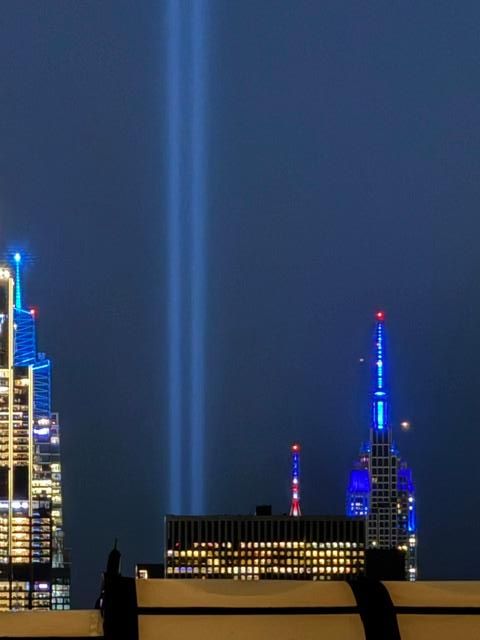
Marty Steinberg - Photo I took on 9/11/26 from the roof of a 41-story building on the Upper East Side.
Your memories of 9/11 attacks
Dan Perry - I was the bureau chief of AP in Israel and the chairman of the Foreign Press Association. I was supposed to fly out to Ireland — on the 12th of September. I very much looked forward to that.
Obviously, 9/11 happened, and pretty soon after that dozens of people, Palestinians, were supporting — were demonstrating in favor of Osama bin Laden in Beirut. And pretty soon after that, hundreds of people were demonstrating in favor of Osama bin Laden in East Jerusalem. We sent a crew, and pretty soon thousands of people were demonstrating in favor of Osama bin Laden in Nablus.
So we had our man there, Nazih Darwazeh, and he filmed it. But Yasser Arafat's Palestinian Authority figured out that this was bad for business, clamped down on the protest and on the coverage and tried to seize everyone's materials. But Nazih was too clever. He switched the cassettes and he sent it to us in Jerusalem, whereupon I got a call from Ahmed Abdel Rahman, the Secretary General, I believe at that time, of the Palestinian Authority. And he told me, Listen, I understand you have a video. The Al-Aqsa Martyrs Brigades are not too happy. And I said, Who controls Palestine, Ahmed? Is it Yasser Arafat or the brigades? And he said, You know very well, Dan, nobody controls anything in Palestine.
And next thing I know, I'm getting calls from Nazih saying, Please don't run the video, because they're going to kill me. So I called (AP President/CEO) Lou Boccardi. Lou said, It's your call. So I made a call. We did not run the video. We ran a story about this. I quoted Abdel Rahman, skirting the edges of what is ethical, and we ran a photo of the event. Tragically, two years later Nazih was killed by a stray bullet from an Israeli event in Jenin, or rather in Nablus.
-0-
Amy Baldwin George - I've been struggling with what to say today, or whether I should or could say anything at all. Some years I have posted or talked about this day and some years I haven't. 25 years. It's hard to grasp.
On this day, my heart is always with my former colleagues at The Associated Press, some who are still there and others who have gone on to other newsrooms or other careers. On that day, after saying goodbye to Jefferson George at the Lexington Ave/59th Street station (it was his second day of work in his new city), I'd just gotten to my desk and turned on my TV to CNBC as the first plane hit. I was one of two daily stock market reporters, and my friend Lisa Singhania was the other. I called over to the general news desk (there were individual newsrooms at 50 Rock) to make sure they knew about the plane. And for a little bit, it was just an accident. Until the second plane, of course. That day changed me. It changed all of us. Be good to yourself today. And never forget.
-0-
Robert Reid - On a steamy morning of April 8, 1995, I joined a group of Filipino journalists on a press trip to the southern Philippine island of Mindanao, where Muslim rebels had just burned down a Christian town.
More than 50 civilians had been killed and dozens of others taken hostage.
Four days after the massacre, the country’s president, Fidel Ramos, flew to the town with journalists to meet survivors and read the riot act to negligent government security forces.
What we found was that preliminary reports of the carnage had not been exaggerated. The center of the town was a smouldering ruin. The few buildings that were still standing were riddled with bullet holes. Survivors appeared dazed and frightened.
Returning that afternoon to Manila, our plane taxied to the military side of the international airport. My driver, it turned out, was waiting on the civilian side. I was stranded in the wrong arrival hall.
Everyone else had rushed off, and I found myself alone except for another man whose driver was also late. It was Rafael Alunan, the country’s boyish-looking interior minister, who was in charge of domestic security nationwide.
I introduced myself and we chatted about what we’d seen in Mindanao.
Back then Filipino officials could be quite open. He told me the attack was the work of a splinter group known as Abu Sayyaf.
That much I knew.
Then he spun a tale about how Abu Sayyaf was affiliated with a worldwide alliance of Islamic extremists led by a rich Saudi named Osama bin Laden, who wanted to foment a global Muslim uprising.
“Excuse me, sir, ‘bin what?’ how do you spell that?”
I’d never heard of Osama bin Laden, much less any plans for global jihad.
Alunan went on to say bin Laden’s brother-in-law had lived in the Philippines and was operating a money-laundering channel sending funds through mosques to Muslim extremists in the South.
Alunan was thin on details and the whole story seemed preposterous - part of a tendency of many Filipinos of his era to blame all the country’s problems on unseen foreign hands.
After all, this was three years before the al-Qaida attacks on US embassies in Kenya and Tanzania, five years before the bombing of the USS Cole in Yemen and a year before bin Laden settled in Afghanistan.
The world seemed different then.
Despite my misguided skepticism, Alunan was a serious figure and it would have been foolish to ignore what he’d said. I messaged AP’s Cairo bureau if they’d ever heard of this bin Laden.
Yes, they replied, he was a Saudi religious extremist and veteran of the Soviet war in Afghanistan currently living in Sudan.
The message made no reference to any plans for global jihad. But it was enough to mention bin Laden in the story - albeit near the very end.
I’m not even sure New York used it on the AAA wire.
-0-
Marty Steinberg - Thanks to Sheila Norman-Culp for her moving recollection of 9/11 and beyond. I would like to add that our beloved morning national editor, Polly Anderson, played a key role in AP’s coverage. When the first building collapsed, it was Polly who suggested that I file the news flash. I’m not sure what Polly’s status is today. Many of us would appreciate an update.
-0-
Ed Tobias - May I please add one more important name those mentioned in the excellent pieces, written by Brad Kalbfeld and Kathryn Loomans , describing the 9/11 coverage provided coverage? George Mayo, AP Broadcast’s Chief Engineer. Not only did sure our technology keep ticking, in the earliest minutes of the story George helped me make an important coverage assignment.
As Brad wrote, Warren Levinson, our NYC radio reporter, was out of position that morning…in WDC for some video training. So, I was pulling out all the stops trying to get other Broadcast staffers into the city. One of those I was trying to scramble from DC was National Security Reporter Thelma LeBrecht. George heard me working on this and quickly cautioned “wait a minute. Don’t send Thelma. What if they hit the Pentagon?” It was less than half an hour later that they did.
-0-
Joyce Rosenberg - My part in the coverage of 9/11 was important for the Business News department, but completely insignificant and tangential considering what my colleagues in other departments and bureaus were doing. I spent the day trying to determine if the stock markets would open that day, and if not, when trading would resume.
The markets didn't open until Monday the 17th. Having been the stock market editor for years, I knew it would be an extremely volatile day. I went to work in jeans, something I never did, and had my breakfast, lunch and dinner with me. I knew I wouldn't be getting out of my chair that day.
I told our two markets writers that I would handle the opening leads. When trading began, the Dow Jones Industrial Average began falling by hundreds of points; I banged out a bulletin but stocks were falling so fast that the lead was already outdated. I sent it, started on another and then another and another with the Dow down about 1,000 points and more. I ignored nonstop calls from the General Desk; there was no time to talk.
Darrell Christian, the blessed business editor, did what a good manager does. He fielded the General Desk calls, and when I had about six leads and 700 words out, he came up behind me and said, "It's looking good."
I don't remember anything else about that day other than the feelings I had. I was intent on writing fast, being accurate, sounding smart. But there was no forgetting that while this was a huge financial story, there were more than 2,700 people lying dead downtown. When I left the AP five years ago, and people asked me what was the most important day of my career, I told them, September 17, 2001.
Saddened to see his local paper dropping AP
Doug Pizac - I was saddened to read that The Columbian -- my local paper in Vancouver, WA -- is dropping AP.
Editor Will Campbell's reasoning is simple: "We are making this change because relevant AP content is dwindling and very expensive." He cited AP's adapting appeal to tech companies and video users which "has led away from hyperlocal and regional news that our readers seek.
"As the AP’s offerings have dwindled, especially for regional content, we’ve also begun printing stories from nonprofit newsrooms, including The Washington State Standard, which covers state government."
The paper will be switching to The New York Times and The Athletic in November for national and international news. It already relies on content-sharing with The Seattle Times, The Tacoma News Tribune, The Spokesman-Review and others for state stories.
The Columbian has been an AP member for over 100 years.
Associated Press ‘flimsies’
Steven Paulson - I was reading the Sinclair Lewis novel ``It Can’t Happen Here,’’ a 1935 dystopian story that is remarkably prescient about today’s political climate. Jump to Chapter 8 if you want to learn that it can happen here and has happened here, along with a 15-point plan. But I digress. The book refers numerous times to the ``Associated Press flimsies.’’ I looked it up and it apparently refers to loose, carbon‑copy pages of Associated Press Washington Bureau stories, sometimes with photographs and clippings. I assume they were mailed to subscribers, since there were no fax machines back then. According to Copilot AI, some of the stories are still available in special collections such as the Schlesinger Library’s Radcliffe Institute Papers of Ruth Cowan Nash.
I wonder if the AP has copies of the ``flimsies’’ in its archive. When I joined the AP in Raleigh, North Carolina, the well-seasoned overnight editor told me stories about the AP Pony Wire. Back then, the AP phoned stories to editors for small-town papers. He told me one old codger at one of the rural papers would take the dictation, and halfway through would say ``OK, I’ve got enough’’ and hang up. Talk about burying the lead. As for Sinclair Lewis, it will be up to history to determine if he was right.
An interesting AP reference
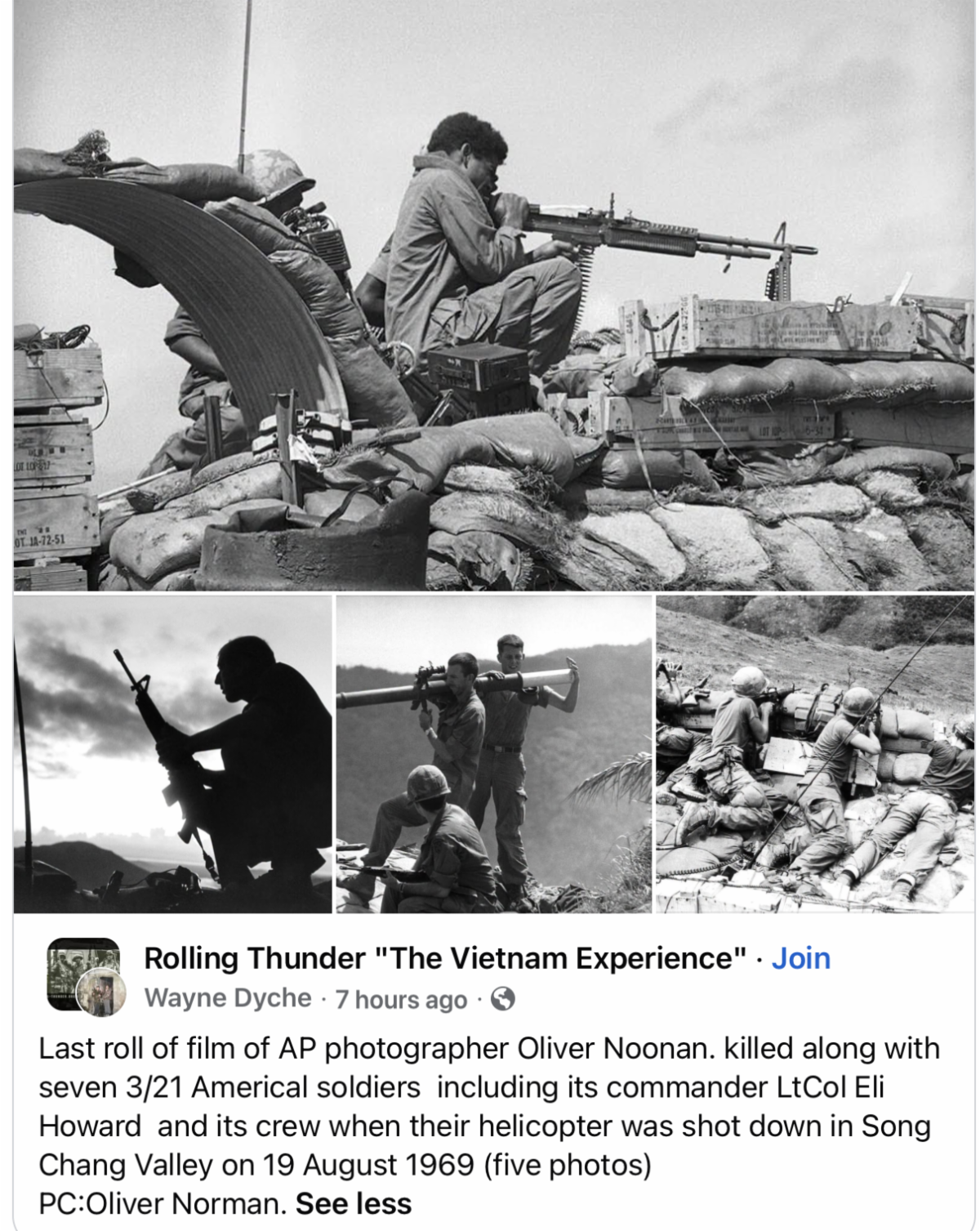
Ken Fields - I saw a Facebook post today on the '23rd Infantry Division ‘Americal’’ which claimed to have the last roll of film shot by AP photographer Oliver Noonan. I wondered how they obtained the photos. Note: The photos were apparently shared from another site called ‘Rolling Thunder “Vietnam experience”
23rd Infantry Division 'Americal'
Joe Leong
| |
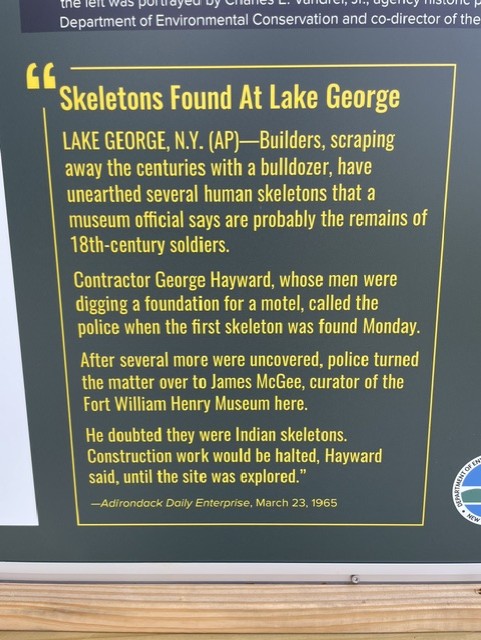
Chris Carola - The signage on display at a Revolutionary War memorial in Lake George Battlefield State Park in New York’s Adirondacks includes a couple reproductions of news reports detailing the discovery of historic skeletal human remains during local construction projects, a common occurrence in a place that saw plenty of military activity in the latter half of the 18th Century, during the French and Indian War and the American Revolution.
One of the stories on display is an AP story from 1965, when the village of Lake George was developing into a popular tourist destination. I would write several stories about similar discoveries made in Lake George during my years working for AP in Albany, including the 2019 discovery of what turned out to be the remains of 44 people, mostly Continental Army soldiers, who likely died of smallpox during the summer of 1776. That discovery led to the creation of the Repose of the Fallen Memorial, located in the battlefield park, which was officially dedicated in May.
Connecting sky shots
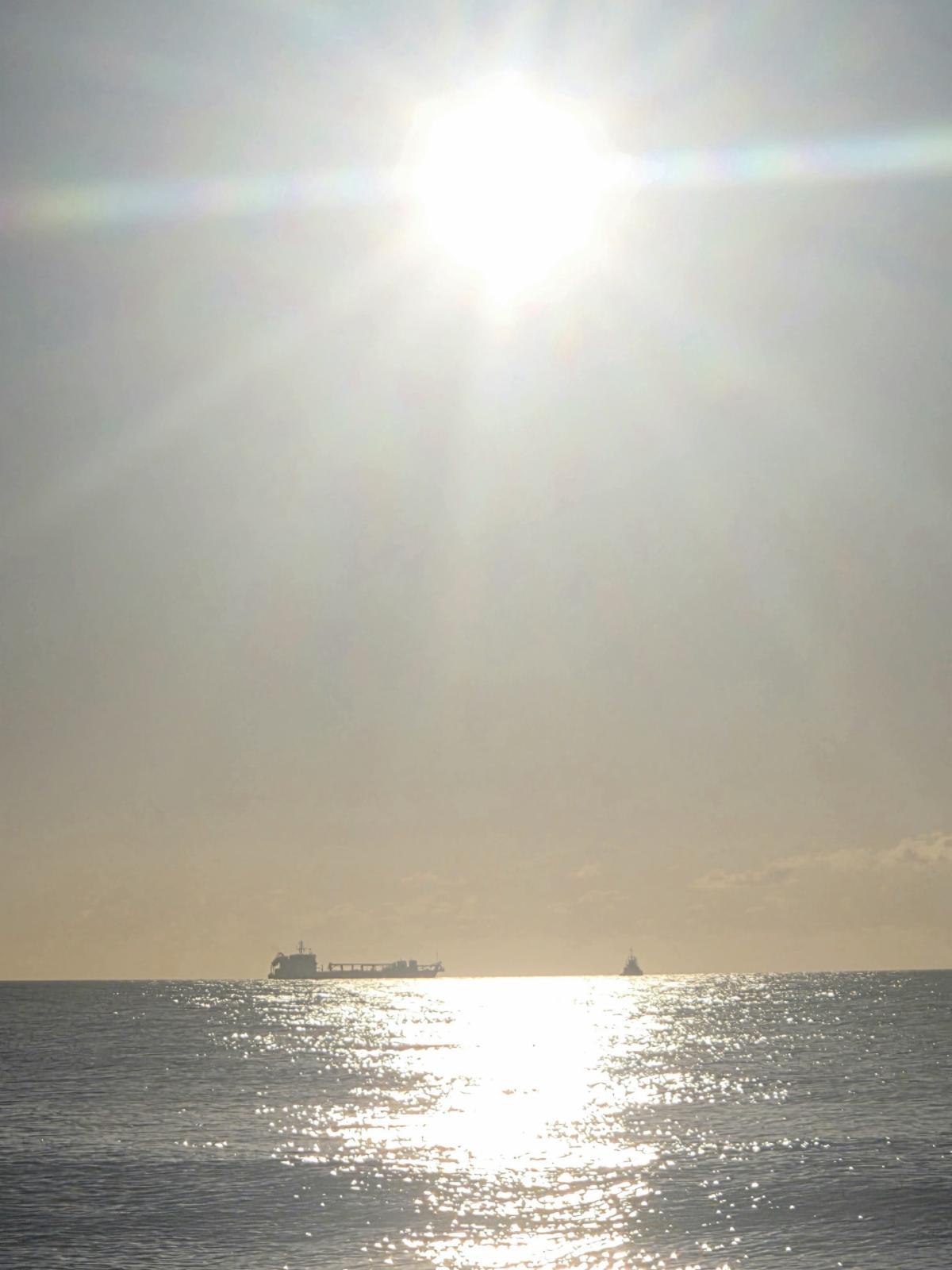
| Joe Macenka - Thursday morning sun shines on two boats being used in a dredging operation that is part of a sand replenishment project on the beaches of Hatteras Island, N.C. | | Connecting wishes Happy Birthday | | |
Stories of interest
For the US news industry, a tough summer draws to a close with McClatchy chain’s cuts
By Jocelyn Noveck
The Associated Press
Closing out a turbulent summer for the news industry, the McClatchy newspaper chain has made deep cuts at The Miami Herald and other papers it owns across the nation.
The union that represents McClatchy journalists said Friday that more than 90 unionized journalists and media workers across 17 publications had been laid off, accounting for about 30 percent of all McClatchy workers unionized with The NewsGuild-CWA. The layoffs have impacted news outlets including The Sacramento Bee, The Kansas City Star, The Charlotte Observer, Fort Worth Star-Telegram and others.
“We are waist-deep in the quicksand and we are still sinking,” Carol Marbin Miller, deputy investigations editor of The Miami Herald, said in a phone interview.
Marbin Miller, who was not impacted by the layoffs, told The Associated Press she was speaking out to stress how dire the situation was at her paper, where a total of 32 jobs were cut. Those included 28 lost jobs and four positions that were frozen, according to a person familiar with the situation, speaking on condition of anonymity. They included the entire writing staff of El Nuevo Herald, the Spanish-language publication.
Read more here. Shared by Adolphe Bernotas, Richard Chady, Paul Albight, Doug Pizac.
-0-
How Trump Is Wielding Power to Stifle Speech
By Jim Rutenberg and Maggie Haberman
The New York Times
The Justice Department has sent F.B.I. agents to reporters’ homes to serve subpoenas and, in at least one case, flashed a warrant to seize devices. The Pentagon has fired the editor and publisher of its traditionally independent newspaper, Stars and Stripes, and blocked access to other journalists who refused to sign pledges that would limit their reporting.
Regulatory agencies are using their powers to pressure media organizations over their content. The administration has stripped funding from public television and radio. Angry over stories he does not like, President Trump has sued major news organizations and the White House has taken control of the previously independent press pool that tracks the president, deciding which outlets can participate.
Almost 20 months into Mr. Trump’s second term, his long-running media clashes have grown into a sweeping campaign to control speech in America that stands out for applying so many levers, so fast, all at once.
Driven by personal pique, fury over leaks and a determination to shape the political narrative to his advantage, Mr. Trump is deploying the might of the federal government and filing personal lawsuits — targeting not just journalists and liberal critics, but also comedians and talk show hosts, and the corporate entities behind them.
Read more here. Shared by Dennis Conrad, Myron Belkind, Michael Rubin, Richard Chady, Doug Pizac.
-0-
Trump Reportedly Banned the AP From Coverage Over Rights To Raised Fist Photo
By Jennifer Bowers Bahney
Mediaite
The iconic photo of a bloodied Donald Trump raising his fist in the air while yelling, “fight, fight, fight!” after the 2024 assassination attempt in Butler, PA, may have played a role in getting the Associated Press banned from the White House, according to a new report.
Trump has used the photo on campaign materials, merchandise, and official White House displays, most notably replacing former President Barack Obama’s official White House portrait in the State Floor foyer with a painting of the moment after the assassination attempt.
New York Times reporters Maggie Haberman and Jim Rutenberg reported Saturday that Trump wanted the rights to the photo, and took his wrath out on the AP after they refused.
“Soon after his inauguration, the White House banned The Associated Press from the Oval Office and Air Force One, ostensibly because the wire service would not call the Gulf of Mexico by Mr. Trump’s preferred name, the Gulf of America,” they wrote.
“Another reason for the ban: The A.P. would not give the Trump team rights to its photo of Mr. Trump, bloodied with a raised fist, after he was shot in Butler, Pa., in 2024. At a private lunch with Mr. Trump and network anchors last year, White House aides tied the A.P. ban to the denial of the rights to the photo, according to two people briefed on the event,” the report said.
The Times report used the AP as just one example of how the Trump administration is working to curtail free speech in America.
Read more here. Shared by Doug Pizac.
-0-
At 60, The Atlanta Voice continues its mission of informing and amplifying Black Atlanta
By Tandy Lau
Editor and Publisher
Thirty years ago, The Atlanta Voice celebrated its first 30 years in circulation. A special section in the weekly edition dated June 22-28, 1996 — tucked between a glowing preview of “The Nutty Professor” starring Eddie Murphy and a jump page in the cover story about a Boston University study on the nuclear family — commemorated the newspaper’s three-decade milestone.
Much of the anniversary edition memorializes co-founder J. Lowell Ware, who died in 1991. Colleagues and friends recounted how the newspaperman dedicated his life to advancing the concerns of Black Atlantans. At the height of the Civil Rights Movement, he started the nonprofit newspaper with Ed Clayton, the inaugural Jet magazine editor and publicist for Dr. Martin Luther King Jr. They published under the motto “a people without a voice cannot be heard.” Five years after his passing, Ware’s voice still resonated.
“Journalist[s] don’t always know how much the public depends on their word and perspectives,” wrote late photojournalist Boyd Lewis in 1996. “They see their craft as employment and their readers/viewers/listeners as people to be pandered to boost their paychecks. Mr. Ware and The Atlanta Voice set a different standard. The man who shaped the weekly newspaper demanded respect for the readership.
Read more here. Shared by Doug Pizac.
-0-
Bill Would Curb ‘Mangionistas’ Who Present Themselves as Journalists
By Hurubie Meko
The New York Times
In May, members of the self-styled “Mangionistas” stood in front of cameras outside the Manhattan Criminal Courts Building, shocking onlookers and online viewers by saying that the children of the health care executive whom Luigi Mangione killed were better off without their father.
And as they spoke, badges that read “City of New York” and “PRESS” were hanging around their necks.
At the time, a spokeswoman for Mayor Zohran Mamdani said that the administration was “reassessing the city’s process and standards for press credentialing.”
Now a bill in the City Council, backed by Julie Menin, the Council speaker, would amend the process to suspend or revoke press credentials, making it easier for the city to rescind the cards that allow reporters greater access behind police lines and City Hall and courthouses.
The bill reflects a backlash against giving journalists’ credentials to social media influencers. There are also signs of a wider backlash against influencers: After some were admonished for disrupting play at the U.S. Open last week, the All England Club, which runs Wimbledon, announced it was limiting the number of influencers at the tennis tournament next year.
Read more here. Shared by Doug Pizac.
-0-
How We Cover ‘60 Minutes,’ Former Colleagues and Media Drama
By Megan DiTrolio, Benjamin Mullin, Michael M. Grynbaum and Erin Mershon
The New York Times
Millions of Americans are expected to tune in on Sunday for the premiere of the 59th season of “60 Minutes.”
A new leadership team has been working to overhaul the program, and the back story has played out like a newsroom TV drama. There have been accusations of bias and political interference; firings and hirings and more firings; and questions about how the program would be remade at a consequential moment for journalism in the United States.
Ahead of the new season, Michael M. Grynbaum and Benjamin Mullin, the media reporters who have been covering the story for The Times, and their editor, Erin Mershon, discussed the challenges of covering their own industry (not to mention, former Times colleagues), the conspiracy theories they hear about news organizations and the complicated work of holding peers to account.
Read more here. Shared by Doug Pizac.
| Today in History - Sept. 14, 2026 | | |
Today is Monday, Sept. 14, the 257th day of 2026. There are 108 days left in the year.
Today in history:
On Sept. 14, 1901, President William McKinley died in Buffalo, New York, of gunshot wounds inflicted by an assassin eight days earlier; Vice President Theodore Roosevelt succeeded him, becoming the youngest-ever U.S. president at age 42.
Also on this date:
In 1847, during the Mexican-American War, U.S. forces under Gen. Winfield Scott took control of Mexico City.
In 1861, the first naval engagement since the start of the Civil War took place as the USS Colorado attacked and sank the Confederate private schooner Judah off the coast of Pensacola, Florida.
In 1927, modern dance pioneer Isadora Duncan died in Nice, France, when her scarf became entangled in a wheel of the sports car in which she was riding.
In 1982, Princess Grace of Monaco, formerly film star Grace Kelly, died at age 52 of injuries from a car crash the day before.
In 1991, the government of South Africa, the African National Congress and the Inkatha (in-KAH’-tah) Freedom Party signed a national peace pact.
In 1994, on the 34th day of a strike by players, Acting Baseball Commissioner Bud Selig announced the 1994 season was over.
In 2001, Americans packed churches and public squares on a day of remembrance for the victims of the Sept. 11 attacks. President George W. Bush prayed with his Cabinet and attended services at Washington National Cathedral, then flew to New York, where he waded into the ruins of the World Trade Center and addressed rescue workers in a show of resolve.
In 2012, fury over an anti-Muslim film ridiculing the Prophet Muhammad sparked violent clashes across the Muslim world.
In 2018, Hurricane Florence made landfall on the U.S. Southeast coast in the Carolinas, swamping entire communities, trapping hundreds in rising floodwaters and leaving at least 43 people dead.
In 2024, the first submarine especially designed to accommodate men and women sailors was commissioned by the U.S. Navy. The USS New Jersey, a fast-attack submarine, was put into service with separate sleeping and bathing quarters for the coed crew.
Today’s Birthdays: Actor Walter Koenig (KAY’-nihg) (“Star Trek”) is 90. Architect Renzo Piano is 89. Basketball Hall of Fame coach Larry Brown is 86. Actor Sam Neill is 79. Pope Leo XIV is 71. Country singer John Berry is 67. Actor Melissa Leo is 66. Actor Faith Ford is 62. Film director Bong Joon-Ho is 57. Supreme Court justice Ketanji Brown Jackson is 56. Actor Kimberly Williams-Paisley is 55. Actor Andrew Lincoln is 53. Rapper Nas is 53. Olympic gold medal middle-distance runner Hicham El Guerrouj is 52. Florida Gov. Ron DeSantis is 48. Chef/TV personality Katie Lee is 45. NBA All-Star Jimmy Butler is 37. Golfer Tony Finau is 37. Actor Emma Kenney is 27. Actor and gymnast Morgan Wigle is 19.
| | Got a photo or story to share? | | |
Connecting is a daily newsletter published Monday through Friday that reaches more than 2,000 retired and former Associated Press employees, present-day employees, and news industry and journalism school colleagues. It began in 2013. Its author, Paul Stevens, retired from the AP in 2009 after a 36-year career as a newsman in Albany and St. Louis, correspondent in Wichita, chief of bureau in Albuquerque, Indianapolis and Kansas City, and Central Region vice president based in Kansas City.
Got a story to share? A favorite memory of your AP days? Don't keep them to yourself. Share with your colleagues by sending to Ye Olde Connecting Editor. And don't forget to include photos!
Here are some suggestions:
- Connecting "selfies" - a word and photo self-profile of you and your career, and what you are doing today. Both for new members and those who have been with us a while.
- Second chapters - You finished a great career. Now tell us about your second (and third and fourth?) chapters of life.
- Spousal support - How your spouse helped in supporting your work during your AP career.
- My most unusual story - tell us about an unusual, off the wall story that you covered.
- "A silly mistake that you make"- a chance to 'fess up with a memorable mistake in your journalistic career.
- Multigenerational AP families - profiles of families whose service spanned two or more generations.
- Volunteering - benefit your colleagues by sharing volunteer stories - with ideas on such work they can do themselves.
- First job - How did you get your first job in journalism?
- Most unusual place a story assignment took you.
Paul Stevens
Editor, Connecting newsletter
paulstevens46@gmail.com
| | | | |