June 2025 - Catch up on the latest news from CAARI! | | |
Dear William,
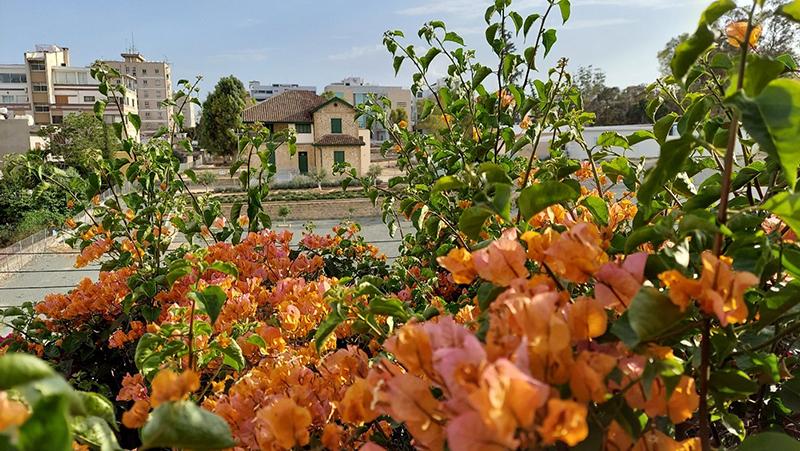
The view above is from CAARI’s balcony, looking westward across Andreas Dimitriou Street to the recently established Ledroi Archaeological Museum on St. George’s Hill. The Museum is devoted to archaeological finds from Nicosia’s own millennia-long past, especially those unearthed on St. George’s Hill itself in excavations conducted between 1996 and 2010. These finds gave new clarity to Nicosia’s history, showing that settlement here reaches back to the late Chalcolithic Period (2800-2500 BCE) and proving that Nicosia is Cyprus’ oldest city. The view reminds us that CAARI looks directly onto a site of deep archaeological significance.
This Newsflash is celebratory. It conveys a triad of triumphs for CAARI. First of all, as an American institution in a season of chaotic uncertainty in which “Archaeology Is Facing an Uncertain Future in the U.S.” (New York Times, 27 May 2025, D1), CAARI is pleased to announce the award of five of its seven customary research fellowships. Only two were suspended this year due to uncertain funding. The names and institutions of the recipients are presented below, with their wide-ranging topics and methodologies. We welcome them with real pride.
The second triumph has been garnered by former CAARI Fellow, Dr. Catherine Keane. Her book More Than a Church: Late Antique Archaeological Complexes on Cyprus (Leiden: Brill, 2024), has been nominated by the European Association of Archaeologists for its 2025 book prize. It is discussed below.
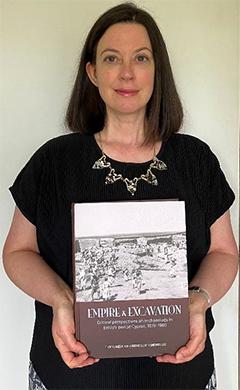
The third of CAARI’s big achievements is the epoch-making volume, Empire and Excavation. Critical Perspectives on Archaeology in British-Period Cyprus, 1878–1960 (Leiden: Sidestone Press, 2025), co-edited by CAARI Director Dr. Lindy Crewe, former CAARI Fellow Dr. Anna Reeve, and British Museum Curator Dr. Thomas Kiely. As promised last time, the Newsflash brings an overview of the book’s distinctive achievements composed by its three co-editors. It is a truly succulent read! The book emerges as a discriminating, richly nuanced, but also imposingly comprehensive analysis of British-era archaeology on Cyprus. It is a monumental contribution not only to the study of colonial archaeology, but to Cyprus’ role in the formation of archaeological practice.
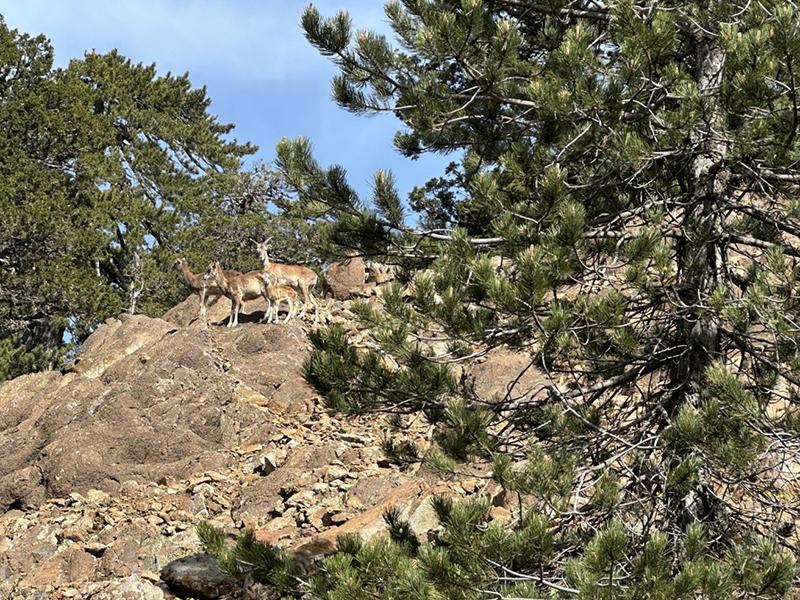
To cap the Newsflash’s celebrative spirit, here is a photo from Prof. Sturt Manning, celebrating Cyprus’ most native inhabitants.
| | |
Message from CAARI’s Director
Dear friends and supporters of CAARI,
Here at CAARI we are enjoying the summer arrival of many old friends and colleagues, along with the new faces of undergraduate and graduate student researchers who will be streaming through CAARI, researching in the library or just popping in for a coffee and a catch up. It is our busiest and happiest time of the year. The highlight is, of course, the annual summer archaeological workshop, held in collaboration with the Department of Antiquities and the Archaeological Research Unit at the University of Cyprus. It will take place again in our favorite venue, The Bank of Cyprus Cultural Foundation premises at Phaneromeni on Saturday 14 June. You can find the very full and exciting program at https://caari.org/events/. We invite all who will be in Cyprus to join us for the workshop and the evening party in the CAARI courtyard.
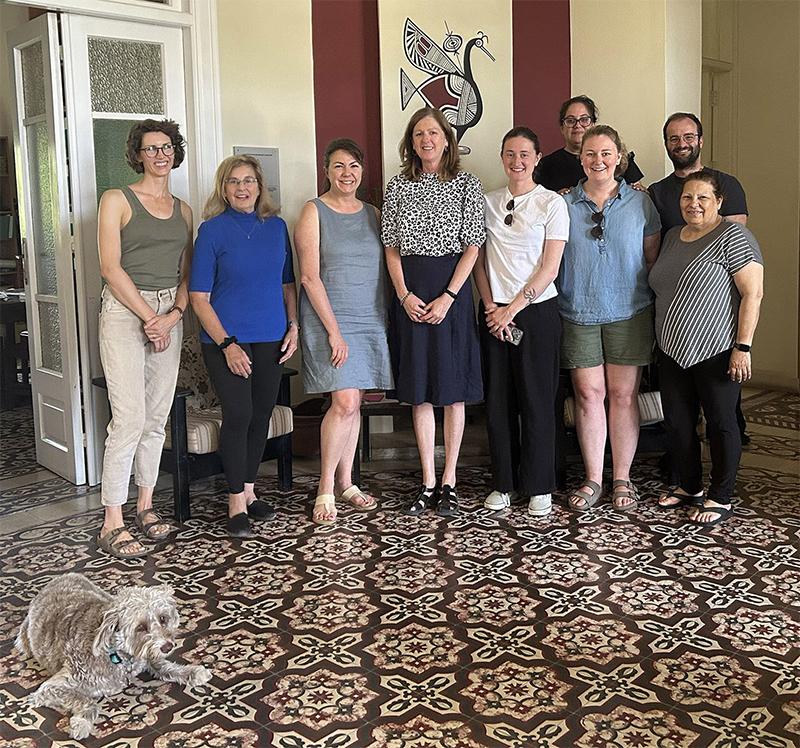
Last week we hosted a visit from a bipartisan group of seven US congressional staffers who were invited by the Ministry of Foreign Affairs of the Republic of Cyprus for a tour of the island. This also coincided with the first visit to Cyprus of Heidi Wiederkehr, the Director of the Council of American Overseas Research Centers (CAORC). CAARI is one of the 27 member centers of CAORC and we are extremely grateful for the work they do, particularly for awarding us funds from the State Department grants that they have secured over the years. Along with CAARI President Scott Moore, we welcomed our visitors to the library and were able to inform them about the long history of American archaeological research on Cyprus, the work that CAARI does to further US-Cypriot relations and to provide a home, research space and fellowships for junior and senior researchers. They were very interested in the heritage and archaeology and asked some great questions. It was also excellent that three of our researchers (Fulbright Student Researcher Kellan Klaus, doctoral candidate Ciara Barrick and Professor Pam Gaber) were on hand working in the library to talk about some of the fascinating and varied research topics that CAARI scholars pursue.
| | CAARI researchers and staff welcome CAORC Director Heidi Wiederkehr. Left–Right: Brianna Bricker, Pam Gaber, Heidi Wiederkehr, Lindy Crewe, Caroline Barnes, Katerina Mavromichalou, Ciara Barrick, Kellan Klaus and Photoulla Christodoulou. Foreground: Darcey the Barkaeologist. | | |
Following our library discussion, Heidi and I accompanied the group to the Cyprus Museum, where I toured through the prehistoric galleries and Archaeological Officer Polina Christofi of the Department of Antiquities guided them around the rest of the museum. In the evening, the American Chamber of Commerce in Cyprus (AmCham) held a networking event for the group in the CAARI courtyard. This was attended by the U.S. Embassy in Cyprus Chargé d’ Affaires ad interim, Dan Mangis, who gave some words of welcome, and the Public Affairs Officer, Elaine Paplos. In addition to our supportive members of the CAARI Cypriot Advisory Committee, the guests were those from Cypriot businesses and charities with connections to the U.S. and Republic of Cyprus ministry staff. The attendees were almost all first-time visitors to CAARI and seemed delighted to get to know us. CAARI staff, researchers and students mingled amongst the guests and gave tours of the library and facilities. In short, this week CAARI has made a whole new group of friends and we hope to build these relationships in the future.Hoping to see some of you here soon and that everyone has a restful and enjoyable summer.
Kalo kalokairi!
Lindy Crewe, PhD
Director, CAARI
| | |
Welcome to CAARI’s 2025 Fellows!
| |
|
Edgar J. Peltenburg Postdoctoral Fellowship in Cypriot Prehistory
Established more than five years ago through a major endowment, this fellowship is unique to CAARI. Each year it supports the work of an outstanding young scholar in the field that Professor Peltenburg developed so significantly.
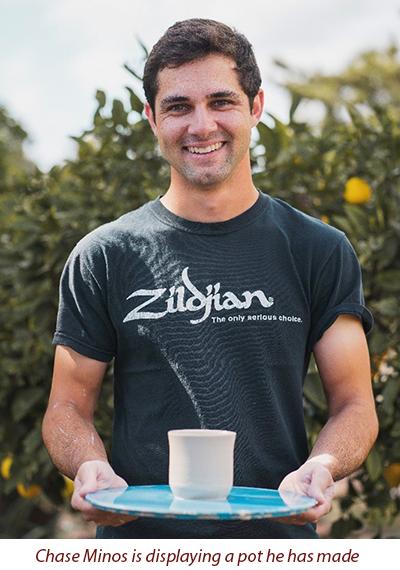
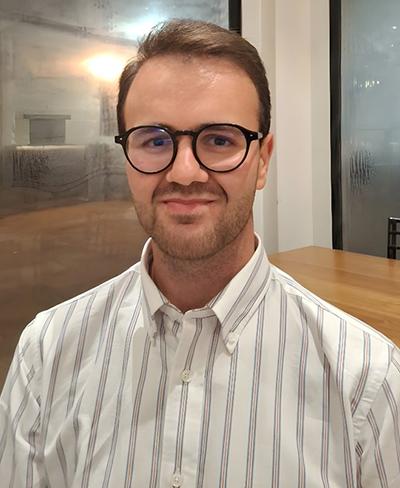
Chase Minos
The Cyprus Institute
Unlocking the Secrets of Plain White: Experimental, Technological, and Compositional Insights into Late Bronze Age Pottery Production at Ayios Sozomenos, Cyprus
| |
| |  | The Late Bronze Age in Cyprus was a transformative period marked by the emergence of vibrant, urban, coastal centers. At the same time, new ceramic technologies were introduced to Cypriot potters, notably the potter’s wheel. The proposed research therefore focuses on the study and analysis of Late Cypriot I-III Plain White (PW) ware from the important, inland site of Ayios Sozomenos, uncovered in recent excavations by Dr. Despina Pilides and the Department of Antiquities. In order to study this utilitarian ware, the project will integrate an innovative methodology combining ceramic petrography and experimental archaeology. It builds upon my Ph.D. research, which sought to characterize the technological and compositional aspects of Plain White among other wares mainly at the site of Enkomi, with Ayios Sozomenos as a small case study. Much of our knowledge of ceramic technologies on the island derive from these coastal sites, but Ayios Sozomenos has produced evidence of a large settlement with agricultural production, significant storage capacity of staple goods, and pottery production, the study of which can help shift scholarly focus.
Therefore, this project will characterize inland ceramic production through the technological and compositional analysis of Plain White, using ceramic petrography. It will then examine technological innovations and the persistence of traditional practices in Late Bronze Age pottery through experimental archaeology, with which I will be making pottery using various techniques and traditional potter's wheels. Thirdly, it will assess ceramic production at local and regional levels, exploring differences in production between inland and coastal sites, and expand our knowledge of clay recipes across Late Bronze Age Cyprus.While at CAARI, I will present a workshop on pottery manufacture in which I will be joined by Michalis Parpas and Maria Aloneftou, both traditionally trained potters who work at the studio called Homa Kai Nero. The workshop will begin with my giving a lecture on pottery manufacturing techniques in general which will then move towards the techniques of traditional potters in Cyprus and finally show how the analogies between ancient and traditional techniques might help us to better understand the Late Bronze Age pottery manufacture, with specific reference to the materials studied and selected from Ayios Sozomenos-Djiropoulos. Following this, I plan to give a pottery demonstration, showing the type of techniques potentially used by Bronze Age potters, and while using a traditional style kick wheel. Finally, I plan a demonstration by my colleagues who are traditional Cypriot potters in the Lapithos tradition.
| | |
CAARI’s Three Predoctoral Research Fellowships
CAARI offers the only research grants for graduate students that are specifically earmarked for Cyprus. It is impossible to overestimate the importance of these grants in attracting gifted young scholars who work on Cyprus, in enabling the research that they do, and in furthering their progress to their eventual careers. They are made possible by our endowment and contributions from our donors.
| | |
Anita Cecil O’Donovan Fellowship
Juan Del Caño Cobo
University of Cyprus and University of Seville (Spain)
Phoenician Maritime Transport Containers from Iron Age Kition. A Chronotypological and Functional Analysis
| |
This project forms part of my Ph.D. research, which focuses on the analysis of Phoenician Maritime Transport Containers in Cyprus. These vessels represent a key class of pottery for understanding the development of seaborne trade in the Eastern Mediterranean. Although these materials have been widely studied, a revisit to their typological analysis in Cyprus remains particularly important, as there is still no scholarly consensus regarding many of the established types. Moreover, while their principal forms are well documented, they cannot yet serve as reliable chrono-typological markers due to the limited research into the evolution of their shapes, mainly for the Cypro-Classical and Hellenistic Periods.
By examining material from the sites of Kition-Kathari and Kition-Bamboula—spanning from the Cypro-Geometric to the Late Classical/Hellenistic period—I aim to contribute to this body of knowledge from the perspective of Kition, one of the Cypriot City Kingdoms with the strongest connections to the Levant.
Furthermore, this project aims to investigate the role of these containers—and by extension, their contents—in Kition and in Cyprus more broadly. Particular attention will be given to their role in relation to the temples of Kathari and Bamboula, their function in the port at Bamboula, and their presence in domestic settings. Further areas of interest include the assessment of their provenance (imported versus locally manufactured), their role in the economic dynamics of the Eastern Mediterranean—particularly that of Cyprus—, the chaîne opératoire underlying their production, the extent of their standardization, and their function as maritime cargo items.
| | |
The Danielle Parks Memorial Fellowship
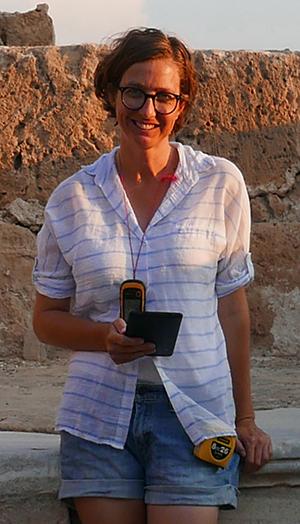
Candace Richards
The University of Sydney
Recycling Paphos from Hellenism to Tourism:
A Diachronic Archaeological Investigation of Architectural Reuse in Nea Paphos Cyprus
| |
| | | The focus of my Ph.D. research is a multi-period archaeological study of architectural recycling and reuse at the Mediterranean island settlement of Nea Paphos, Cyprus from its Hellenistic foundations to the present day. My aim is to develop a new, evidence-based understanding of the practicalities and motivations for reuse and recycling, as part of a pre-modern circular economy within an urban environment over a significantly broad timespan. To date, I have undertaken two field surveys across the area of ancient Nea Paphos (2019, 2022), completing the physical data collection for my doctoral thesis. In these surveys I have recorded over 900 examples of reused architectural materials, cataloguing the life cycle events of each individual item. This approach allows for the quantification of reuse events per item, with some surveyed elements revealing up to five distinct uses. This kind of in-depth analysis of reuse, which takes into account the instances of multiple reuse activities, provides vital data for the reconstruction of pre-industrial circular economies. The results of this work, to be written over the course of my CAARI fellowship, will contribute an important perspective from island settlements, currently missing in the discourse on reuse and recycling practices, and help understand the continuity of reuse as a cultural practice over time.
| | |
The Helena Wylde Swiny and Stuart Swiny Fellowship
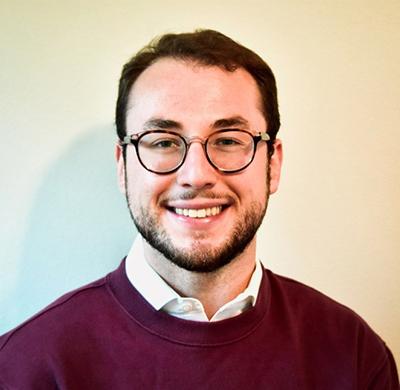
Spencer Cook
University of Michigan, Ann Arbor
Everyday Circulations: Mobility and Trade in Contemporary Cyprus
| |
| | | Cyprus is a place of circulation. Due to its geographical location, historical trajectory, and positioning within the global economy, life on the island is shaped by diverse flows of people, capital, and commodities. My dissertation project examines intersecting forms of mobility and economic activity that characterize Cyprus today—from Green Line trade and supply chain logistics to labor migration and immigrant entrepreneurship. Using ethnographic and archival methods, I will explore how Cypriots and non-Cypriots make lives across geopolitical boundaries and scales, navigating ecosystems of regulation, economy, social relations, material culture, and value in the everyday. While at CAARI, I plan to conduct research in the Republic of Cyprus State Archives, the Press and Information Office Archives, and the Cyprus Library to gather historical material from the British colonial and postcolonial periods. These documents will contextualize ethnographic data that I will gather in future phases of the project, illuminating how contemporary trade and migration are informed by longer histories of both conflict and connectivity.
| | |
Scholar in Residence
Each year, CAARI welcomes an established scholar to reside for a period at the Institute as a mentor and model. Interchange across disciplines and age groups is an invaluable part of the CAARI experience.
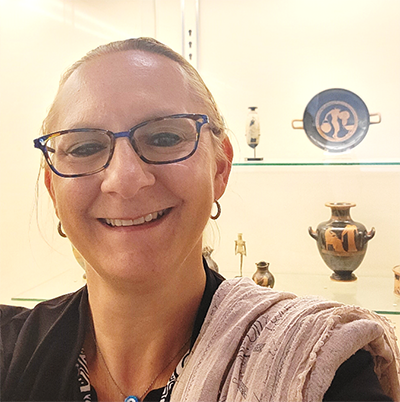
Tyler Jo Smith
University of Virginia
Through 'Cypriot' Eyes: Athenian Vases and Ritual Practices during the Cypro-Archaic
| |
| | | The study of ancient Greek figure-decorated pottery (‘vases’) in Cyprus has a long history, but there has yet to be a focused study of their possible uses within ancient Cypriot contexts. My research project on ‘Athenian Vases and Ritual Practices during the Cypro-Archaic’ revisits the topic as expressed through visual translation and archaeological contexts. Rather than viewing the relevant scenes on pottery as ‘snapshots’ of actual festivals or events, I envision the examples as part of religious experience overall and one that encapsulates both performative and ritualized facets of cultic practice within the context of their use. While in residence at CAARI, I intend to research Archaic Greek vases (6th-early 5th c. BCE) produced in Athens, East Greece and elsewhere, discovered across the island of Cyprus, and related to religious activities and ritual practices either through their iconography, their shape, or both. In order to do so, I will incorporate a contextual approach to Greek vases with religious imagery alongside some of the long-established methods of Indigenous Studies, which recognize the importance of sacred stories, non-verbal communication, and relational contexts. I will question the meaning of festival iconography, cultic practice, and ‘special’ shapes within the framework of the various Greek, non-Greek, and coexistent audiences that may have used them, such as those both discovered at and produced at Amathous. The production and importation of festival imagery and ritual shapes is a traceable reality that deserves our attention as a reality all its own.
| | |
Help Support CAARI’s Development
HTTPS://CAARI.ORG/DONATE/
Zuzana Chovanec
CAARI Development Chair
There are so many wonderful achievements reported in this newsflash edition and with great promise on the horizon with our new cohort of fellows. These achievements are enabled by YOU, our committed friends and supporters. Your generosity has supported many years of high-achieving scholars, as well as improvements that have helped us better serve their needs.Each year, CAARI welcomes an established scholar to reside for a period at the Institute as a mentor and model. Interchange across disciplines and age groups is an invaluable part of the CAARI experience.
In that respect, we extend our sincere thanks to all those who have responded to our recent letter, outlining our continued and most pressing need to repair the exterior sandstone building in Nicosia. Last year, your generous support enabled us to achieve (and exceed!) our first financial target. Our second target is tied to furnishing the 50% deposit ($13,500) to start construction. We are confident that we will achieve this goal and with your unfailing support, CAARI will continue to serve as the welcoming meeting place that it has been for four decades.
| | |
Donate to CAARI online:
HTTPS://CAARI.ORG/DONATE
| | |
Or by mail:
CAARI
209 Commerce Street
Alexandria, VA 22314 USA
or
CAARI
11 Andrea Dimitriou Street
Nicosia 1066 Cyprus
| | Nomination for the 2025 EAA Book Prize | |
Dr. Catherine T. Keane’s More than a Church: Late Antique Ecclesiastical Complexes in Cyprus, Late Antique Archaeology, Supplementary Series 8 (Leiden and Boston: Brill, 2024) has been nominated by the European Association of Archaeologists for its 2025 Book Prize (https://www.e-a-a.org/EAA/Awards/Book_Prize_tabs/Book_Prize_2025_Shortlisted.aspx). With more than 12,000 members in 120 countries, the EAA is the largest archaeological association in Europe. Its nomination of the book is a thrilling acclamation for Dr. Keane, but also a welcome affirmation of Cyprus’ archaeological significance. The winner of the prize will be announced at the association’s annual meeting in early September, scheduled for Belgrade this year but to be held online.
|
| | | Dr. Keane was a CAARI Fellow in 2022, and she authored an article about her book, then under review for publication, for the October 2022 CAARI Newsflash (https://caari.org/newsletters ). She explains that the book is a close archaeological study of Cyprus’ Late Antique churches, but not in the usual sense: rather than focusing on the surviving archaeological remains of each church, it probes the relationship of the churches to the agricultural and commercial enterprises that appear recurrently to have been located in close proximity to them. Thus it is not just the churches as ritual spaces that are her subject, but the religious institutions as interactive components in the productive fabric of Late Antique society. As Tassos Papacostas writes in his review in Plekos 27 (2025): 119-26, “Keane’s stated aim is to map through the archaeological record the economic activities linked to ecclesiastical buildings and institutions from the fourth to the ninth/tenth century.” As such, it has relevance to every aspect of Late Antiquity on Cyprus. It represents the island’s archaeology well as a potential prize-winner.
On Friday, 30 May 2025, Dr. Keane will discuss the book’s conclusions in the Third Online Athens-Edinburgh Byzantine Book Festival (https://hca.ed.ac.uk/updates-events/events/3rd-online-athens-edinburgh-byzantine-book-festival ).
| |
Book Announcement
The Essence of Empire and Excavation
by its editors
Dr. Thomas Kiely, Dr. Lindy Crewe, Dr. Anna Reeve
As announced in the last CAARI Newsflash, the edited volume Empire and Excavation: Critical Perspectives on Archaeology in British-period Cyprus, 1878–1960 has now appeared online and in print. As editors, this is a moment for relief, gratitude, and a sense of achievement. The book has had a long genesis, requiring patience, collaboration and innovative ways of working to respond to the challenges of the Covid-19 pandemic. We hope that the final product does justice to all the hard work of our contributors, as well as the generous support of colleagues during the peer review process, without which it would not have been possible.
| | | | |
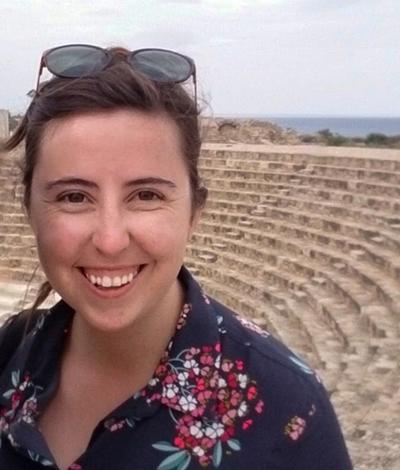
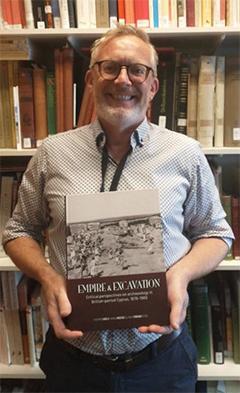
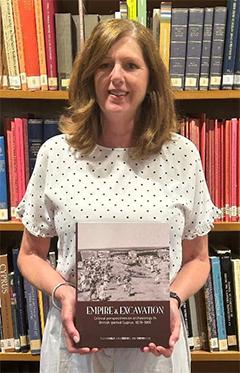
The Editors
Dr. Lindy Crewe
| | | |
So what can readers expect to encounter in its pages? The book opens with a synoptic historical overview by Thomas Kiely, bringing out some of the key themes across the period covered by the individual chapters. Here we attempted to track the changes in Cypriot archaeology across the British colonial era against the complex and shifting backdrop of British and European imperialism, and indeed global politics more generally. What was unique about developments in Cyprus during this period and what was shared with other colonized territories? Crucially, how do we highlight the contribution of Cypriots to the cultivation of their material heritage and related institutions that laid the groundwork for the achievements of the Republic of Cyprus?
The 22 chapters which follow are grouped into three broad themes: People and Places; Politics and Practices; and Legacies and Receptions. In the first, individuals whose lives and careers are revealing of the development of archaeology in Cyprus are brought into focus. These range from the British traveller, geographer and collector Dr Francis Henry Hill Guillemard (1852–1933) to Stephan Hanna Stephan (?1894–1949), a historian and ethnographer from Palestine deeply engaged in British colonial archaeological networks, and Enoch Miguerdich Jelajian (1856–1936), an Armenian educated in Constantinople, who worked as a clerk and interpreter on Kitchener’s land survey and collected Cypriot antiquities. The intersections of people and places are explored, with fascinating insights into different ways of understanding spaces, places and sites, and what is at stake when different ways of knowing come into conflict.
The revealing gaps between policies and practices form a common theme running through the second section, from the letter, intent and application of British antiquities laws, to negotiations with Evkaf (the Turkish Cypriot organization that oversees foundations and properties) over medieval monuments. This section takes us underground, overground, and into the sea, with in-depth discussion of the development and early work of the Cyprus Survey Branch, the complex intersections between the mining industry and archaeology in this period, and the early history of underwater explorations off the coast of Cyprus.
The final section addresses some of the consequences and ramifications of archaeological practices and antiquities laws in British-period Cyprus, including examination of the diaspora of Cypriot antiquities in Britain, Sweden and Swansea. While these objects and their interpretation have long spoken of the archaeology of Cyprus to museum visitors, this section also considers the development of other discourses on Cypriot archaeology, both in scholarly circles and through popular media such as postage stamps.
Instead of including individual bibliographies for each chapter, we asked our authors to select a short list of key readings underpinning the subject of their papers. The composite bibliography, amounting to the final 50 pages of the book, apart from reducing duplication, represents a deep and rich reservoir of research for future study, in Cyprus and around the Mediterranean, and in both empirical and theoretical fields. This approach also highlights the key figures who have contributed to Cypriot archaeology and its histories over the years, such as Vassos Karageorghis and Olivier Masson, while also suggesting new approaches and methods for future research.
Our contributors have been creative in their choices of images to accompany their chapters, many of which are reproduced in color. The large format of the volume – 210 x 280mm, just below quarto size – means that details can be seen and appreciated. One key advantage of the generous support for the volume’s production is that it is available to read online free of charge, via the Sidestone Press website (https://www.sidestone.com/books/empire-and-excavation). This is a wonderful opportunity to make new scholarship available to all, including those without access to institutional libraries, and fully in line with the CAARI ethos.
As is to be expected of a project of this scale, the chapters are in dialogue with each other and with wider concerns and discussions, and the volume becomes more than the sum of its parts. It emerges clearly from its range of topics and approaches that the history of archaeology in Cyprus is a social as well as a scientific history, and must be considered within broader socio-cultural developments to be understood. It is also evident that a ‘one size fits all’ model of colonial approaches to archaeology, developed for a broad geographical and temporal framework, simply will not do in the case of Cyprus, where the specificities of the local situation must always be kept clearly in mind. With this in view, the work presented in this volume also reveals the huge potential of archival records in Cyprus and elsewhere to reveal more about the development of archaeology and attitudes towards cultural property; much has already been done, and more remains.
What next? the essays in this volume demonstrate that the historiography of Cypriot archaeology is both a thriving and evolving subject, and we hope that other scholars will take up the baton, not least in the field of untapped archives and greater comparative work with other parts of the Mediterranean and Middle East (and indeed globally). The scope of our volume formally ends in 1960, at a crucial juncture in modern Cypriot history, but the years that followed witnessed significant changes as well as important continuities in the practice of archaeology and heritage management on the island. The significance of many of these developments, and their relationship with broader social, economic and political conditions – including the tragedies of inter-communal strife, invasion and division – remain to be fully and critically assessed with the nuance, sensitivity and spirit of inclusion that they require. We hope that the insights and tools gained from the study of archaeology in earlier times will also serve the needs of scholars focused on more recent times. So many of the issues confronted then remain challenging today.
It only remains for us to offer our heartfelt thanks to our contributors and peer reviewers; CAARI and the British Museum, which provided vital institutional and financial support; CAARI supporter Mrs Leslys Vedder for a generous contribution towards the costs of publication; as well as all the colleagues, archives and museums who have helped us, individually and collectively, along the way. We would particularly like to thank the Cyprus Museum and the Department of Antiquities, Cyprus, for their collegial support and willingness to share archives and images. While the volume may be somewhat hefty for beach reading over the summer, we hope that many friends of CAARI will find something of interest within it, and that the conversations from which it grew will continue.
| | |
To All our Friends and Supporters
A very special thanks goes out to all those who have responded to the recent letter highlighting the ongoing need for support in addressing the needed repairs to the exterior stonework of our building in Nicosia. We thank you with warmth and sincerity.
No less sincere is our thanks to those who have stood by CAARI as we have waited vigilantly to see whether and how the pruning of the U.S.’s overseas commitments will affect our funding. We remain dedicated to fulfilling CAARI’s triple mission of promoting and disseminating significant research on the archaeology, history, and culture of Cyprus and the eastern Mediterranean region, of fostering dialogue between American and Cypriot scholars, and of provide services and facilities to researchers of all nations who are at work in the fields of the humane, social, and related natural sciences on Cyprus. Our facilities and our fellowships are the core tools of our mission. With your help, we can together build a resilient CAARI uncompromised. Do help if you can: caari.org\donate.
| |
Annemarie Weyl Carr
Vice President, CAARI Board
| | | | | |