Maintaining Your Gardening Motivation in the Heat of Summer 

I don't know about you, but August is probably my least favorite time to work in the garden. I'm generally an outdoorsy person, but with the heat, humidity, sun, and bugs, being outside in August in Arkansas is really quite unpleasant. It's easy to get discouraged with your garden or landscape in August, too. Most plants are looking at least a little stressed by now and some have outright died. Gardening seems to lose some of its joy when you can't step outside without sweating through your shirt.


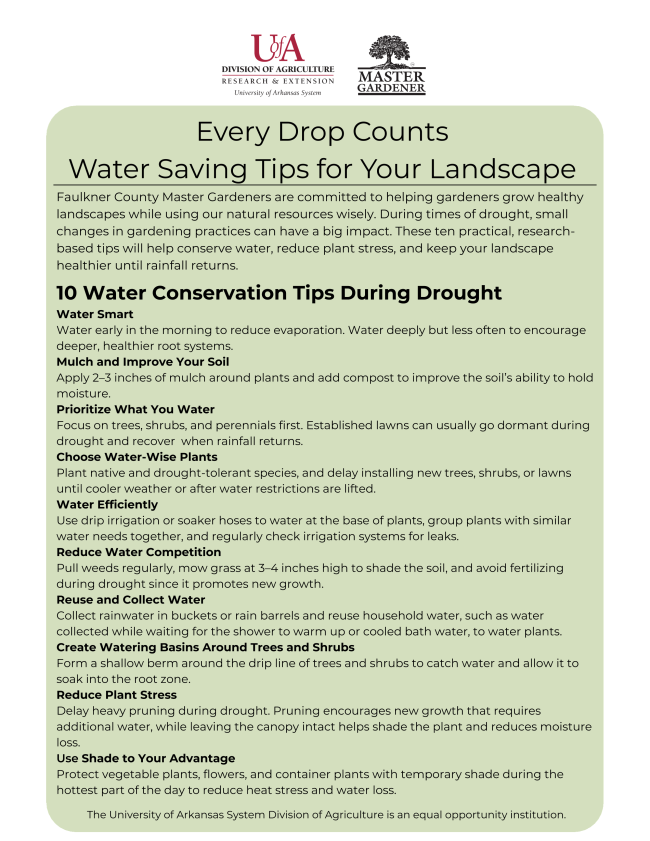
So how do we maintain our motivation for gardening when it's 100 degrees outside and we haven't had a drop of rain in weeks? I actually think this is a time of year when we should step back and do a little less in our landscapes. Plants are tired just like us and they really don't want to be messed with too much when it's this hot. You definitely shouldn't be doing any hard pruning right now since this will stress plants more. Cutting back on fertilization can also help plants tolerate drought conditions better as can letting your lawn grow a little taller so the grass blades shade the soil and reduce evaporation. If you have annual flowers or vegetables that are struggling in the heat, it is perfectly acceptable to let those plants go. Too often, I see people working really hard to keep some cucumber plants alive in late summer when all they are getting is bitter, malformed fruit. I'd rather see them pull those plants out and maybe start a few seeds indoors to plant outside in September for a fall harvest. We'll also start seeing mums and other fall flowers available in stores in September, so you can fill in any gaps in your ornamental plantings then.


Speaking of fall, I think that's where you can find some motivation. If you do want to plant a fall vegetable garden, August is the time to get started. I recommend planting seeds indoors with grow lights in August and then transplanting them outside later in the fall. It's just too difficult to keep young plants watered sufficiently outside in the August heat and sun. If you're interested in growing spring bulbs or expanding your native wildflowers, August is also the time to be ordering bulbs and seeds for fall planting.


It's important to take care of yourself at this time of year, too. Try to complete your landscaping tasks in the early morning or evening when the temperatures are cooler and the sun is less intense. Be sure to drink plenty of water and protect your skin from the sun. Finally, consider taking a real break and schedule a vacation to a cooler place or the beach. Even a day trip to a lake or a local swimming hole can offer some respite from the heat and what seem like tedious landscaping chores this time of year.


Krista Quinn

Faulkner County Extension Agent- Horticulture


2026 Master Gardener Training

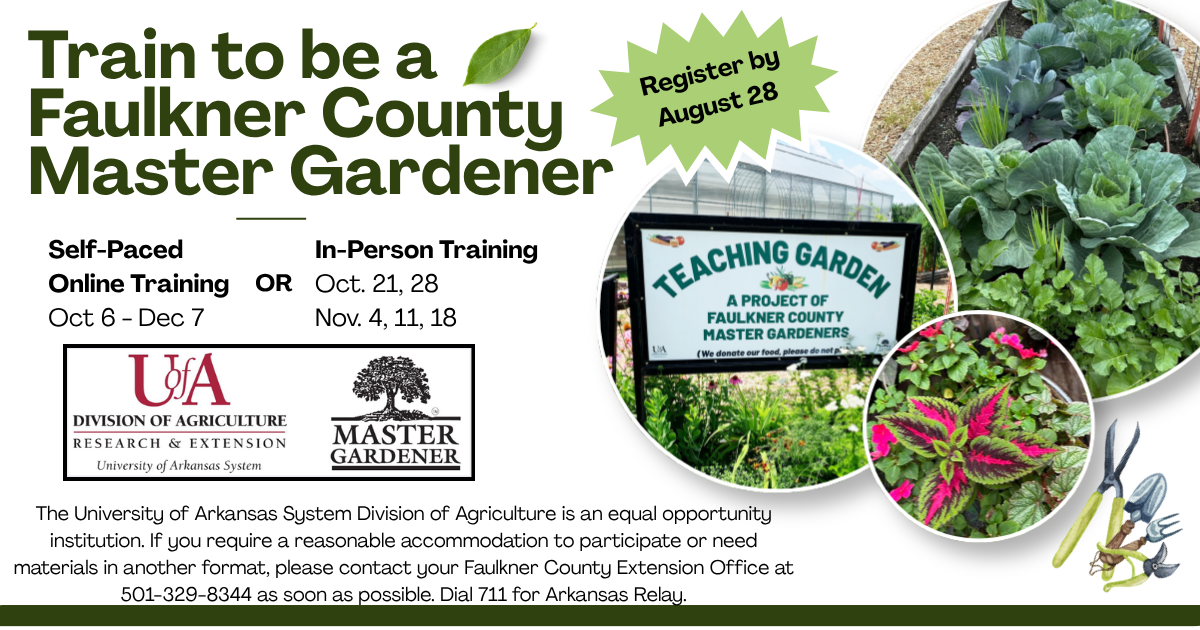
Are you interested in learning more about gardening and sharing what you learn with others? Do you have a volunteer spirit and an interest in working to improve your community? If so, the Faulkner County Master Gardener program might be just the place for you! Master Gardeners receive intensive horticultural training and then volunteer in their own communities by teaching others about gardening, beautifying public spaces, and participating in many other projects. Our next Faulkner County Master Gardener training class will start in October and the great news is that we will be running the in-person and online training concurrently again this year! Please complete our online application by clicking the link below if you are interested in being considered for this year's training program. The application deadline is August 28, 2026.


What: 2026 Faulkner County Master Gardener Training Class: In-person and Online

Place: Faulkner County Extension Office

Dates for In-Person Training: October 21, October 28, November 4, November 11, and November 18

Dates for Online Training: October 6 - December 11

Cost: In person training - $150, Online - $200


Pest Alerts

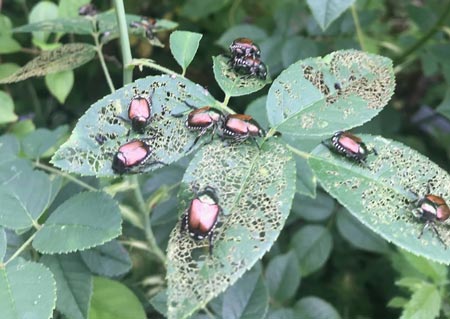
Japanese beetles have been causing problems in many home landscapes in Faulkner County this summer. Controlling Japanese beetle adults depends on the magnitude of the problem. Small numbers of beetles can be removed by hand; simply shake the plant early in the morning when the beetles are least active and collect them in a bucket of soapy water. If the problem persists or the concentration of beetles becomes too high, other methods of control may be necessary. For more info about Japanese beetles, click the button below.

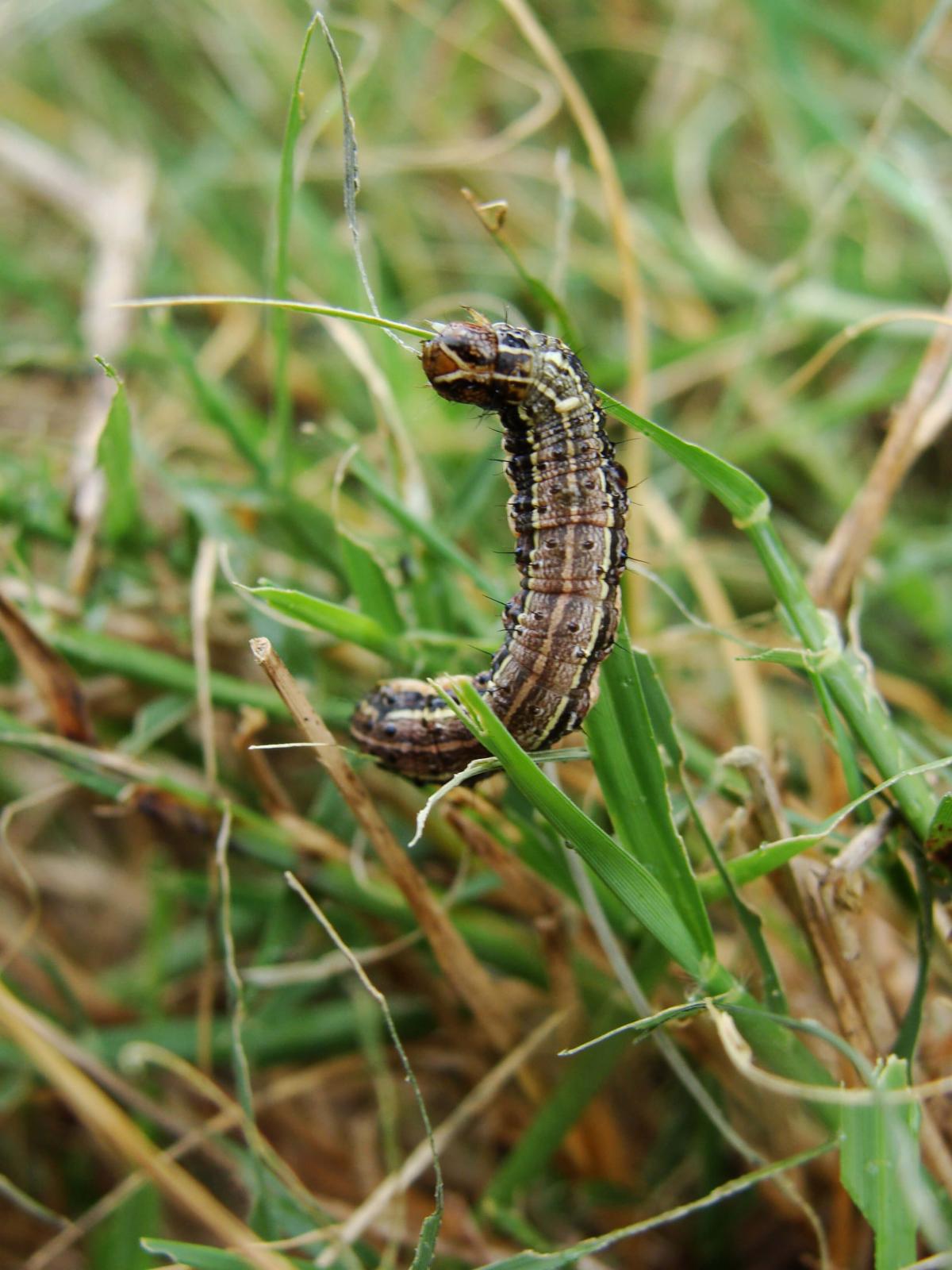
We are seeing fall armyworms in some pastures and hayfields in AR, so we should be on the lookout for armyworms in home lawns also. Armyworm damage can appear almost overnight. Infestations can be easily overlooked when the caterpillars are small and eating very little, but once they grow large and eat more, the damage becomes readily apparent.


The good news is that fall armyworms rarely permanently damage lawns. Since the worms feed on the grass blades and not the roots, the grass usually recovers. However, lawns can be weakened by this voracious eater especially if there are other factors causing stress to the lawn or the grass is very young.


It is not always essential to treat armyworm infestations. Several natural enemies such as parasites, predators, and pathogens occur and can possibly eliminate or reduce populations in a very short period of time, thereby saving you the effort.

If you do decide to treat for armyworms, a liquid insecticide is usually more effective than a granular one. Several lawn insecticides are effective caterpillar killers. Products containing Bacillus thuringiensis (Bt) are relatively safe to use and only affect caterpillars and not other insects or animals. However, Bt is only effective on small (1/2 inch or less) worms so it may need to be applied multiple times to control an outbreak. Irrigate the grass before treating to move the caterpillars out of the thatch. Treat in late afternoon, as this is when the caterpillars are likely to be feeding. If possible, mow before you treat and then do not mow for 3 days after treatment.

Taking Care of Trees During Drought

Many trees in Faulkner County are showing signs of drought stress. Symptoms of drought stress in trees include wilting, yellowing or coloring of leaves, defoliation, branch death, and bark cracking. Drought stress can weaken trees, making them more susceptible to pests, and lead to the death of the trees. Large established trees probably do not need special care unless they are showing signs of drought stress, but young trees and especially trees growing in harsh urban conditions can benefit greatly from some additional care during drought conditions. The two best things we can do to minimize drought damage to trees is to water them and lightly mulch them. Watering and mulching trees now may not be enough to get them to produce new leaves or start growing again this season, but it can minimize damage and make them better able to withstand other environmental and pest pressures during the coming year.


Tree Watering Tips:

·        Water under the entire tree canopy and not just at the trunk.

·        For newly planted trees, make sure to water the area just outside the root zone to encourage roots to grow out away from the trunk into the native soil.

·        Irrigate infrequently, but deeply – usually watering once a week is sufficient as long as the top 4 to 6 inches of soil is being wetted. You can dig a small hole after watering and make sure that the water has percolated through the soil.

·        Watering trees in clay soils, compacted soils, or on slopes can be difficult since the water often starts to runoff before the top 4 to 6 inches of soil is wetted. In these conditions, it can be beneficial to use soaker or drip irrigation systems that apply a low volume of water over a longer amount of time. Another option is to cycle the water flow on and off every 20 to 30 minutes. Water for 20 minutes, then let the water soak into the slope for 20 minutes, then water again for 20 minutes until the needed amount of water has soaked into the soil.

·        Water in the evening or early morning to minimize evaporation.

·        Sprinklers, soaker hoses, watering bags, and even buckets can be used to water trees.

·        Newly planted trees have a much better chance of surviving if they are watered during dry spells for the first two years after planting.


Tree Mulching Tips:

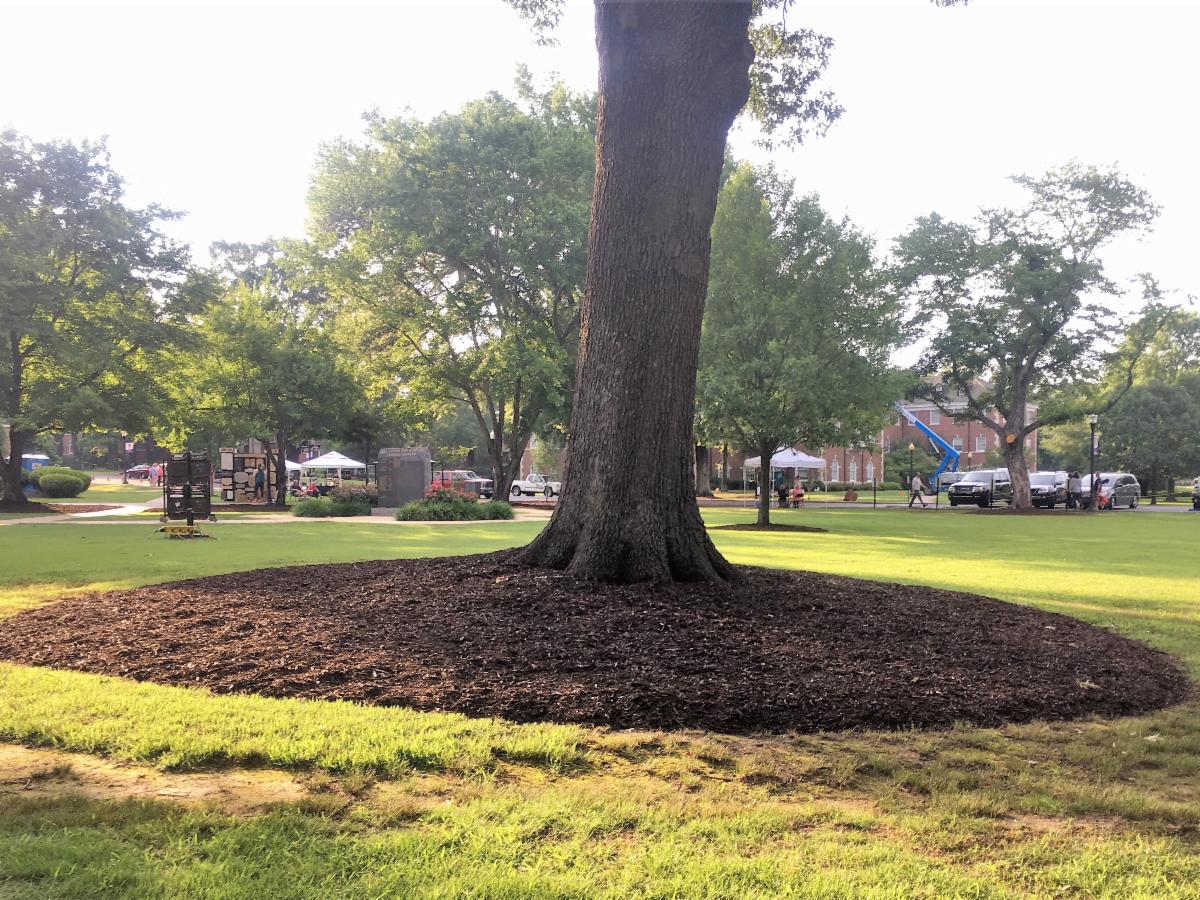
·        Apply a 2 to 4 inch deep layer of mulch over tree roots.

·        For tree health, keep all mulch material away from the trunk. The goal is to keep the tree roots moist and the trunk dry.

·        Mulch as much of the area under the tree as possible, preferably to the outermost edge of the tree's canopy.

·        Many different organic products can be used as mulch. Bark, shredded wood, grass clippings, straw, pine needles, and dried leaves are all good options for mulch.

·        Mulch does NOT need to be reapplied every year and having a mulch layer more than about 4 inches deep can be harmful to trees. 

Meet the Faulkner County Master Gardeners

Want to learn more about the Faulkner County Master Gardener program? Join us August 20, at 5:00 pm, at the Conway branch of the Faulkner County Library to meet some local Master Gardeners and learn what we do and how you can join.

Join the Master Gardeners at the

Teaching Garden!

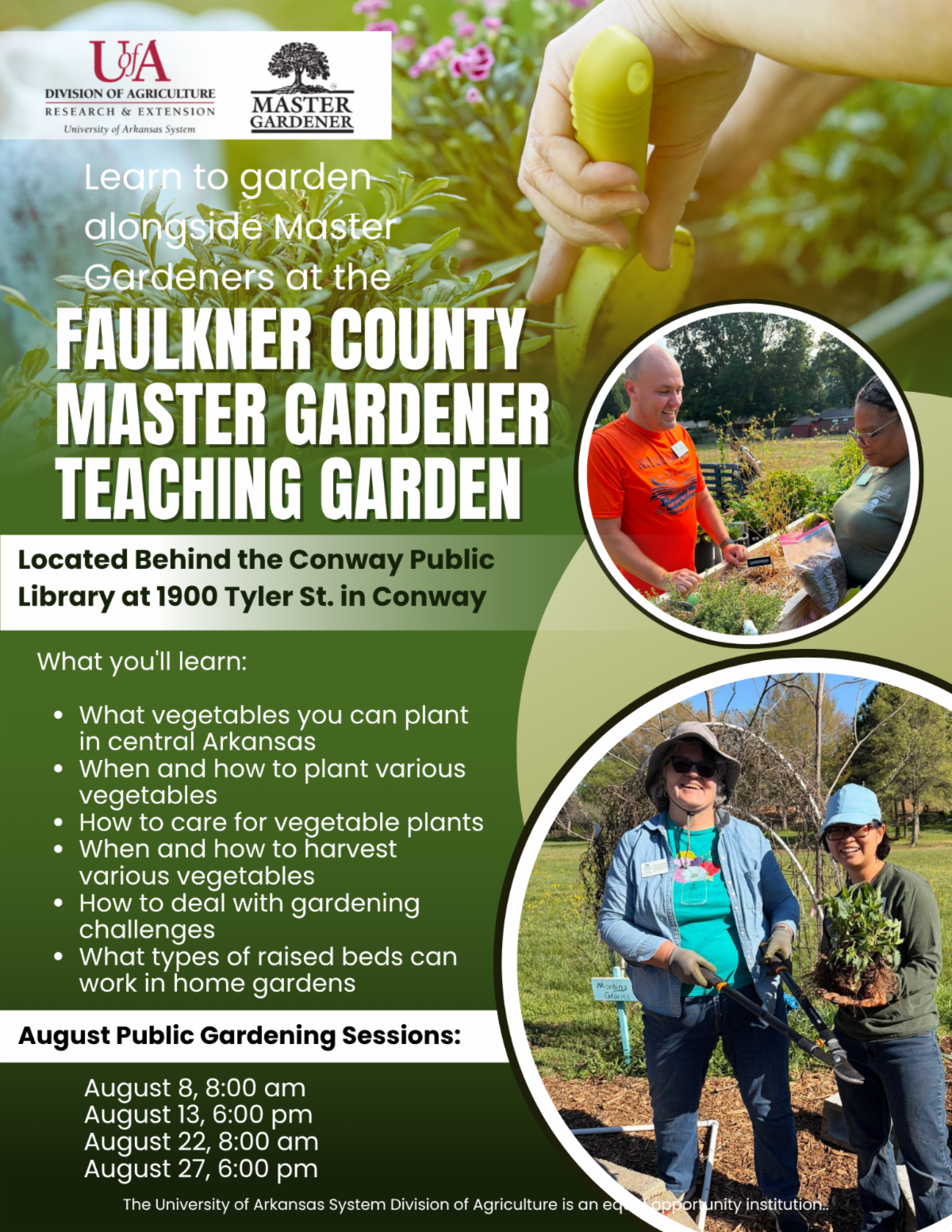
Join the Faulkner County Master Gardeners at their demonstration vegetable garden to learn about home vegetable gardening. You'll have the opportunity to talk with Master Gardeners and participate in some gardening activities. Each week's activities will vary depending on what is being planted, cared for, and harvested at that time.


Where: The garden is located behind the Conway Public Library at 1900 Tyler St. in Conway.


When: Alternating Saturday mornings and Thursday evenings (rain cancels). In August, we're meeting August 8 at 8:00 am, August 13 at 6:00 pm, August 22 at 8:00 am, and August 27 at 6:00 pm.


What you'll learn: What vegetables you can plant in central AR. When and how to plant various vegetables. How to care for vegetable plants. When and how to harvest various vegetables. How to deal with gardening challenges. What types of raised beds can work in home gardens.


Register Now for this Free, Virtual Seminar

Peaches, plums, and nectarines are closely related to each other and can be grown using similar methods. Join us Tuesday, August 4, at noon (Central) on Zoom to learn how to grow these summer treats in your own backyard and get some tips for cooking with them.


Save the Date

We'll have more info soon about these upcoming events!


September 1, Noon- Grow Your Own Groceries: Fall Greens virtual presentation

September 3, 4:30 pm- Hands-on Blackberry Pruning Demo at the Conway Public Library

September 17, 5:30 pm- Fall is for Gardening program at the Conway Public Library

September 25, Noon- Backyard Composting program at the Faulkner County Extension Office

September 26, 8am-Noon- Ask the Master Gardeners at the Conway Farmers' Market, 150 Amity Rd., Conway

The University of Arkansas System Division of Agriculture is an equal opportunity institution. If you require a reasonable accommodation to participate or need materials in another format, please contact the Faulkner County Extension Office at 501-329-8344 as soon as possible. Dial 711 for Arkansas Relay.

If you no longer wish to receive these email updates, please click "unsubscribe" below.