|
|
School Wellness Weekly
April 9, 2021
|
|
Two Days, One Common Theme: Ensuring All Students Are Safe and Healthy |
|
This week we recognize two important days—World Health Day on April 7 and National Youth HIV/AIDS Awareness Day (opens in new window) on April 10. National Youth HIV/AIDS Awareness Day is observed each year to educate the public about the impact of HIV and AIDS on young people. World Health Day creates awareness around a specific health theme, and this year it focuses on “building a fairer, healthier world for everyone.”
We’re proud to honor and celebrate these days by working to ensure that all students in every community—especially our communities of color—have access to age-appropriate, medically accurate health information through standards-based Health Education instruction (opens in new window). As part of Health Education in New York City public schools:
- students in grades K-6 must receive five HIV/AIDS lessons per year;
- students in grades 7-12 must receive six HIV/AIDS lessons per year.
Students in grades 9-12 can go to their school’s Health Resource Room (these are also operating virtually in response to the pandemic) to request information about HIV/AIDS and other reproductive and sexual health topics; free condoms and other resources; and referrals to local health clinics and services as part of the DOE’s Condom Availability Program (opens in new window).
|
|
Photo credit: Centers for Disease Control and Prevention DASH |
|
Photo credit: Centers for Disease Control and Prevention |
|
Every day, PE and Health Education teachers play a critical role in promoting the health and safety of youth by teaching them the skills needed to be physically, mentally, socially, and emotionally healthy throughout their lives (in this issue, read about PE teacher Jaclyn Mahnken, who is keeping her students safe and active in the classroom with yoga). Wherever learning takes place—in a classroom or in a virtual space—we’re committed to helping schools create communities where every student can learn and thrive. Continue reading this issue for:
-
Health Education Instructional Toolkits with guidance on teaching HIV/AIDS lessons, links to age-appropriate resources, and access to the NYC Department of Education’s HIV/AIDS Curriculum (2012 edition)
- SHAPE’s updated position statement: Sex Education is a Critical Component of School Health Education
- PE and Health Education professional learning opportunities
- Grant opportunities for students, teachers, and schools
Header photo credit: Atoms, Unsplash
|
|
Toxic Stress and Racism:
Join us on April 24 at This Year’s Final Weekend Wellness Event
|
|
We're coming to you live and direct again, Saturday, April 24 with "Community Resiliency": The Real Deal on Toxic Stress and Racism” (opens in new window). The Office of School Wellness Programs is partnering with Hip Hop Public Health for a free, three-part, monthly Saturday morning event series, "Weekend Wellness: Self-Care for Communities and Families". Spread the word to families and caregivers in your school communities—especially our communities of color—and encourage them to join us for the final Saturday-morning event from 10:30 a.m. to 11:30 a.m. Look for more details in the upcoming issue of School Wellness Weekly.
|
|
Teachers Making It Work: Jaclyn Mahnken, PS 253, Brooklyn
|
|
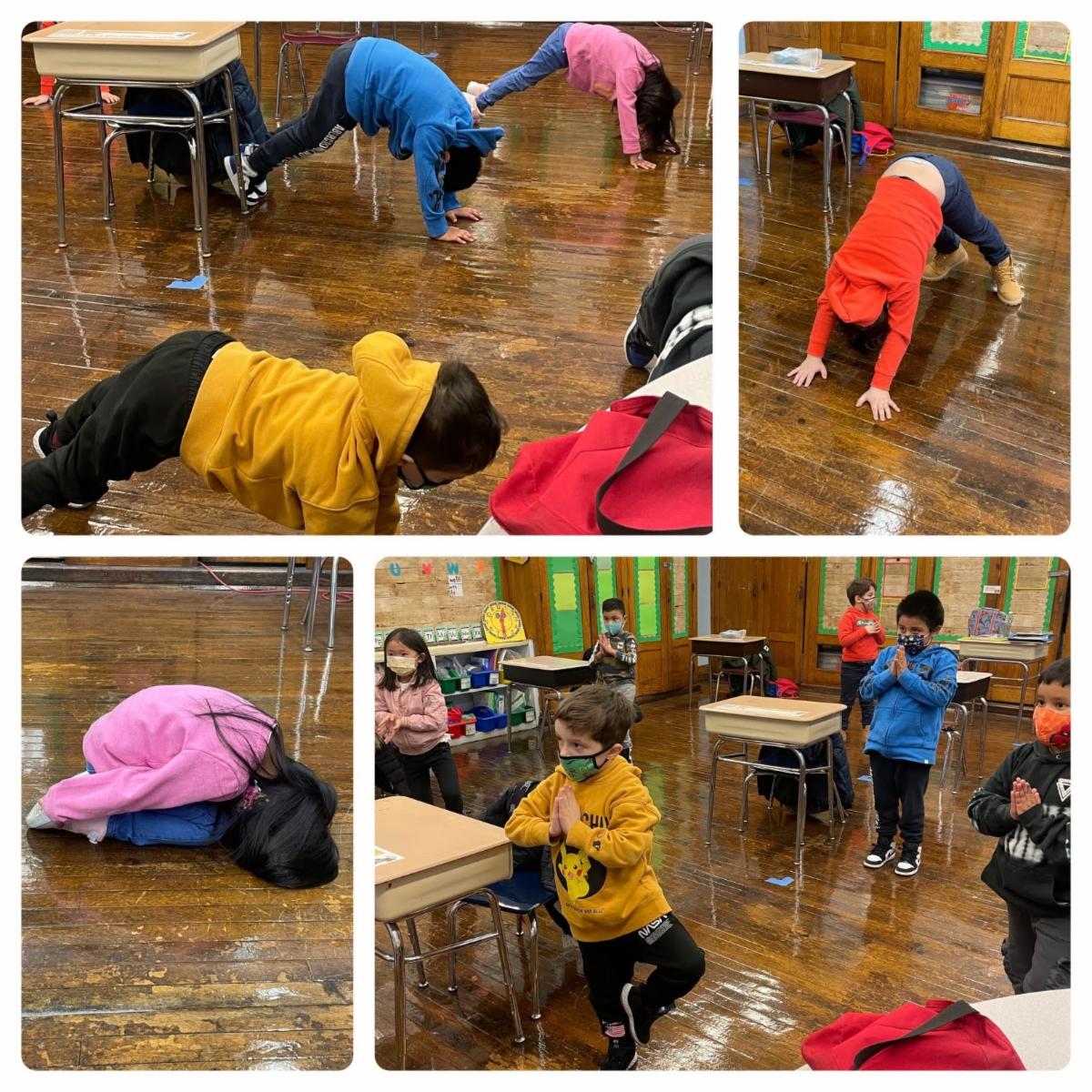
When NYC PE teacher Jaclyn Mahnken posted this Tweet (opens in new window) showing her students staying safe and physically active with yoga in a classroom, we were intrigued! We asked Ms. Mahnken, a PE teacher at PS 253, Brooklyn (21K253), to share more about the lesson and her approach to teaching this year.
|
|
|
|
What activity were the kindergarten students in the photos doing, and what were you teaching with that lesson?
I have been lucky enough to work in [this kindergarten] classroom twice a week, which allows us to really dive deep into our practices. The photograph showcases the students practicing simple yoga poses. Introducing the lesson led to a discussion of what it meant to be physically and emotionally healthy. I explained that practicing yoga poses and breathing techniques will help improve their focus, make them feel calm and relaxed, and improve their mood, especially when they are anxious or stressed. I surveyed the students before and after the lesson. They all discovered that after completing the breathing and yoga practices, they felt “happy and calm.”
Photo credit: Jaclyn Mahnken, PS 253, Brooklyn (21K253)
|
|
How have you continued to be inspired, and inspire your students, during COVID-19 and blended learning?
Every morning I wake up with a positive attitude and look forward to seeing my students in person and/or remotely. I remind myself that the students depend on me to be there to listen, to share, and to teach. There are times when I have had to adjust the planned lesson to address the needs of the students. I do this by leaving enough time for conversations (holidays, culture, and daily stresses), show-and-tell (showing me a cool handstand), and a student choice activity (HITT or yoga). It is extremely important for me to let my students know that I care about them and their well-being. In turn, they come to class prepared with open minds and big hearts.
What do you love most about teaching PE?
First, I love that I teach children the information they need to know in order to live healthy lifestyles even into adulthood; also, we have a lot of fun doing it. I have the pleasure of working with all of the grades at P.S.253. It’s incredible to see how the students progress each year, from learning simple locomotor movements to then participating in staff vs. student basketball games before they graduate. Last, the content is exciting: We are always having fun, whether we are working on the mechanics of an underhand throw or practicing yoga and mindfulness.
If you could share with your fellow teachers one instructional resource that has helped you most in the past year, what would it be?
The NYCDOE TeachHub. There is an overview table of contents, a list of online resources, and lesson plans that provide all the necessary materials to help you teach the lesson successfully! I would personally like to thank the people who created the lessons.
|
|
School Wellness Programs tips:
The DOE TeachHub contains folders for both Physical Education and Health Education, with lesson plans and resources organized by grade level. Log in with your DOE credentials to access these helpful how-to videos:
Interview by Katie Dorman, Wellness Policy Promotions intern at the Office of School Wellness Programs. Know a teacher, school staff member, School Wellness Council or student group going above-and-beyond to teach students the concepts and skills they need for life-long mental and physical health? Email us at wellness@schools.nyc.gov (opens in email window) and include the teacher or staff member’s full name, school, and DBN.
|
|
Calling All PE and Health Education Teachers: Learn How to Integrate Yoga into Your Instruction
Sign up for a free, seven-part professional learning yoga series that introduces K-12 PE and Health Education teachers to yoga and mindfulness practices that can be integrated into classrooms and remote instruction. Offered by Little Flower Yoga and sponsored by the Office of School Wellness Programs, this series offers practical ways to support students’ social-emotional needs and teachers’ own well-being. Principal approval, as well as a commitment to participate in all seven training dates (May 3, 10, 17, 24, and June 7, 14, 21, from 3:00 to 4:30 p.m.) is required. Participants are eligible for up to 10.5 hours of CTLE upon completion. Speak with your principal and then complete this Yoga Series Spring 2021 Request Form (opens in new window) today! Deadline to apply: Friday, April 23.
Creating and Teaching Dance Units in PE: New Professional Learning Webinars
Learn how to build engaging and active dance units in PE with new webinars presented by DancePl3y (opens in new window) and sponsored by the Office of School Wellness Programs. Join your PE colleagues to learn simple dance choreography, participate in lesson plan demonstrations, and access online resources to support ongoing implementation. Webinars will integrate concepts from the New York City Scope and Sequence documents.
Spring = New: Check Out New Elementary PE Lessons
Grades 6-12 Teachers: PE Resource Review Webinars for Fitness for Life Curriculum
Register for webinars that introduce the Fitness for Life curriculum for Middle School (2nd Edition) and High School (6th Edition), now available free in the DOE’s TeachHub, and show how to use these resources to provide Physical Education instruction in remote, blended, and in-person environments.
Updates to PE Instructional Toolkits: Now Including NYC Remote PE Considerations
Upcoming K-12 PE Basics Webinars
Get back to the basics with these PE Basics webinars that cover the foundational concepts and skills needed to teach high-quality PE:
-
PE Basics 1: Fitness Assessments for Any Environment, Tuesday, May 4 (opens in new window): focuses on fitness assessment strategies related to a culturally relevant Physical Education learning environment.
-
PE Basics 2: Unit Planning with Culminating Events, Wednesday, May 5 (opens in new window): focuses on identifying, prioritizing, and planning sequential skills and concepts for in-person, remote, or blended learning.
-
PE Basics 3: Decision Making, Growth Mindset, Thursday, May 6 (opens in new window), focuses on creating a community of learners and supporting the development of social emotional learning skills in all PE students.
K-5 Classroom Teachers: Use Move-to-Improve to Keep Your Students Active While Learning
All students, even those doing blended and remote learning, can and should stay physically active during the day, and the DOE’s Move-to-Improve program is an easy, effective way to help elementary students do just that. Grades K-5 classroom teachers can register for a free, one-hour upcoming webinar to learn how to use Move-to-Improve to get students up and moving during the day to improve their health and stay focused on learning.
|
|
K-12 Educators: Use the Health Education Instructional Toolkits Now and Throughout the Year
Grades 6-12 Health Education Teachers: Register for Online Professional Learning Communities in April
Connect with your Health Education peers to share ideas and keep your teaching fresh this Spring: Sign up to participate in Health Education Online Professional Learning Communities (opens in new window) where you can share challenges, identify best-practices, and feel supported. Online communities take place on Microsoft Teams, a free digital collaboration platform available to all DOE employees. Register for upcoming sessions:
Announcing Our New Grades K-5 Health Education Online Professional Learning Community
Are you teaching health education in grades K-5 and looking for ways to expand your practice? Join fellow elementary Health Education teachers in our new Online Professional Learning Community. Teachers will have an opportunity to come together, share successes and challenges, and access resources that can improve teacher practice and student learning. Register for the first session on Monday, April 26 (opens in new window).
Building Advocacy for Sex Education: SHAPE Releases New Position Statement
Parents, guardians, and schools share a common goal: we want students of all ages to be healthy in all aspects of their lives. As part of comprehensive health education, sexual health lessons are important because they provide students with medically accurate information and communication skills to help them make decisions that can keep them healthy and safe. The national Society of Health and Physical Educators (SHAPE) has released an updated position statement, Sex Education is a Critical Component of School Health Education (opens in new window), affirming the importance of sex education:
“SHAPE America supports age- and developmentally appropriate sex education as a critical component for all K-12 students in the United States. Standards-based sex education should be skills-based and comprehensive in scope. It should use accurate information and be responsive and affirming to the culture, identities, and lived experiences of students, families, and the community.”
Thank you to NYCDOE health educator Drew Miller (01M696) and Office of School Wellness Programs content specialist Rachael Gibson for serving on the task force that developed the statement.
|
|
Building the Wellness Community |
|
Share with High School Seniors: $10,000 Yankees-Stonewall Scholarship Opportunity
School Staff: Register for “Playworks’ Safe Return to Play” Training on April 15
When transitioning back to school buildings after remote or hybrid learning due to COVID-19, safe and healthy recess is especially critical for building connections between peers, healing from stress of the pandemic, rebuilding a sense of belonging, and promoting academic success. Join the Safe Return to Play training (opens in new window) with national nonprofit Playworks (opens in new window) on Thursday, April 15, 10:30 a.m.- 12:30 p.m., to learn how to practically transition space and equipment so every child can experience safe and healthy play every day. Register (opens in new window) for the virtual training, which will cover:
- General Outdoor Space Guidelines
- General Indoor Space Guidelines
- Equipment Options
- Play Structure Options
- Games to play with students safely
New York Agriculture Grow with Us Grant Opportunity
Brownsville and East Harlem-Based Organizations Serving Youth: Building Healthy Communities (BHC) Mini Grant Opportunities
|
|
|
|
|
|
|