Volume 5, Issue 2 | July 2025 | | | |
|
Your Monthly News
& Updates
| | |
Summer – a time of rest, relaxation, and often reflection. For educators, often a time to consider “what to do differently” during the next year. At CEI, even with the several shifts that are happening, we have been in a period of reflection – and with that, some preparation for action. Read on to learn about leadership and directions for CEI – including a request of you, as well as thoughts from Nicole Benquechea about empathy and banned books, and articles from two guest authors. Laura Bosch offers information about a mindfulness app – something that might truly be useful to add to your toolbox next year. And lastly, Rachelle Hannoush describes the importance of belonging and attending to DEI in Early Childhood. All of these connect strongly with our mission at CEI to accelerate the adoption and implementation of practices that address the holistic needs of students and staff.
| | |
Dr. Mason Returns as Executive Director to CEI
Christine Mason and Jillayne Flanders
| | |
On June 26, 2025, the CEI Board of Directors approved the appointment of Dr. Christine Mason, Founder and Senior Scholar at CEI, as the Executive Director – with her term beginning on July 1, 2025.
Dr. Mason indicates that she is ready to help CEI out during this stressful time for so many in our nation, stating:
At CEI, we created Heart Centered Learning (HCL) as a way to bring compassion to schools. Since 2009, CEI has partnered with many, including our colleagues at Yale University, as well as many school districts and educational leaders across the US and internationally. During that time, we also mentored 5-14 young professionals a year as they served as interns and research assistants at CEI.
While I am pleased to serve as CEI’s Exec once again, I am also appreciative of the many skills and talents that Jillayne Flanders brought to CEI, particularly with her focus on early childhood, during the past 18 months.
So now that I am back at the helm, what can you expect from CEI? You will find continued excellence, an ongoing commitment to evidenced-based practices, and strategic recommendations to improve what is happening in every school and classroom, for all students, and all educators. You will also find that we continue to be passionate about promoting children’s mental health, uplifting educators, and our vision for a better future. To continue this work, we will be continuing many of CEI’s initiatives, with a focus on “Cultivating Happiness”.
Read more.
| | |
In Such a Loud World, How Does One Find Inner Quiet?
Laura Bakosh, Co-Founder of Inner Explorer
| | |
Dr. Bakosh was trained as an instructor of Mindfulness Based Stress Reduction at the University of Massachusetts. To learn more about Inner Explorer, view this YouTube video: Finding Your Inner Quiet.
Executive Summary:
By attenuating the biological and cognitive impacts of stress through daily mindfulness practice, Inner Explorer increases calm, focus, and learning readiness for preschool through high school students. In just 5-10 minutes a day, students and educators listen to audio-guided mindfulness practices together in the classroom. As a result, they can better regulate their emotions, think more clearly, tap into a deeper recess of potential and possibility, and increase their academic success across subjects, including STEM. Within 3 years, the achievement gap will lessen, and in its place will open the doors for education, equity, and human flourishing.
Background:
Education is a proven path out of poverty and towards one’s potential. Yet, as measured by test scores, the achievement gap, graduation rates, and college/career readiness, education inequity has stubbornly hindered success for students. In addition, student anxiety, depression, and stress have increased dramatically nationwide during the pandemic. Less well-known is how much self-reported anxiety and suicidal ideation increased during the decade before the pandemic.
Per a series of biannual YRBS surveys (youth risk behavior survey), the percentage of high school students experiencing persistent feelings of sadness or hopelessness increased from 26% in 2009 to almost 37% in 2019, while students making a suicide plan increased from 11% to nearly 16% over that time (CDC, 2024).
The foundational issue contributing to this growing and multifaceted catastrophe is biological. Stress not only inhibits healthy brain development and limits the capacity to learn, it also contributes to unhealthy patterns of brain activity, perpetuating dysfunction and reactivity. As highlighted by the Dana Foundation’s work on socioeconomic adversity and brain development, this biological chain reaction triggers mental and physical health problems, poor decision-making, aggressive behavior, including bullying, and a steep cognitive decline (Noble, 2014). Conservative estimates suggest this negatively affects 40-50% of K-12 students.
Without an intervention that targets the biological underpinnings of stress, children across the socioeconomic spectrum will struggle to succeed in school, leading to a cycle of underachievement and unrealized potential.
Read more.
| | |
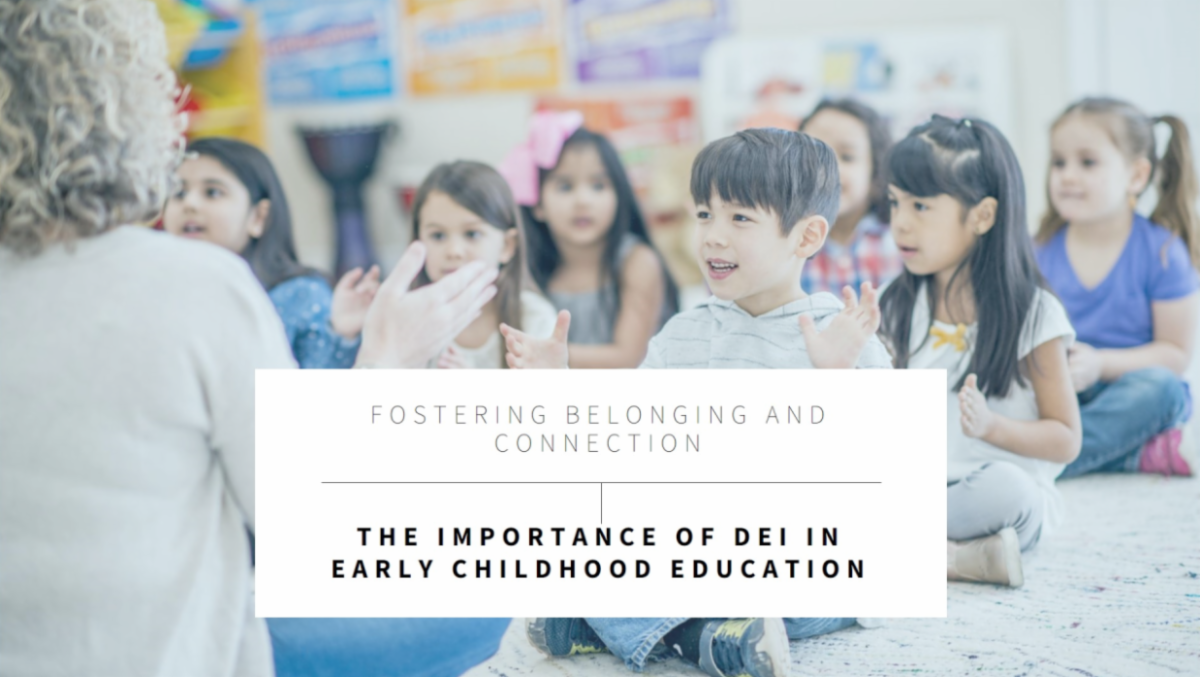
The Importance of DEI in Early Childhood Education: Fostering Belonging and Connection
Rachelle Hannousch M.Ed., Founding Executive Director of Rooted Leaders
| |
Rachelle is a passionate early childhood and nonprofit executive as well as an equity and inclusion advocate based in West Springfield, Massachusetts.
Rachelle originally published this article on LinkedIn in February 2025. We are republishing it here with her permission.
In early childhood education, Diversity, Equity, and Inclusion (DEI) are not just policies or checkboxes to be marked. They are the foundation for building authentic connections, fostering a sense of belonging, and creating environments where children and families feel seen, valued, and understood.
The Power of Belonging
Every child deserves to walk into a classroom and feel like they belong. This sense of membership – the feeling that they are not just present but truly included – impacts their confidence, learning, and overall well-being. Belonging happens when children see their languages, cultures, and experiences reflected in the environment around them. It happens when a teacher greets them in their home language, when they hear music that sounds familiar, when they see books with characters who look like them, and when they taste foods that remind them of home. These seemingly small moments collectively create a strong foundation of trust and security.
Representation Matters
A child’s identity is shaped by what they see and experience. When classrooms are filled with books that showcase diverse cultures, abilities, and family structures, children gain a sense of pride in who they are. Representation in early education is not just about diversity – it’s about affirming a child’s sense of self and broadening their understanding of the world. A classroom that reflects the lived experiences of its students tells them, "You matter. Your story matters."
Language and Cultural Connection
For multilingual children, hearing their home language spoken by an educator or seeing it displayed in the classroom can be a powerful affirmation of their identity. Language is deeply tied to culture, and when educators make an effort to honor and integrate students’ linguistic backgrounds, they send a message that every child’s heritage is valued. Even when teachers do not speak a child’s home language, small gestures – like learning key phrases or encouraging peer-to-peer language support – can go a long way in building a bridge of inclusion.
Read more.
| |
Student Empathy and Book Bans in Schools: A Connected Perspective
Nicole Benquechea, Social Media Specialist & CEI Research Assistant
| | |
Across the country, more and more books are being pulled from school libraries and classrooms. This trend raises serious questions about which stories students are exposed to – and whose lives and experiences are represented in their education. Most often, these bans target books with characters of color or LGBTQ+ identities, not only limiting what students can read, but also shaping the overall learning environment.
When diverse voices disappear from reading lists, students miss out on critical chances to develop empathy, broaden their perspectives, and connect with experiences different from their own. Thankfully students themselves are stepping up – using their voices to advocate for inclusion and the freedom to learn from a wide array of stories.
At a time when social-emotional learning (SEL) is recognized as vital for student growth, removing books that help kids understand complex social issues is especially concerning. As Mason and colleagues (2023) point out, “Empathy is not an innate trait but a skill that must be nurtured, particularly in early education, where children form their foundational understanding of self and others” (p. 27).
Ensuring all students have access to diverse stories isn’t just about reading – it’s about preparing them to thrive in a complex, interconnected world.
The National Trend of Book Bans
Recent research by PEN America highlights the widespread nature of book bans in American public schools. During the 2023–2024 school year, thousands of books – many featuring characters of color or LGBTQ+ individuals – were removed from classrooms and libraries (PEN America, 2024). These bans do more than limit access to certain stories; they shape the environment in which students develop empathy. When students are denied the chance to read books that reflect their own lives or introduce them to different cultures and experiences, they miss important opportunities to build understanding and compassion. Additionally, reading about the challenges and triumphs of people from different backgrounds helps students understand the world in a more nuanced way (School Library Journal, 2025).
The absence of diverse stories can make students from underrepresented backgrounds feel invisible, while limiting all students’ exposure to the realities of discrimination and difference (PEN America, 2024). Fortunately, many students are speaking out against these bans, advocating for the right to read diverse books and to see themselves represented in the stories that shape their education.
States like New Jersey are resisting this trend. In 2024, Governor Phil Murphy signed the Freedom to Read Act, protecting librarians from retaliation and preventing local boards from arbitrarily banning books (DiFilippo, 2024; Solis, 2024). The growing divide between restrictive and inclusive policies raises urgent questions about the future of education in America.
Read more.
| | Upcoming Events and Announcements | | |
From the Archives
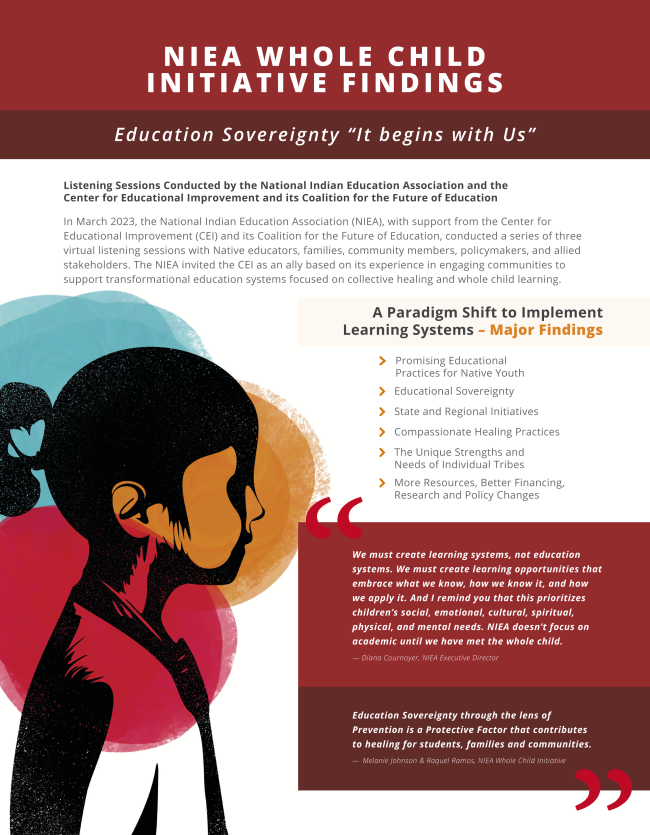
Check out the findings from our listening sessions conducted in partnership with the National Indian Education Association. To reimagine a Whole Child approach specifically for Native people and communities, NIEA sought input from Native families, educators, and policymakers during three virtual listening sessions in March of 2023.
| | | | |
CEI Resources
Check out these rich CEI resources that you can count on for up-to-date evidenced-based practice furthering the well-being of children, youth, and school staff.
| |
You are also invited to join the HeartMind Community to receive discounts on publications and workshops, networking opportunities, and special offers for virtual consultations and additional resources from the Center for Educational Improvement.
| | Editors: Lauren Kiesel and Meghan Wenzel | | | | |