Facebook  Instagram  Bluesky  Youtube  Linkedin
 

HRAF News Vol. 2026-10

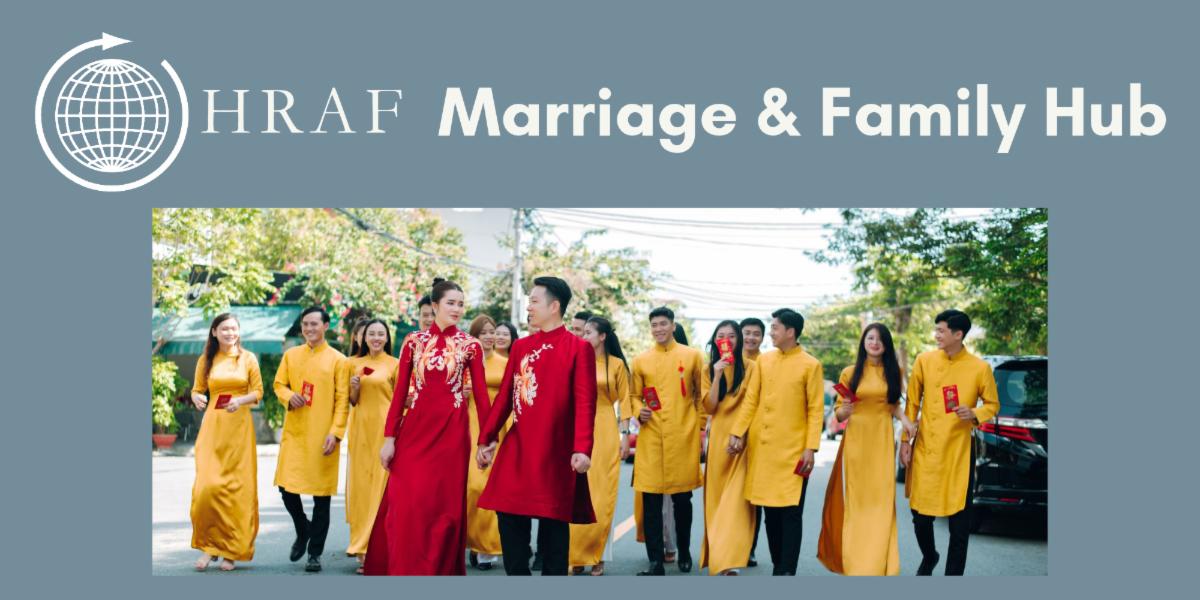
HRAF Launches Marriage & Family Hub

Research and Learning Hubs aggregate materials on anthropological topics and provide guidance to assist with research and teaching. To help users navigate and see how the eHRAF databases work, we provide a list of subjects from the Outline of Cultural Materials (OCM) that are most relevant to the topics of our Research and Learning Hubs. We provide sample searches and pointers to selected resources, both on our homepage and elsewhere. Finally, we provide strategies for conducting your own research project using eHRAF.


HRAF has launched a new Marriage & Family Hub in eHRAF World Cultures. Every society has some form of family and some way of recognizing marriage, but what those look like varies enormously — who may marry whom, what is exchanged, where the couple lives afterwards, and who counts as kin. Use this hub to explore the OCM subjects covering marriage and family in eHRAF World Cultures, curated resources, and the cross-cultural findings behind them.


Other hubs available include the Hunter-Gatherers Hub in eHRAF World Cultures and the Architecture Hub in eHRAF Archaeology. Stay tuned for more hubs coming soon.


Click here to access the Marriage & Family Hub

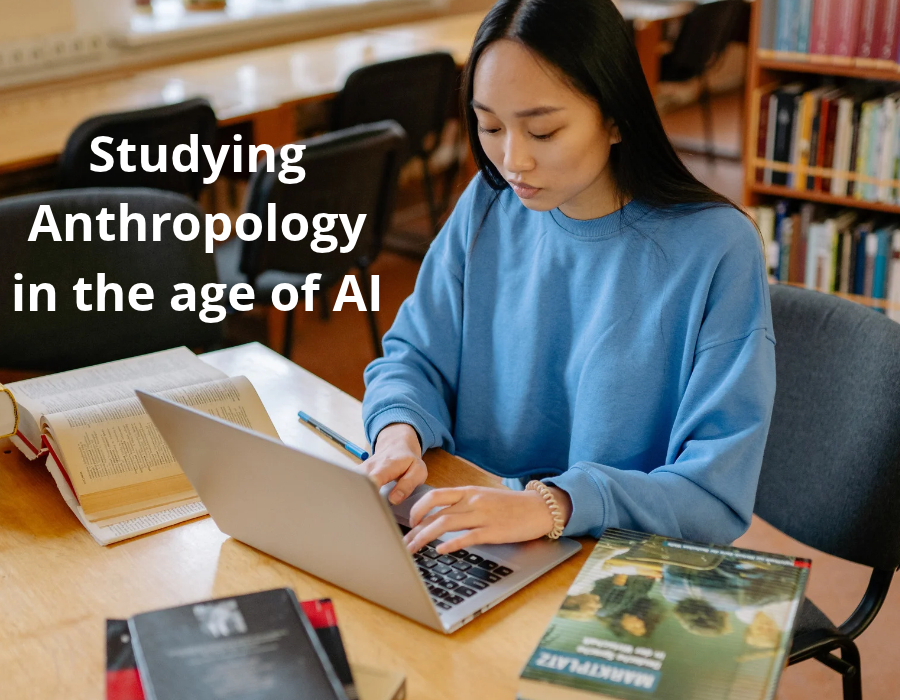
A recent article in The Wall Street Journal titled Want to Succeed in an AI World? Study Anthropology recommends anthropology as a field of study to develop the humanistic and critical thinking skills required in the 21st century.


In a rapidly changing workplace, humans need to develop skills that machines struggle with or are inept at. According to Leah Belsky, OpenAI's vice president of education. "Human skills remain even more important as AI takes on more complex work and reshapes fields in ways we can’t fully predict."


Callum Borchers writes: "At its core, anthropology is an effort to grasp what makes us human. It's hard to think of a more relevant pursuit when our career prospects hinge on humanity's value proposition, relative to bots." 


In addition to anthropology, the article recommends the study of other liberal arts subjects such as mathematics and philosophy. Math and philosophy majors typically have experience in manual problem solving. These critical thinking skills are essential to HRAF's mission: To promote understanding of cultural diversity and commonality in the past and present.


Click here to read about Anthropology in the age of AI

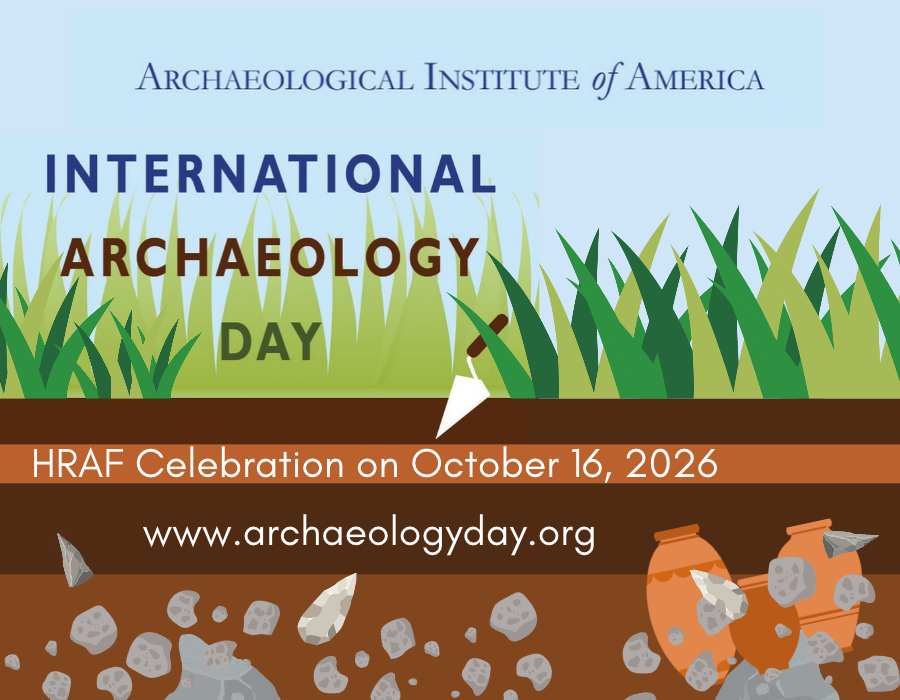
On Friday, October 16, HRAF will host an Archaeology Day Celebration. Each October, the Archaeological Institute of America and organizations around the world present archaeological programs and activities. This will be HRAF's fifth annual Archaeology Day event co-sponsored by the UConn Stamford Anthropology Society. HRAF's Director of Membership and Outreach Matthew Longcore, Ph.D., teaches Anthropology at UConn and is the faculty advisor for the student club.


UConn students have been invited to New Haven for a day exploring anthropology and cross-cultural research. We will begin our day with a visit to the HRAF offices at 755 Prospect Street. There will be a presentation on cross-cultural research from HRAF's President Carol Ember, Ph.D., followed by a discussion about the Melvin Ember Internship with current interns Victor de Munck and Alex Knickrehm. 


Following the visit to HRAF, the group will take a tour of the historic Yale University campus. Afterwards the group will have lunch in New Haven. The day will conclude with a visit to the Yale Peabody Museum. The museum has a new exhibition titled Unfolding History: Writing in Ancient Egypt. The exhibition features never before displayed papyri from Elephantine, Egypt. The exhibition is curated by Victoria Almansa-Villatoro, an Assistant Professor of Egyptology in the Department of Near Eastern Languages & Civilizations at Yale University.


Click here to read about Archaeology Day at HRAF 

HRAF is pleased to announce that we are accepting applications for the HRAF Global Scholars Program 2027. This program provides scholars around the world with one year of complimentary access to eHRAF World Cultures and eHRAF Archaeology. Should further access be desired beyond the award year, memberships are available in our lowest dues category. Awardees will be notified in November and access to the eHRAF databases will be granted for the 2027 calendar year. The application deadline is November 15, 2026.


Here are the eligibility guidelines:


Applications are welcome from graduate students (master's or doctoral candidates) or faculty who are formally affiliated with academic institutions in low-income or middle-income countries, as defined by the World Bank. The institution must be eligible for our special country dues category.


Please note that applicants must provide proof of academic affiliation or enrollment.

Awards may be expanded to the entire academic institution. An official from your institution will need to sign an agreement authorizing the institution to participate.


Please note that the HRAF Global Scholars Program awards provide online access to the eHRAF databases, but do not include affiliation with Yale University or access to academic programs and services offered by the university.


Click here to read about the HRAF Global Scholars Program

 
HRAF at Yale University|hraf.yale.edu