Volume 6 Issue 9 | September 2025 | | August days: waiting for the cooldown, waiting for the rain. Suddenly September arrives with its promise of fall colors, and fills us with change-of-season energy. | | The Root of It newsletter ends with our monthly quotation. If you find your newsletter has been clipped by your email provider please click HERE for a webpage version of the newsletter. | | |
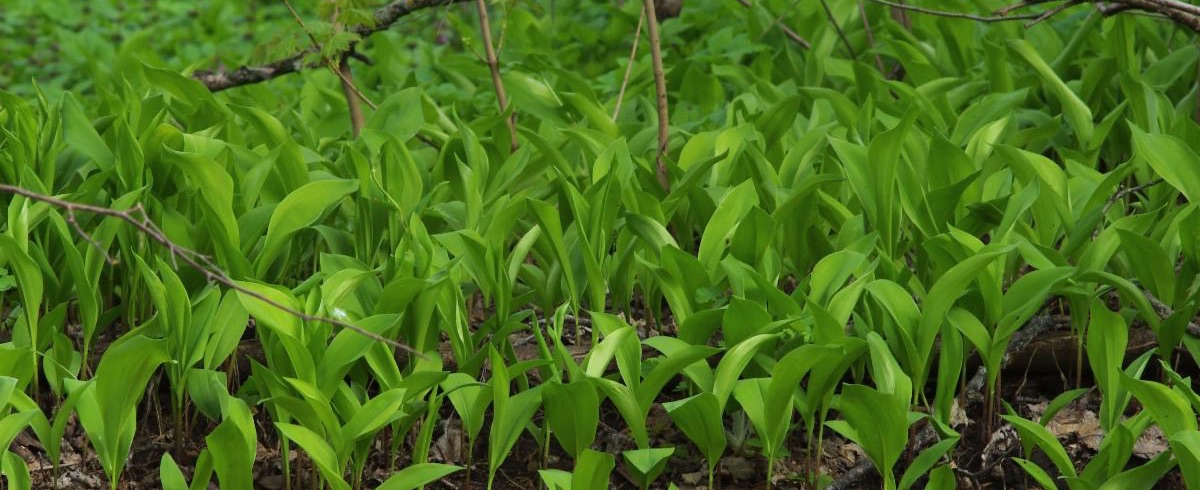
A sea of lily of the valley (Convallaria majalis)
Photo by E Barth-Elias
| | |
This is the story of a charming house guest who seemed such a pleasure when she arrived. After a short time she invited her relatives to join her, and before our host knew it, every space was filled, the fridge and pantry were empty, and, one by one, her family members disappeared. Meet the perennial bullies, who seduce us with their beauty, and then set up permanent residence, filling every niche and outcompeting surrounding plants. Some are labelled “aggressive” and some are “invasive.” You know who they are…
Woe to the person who brought home beautiful houttuynia (Houttuynia cordata), delighting in its striking color and form, and then found it EVERYWHERE in the garden, taking over whole beds before moving to the next. This is a tough one to get rid of, since each bit of root left in the ground can generate a new plant. I have a friend who has spent years ridding her garden of an inherited stand of houttuynia, only to find it popping up anew. Persistent doesn’t even begin to describe this hooligan.
What sweet memories I have of lily of the valley (Convallaria majalis) growing underneath a window of my childhood home. The heavenly scent wafting into the house, the gorgeous bell-shaped blooms—I loved them as a young child, but as the years passed, I learned that they are not the demure plants they appear to be. Like houttuynia and many other garden thugs, these beauties spread by underground stems called rhizomes. They’re also easily dispersed by birds, who deposit their seeds willy nilly.
Bee balm (Monarda didyma), a member of the notorious mint family, races through the garden. This native is pollinator friendly and a real beauty, but can overtake a garden bed without proper supervision.
The delicate-looking flowers of Japanese anemones (Anemone x hybrida) are captivating as they sway in the breeze. These stealth plants behave themselves for a couple of years, and then their creeping rhizomes spread with abandon. This may not bother you—they are beauties after all—but regaining control of a bed they have populated can be a challenge.
By their very nature groundcovers are fast growers, but some require a firm hand. English ivy (Hedera helix), a classic and a beautiful climber, can get out of control and damage walls and structures. It spreads by aboveground stems called stolons and by bird-dispersed seeds. Bugleweed (Ajuga reptans) is another groundcover to plant with care. It happily populates adjoining lawns and beds, particularly those that are not densely planted. Creeping Jenny (Lysimachia aurea) adds gorgeous color to the landscape, but keep this beautiful spreader contained—it travels here and there in the blink of an eye.
Obedient plant (Physostegia virginiana), deadnettle (Lamiastrum galeobdolon), snow on the mountain (Aegopodium podagraria), creeping bellflower (Campanula rapunculoides), Mexican evening primrose (Oenothera speciosa), cutleaf rudbeckia (Rudbeckia lanciniata)—there are many plants that should sport caution signs at the garden center. Should you still grow them? Avoid some at all cost, houttuynia for instance, but others can be managed and enjoyed, and their robust growth can be an asset. Use care when selecting their companions—only vigorous growers allowed. Make use of barriers—cement walks, sunken large nursery pots with the bottoms removed, and rocks or boulders can keep the stolons and rhizomes of these plants in check. Keep bare spaces in garden beds to a minimum, limiting opportunity-sites for aggressive plants.
What to do if you wish to remove one of these “enthusiastic” perennials? Persistence is the key. Remove the plants, including their roots, from the site. (Do not compost aggressive or invasive plants unless your pile is super-hot.) This may involve sifting the dirt for errant root sections. In some cases, covering the ground with newspaper or other impenetrable mulches for a year or more may be necessary. This may be an effort over a period of years, with vigilance and roguing out new sprouts thereafter.
What is taking over YOUR garden? Look Around.
K Edgington
| | |
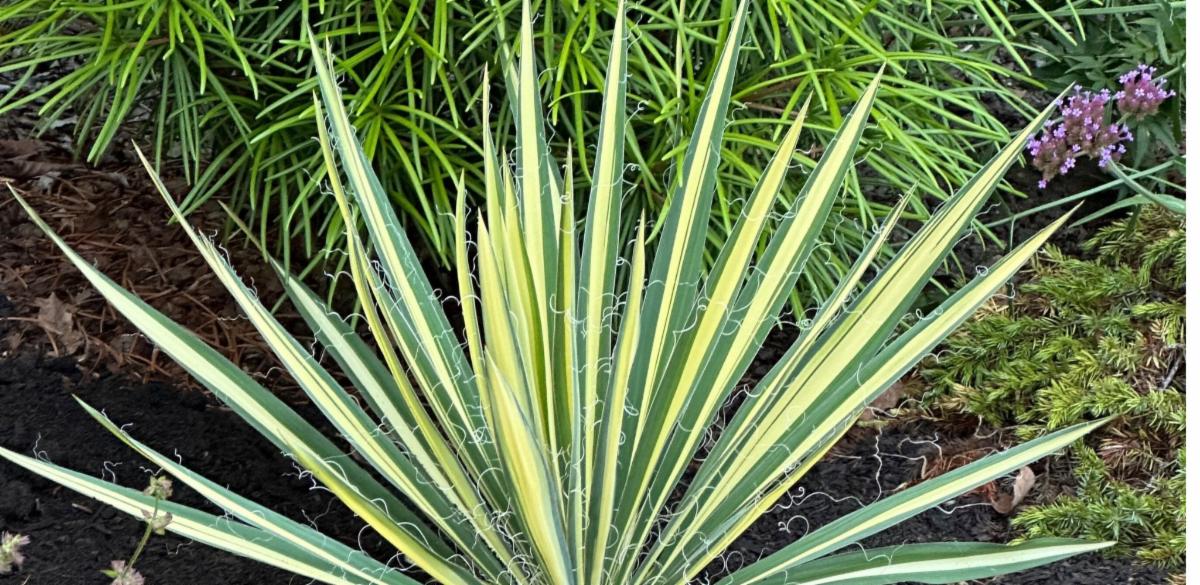
LEAF BRIEF: Yucca filamentosa 'Color Guard'
Garden Guardians
| | |
Yucca filamentosa ‘Color Guard’—also known as Adam’s needle or Spanish bayonet—is a standout among variegated yuccas, prized for its vibrant foliage, architectural form, and resilience. This evergreen perennial features a rosette of creamy-yellow, sharp, sword shaped leaves, and typically reaches 2-3 feet in height with a spread of 2-3 feet. The flower spikes reach 4-8 feet in early summer. Color Guard is native to the Southeast United States, but yuccas in general can be found throughout the U.S., Mexico, and South America. Yuccas are part of the Asparagaceae family, a diverse group that includes asparagus, lily of the valley, bluebells, hostas, and even spider plants. It is hardy in USDA Zones 4–10 (some sources list Zones 3–8), making it right at home here in Ohio.
Considered a succulent, Color Guard thrives in dry, hot, sunny conditions but is surprisingly shade-tolerant, although it may produce fewer flowers. It is highly tolerant of poor soils such as sandy, rocky, or clay. Avoid poor drainage or waterlogged conditions, especially if an automatic sprinkler system is in use. Yucca Color Guard stays green year-round; some say it looks even more striking in winter as the leaves develop pink or coral tints at the edges that stand out against the snow. This yucca handles snow and ice like the tough guy it is!
Maintenance is a breeze—simply prune spent flower stalks at the base after blooming to keep it tidy. It is also deer and rabbit-resistant thanks to its fibrous, mildly toxic leaves. Slow to spread via basal offsets, it will eventually form a clump, which is a great opportunity to pot divisions and grow new plants. Color Guard Yucca works well as a focal point or dramatic accent, ideal for xeriscapes, rock gardens, containers, dry slopes, coastal gardens, and salt-sprayed areas. Its bold, upright shape adds structure and contrast next to smaller-leaved perennials, ground covers, fine grasses, or other succulents. It’s perfect for containers, especially in hard-to-water locations.
In early summer, Color Guard produces creamy-white, bell-shaped flowers that attract moths, bees, and hummingbirds as a food source, but yucca moths are its exclusive pollinator. Read about them HERE. As a cultivar of a native, it supports local wildlife better than many exotic ornamentals. The flowers are edible, though somewhat bitter, and the fruits can be roasted or baked—they are fig-like and sweet. The roots, which are not edible, contain saponins, surfactants that are used in detergents and cosmetics.
With its bold variegation, durable structure, and minimal maintenance, Yucca filamentosa ‘Color Guard’ is an excellent choice for eco-friendly gardening. It combines drought tolerance, wildlife benefits, and year-round appeal—ideal for xeric, low-maintenance landscapes. Plant it in full sun and well-draining soil, cut back flower stalks when they fade, and enjoy this splash of evergreen elegance season after season. This bold choice will add excitement without becoming a high-maintenance drama queen.
J Gramlich
| |
|
CREATURE FEATURE
These Magnificent Beasts
| |
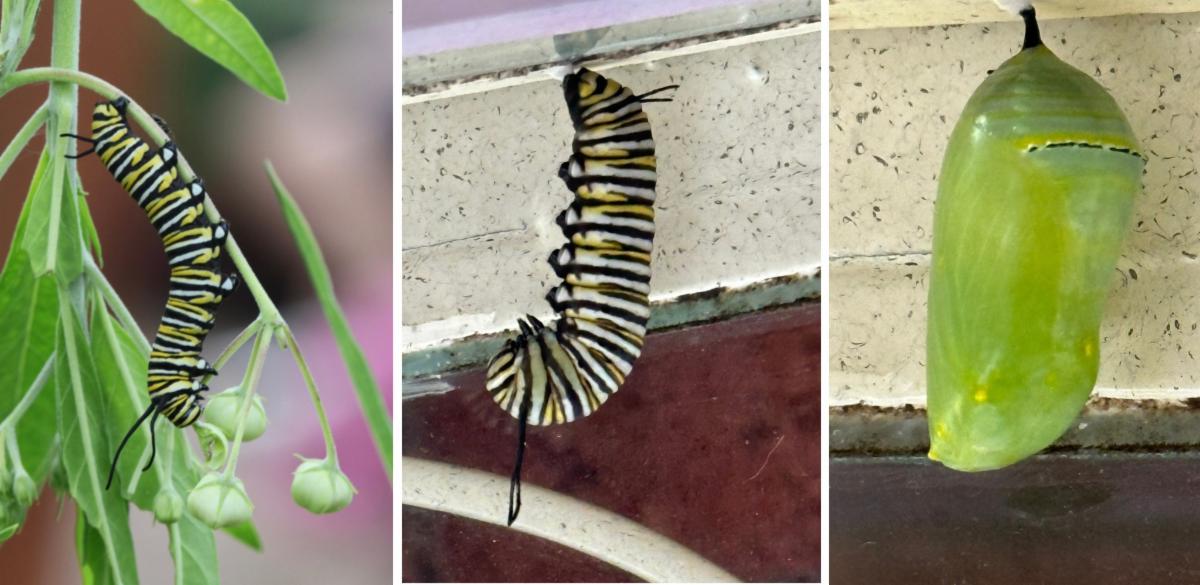
A monarch butterfly feeding, attaching, and chrysalis.
Photos by E Barth-Elias
| |
Caterpillars are magnificent beasts. So proclaimed Dr. Roger Downer at the beginning of our chat, and who am I to argue with a renowned entomologist, author and life-long lover of all things Lepidoptera? More of a moth than a butterfly guy (in the UK, where he grew up, there were far more moths to study), Dr. Downer noted that now is a great time to spot caterpillars on their way to their overwintering sites. Common sightings include Virginian Tiger Moths (Yellow Bears), Isabella Tiger Moths (Woolly Bears), and Giant Leopard Moths, but you may come across many others. And don’t just look—take pictures, identify (https://bugguide.net/node/view/15740), upload (https://www.butterfliesandmoths.org). You’ll be acting as a citizen scientist and adding to an important database—far more soul-satisfying than taking selfies (hopefully). Some additional Downer-endorsed sites:
https://www.inaturalist.org and https://mothphotographersgroup.msstate.edu.
By the end of our talk, Roger (by now) had piqued my interest—see what you think.
Caterpillars are the adolescent form of Lepidoptera (butterflies and moths), insects that undergo complete metamorphosis (holometabolous). Eighty percent of insects experience life as egg, larva, pupa and adult, but that doesn’t make it any less remarkable. Human teenagers may act like aliens, but their bodies are basically the same as ours (maybe gawkier and splotchier). A butterfly or moth teenager doesn’t even have the same body parts as the adult it will become. How (and why) does this happen?
Here's the how—speaking in generalities of course because Nature loves exceptions, especially in an order of around 180,000 species!
THE BEGINNING—EGG: Mom Lepidoptera lays her eggs (up to 500) in spring, summer or fall, mostly on the specific plant (host plant) her picky babies will eat, an example of how one species depends on another— monarchs lay eggs on milkweed, spicebush swallowtails on spicebush—you get the idea. Eggs are laid individually or in clusters and hatch in a few days to a few weeks.
THE FEEDING—LARVA: Newly hatched babies get right to work, first eating their own eggshells. This stage is called “feeding” for good reason. Caterpillars eat and grow at incredible rates, doubling in size every few days. As they expand, their non-stretchy exoskeleton skin splits (like jeans without spandex), revealing the new skin underneath. This molting occurs multiple times; the period in between molts is called an instar. The giant silk Cecropia moth expands to 5,000 times its birth weight in just 6 weeks! At a similar growth rate, a human baby would weigh 36,000 pounds by age 25. The Very Hungry Caterpillar by Eric Carle got this part right. Watch it HERE.
THE CRAZY PART—PUPA: Eric Carle glossed over this phase and I understand why. The fully grown caterpillar stops eating, finds a protected spot, molts for the final time and becomes a pupa—the stage where the metamorphosis from larva to adult happens. Moth caterpillars often spin a cocoon of silk around their pupa to protect it, but some burrow underground or hidden in leaves. The pupa of a butterfly caterpillar is a hard, smooth exoskeleton called a chrysalis. (Butterfly caterpillars do not spin cocoons.) Inside the pupa, enzymes in the caterpillar dissolve the caterpillar’s head and body (yuck!), turning it into a kind of soup, from which new organs, antennae, wings and legs form (buds of wings can be seen inside during the larva stage). Chrysalids are generally attached to parts of the host plant. This pupal stage can last from a few weeks to two years—patterns and colors on the wing cases develop last. Watch here.
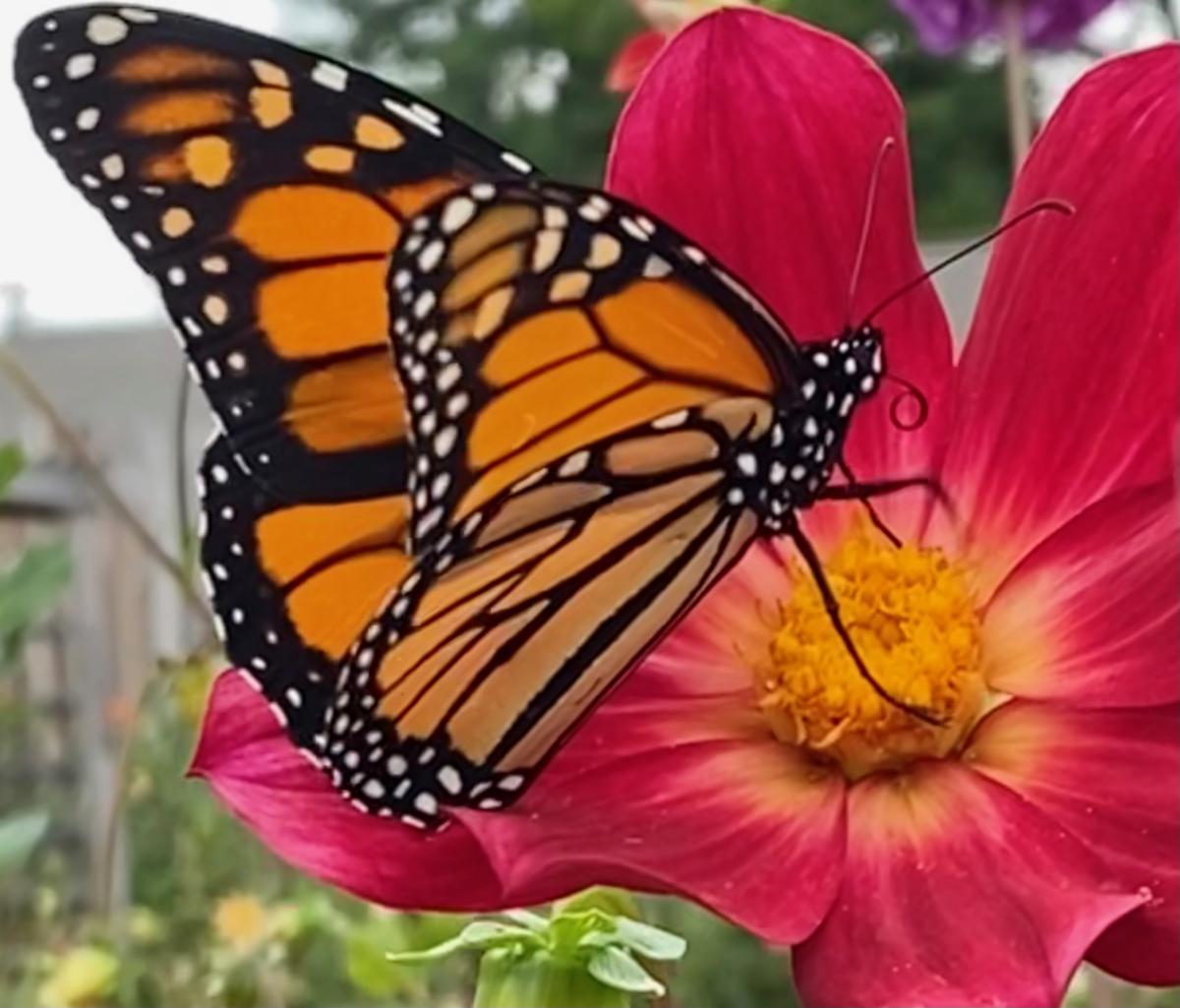
THE LOVE MACHINE—ADULT: Surprise! The stubby-legged, teeny-eyed wormy caterpillar emerges—with long legs and antennae, beautiful wings, two big compound eyes—and begins looking for love. Like their adolescent selves, adults have an incredible work ethic and one job— find each other, mate and lay eggs. Adults first hang upside down to dry their wings and then get busy—most have only a few weeks to live. Some moths don’t even stop to eat, while others sip sugary nectar or oozing tree sap. Butterflies are avid nectar feeders and mud puddlers (see HERE), while nocturnal moths are important pollinators for night-opening flowers. The adult’s ability to fly helps it locate mates and host plants to lay eggs on.
That’s the how, so what about the why? Only Nature knows for sure, but Lepidoptera’s strategy is sound. Caterpillars are built to eat and store up energy for the adult to come, moths and butterflies are made to travel long distances to find host plants for eggs. By specializing at different tasks, and not competing for food, teen and adult Lepidoptera best ensure survival. And that’s pretty magnificent.
C Christian
| | |
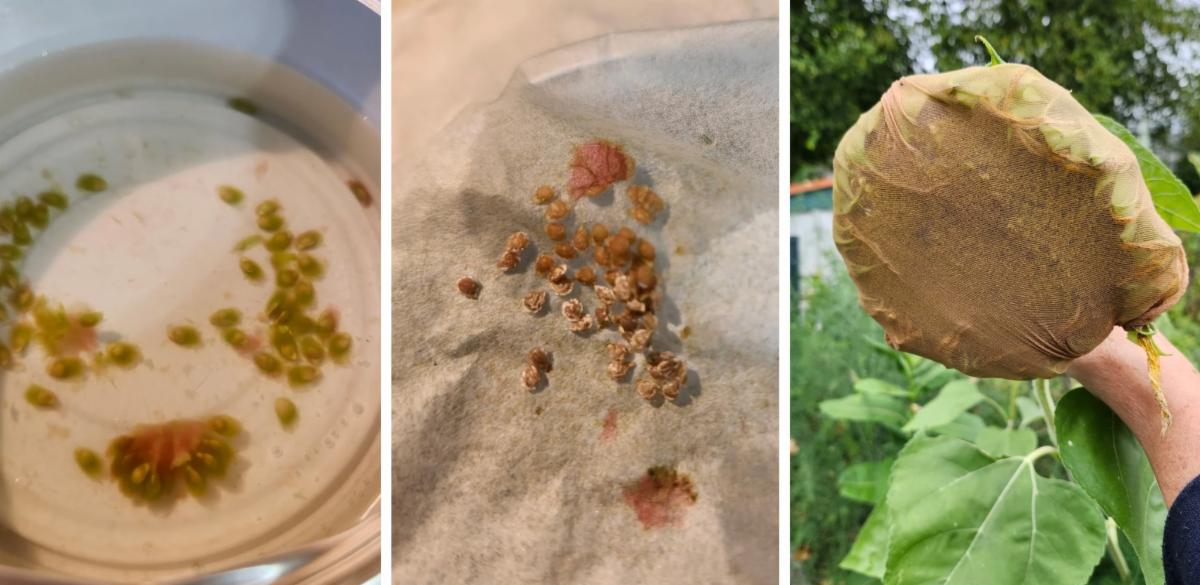
Soak tomato seeds and then allow to dry on cloth or paper. Contain sunflower heads to save the seeds from birds and other critters.
Photos by Becky Ramskogler
| | |
Fall shows up this month. Animals are busy storing provisions to get them through the winter. Squirrels and chipmunks store nuts and seeds, moles paralyze and store earthworms, beavers amass sticks and branches for the cold weather. Humans store seeds for next year’s crops.
There’s more to saving seed than simply waiting until the flowers and vegetables produce their seasonal bounty. It’s a race with birds and other critters to harvest seeds at all. Chickadees and goldfinches can pick flowerheads bare before there’s even a hint of cooler weather.
Successful seed-saving requires familiarity with flower and vegetable characteristics. Is the plant open-pollinated or a hybrid? This distinction is crucial because using seed from a hybrid plant, often labeled F1 on the seed packet, can produce flowers or fruit that do not have the same characteristics as the parent plant. The parents are two different species, and the seed could have the characteristics of either parent.
Open-pollinated seeds come from plants that have been cross-pollinating over years, even generations. The seed from these plants will grow true-to-type and are best for seed-saving. Such seeds can be heirlooms, meaning they have special characteristics or meaning, and have been grown and saved because of flavor, color or hardiness. However, not all open-pollinated plants are heirlooms.
Does the plant need to be isolated in order to produce true-to-type seeds? For insect- pollinated plants, isolation prevents unwanted cross-pollination. Things are different for wind-pollinated plants like corn and beets. They need to be either several hundred feet apart or, more easily, staggered when sown so that the plants flower at different times.
Master Gardener Becky Ramskogler, an avid seed-saver with a tour-worthy garden, says the most important thing is to be sure the seed heads are thoroughly dry. If you want to guard against hungry birds, wrap the seed heads in pantyhose or fine netting while they dry. Once dried, place the seeds in a paper envelope labeled with the full name, variety and date. An added safeguard can be to store the envelopes in jars with tight lids to keep them free of pests. Store them in a cool, dry place—the refrigerator is ideal.
“Wet” seeds, such as tomatoes, have a gel coating that must be removed. This is best done by leaving the seeds in a jar with a little water. Over a few days, the moist coating will ferment and the viable seeds will drop to the bottom. Allow the seeds to dry, just as any other seed, and store in a cool, dry place—again, the refrigerator is ideal.
Seed saving is an excellent way to ensure you get the quality and kind of seeds you prefer. Once the seeds are labeled and stored, all that’s left to do is dream of next year’s garden. But, don’t deny yourself the pleasure of seed catalogs. Who knows, you might find something you just can’t resist.
HOW TO SAVE SEEDS: Illinois Extension
S Vradenburg
| | |
September Checklist:
-
Tidy up perennials by removing dead/diseased foliage and weeds, leaving the remainder for birds and winter interest. FALL GARDEN CLEANUP WITH POLLINATORS IN MIND: Almanac
- Move outdoor houseplants to a less sunny location to acclimate to indoors. Spray vigorously with water to dislodge pests before bringing them inside.
- Discontinue fertilizers and pruning to allow plants to go dormant naturally. (It’s OK to fertilize lawns.)
- Continue garden harvest and cleanup. Plant a cover crop in open soil. https://ohioline.osu.edu/factsheet/agf-142
- Replace spent annuals with mums, asters, ornamental kale, and others for a colorful autumn.
- Harvest herbs and dry them for future use.
-
Save tomato seeds (and other “wet” seeds such as peppers, squash, cucumber, and melon). SAVING TOMATO SEED: A Way to Garden
- Begin spring bulb shopping!
J Gramlich
| | |
More learning opportunities:
| | |
When one tugs at a single thing in nature,
he finds it attached to the rest of the world.
John Muir
| | We invite you to share The Root of It with your friends and family. If you would like to subscribe to our mailing list please visit our website, scroll to the bottom, and follow the link under Join our email list. | | The Root of It staff: Karen Edgington (Editor), Emma Barth-Elias (Photo Editor), Carolyn Christian, Jennifer Gramlich, Sarah Vradenburg, and Geoff Kennedy (Technical Advisor) | |
We Would Like your Feedback
Contact us at: newsletterscmg@gmail.com
To discontinue receiving this newsletter please click on the UPDATE YOUR PROFILE link below. You may then choose what types of information you would like to receive from us.
| | | | |