News and information to help journalists serve the public and stay safe.
|
|
Explore how truth-telling in tough times creates community, with syndicated columnist and author
Connie Schultz
, and journalist and author
Jon Mooallem
.
They will discuss their experiences in “
Resilience and Community
,” from 11:30 a.m. to noon Wednesday, April 29, on Zoom.
|
|
 |
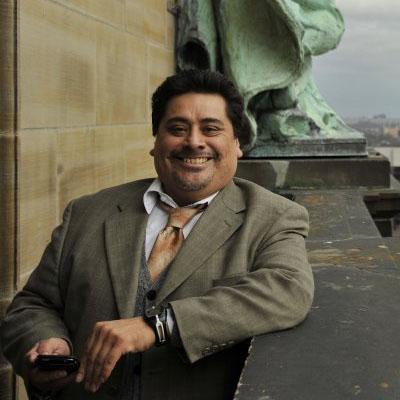
Louis Aguilar, senior reporter for Bridge Detroit
|
|
|
|
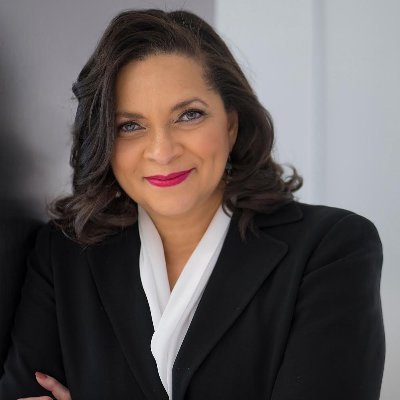
Felecia D. Henderson, Table Stakes Coordinator at the Maynard Institute
|
|
|
|
COVID-19 is shining a harsh light on socio-economic divides across the country. At first glance, the virus appears to be a “great equalizer.” Dig a little deeper, and glaring issues of class and race emerge.
“It is imperative for news organizations to dive into city, county and state statistics to report candidly on the impact of COVID-19 across the Fault Line of class,”
writes Felecia D. Henderson
, Table Stakes Coordinator at the
Maynard Institute
.
“
Fault Lines
” — as Maynard defines them — describe the societal tectonic plates that lie beneath what we see on the surface, such as race, class, generation, geography, gender and sexual orientation. Learning to report with this framework in mind helps journalists improve the quality and inclusiveness of coverage.
As part of Maynard’s “
Best Practices
” webinar series,
Henderson
joined
Louis Aguilar
, senior reporter for Bridge Detroit, to discuss the intersection of Detroit's class inequalities and COVID-19 coverage.
Here are four trends from Aguilar’s reporting that journalists can use to inform their coverage.
- Newsrooms must have “an ongoing discussion on what kind of conclusions we can make from raw data.” For example, Detroit recently released ZIP code information to show areas hardest hit by COVID-19. But, Aguilar cautions, there are too many unknowns with this type of data release. Some areas with a larger number of confirmed cases might have better access to test kits or have a higher density of nursing homes. Experts can put into context what the numbers are not showing.
- Racial disparities must be addressed, delicately. “The African-American community is being hit much harder,” Aguilar said. “Detroit is one of the poorest cities in the U.S., and the density of the African-American community is a lot higher, and there is a lot of segregation.” This trend is not unique to Michigan. Reporters have an obligation to dive into the issues that affect infection rate, such as urban density, underlying health conditions, access to health care and delayed messaging in cities. But, it’s also a balancing act. Aguilar points out that communities in New York City and Massachusetts also are having large outbreaks, but “you're not seeing reporters descend on them the same way.”
- Tough and sensitive conversations are unavoidable, in the newsroom and in the field, and can be crucial to candid coverage. “There is no magical formula except to stay with the facts,” Aguilar said. “It’s always a delicate conversation. But other than truth and experience, there is no other way to go about it.”
- It is harder to remain impartial as the coronavirus death toll mounts. In one article, Aguilar mentions a comment from state leaders that it is “difficult to find a Detroiter who doesn't know someone who is infected with the virus.” He also describes how challenging it was to interview a source who lost 10 people to COVID-19. “It’s hard not to get emotionally involved in tough conversations,” he said.
Click here
to learn about additional Maynard programs and to watch a recording of their conversation.
|
|
When you’re stressed, reach for a bottle … of water, that is.
WFH journalists with more access to their daytime beverages of choice — coffee and sodas,
which are diuretics
— should consider substituting some good ol’ H2O.
Set hourly reminders on your phone or laptop to sip some water. This also will force you to stand and walk for a few minutes while you get your drink.
Download one of the numerous apps to track your water intake.
Know how much you need: A
basic equation
is to divide your body weight in half, then drink that number of ounces. (For example, if someone weighs 160 pounds, he or she would need 80 ounces of water, or about 10 cups.)
Eat whole fruits and vegetables, which contain a lot of water.
|
|
|
Four books remain in the running for the title of 2020 Book Bracket champion.
She Said, by Jodi Kantor and Meghan Twohey, faces The Boys on the Bus, by Timothy Crouse, in the Final Four round of the bracket showdown. Also competing are On Writing Well, by William Zinsser, and All the President’s Men, by Bob Woodward and Carl Bernstein.
The titles share a history with the National Press Club. Kantor and Twohey received the inaugural Neil and Susan Sheehan Award for Investigative Reporting in 2018 for their reporting on Harvey Weinstein, which amplified the #MeToo movement.
In 2012, the Club honored Woodward with its prestigious Fourth Estate Award. The award recognizes a journalist who has made significant contributions to the field through a lifetime of excellence.
Vote for your favorites
in this round of the Book Bracket through midnight Thursday, even if you haven’t yet participated. The champion will be chosen after that and announced Monday.
|
|
This newsletter is written & edited by the National Press Club Journalism Institute staff: Beth Francesco, Holly Butcher Grant, Jim Kuhnhenn, and Julie Moos.
Send us your questions and suggestions
for topics to cover.
|
|
The National Press Club Journalism Institute promotes an engaged global citizenry through an independent and free press, and equips journalists with skills and standards to inform the public in ways that inspire civic engagement. Support our important work with a tax-deductible contribution today.
|
|
|
|
|
|
|