Wednesday | February 24, 2021
|
|
If you've put off or skipped needed medical care during the COVID-19 pandemic, you've got plenty of company.
More than a third of U.S. adults say they have delayed or gone without care either because they fear exposure to the virus or because health care services are harder to come by, two new surveys found.
The same reasons led nearly as many parents to avoid care for their kids.
|
|
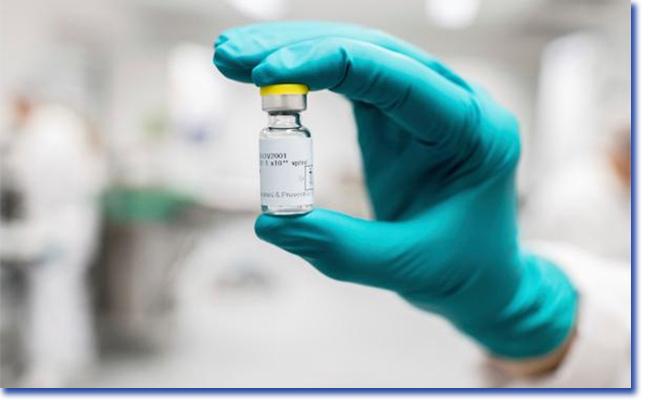
Johnson & Johnson’s single-dose vaccine protects against COVID-19, according to an analysis by U.S. regulators Wednesday that sets the stage for a final decision on a new and easier-to-use shot to help tame the pandemic.
The Food and Drug Administration’s scientists confirmed that overall the vaccine is about 66% effective at preventing moderate to severe COVID-19. The agency also said J&J’s shot — one that could help speed vaccinations by requiring just one dose instead of two — is safe to use.
|
|
One patient threatened to shoot Dr. Terry Hunt if physical therapy didn’t relieve his pain as effectively as opioids did. Another harassed his staff, then roamed a hospital searching for Hunt after being told he would be weaned off painkillers he had used inappropriately.
Hunt was unharmed, but shaken enough to ask the central Illinois hospital system where he worked to dismiss both patients.
|
|
Election Results for ASIPP Board of Directors
Serving from April 2021 through March 2022
|
|
The election results are as follows:
First Executive Vice-President: Salahadin Abdi, MD, PhD
Second Executive Vice-President: Christopher Gharibo, MD
Vice President-Strategic Affairs: Mahendra Sanapati, MD
Secretary: Annu Navani, MD
Treasurer: Devi Nampiaparampil, MD
Directors-at-Large: Deborah Tracy, MD | Ricardo Buenaventura, MD | Steve Aydin, DO
Academic Directors: Kenneth Candido, MD | Joshua Hirsch, MD | Vanila Singh, MD
Young Physician Directors: Helen Blake, MD | Kunj Patel, MD | Kartic Rajput, MD
Resident/Fellow Board Member: Allan Parr, III
Directors Emeritus: Peter Staats, MD | Sudhir Diwan, MD
ASIPP will also recognize and introduce the new board during the 23rd Annual Meeting, June 24-26, in New Orleans. We hope you will join us for the meeting to congratulate the new board and to participate in and enjoy our long-awaited live meeting!
|
|
Join the 2021 Annual Meeting in New Orleans, June 24-26, for the FIRST LIVE, MUST-ATTEND Meeting since COVID Shutdowns
|
|
The 23rd annual meeting will be educational (providing much needed CME credits), exciting, and will offer the long-awaited ability to leave our homes and attend meetings in a safe and responsible manner.
ASIPP is working to make the program highly relevant for our changing healthcare system and environment. We will also bring you cutting-edge lectures on exciting new technology, world-renowned speakers, and much, much more. Registration is now open. Topics will include: COVID-19, economics, burnout, social media, metabolic health, regulatory issues, scientific advances in IPM, and much more!
|
|
Pain Medicine Case Reports (PMCR) and Editor-in-Chief Alaa Abd-Elsayed, MD, PhD would like to invite you to submit case reports and case series to PMCR journal. Your article will be published free of charge.
Open access journals are freely available online for immediate worldwide open access to the full text of published articles. There is no subscription fee for open access journals. Open access journals are no different from traditional subscription-based journals: they undergo the same peer-review and quality control as any other scholarly journal.
Interested in becoming a member of the PMCR Editorial Board?
Editorial board members are asked to review 2-6 manuscripts per year. Please submit your most up-to-date CV to sgold@asipp.org for consideration.
For more information or to submit your articles, click here.
|
|
Abstract
Background: Stellate ganglion block is an option for refractory ventricular tachyarrhythmia. Approaches include using anatomical landmarks or image-guidance with fluoroscopy, computerized tomography, magnetic resonance imaging, or ultrasonography.
Case Report: We describe a case of a 70-year-old man with multiple comorbidities presenting with sustained ventricular tachycardia (VT) who received a cervical sympathetic chain block at bedside. This resulted in ablation of his refractory VT and return to a paced rhythm, allowing him to be discharged from the intensive care unit.
|
|
ASIPP® is pleased to announce the publication of the Comprehensive Evidence-Based Guidelines for Epidural Interventions in the Management of Chronic Spinal Pain. In preparation of the guidelines, an extensive literature review was performed. The 210-page guidelines contains 33 figures, 48 tables, 1,345 references and has 60 authors.
In addition to the review of multiple manuscripts in reference to utilization, expenditures, anatomical and pathophysiological considerations, pharmacological and harmful effects of drugs and procedures, for evidence synthesis, we have included 47 systematic reviews and 43 RCTs covering all epidural.
|
|
Abstract
Background: Since the late 1940s, corticosteroids have been a mainstay class of agents in multiple interventional techniques and intra-articular injections. Exogenous glucocorticoids are structurally and pharmacologically similar to the endogenous hormones. As such, multiple actions of corticosteroids are exhibited, including those of anti-inflammatory and immunosuppressive effects. Epidural injections, with or without steroids, have been extensively used throughout the world. There are reports of epidural injections starting in 1901, with steroids being added to the local anesthetic since 1952, when steroids were administered into the sacral foramen.
Purpose: Due to the extensive side effects of steroids in various injections, some have proposed limiting their use in epidurals and intraarticular injections. With the COVID-19 pandemic, the multiple side effects of the steroids have elevated the level of concern and recommendations have been made to utilize local anesthetic alone or the lowest dose of steroids. Fashioned from common expressions of the day, the term "steroid distancing" began to be used and proposed for intraarticular injections of the knee. Consequently, we sought to evaluate the evidence and feasibility of steroid distancing in interventional pain management.
|
|
Abstract
Background: A primary concern in the use of EBP in these patients is the possibility of seeding the virus in the CNS. Another important concern is related to the known hypercoagulable state in COVID-19 positive patients and associated organ dysfunction that may alter the metabolism of anticoagulants. The safety of the providers performing the EBP, the position of the patient and choices for image guidance (blind, fluoroscopic) are also key considerations to review. It is also important to explore the current state of knowledge about using allogenic instead of autologous blood as well as emerging techniques to eliminate the coronavirus from the blood.
Objectives: In this article we pose the questions of how to manage PDPH in the COVID-19 positive patient and more specifically, the use of epidural blood patch (EBP).
|
|
Not the research or the headline we needed
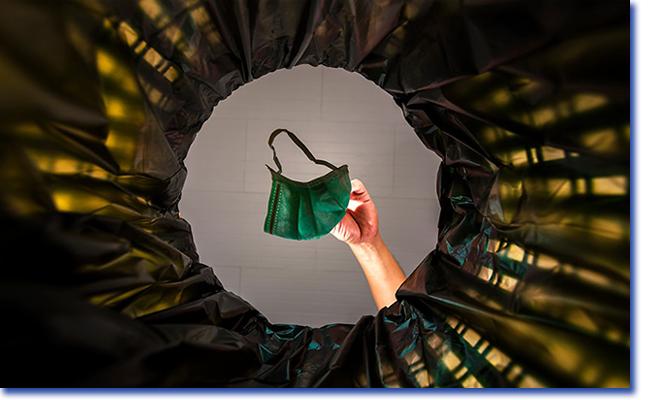
Last week, the CDC announced results showing that when dummy heads were fitted with a cloth mask over a surgical mask, or when a surgical mask had a knot tied near the corner of the mouth, more particulates were captured when the head emitted an aerosol from its plastic mouthpiece during a simulated cough than were captured by a surgical mask alone.
|
|
Why OIG Did This Audit
Facet-joint injections of an anesthetic with or without a steroid are used to diagnose or treat chronic neck and back pain. A prior OIG review found that 47 percent of Medicare payments to physicians for facet-joint injections nationwide in calendar year (CY) 2006, or approximately $96 million, did not meet Medicare requirements. In addition, Noridian Healthcare Solutions, LLC (Noridian), the Medicare Administrative Contractor for Jurisdiction E, identified during audits performed in CYs 2016 through 2018 various errors in which physicians did not bill for facet-joint injections in accordance with Medicare requirements.
|
|
The Surgeon General nominee will only treat corporate America's woes
Over the weekend, Dan Diamond for the Washington Post reported that Vivek Murthy, MD, nominated for Surgeon General and to help the Biden COVID-19 response, received 2.6 million dollars in pandemic consulting fees and speaking engagements since January 2020. Murthy received $400,000 from Carnival cruise lines for consulting, over $400,000 in cash and another $400,000 worth of stock from Airbnb, nearly $300,000 from Estee Lauder, and $600,000 from Netflix. The article notes, "most of Murthy's consulting work came after Biden effectively cinched the Democratic nomination in April 2020, after rival Sen. Bernie Sanders dropped out of the race, and he was sometimes touted in speeches as a Biden adviser."
|
|
Vinay Prasad says it's probably safe
Recently, a spirited discussion was sparked on social media: is it acceptable to relax masking 14 days after the second COVID-19 vaccine dose? Having spent some time thinking about the topic, and discussing with colleagues, I have reached two conclusions. First, it is a tradeoff with residual uncertainties, and reasonable people can disagree. But also, I favor the view that generally, 14 days after vaccination, we can relax some restrictions.
The caveats - It is important to be upfront with the caveats. Everything I say applies to average people in the community -- I am not speaking about enhanced precautions in high-risk settings like nursing homes or medical centers. My argument is contingent on there being no "vaccine escape," that is, no mutation in the coronavirus that markedly reduces vaccine efficacy. If that happens, may God help us. I am not sure we will make it.
|
|
After reading the 2021 Abstracts & Poster Presentations guidelines, please complete the form along with the presenter's CV by clicking here. Questions can be directed to Savannah Gold at 270-554-9412 x 4219 or sgold@asipp.org.
- Selected manuscripts will be presented in electronic poster presentation.
-
Top 25 will be published in the Pain Physician journal.
- Top 10 will be selected for abstract presentation at meeting.
- Top 3 will receive cash prizes.
A $50 submission fee is required, and will be collected at the end of this form.
Proposals will be accepted until April 14, 2021
|
|
up-to-date news related to you, your practice, and patients!
|
|
Since this malpractice insurance program officially launched in November 2018, ASIPP has sign up hundreds of providers with an average savings of 30%. This is a professional liability insurance that is tailored to our specialty and will stand up for us and defend our practices.
Norcal Mutual is 'A' Rated by AM best and is license in all 50 states. To read a few important points to keep in mind about the program, including discounts, administrative defense, cyber coverage, aggressive claims handling, and complimentary award-winning risk management CME activities, click here.
|
|
ASIPP has formed a partnership with Henry Schein and PedsPal,
a national GPO that has a successful history of negotiating better prices on medical supplies and creating value added services for the independent physician. Working with MedAssets, PedsPal provides excellent pricing on products like contrast media that alleviate some of the financial pressures you experience today.
|
|
All sessions from the September 2020 meeting are available through June 2021 for a reduced fee. On-demand registration also provides access to all of the great resources available in the exhibit hall.
*Recorded sessions are not eligible for CME credits.
|
|
ASIPP is now offering our members the benefit of a unique revenue cycle management/billing service. We have received a tremendous amount of interest in the ASIPP billing and coding program. Click here to learn more about the negotiated rate for practices and more!
|
|
|
|
|
|
|