Ag Update March 2026

 
  • Upcoming Meetings and Events
  • Dicamba Update
  • Weather
  • Average Planting Dates
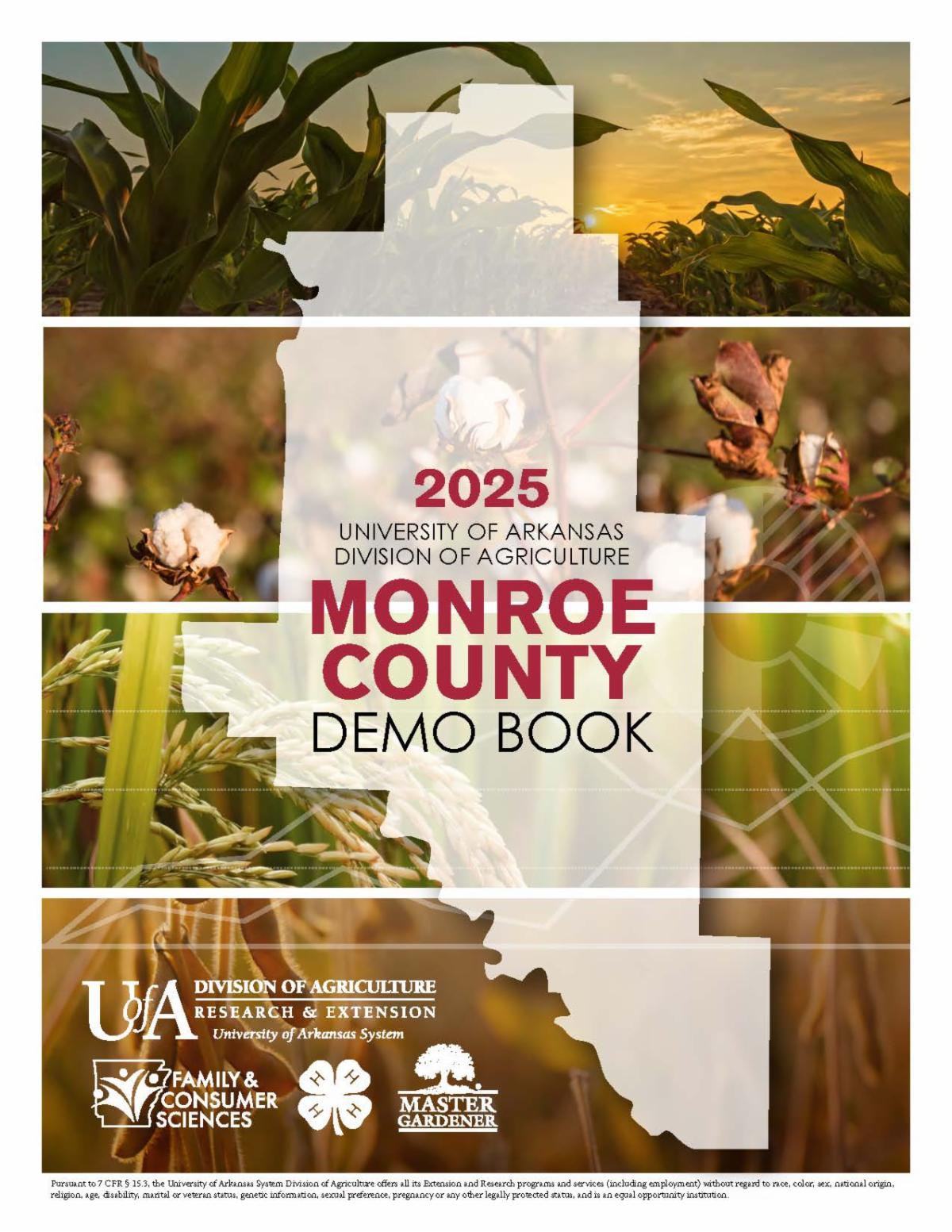
  • 2025 Monroe County Demo Book
  • Things to Do in the Field Now
  • Crop Variety Testing Results
  • Economics, News, & Budgeting Tools

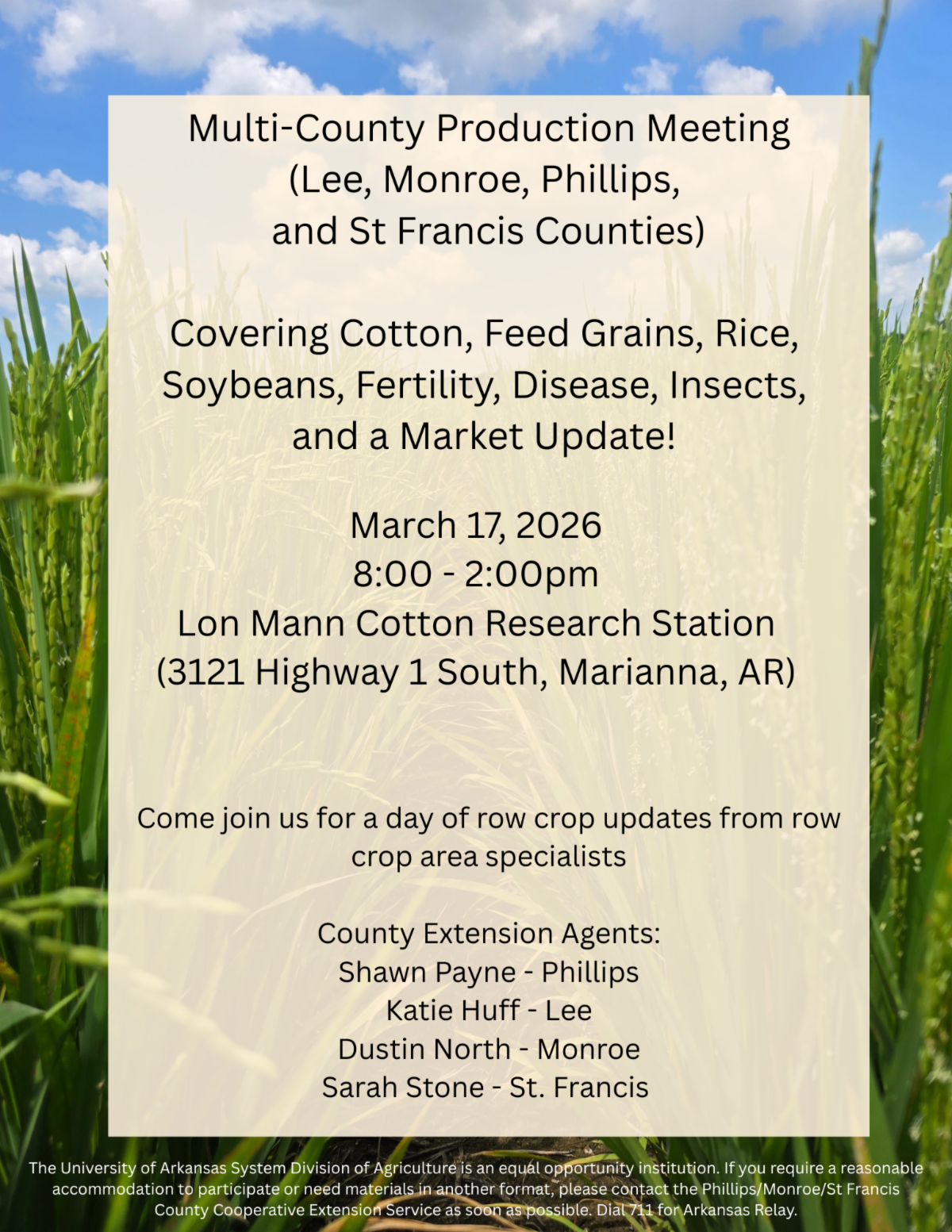
Upcoming Meetings & Events


Dicamba Update

The EPA has approved Dicamba for 2 years with additional restrictions. You can read this in the article below, however, to be approved in Arkansas it will go through State Regulations handled by the Arkansas Department of Agriculture's State Plant Board Pest Control Board. The next meeting is scheduled for March 10, at 8:00 AM. Their meeting will be held live on YouTube and can be viewed by clicking this link - Arkansas State Plant Board Pest Control Meeting

EPA's 2026 dicamba labels come with new restrictions

In its announcement, EPA acknowledged the battle farmers face with herbicide-resistant weeds, concerns about public health, as well as drift and volatility.

Weather

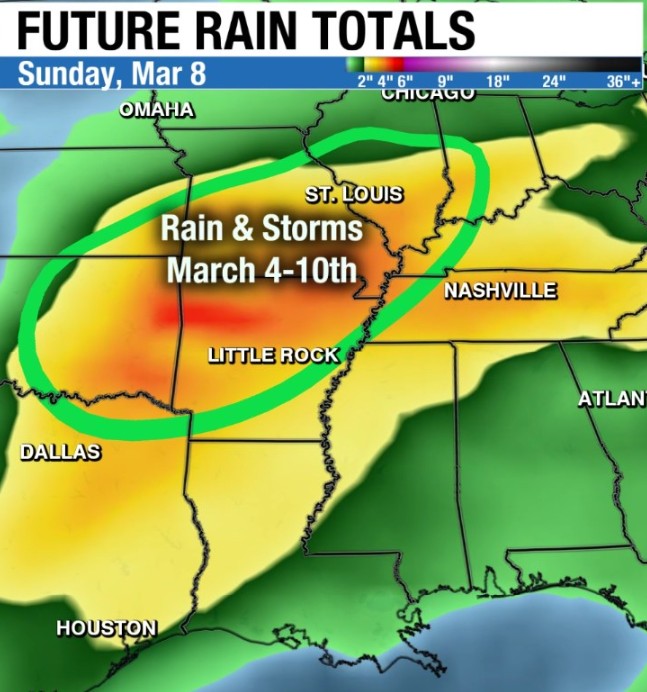
The statewide drought continues. Forecasts are showing some rainfall the first week of March, however, it will not be enough to get us out of drought conditions. Some local weather stations are predicting a need of +15" of rainfall to get us back to average rainfall during this time of year.


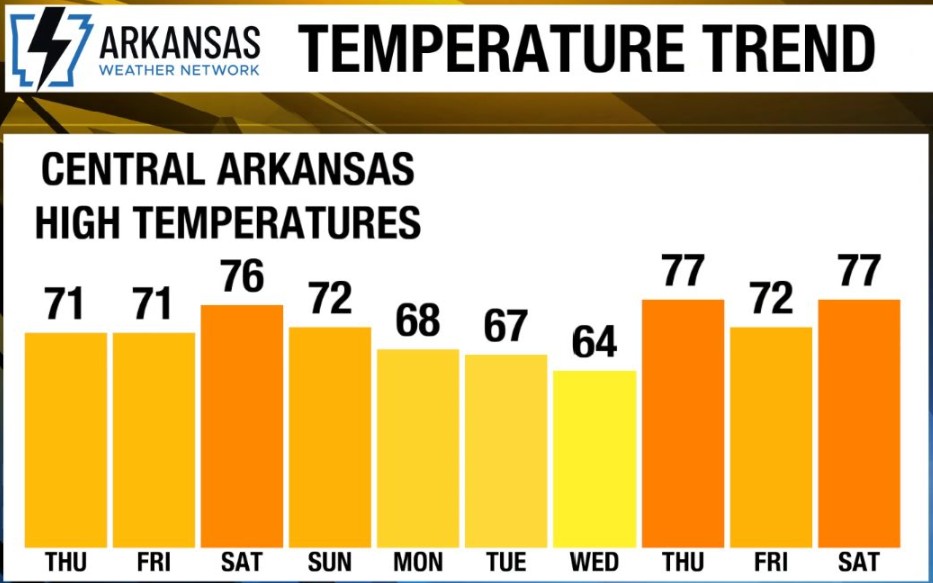
Long-term forecasts predicts above average temperatures for March. It appears that we are at least have made it through the possibilities of any more heavy winter weather storms like we experienced in January.

Average Planting Dates

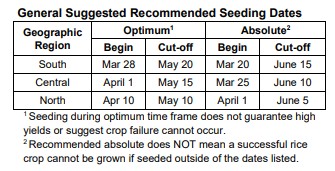
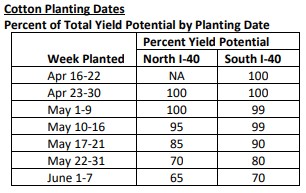
Start your planting season with caution, and remember to look at our recommended planting dates for each crop:


Corn - Good germination and emergence are expected when the soil temperature at a 2-inch depth is 55˚F by 9:00 a.m. for three consecutive days. This normally occurs in late March in south Arkansas and early April in north Arkansas. Frost may occur after these planting dates in some years, but corn typically withstands frost with little economic injury. Early frosts may remove a single emerged leaf, but a leaf will emerge from the seed. Severe frosts later in corn development can be destructive, but these conditions are very rare in Arkansas. 


Avoid planting 48 hours or less ahead of cold rains if possible to ensure maximum emergence.


Greatest yields are generally obtained from corn planted before April 25th in South Arkansas and May 1 in North Arkansas.


Soybeans - Growers can expect rather uniform stand establishment after soil temperatures reach or exceed 50˚F. In Arkansas, this typically occurs during the month of April.


The standard recommendation for planting determinate varieties in Arkansas is between April 25 to June 30. Planting before this date as early as April 1 in southern and April 15 in northern Arkansas can be accomplished when planting the early maturing indeterminate MG IV varieties. Slow emergence and growth often occur with this early planting date, but the potential for an early harvest (August or early September) and the possible avoidance of summer drought during seed filling often result in improved grain yields (both irrigated and non-irrigated) 


University research recommends inoculating soybeans planted after May 15


Rice -

Cotton -

2025 Monroe County Demo Book


Things to Do Now

What can be done in the field now?


Soil Sampling: It is a good time to finish up soil sampling if you have not already done so.


Burndown Applications: Get out a good burndown now. It become more difficult to control some weeds the closer we get to planting if no applications were made in the fall.


Italian Ryegrass: For smaller ryegrass clumps 32 - 40 oz of Paraquat should be sufficient, however for larger clumps apply 40 oz of Paraquat + 3 oz of Metribuzin. Select is another option, however there is a 30 day plant back interval for most crops except for cotton and soybean.


Marestail/Horsetail: Valor at 2 oz rate is still recommended for residual pre-emergence control.


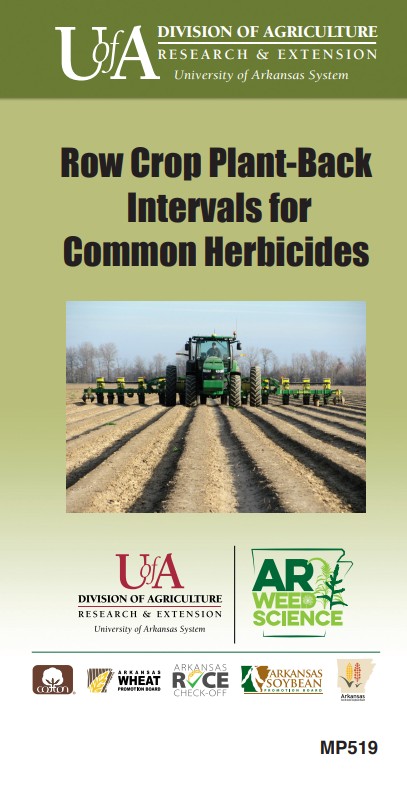
Further Recommendations: Make sure to check out pages 21 - 29 for all burndown recommendations. Also take note of the sensitivity of major Arkansas field crops to commonly used herbicides on page 29. Last note, make sure to pay attention to the plant-back recommendations for burndown herbicides in the publication: MP519, which you can access by clicking on it below:


Crop Variety Testing Results


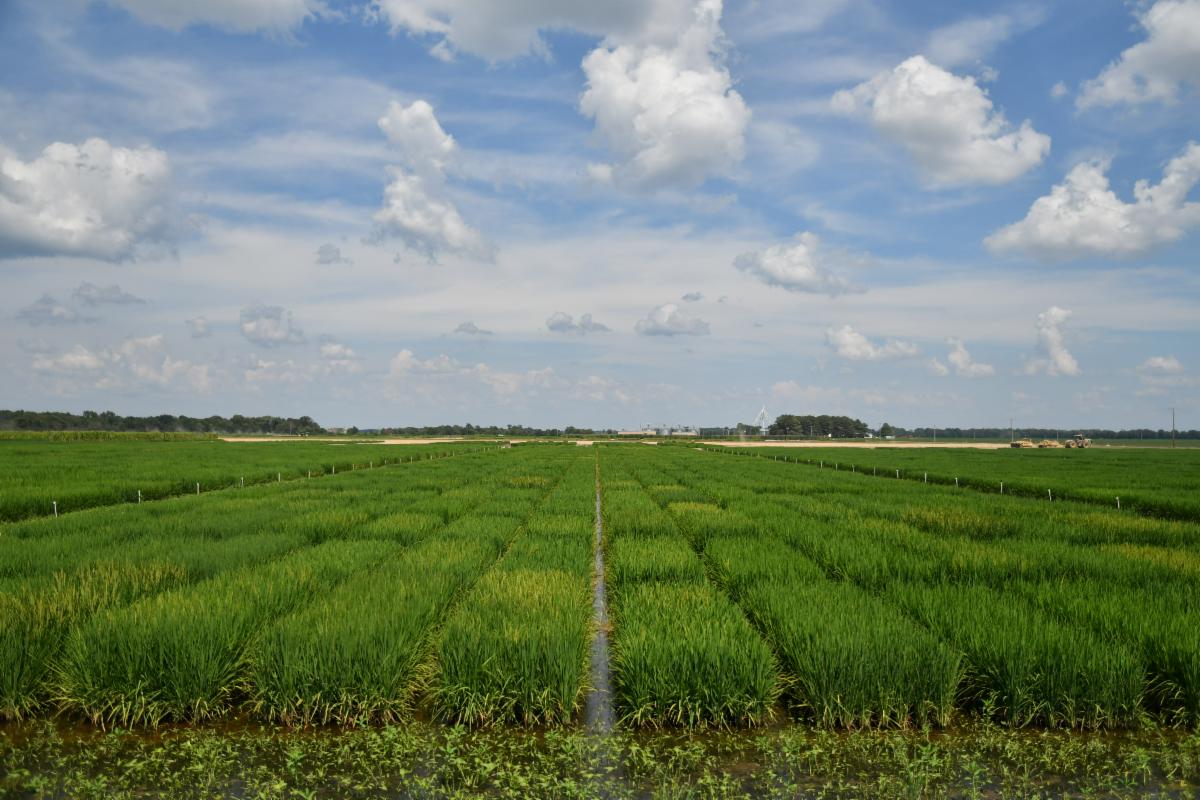
Variety Testing - Rice, Soybean, Corn, Cotton, Sorghum

Choosing which varieties to plant is a cornerstone of all crop production systems. The University of Arkansas System Division of Agriculture's Variety Testing Program provides impartial information about the adaptability and performance of varieties in Arkansas' diverse environments, thereby allowing producers to make informed decisions.


UADA Research Variety Trial Results:


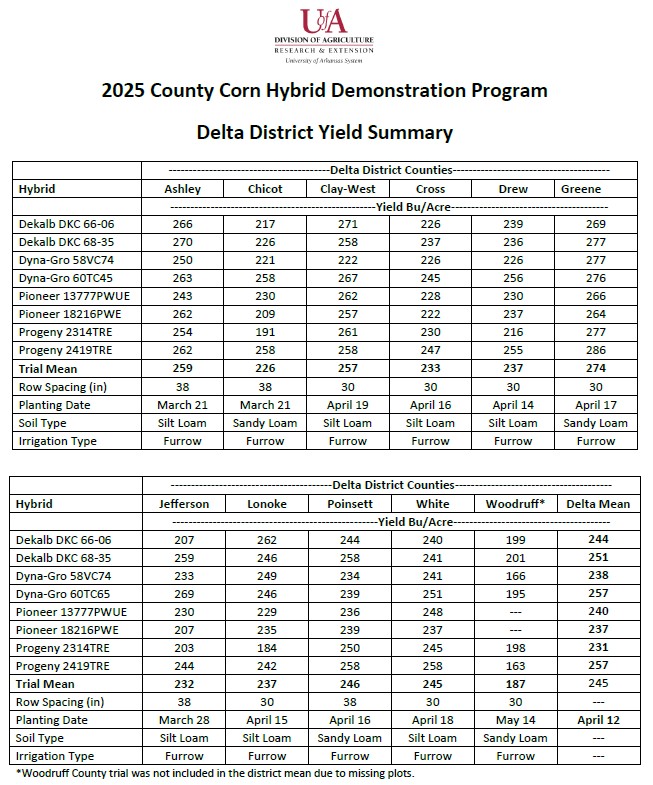
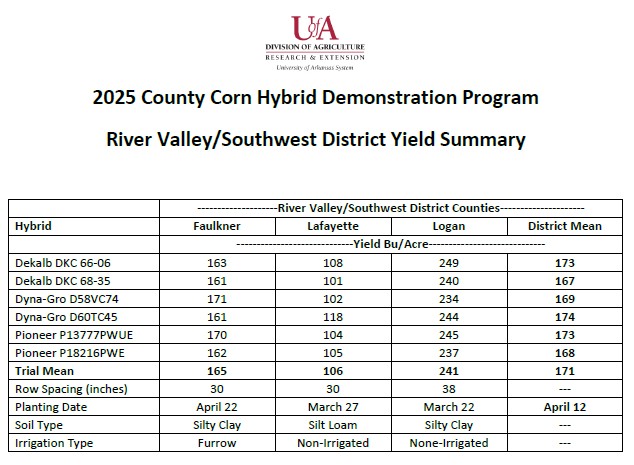
UADA Extension Variety Trial & Research Verification Results:


Updated Annual Soybean Publications Now Available

What's Included:

2025 Arkansas Soybean Update

2025 Metribuzin Tolerance Testing of Soybeans

2026 Soybean Cross Reference Guide


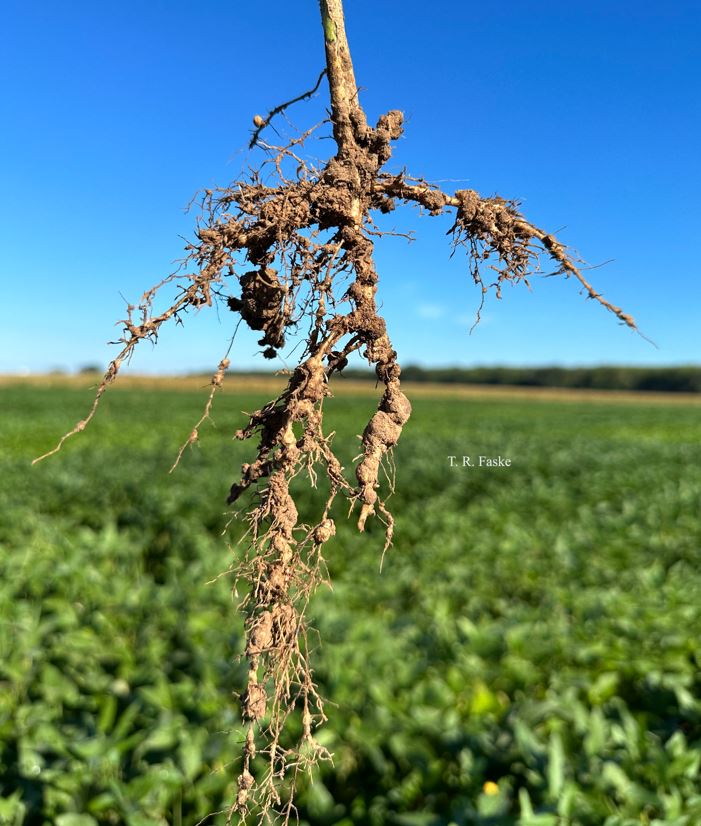
Field Performance of One Hundred Five Soybean Varieties Against the Southern Root-knot Nematode and Frogeye Leaf Spot, 2025

A comprehensive disease screening program has been conducted by the University of Arkansas System, Division of Agriculture, Extension Plant Pathology since 1990, thanks to support by the Arkansas Soybean Promotion Board.

Susceptibility and Yield Response of Sixty-nine Soybean Varieties to Frogeye Leaf Spot and Southern Root-knot Nematode, 2025

The southern root-knot nematode is a major threat to soybean production and is the most yield-limiting plant-pathogenic nematode in the Mid-South. This report summarizes the susceptibility of 69 commercially available soybean varieties to the southern RKN that are marketed as suitable for production in southern RKN fields.


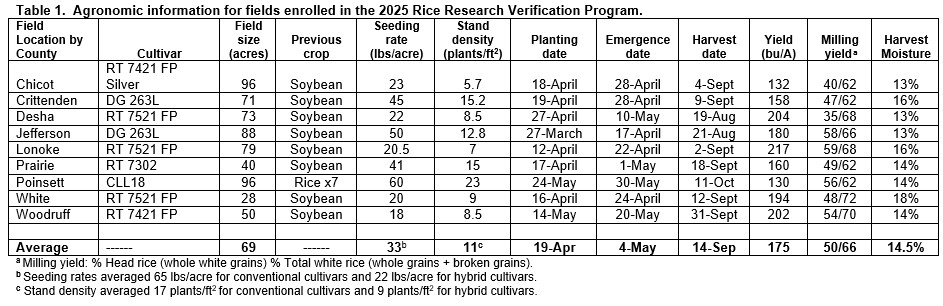
2025 University of Arkansas

Rice Research Verification Program


Economics, News, & Budgeting Tools


🎙Check out the Morning Coffee & Ag Markets Podcast. This podcast delivers weekly insights for the agriculture industry, covering everything from farm-level risk management to market volatility and production challenges.


⬅️Click on the logo for the Podcast


➡️Click here to sign up for the weekly email.


Crop Enterprise Budget | Arkansas crop budget resources

Are you a farmer looking for crop budget information? Find resources for planning budgets for your Arkansas farm.


Arkansas Crop Profit/Loss Calculator (Crop Year 2025)

This tool provides users with a summary of potential returns and losses under various price and county-specific yield combinations. We also provide returns under various land tenure situations (i.e., own, cash rent, crop share rent). Given the many market forces impacting commodity price volatility this growing season, we have updated the decision tool to provide up-to-date expected cash prices received at harvest.


Fryar Price Risk Management Center of Excellence


The Center is committed to developing an international program of scholarship embracing the University's three-fold land-grant mission of research, teaching and outreach. Our work focuses on critical risk management issues facing the food and fiber system, with particular emphasis on products and industries contributing significantly to the Arkansas economy.


Pursuant to 7 CFR § 15.3, the University of Arkansas System Division of Agriculture offers all its Extension and Research programs and services (including employment) without regard to race, color, sex, national origin, religion, age, disability, marital or veteran status, genetic information, sexual preference, pregnancy, or any other legally protected status, and is an equal opportunity institution.


Visit Us Online | www.uaex.uada.edu/counties/monroe/

Facebook  X