|
|
Navigating Excellence - Parent Center Assistance & Collaboration Team
Region A E-News
|
|
 |
“A successful man is one who can lay a firm foundation with the bricks others have thrown at him.” ~David Brinkley |
|
|
|
|
Message From Diana & Michele |
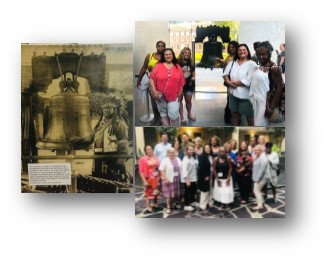
We are happy to share that 9 parent centers participated in the Military-Connected and Native American Family Convening in Philadelphia this month. We also had the opportunity to tour Independence Hall and see the Liberty Bell together. We hope you enjoy the pictures! And remember, we are here to support you in any way we can, so don’t hesitate to contact us!
|
|
|
|
Parent Information Center of Delaware (PIC of DE): PIC has operated as the PTI for Delaware for more than 30 years. Most recently, PIC has been able to expand our capacity to serve youth and young adults with disabilities and their families when awarded the F2F grant. This has opened doors for opportunities to expand our outreach and support to children and youth with special healthcare needs (CYSHCN). Our Family SHADE program awarded two mini grants to organizations with innovative projects serving CYSHCN in underserved, high need areas. Each organization received $25,000 for projects focusing on mental and behavioral health and support for families of children with autism. Check out our website to learn more.
Long Island Advocacy Center: LIAC’s Youth Leadership team is hosting a REAL Transition Virtual Youth Mentoring Series. The sessions will be facilitated by peer mentors who have experienced different types of transition and are in various stages of the process. They will explore interests and options for life after high school with the attendees. For more information check out the flyer.
|
|
|
|
Upcoming Events/Dates to Remember |
Region A Drop-In Call: The August Drop-in call will take place on Tuesday, August 2, 10:00 am - 12:00 pm. The NE-PACT Drop-in calls are on the first Tuesday of every month. Check your calendar invite for additional details. Please let us know if you have any agenda items. Join here.
COVID-19 Drop-In Call: The next COVID-19 Drop-In call will be on Tuesday, August 16th, 10:00 - 11:15 am. We will discuss what is happening in your state/territory/community, address any new developments, and identify any help you need concerning COVID-19. Join here.
National Parent Center and F2F Conference: For the first time ever we will bring together the Parent Center and the Family to Family Health Information Center networks for a national conference! We will start the morning of Tuesday, October 18th and end around noon on Thursday, October 20th. You may want to think about the possibility to stay on Thursday afternoon to visit your elected legislators to share information about your parent center. Click here for information about registering and to view the agenda information. See you there!
|
|
|
|
Non-Profit Management Resources |
Board Development Toolkit: Do you have new Board members? Is it time to start planning for succession for your parent center? Are you getting ready for strategic planning? Check out the Board Development Toolkit that is available at no charge to your Board of Directors! You can access the toolkit here.
|
|
|
|
Family-Centered Services Resources |
Motivational Interviewing: Motivational Interviewing (MI) is often recommended as an evidence-based approach to behavior change. However, definitions of MI vary widely, including out of date and inaccurate understandings. This document provides a brief summary of what MI is, what it isn’t and where to go next if you are interested in learning more about this approach.
|
|
|
|
Youth-Centered Services Resources |
From Pity to Pride: Why Disability Matters: As we close out Disability Pride month, this powerpoint can be a useful resource in helping youth explore disability identity. Check it out here. |
|
|
|
Staff Development Resources |
Unauthorized Practice of Law: Do you have new staff? Do you need to make sure that your staff are providing appropriate, high quality individualized assistance? Do you want to develop policies that are consistent with your role as a parent center and avoid the unauthorized practice of law? Then access the UPL training and tools in the www.parentcenterhub.org Workspaces section under the forum tab.
|
|
|
|
Nearly Half of Teachers Had Students Who Never Showed Up to Class Last Year: Report: Nearly half of public school teachers in the U.S. reported at least one student during the 2020-21 school year who was enrolled but never showed up for class, according to new federal data that provides one of the first glimpses from the national level of the major challenges that sidelined student learning and the types of schools they left behind. Read the report.
|
|
|
|
English Language Development Among American Indian English Learner Students in New Mexico: New Mexico’s Every Student Succeeds Act state plan sets the goal for all English learner students to attain English proficiency within five years. The Regional Educational Laboratory Southwest English Learners Research Partnership conducted this study to better understand progress toward English proficiency among American Indian English learner students. Read more. |
|
|
|
Weight-Based Bullying Linked to Increased Adolescent Alcohol, Marijuana Use: The link between appearance-related teasing and substance use was strongest among overweight girls, according to the American Psychological Association. Read more about the study. |
|
|
|
Kinship Care and the Child Welfare System, Factsheets for Families Series: Sometimes grandparents, other relatives, or family friends care for children when their parents are unable to care for them. This arrangement, known as kinship care, can occur with or without the involvement of a child welfare agency. This factsheet, from the Child Welfare Information Gateway, 2022 is designed to help kin caregivers work effectively with the child welfare system. It also includes resources, such as links to more detailed information or places to find support, to help caregivers learn about and navigate the child welfare system. Find it here and in Spanish. |
|
|
|
Choice/Charter Schools/Virtual Schools/Voucher Programs |
Beyond the Virtual Classroom: Extending the Social Presence Model to Extracurricular Activities in On-line Schools, Institute of Educational Sciences: This “social presence” framework offers research-informed strategies that have been primarily described in the context of virtual classrooms and courses. In recent years, online schools have expanded beyond the virtual classroom to offer students extracurricular activities, such as virtual clubs. In response to the COVID-19 crisis, this infographic provides an initial look at how the Social Presence Model could help strengthen these extracurricular opportunities for K-12 students, along with video examples of student clubs at Florida Virtual School, the nation’s largest state virtual school. Find it here.
|
|
|
|
Culture in Person-Centered Planning | Culture and Person-Centered Practices: Deanna Yadollahi hopes to enact institutional change and radical reimagination that will lead to more supportive and just realities. Watch the video here. |
|
|
|
Using Data for Quality Improvement: One approach to program improvement is to use data to help you learn about your program, identify areas for improvement, and set goals. Potential sources of data include your management information system, observations of your program, and feedback from staff members. Data can help to answer questions about whom you are serving, what the content of each service is, and how many services those you serve receive. What you learn may help you identify an improvement strategy to apply to your program. Then you can monitor changes and continue reviewing data to learn about how the strategy is working. This infographic presents examples of how programs in the B3 study used data from different sources to gain insights. Check it out. |
|
|
|
Discipline & Positive Behavior Supports |
New Discipline Guidance Focuses on Discrimination Against Students With Disabilities: Students with disabilities experience disproportionately high rates of expulsion and suspension, according to the most-recent data from the department’s Office for Civil Rights. In the 2017-18 school year, students with disabilities represented 13% of the total student enrollment but experienced 23% of all expulsions with educational services and 15% of all expulsions without educational services. Read more.
|
|
|
|
Communication with your Child’s School: This brochure offers specific communication skills that may be helpful to parents as they develop and maintain partnerships with their child's school. This document was originally published in May 2004 and developed in partnership with the National Dissemination Center for Children with Disabilities (NICHCY). It is also available in multiple languages such as: Arabic, Chinese, Haitian Creole, Hmong, Korean, Marshallese, Polish, Portuguese, Russian, Somali, Spanish, and Vietnamese. Find it here. |
|
|
|
National Dropout Prevention Center Releases New Practice Guide: In response to the pandemic's effect on at-risk students, schools, and graduation rates, the National Dropout Prevention Center, a division of Successful Practices Network, released The Pandemic's Effect on At-Risk Students, Schools, and Graduation Rates. The practice guide addresses pandemic-related issues and identifies opportunities for schools and districts to prepare for the growing number of students who will be identified as at risk as a result of missed, delayed, and compromised school attendance and instruction.
|
|
|
|
Early Childhood/Early Intervention |
STEMIE: Innovation for Inclusion in Early Childhood: All children have the capacity to engage in activities that teach them about science, technology, engineering, and mathematics (STEM), not just older students. Check out 5 things to know about STEM learning for young children.
|
|
|
|
Engage Every Student Initiative: U.S. Department of Education Announces Engage Every Student Initiative to Ensure Every Student Has Access to High-Quality Learning. The Initiative will help communities utilize American Rescue Plan funds alongside other state and local funds to ensure that every child who wants a spot in a high-quality out-of-school time (OST) program has one. This announcement coincides with National Summer Learning Week and will allow more students to access more programs year-round to support their academic and mental health needs. Check it out here. |
|
|
|
See, Engage, Act: Leading an Equitable Organization: Achieving equity takes a transformation of power and a clear commitment, says LaShawn Routé Chatmon, the executive director of the National Equity Project (NEP). Chatmon described her passion for equity in education and NEP’s theory of change toward building more equitable and resilient organizations. Read more here. |
|
|
|
Parenting Foster Kids with Challenging Behaviors: A Foster Care Resource Guide: Foster children may come into care specifically because they have experienced abuse or neglect. Those experiences and other kinds of trauma that may have occurred in their home, including being removed from their birth family, can and often do influence how a child behaves. Check out the guide and additional resources. |
|
|
|
Grandparents as Caregivers |
Grandparents Who Don't Help Care For Autistic Son Divide Opinion: A mother has divided opinions online after revealing she may stop her daughter spending alone time with her grandparents because they refuse to help care for her autistic brother. Read her story here. |
|
|
|
MCHB Strategic Plan: The Maternal and Child Health Bureau has a new strategic plan with a greater focus on equity for the health of women, mothers, infants, toddlers, children, and adolescents, including those with special healthcare needs. Read a four page infographic summary. |
|
|
|
Nearly 70% of homeless students in Los Angeles Unified Schools were chronically absent last year: Jennifer Kottke has worked with LAUSD homeless and foster care youth for more than 20 years — but she has never seen chronic absenteeism among these students become the crisis it did during the pandemic. See more statistics here. |
|
|
|
More than 45,000 Americans have applied to sponsor Ukrainian refugees in the U.S.: In just over a month, more than 45,000 Americans have submitted applications to resettle Ukrainians displaced by the war in their homeland as part of the largest U.S. private sponsorship program for refugees in decades, according to Department of Homeland Security (DHS) data shared with CBS News. Read more. |
|
|
|
Toolkit: Power in Friendship: Making friends can be hard. For many families of children with disabilities, the fear that their child might never make a friend is all too real. The world of "different" can feel isolated, isolating, and sometimes insurmountable. The Power in Friend Toolkit is designed for families of children with disabilities AND those with typically developing children. It provides resources and help on how to help your child build inclusive friendships. Get a copy of this great toolkit here. |
|
|
|
Juvenile Delinquency/Juvenile Justice |
ANALYSIS: Overrepresentation of Youth Minorities in the Criminal Justice System – A Sociological Explanation. “The over representation of minority youth in juvenile justice system is startling and demands an explanation.” According to the Office of Juvenile Justice and Delinquency Prevention’s (OJJDP) 2019 statistics, the number of youth in residential treatment programs has declined, but minority youth continue to make up the majority of the population (69% as listed in the report). This disproportionate impact is most prevalent in the percentage of Black youth committed to residential treatment programs (42%). Read more here.
|
|
|
|
Disability & LGBTQ+ Resource Guide: This 4 page guide is a great way to share resources with families about disabilities and the LGBTQ+ communities. It is full of links to videos, blogs, books, etc. Check it out here. |
|
|
|
The Benefits of Boredom - What kids can learn from handling more free time: It’s okay for kids to be bored. In fact, boredom helps kids develop valuable skills, says Stephanie Lee, PsyD, director of the ADHD and Behavior Disorders Center at the Child Mind Institute. For starters, it helps kids build tolerance of less-than-ideal experiences. “Boredom might not be super distressing,” she explains, “but it’s not fun. Life requires us to manage our frustrations and regulate our emotions when things aren’t going our way, and boredom is a great way to teach that skill.” Learn more. |
|
|
|
Military Families & Youth |
Military parents are choosing their transgender children over service: Some parents are leaving the military to avoid duty assignments in states that have passed harsh laws targeting LGBTQ youth. Read more. |
|
|
|
National Indian Education Association Conference: The National Indian Education Association’s 53rd annual conference will be held this year on October 5-8, 2022, in Oklahoma City, OK. This event offers an excellent opportunity for Parent Centers to outreach to Native American parents, educators, counselors and elders, as well as non-Native educators and allies. NIEA generally hosts 2000 attendees from most states. Parent Centers can apply to host an information booth. Learn more about this great outreach opportunity!
|
|
|
|
Parent/Family Engagement (and Youth!) |
Working with Parents who Have Disabilities: Researchers and professionals are increasingly aware of the needs of parents with intellectual disabilities. However, there are still significant gaps in the experiences of parents with and without intellectual disabilities. Researchers from around the world and US government agencies have found that parents with intellectual disabilities face stereotyping, stigma, unequal health outcomes, poverty, and other adverse factors. It is vital for professionals working with this population to understand the unique needs and challenges these parents face. Find out more. |
|
|
|
Immigrants and Poverty: There were a record 44.8 million immigrants living in the U.S. in 2018, making up 13.7% of the nation’s population. This represents a more than fourfold increase since 1960, when 9.7 million immigrants lived in the U.S., accounting for 5.4% of the total U.S. population. Click the link below each summary table to download the data. You can access information about earnings and income, poverty, and related facts about the US immigrant population at the Pew Research Center’s website. |
|
|
|
Remote Learning/School Reopening |
Capturing the Benefits of Remote Learning: For all the downsides of distance learning, educators, psychologists, and parents have seen some benefits as well. For example, certain populations of students found new ways to be more engaged in learning, without the distractions and difficulties they faced in the classroom. Also, the general challenges of remote learning and the pandemic brought mental health to the forefront of the classroom experience. Follow this link to read how education experts are applying lessons learned in the pandemic to promote positive outcomes for all students.
|
|
|
|
Restraint and Seclusion, and Disability Rights: Education Department Has Work to Do, Audit Finds: The U.S. Department of Education should increase its attention on preventing the underreporting of restraint and seclusion problems involving students, ensuring parents understand special education rights, and helping states provide more transparency on charter school management organizations, the Government Accountability Office says. Read more here.
Bonus Editorial on Seclusion
NJ restricts solitary confinement in prisons. Why not in schools?: Imagine leaving a boy with autism secluded in a small cement room with a window too high for him to reach, as he bangs his head against the wall, screams and cries for hours, and wets his pants. Think, too, of how it must have felt for five-year-olds hearing a kid screaming next door for 30 minutes on a regular basis, begging to be let out of that school’s quiet room. “My kindergarteners would say, ‘What are they doing to him?’ That broke my heart,” a former teaching assistant said. Read the full editorial here.
|
|
|
|
Social-Emotional Learning |
Uniting Technology and SEL to Teach the Whole Child: Social-emotional learning is seeing a surge in mentions in the educational landscape. Most recently, the COVID-19 pandemic clearly illuminated the fact that academic growth and social and emotional wellness are interdependent and that educators must take into account the social and emotional aspects of a student’s reality as they consider academic development. Check out the full article here. |
|
|
|
Five Tips For Improving Web Accessibility And SEO (Search Engine Optimization): This article looks at how you can improve your web accessibility compliance and, in turn, help your website rank higher in search engines. Read more. |
|
|
|
Transition to Adult Life/Youth |
Why Are You Proud to be Disabled: Disabled and Proud youth leader, Tatum Tricarico, created a video in honor of Disability Pride Month and the 31st anniversary of the Americans with Disabilities Act (ADA). Check out this empowering 5 minute video showing 40 individuals spanning 5 countries who share why they are proud to be disabled.
|
|
|
|
Preventing Childhood Trauma: Guidelines for Administrators and Crisis Teams: Read these tips from the National Association of School Psychologists on how administrators and crisis teams can help prevent childhood trauma.
|
|
|
|
ABOUT THE REGION A PARENT TECHNICAL ASSISTANCE CENTER
The Navigating Excellence-Parent Assistance and Collaboration Team (NE-PACT), the Region A Technical Assistance Center, provides technical assistance to federally-funded parent centers -- Parent Training and Information Centers (PTIs) and Community Parent Resource Centers (CPRCs) - NEPACT Logolocated in the states of CT-AFCAMP, CT-CPAC, DC-AJE, DE-PIC, MD-PPMD, ME-MPF, MA-FCSN, NH-PIC, NJ-SPAN, NJ-ASCF, NY-AFC, NY-CIDA, NY-LIAC, NY-UWS, NY-Starbridge, NY-INCLUDEnyc, NY-Sinergia, NY-PNWNY, PA-HUNE, PA- ME, PA-PEAL, PR-APNI, RI-RIPIN, VI-DRVI and VT-VFN. These Parent Centers are independent non-profit organizations. We also provide support to emerging parent centers and parent organizations serving families of children with or at risk of being identified as having disabilities. In addition, we work with early intervention and education agencies (local, state and federal level) seeking information regarding best practices in involving parents of children with disabilities in systems improvement.
The center activities are specifically designed to:
- Enhance the capacity of parent centers to provide effective services to families of children with special needs and to work effectively with their states to improve special education and early intervention systems; and,
- Facilitate their connections to the larger technical assistance network that supports research-based training, including educating parents about effective practices that improve results for children with disabilities. For more information click here.
|
|
|
|
|
|
|