Message from the President | |
|
Dear IDA-Oregon Community,
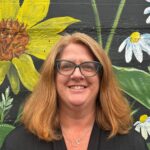
When asked to write a quick message from the president for our newsletter I admit I panicked. What could people possibly want to hear from me? Then I thought about why I am here and why I continue to volunteer to support an amazing organization. The answer is the people! My journey started with a panicked phone call to Oregon IDA about my daughter and it was answered by Lynetta Weswig. She might not know how much she changed our lives, but I will never forget. Next, we were referred to Dale Holloway who ran a support group called Reversals for our Oregon Branch and we started to finally feel like we had some answers and what to do. Then I started to serve on the board and met my hero, Judy Wright! Judy was my teacher, mentor, and friend. She is the reason I continue to serve our branch today. Judy and I were sitting in an Anita Archer workshop our branch was sponsoring and we heard her say I do, we do, you do. After that when we got frustrated with how slow change in the schools was happening, Judy would say, “Take a deep breath and channel Anita.” Then we would repeat, “I do, we do, you do.”
I challenge you to get involved, collaborate with others and you will find a great community.
I am so grateful for the people I have met through IDA. Our board members are working hard to fulfill our mission to raise awareness and understanding of dyslexia, to promote effective intervention strategies, and to support individuals with dyslexia, their families, and professionals in our community.
#UntilEveryoneCanRead
Shelbe Park, IDA-Oregon
| |
|
Understanding a Different Path to Learning
Dyslexia, often misunderstood, is not a lack of intelligence but a unique way of processing information. Individuals with dyslexia may face reading, spelling, and language processing challenges, yet they often possess exceptional creativity, problem-solving, and critical thinking strengths.
While reading may be a struggle, it's essential to recognize that dyslexic individuals often excel in areas beyond traditional academics. Their ability to think outside the box, visualize complex ideas, and approach problems from unconventional angles can lead to remarkable success in art, design, engineering, and entrepreneurship.
Understanding dyslexia as a different, not deficient, way of learning is crucial for creating inclusive environments where individuals can thrive. With proper support, such as multimodal learning techniques, assistive technologies, and tailored educational strategies, dyslexic individuals can unlock their full potential and make invaluable contributions to society.
Let's embrace the diversity of learning profiles, celebrate the strengths of dyslexic individuals, and work towards creating a world where everyone has the opportunity to shine.
| |
Upcoming Events & Workshops | |
|
|
Literacy Toolbox for Educators?
YES, PLEASE!
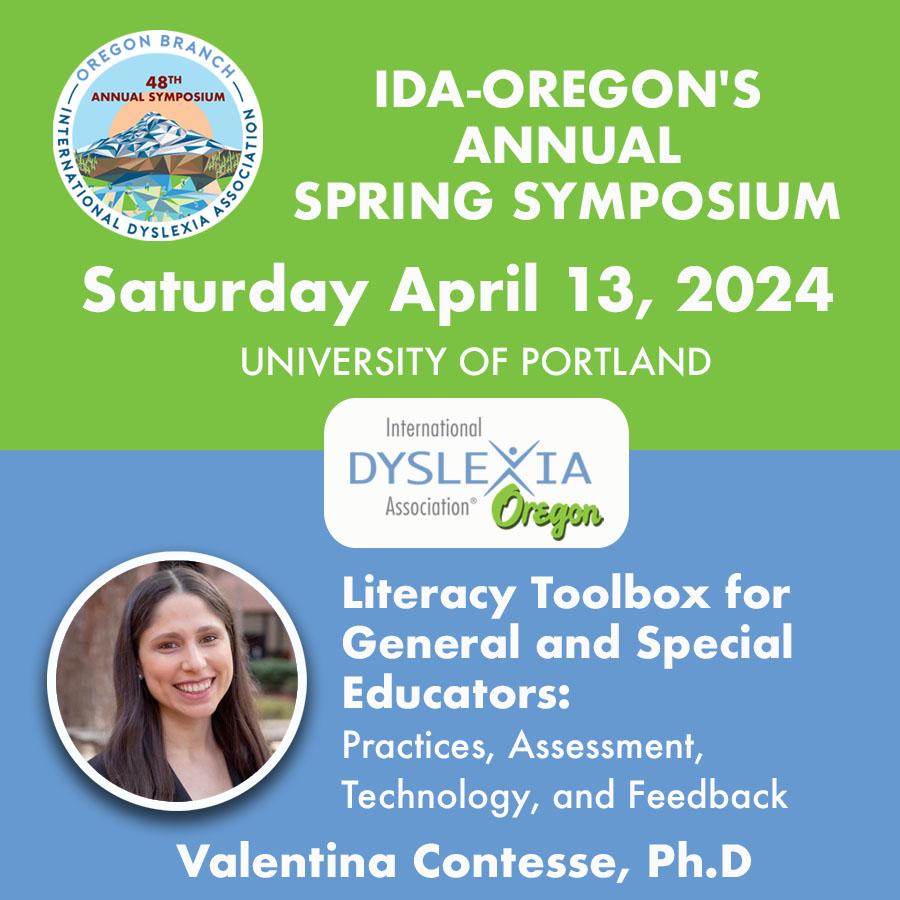
Join us at this year's Spring Symposium for an enlightening day with Valentina Contesse, Ph.D.
Dr. Contesse will delve into the literacy toolbox for general and special educators, focusing on effective practices, assessment techniques, and technology integration. You can use this opportunity to gain valuable insights into enhancing literacy instruction for all learners.
| | | |
Shining a Light on Awareness and Advocacy
Recent news headlines have highlighted the importance of dyslexia awareness and the need for greater support for individuals with dyslexia. From groundbreaking research findings to personal stories of triumph and advocacy efforts, dyslexia is gaining the spotlight it deserves in the news.
Media coverage has shed light on the latest advances in understanding dyslexia, such as brain imaging studies that reveal the neurological differences in dyslexic individuals. These insights deepen our understanding of the condition and pave the way for more effective interventions and support systems.
Additionally, heartwarming stories of students overcoming dyslexia challenges and excelling in academics, sports, and the arts are potent reminders of the resilience and potential of every dyslexic individual.
Advocacy efforts by parents, educators, and organizations have also made headlines, calling for increased dyslexia screening in schools, improved teacher training, and better access to assistive technologies. These initiatives are crucial steps towards creating a more inclusive and supportive environment for individuals with dyslexia.
As dyslexia continues to make headlines, we are reminded of the importance of raising awareness, fostering understanding, and championing the strengths and abilities of dyslexic individuals. Together, we can create a world where every individual, regardless of learning profile, has the opportunity to thrive.
| |
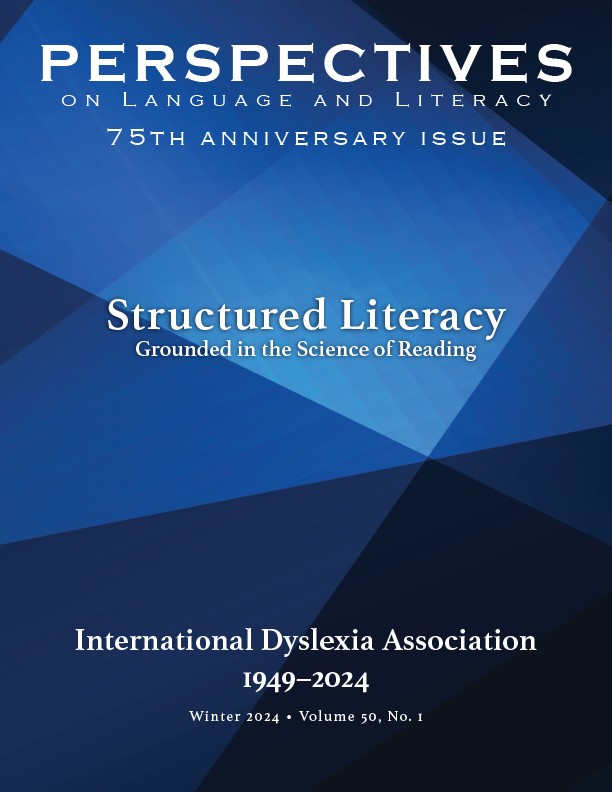
IDA Celebrates its 75th Anniversary
Legacy of Achievement & Vital Vision for the Future
We are excited to share the release of the Perspectives Special Edition focusing on the Importance of Structured Literacy! This edition is a significant milestone in our ongoing efforts to advocate for effective literacy instruction, particularly for individuals with dyslexia.
| |
|
Parent Support & Advocacy | | |
|
|
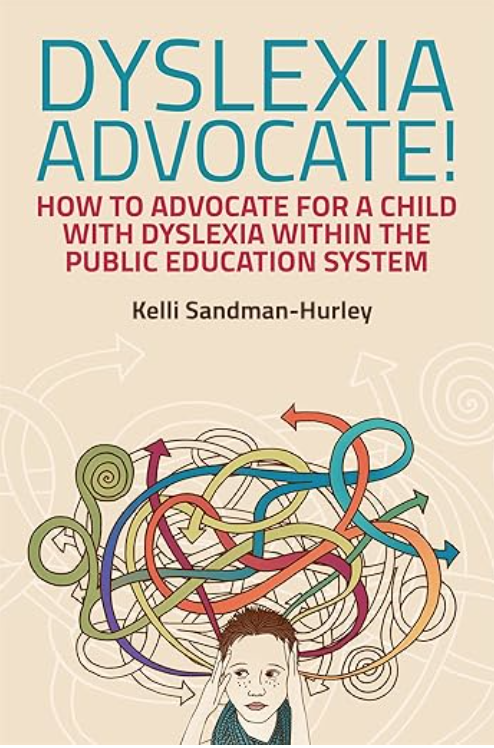
This straightforward guide provides essential information for parents and advocates to understand US law and get the proper educational entitlements for a child with dyslexia.
Using case studies and examples, this book demonstrates clearly how to apply the Individuals with Disabilities Education Act (IDEA) to the unique requirements of a dyslexic child. It offers simple, intelligible help for parents to coordinate successfully with their child's school and achieve the right services and support for their dyslexic child, up to and beyond getting an effective Individual Education Plan (IEP).
Dyslexia Advocate! is an invaluable tool for parents trying to negotiate a complex legal system to get the best outcome for their child. It is an essential guide for anyone considering advocating for a child with dyslexia.
| | |
Genetics of dyslexia: the evolving landscape
National Library of Medicine
National Center for Biotechnology Information
Abstract
Dyslexia is among the most common neurodevelopmental disorders, with a prevalence of 5–12%. At the phenotypic level, various cognitive components that enable reading and spelling and that are disturbed in affected individuals can be distinguished. Depending on the phenotype dimension investigated, inherited factors are estimated to account for up to 80%. Linkage findings in dyslexia are relatively consistent across studies in comparison to findings for other neuropsychiatric disorders. This is particularly true for chromosome regions 1p34–p36, 6p21–p22, 15q21 and 18q11. Four candidate genes have recently been identified through systematic linkage disequilibrium studies in linkage region 6p21–p22, and through cloning approaches at chromosomal breakpoints. Results indicate that a disturbance in neuronal migration is a pathological correlate of dyslexia at the functional level. This review summarizes the latest insights into the genetics of dyslexia and an overview of anticipated future developments.
| |
|
It is with great sadness that the International Dyslexia Association – Oregon Branch (ORBIDA) shares the news of the passing of our colleague, friend, and past president, Judy Wright, on Thursday, January 25, 2024. For now, as we remember Judy and the many ways she touched our lives in friendship and her professional capacity as a dedicated teacher and advocate for literacy, here are her words:
“Why was this so important to me personally? Because reading is the basis for everything in life, and ‘my kids’ needed the best chance of learning to read for success in life. These kids are bright. There is a special place in my heart for every child who struggles with learning to read and often concludes that he/she is dumb because of those struggles. I remember one child in particular–a first-grade boy–who struggled with learning the sound symbol relationships. When he finally passed the ‘test’ for all the sounds, I gave him a high five, and he replied with a grin from ear to ear, ‘Just call me Letterman’! This is what it’s all about.”
Gary and Judy have contributed more than professional service to ORBIDA and IDA. They gifted us with enthusiasm, energy, integrity, discipline, humor, and guidance; they made us their family. Due to their efforts and loyalty, IDA Oregon has been able to expand support and assistance to thousands of dyslexic children and adults in Oregon and Southwest Washington for over three decades.
Judy's family invites us to share her memorial website widely. Judy made a tremendous impact in the education community and we want to invite all who knew her to post memories, pictures, and RSVP for her memorial in July, You can access her memorial website here: https://judywrightmemorial.com/
Thank you for helping us get the word out.
| | | |
|
|
Understood.org and iHeartMedia launch “Wired Differently” radio campaign to empower the 70 million people in the U.S. with learning and thinking differences.
Understood.org is partnering with iHeartMedia to launch Wired Differently. This national radio campaign celebrates neurodiversity by creating a positive and understanding environment for people with learning and thinking differences like ADHD and dyslexia.
Some of us are wired differently. But we can all thrive with the proper support. The Wired Differently campaign guides people to understand and embrace differences.
| | | |
It's Never Too Late
An Update on Sandy and Mike
| | |
|
Sandy and Mike were in their fifties when they decided to give reading one last chance.
In 2018, Dr. Pamela Mears created a short documentary, It’s Never Too Late, which shares the heartfelt story of two Oregonians who learned to read in their fifties. This true life story of two adult siblings, Sandy Meade and Mike Herron, will inspire you and lift your spirits. With over three years of proper dyslexia instruction, Sandy and Mike are reading and writing. They share their story as they want others to know it is never too late to learn to read. In their words to their teacher, “You created a whole new world for us after all these years of feeling left out.”
When dyslexia is in your world, it’s common to feel confused, frustrated, or powerless when dealing with the written word. Learning to read is complex. It requires our brains to connect letters to sounds, weave sounds into words, and merge the words together into sentences we can read, write, and understand. Dyslexia is common, affecting 15-20 percent of the population. Dyslexia can’t be “cured” – it is lifelong. Some individuals know they are dyslexic, some do not. Some find out early in life, some later in life. Regardless, almost everyone at any stage can find support to manage their dyslexia.
Pam Mears recently checked in on Sandy and Mike and here is an update on their "reading lives."
One of the things Sandy just lit up about was letting Pam know she was getting a library card. She said, in the past, she could never have read a book in 3 weeks...and she also learned she could renew a book if she didn't finish it. She was so excited to find out there was a source for reading material open to her other than Goodwill! She said she is reading 3+ hours a day!
Sandy says she starts her day with Bible reading. She has discovered she has an interest in the Old Testament stories and no longer lets herself get bogged down by the long names. Then she moves to non-fiction, Christian women's and self-help books. She saves novel reading for the evening where she can get lost in a story for hours.
Since retiring, Mike has also discovered the library. He loves to read adventure and suspense books. Some of his favorite authors are Nelson DeMille, Randy White, Stuart Woods, and William Forstchen (expert on EMP and life without the power grid). He has lost track of the number of books he has read, but says it's close to fifty.
Thank you, Sandy and Mike for this inspiring update!
Dr. Pamela Mears is an English Language Arts TOSA (Teacher on Special Assignment) and Literacy Specialist in the Newberg School District near Portland, Oregon. She is a long-time member of the International Dyslexia Association – Oregon Branch.
| | |
Invitation
to Advertise with Us
| |
|
|
|
The significance of networking, visibility, and collaboration cannot be overstated in the professional arena. By joining IDA-Oregon, your organization will have the opportunity to connect with a diverse range of professionals, businesses, and institutions. Here are a few compelling reasons why we believe your organization would benefit from joining us:
-
Enhanced Visibility: Your organization will gain increased visibility through our marketing channels, which are highly effective in promoting professional organizations.
-
Networking Opportunities: Our organization hosts events, conferences, and workshops that provide excellent networking opportunities for professionals.
-
Promotional Opportunities: We offer exclusive advertising and promotional opportunities for our members. From featured spotlights in our newsletters to sponsored content on our platforms, we provide avenues for your organization to showcase its services, products, or achievements.
-
Collaborative Projects: By collaborating with other member organizations, your organization can participate in joint projects, initiatives, or campaigns that benefit the entire community.
This collaborative spirit fosters innovation, knowledge sharing, and mutual growth. We believe joining forces with IDA-Oregon will amplify your organization’s presence within this community and contribute to our collective advancement to work until everyone can read.
To get started, you can just complete the Google form below.
| | | |
Connect with Our Community! | |
Professional Dyslexia Network | Join the IDA-Oregon monthly discussion group, run by and for dyslexic adults. | |
Student Empowerment Group | |
Join the IDA-Oregon Student Empowerment Group. Monthly zoom meetings and in-person gatherings.
| |
Are you looking for a cost-effective way to reach a wider audience and grow your business? Look no further than our website and newsletter advertising opportunities! | |
Welcome to our 1st Community Partner, Language-Learning Connections | |
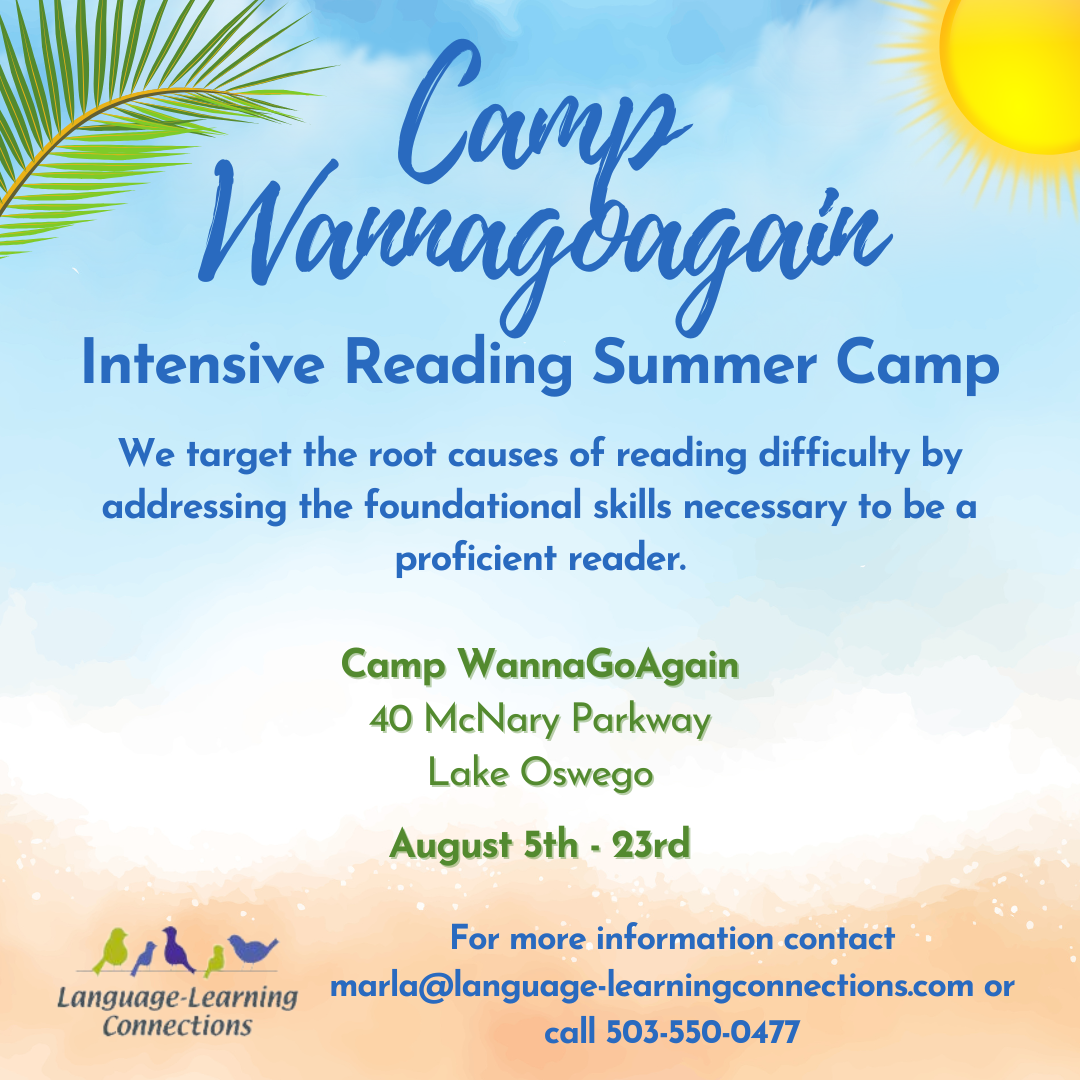
Adventure Awaits
Join Us for an Unforgettable Summer at Camp Wannagoagain!
"Immerse your CHILD in a world of words at our Intensive Reading Summer Camp! Dive deep into EXERCISES THAT WILL boost critical reading skills, foster self-esteem, and ignite a love for reading that lasts a lifetime."
| | | | | | |