|
Dear Friends committed to living and aging consciously:
Welcome to the Winter, 2026 edition of Conscious Eldering Inspiration and Resources; The Journal of the Center for Conscious Eldering. Wintertime in nature’s cycle reminds us of the importance of quiet, introspective time for rest and building up our life energies so that our inner sap may rise again in the Spring, bringing renewed selves to the task of serving a world that urgently needs our gifts and our healthy energies. Renewed people, as agents of healing in this chaotic world, bring transformative energy to what we do. Allowing ourselves to become depleted serves no one..
This Winter we wish you renewal. And may the holy-days you celebrate connect you with deep joy, hope and trust. May the articles and poetry in this Winter edition of our Journal support your renewal and help gestate seeds of possibility that will spring to life come Springtime, as your further grow into the conscious elderhood that is possible for you.
We are so very grateful for the deep commitment to your growth that is so life-supportive for you who read this journal. You give us the support we need to continue living our purpose of supporting the development of conscious elders. Thank you!!!
| | |
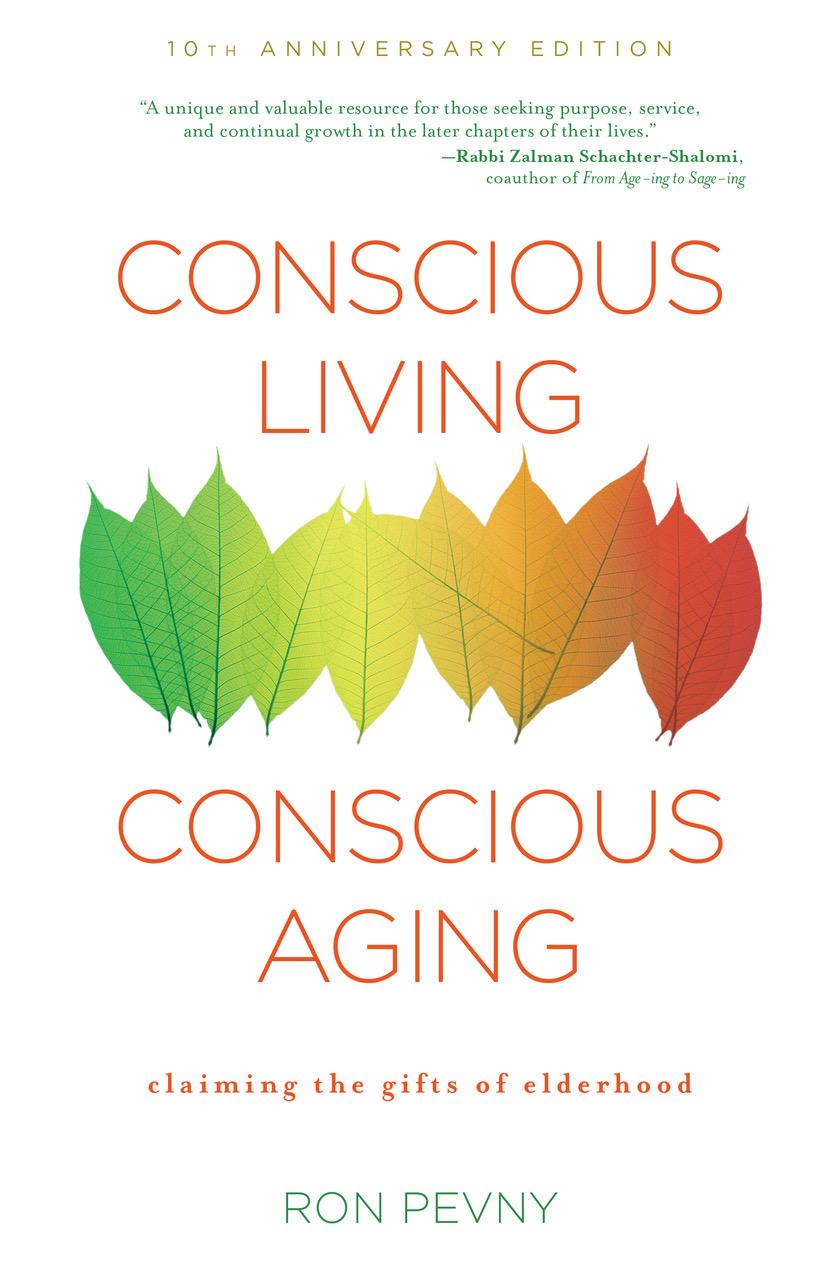
We are delighted to announce that Ron Pevny's book Conscious Living, Conscious Aging; Claiming the Gifts of Elderhood will be available as an audio-book January 4th.
Additionally, Ron and his publisher announce a 50% off HOLIDAY SALE on his book. Consider giving it as an inspiring holiday gift for a special friend of yours. For details. scroll down to the announcement about Ron's book.
| | |
Scroll down to find info about our
2026 Choosing Conscious Elderhood retreats
| | |
An Empowering Dream for Your Hero’s Journey
by Ron Pevny
Many of you reading this know that what makes Conscious Eldering distinctive is its emphasis on the journey into elderhood being an extended rite of passage from mid-life adulthood to the distinctive life stage that can be the pinnacle of our emotional and spiritual growth. The call to bring forth in our later life the elder qualities that are imbedded in the human psyche is archetypal. Supporting the emergence of their elders is how cultures around the world throughout most of known human history have recognized and nurtured the wisdom and gifts that were vital to the wellbeing of communities and their elders.
Life’s major transitions have long been marked by initiatory processes, supported by the entire community, that Joseph Campbell and others labeled as the Hero's Journey. These initiations into emerging life stages, also called rites of passage, extended over a significant period of time, usually with a challenging multi-day individual ceremony in the natural world, somewhere in the middle of the process, empowering the transition.
These journeys of emotional and spiritual growth of the members of the community were deeply challenging and involved three dynamics that are as critical now as they have always been, although this process has to unfold much differently in today’s world which has largely forgotten the natural process by which people grow throughout life.
Traditionally, those hearing their psyche's inner call to initiation were supported by their community in letting go of outgrown aspects of their former sense of identity, comfort and status. At a certain point in this process they were required to leave the village to face daunting challenges that required tapping into heretofore unrealized strengths, wisdom and gifts. And then they returned to community as newborns into their new life stage, with commitment to learning how to bring changed, empowered selves to serve the greater good.
The period of time alone in nature away from the village is often referred to as a rite of passage, but in actuality a successful passage was, and still is, defined by the entire three-dynamic process. The time alone living in-between an old sense of self and a new identity was designed to amplify and empower the unfolding transformation.
Traditionally, not every initiate was successful in their Hero’s Journey. If it were safe and easy, no real growth could happen. And today, in our vastly different world where there is little to no societal support for this journey, relatively few recognize the call and undertake the challenging work that true personal transformation requires.
But for those who do feel called to their Hero’s Journey into a conscious elderhood, I have a dream to share which can make a big difference in how you approach this initiation.
Way back in 1980 I was apprenticing with Steven Foster and Meredith Little, recognized as the “grandparents of the contemporary wilderness rite of passage”, to become a guide of such initiatory experiences. My apprenticeship included participating in four wilderness vision quests, with increasing responsibilities. These quests, in Death Valley, each involved three days and nights in solitude, fasting and facing the daunting outer and inner challenges that usually arise.
On my second quest, in the time leading up to the, solo, I was filled with trepidation. I felt inadequate to the task and opportunity ahead. I didn’t think I had the strength, wisdom or spiritual qualities to succeed in breaking through very old personal blocks and limitations so that I could receive the strength and spiritual connection needed to guide others on their rites of passage. I carried many disempowering inner images of how I should be able to live spiritually and heroically for three days and nights, and was very frightened of failing.
Then the night before we all were to leave the little questing community to go alone into the desert, I had a dream that shook me to the core as it empowered me to own and embrace my calling with confidence in my own unique path to growth, gifts and authenticity. I awoke with a strong feeling that this dream was not only for me, but was also for all those whom I would guide through their own passages. Since then, I have shared this dream right before the solo time on every vision quest I led or, for the past 20 years, on every Choosing Conscious Elderhood retreat I have guided.
I share it with you so that, whether you choose to experience a retreat or quest, or to do the inner work of initiation into elderhood without the support of such ceremonies, this dream can help you remember what your Hero’s Journey is truly about. Here is the most important dream of my life:
I am waking up from restless sleep knowing that a big, highly significant test awaits me that day. I am filled with feelings of inadequacy. It all feels too daunting. I tried my best but didn’t prepare well enough anyway. I have heard from people wiser than myself about the beautiful fruits of passing the test, but I fear there is no way I can succeed at this challenge that is so important to my future.
I manage to get up and slowly head to the test site. On my way, I see several people already leaving the test site, and I start berating myself for not even being able to get to the test on time. I finally make it to the door. I walk in and to my surprise am greeted by a short, elder Buddhist woman who radiates kindness and wisdom. I’m expecting her to give me a long, difficult test. But instead she hands me a single sheet of paper. On it there are only these seven words: Pray for the Welfare of All Beings.
I believe this message is the essence of conscious eldering, and the core practice of the inner work that leads to such an elderhood. It is the reason for undertaking this journey. It is the reason for making the counter-cultural decision to embrace the challenges, opportunities, inner work, growth, and call to serve community and planet that are the essence of elderhood. We choose elderhood, not just for ourselves, but so that our lives can be a living prayer for the welfare of all beings.
| | |
Grief as Companion: The Inner Work of Conscious Ageing
by Martina Breen CSL
“A threshold is not a simple boundary; it is a frontier that divides two different territories, rhythms, and atmospheres. To enter a threshold is to cross into a new world.”
—from To Bless the Space Between Us by John O’Donohue
There comes a time in life, and particularly with age, when grief is no longer an occasional visitor — it becomes a regular companion, shaping how we see, how we feel, and how we love. In the second half of life, grief is not only about death; it is about the countless endings that we have experienced, the losses that deepen us and refine us.
In western culture, grief is often treated as something to fix or to move through quickly. But what I have learned is, that those of us walking the path of conscious ageing know that grief is not a problem to solve — it is a sacred visitor to be welcomed.
Nature teaches us this again and again. At this turning of the year, there is a particular stillness in the land — the leaves have fallen, the air sharpens, and the earth has begun her slow long exhale into rest. In Celtic imagination, every ending is a threshold — a caol áit, a thin place where worlds touch. These thresholds are not limited to one season; they echo through every chapter of a life — especially in times of loss, endings, and the quiet unravelling’s of ‘what once was’.
When something ends — a relationship, a vocation, a phase of life — we stand between stories; one has ended and we have not yet grown into the new one. In elderhood, when so much is being surrendered — identities, roles, relationships, physical capacities — it is tempting to rush toward the next beginning, to fill the space. Yet the work of elderhood calls us to linger in the in-between, to honour what has been and to wait with patience and trust for what is emerging.
As Elders, we are called to meet these winter thresholds consciously. Each time we say yes to something new, we must say no to something else — and that no is a little death: Elderhood invites us to honour these little deaths, not rush past them.
Loss has been a lifelong companion for me— arriving first when I was too young to understand its language, and returning again and again through the seasons of my life. My first experience of death occurred when I was 13 when my grandfather passed. Then, at 21, my first child, Jonathan, lived only a short time after birth — a tiny life that reshaped mine forever. One week later, my father died; and later, my mother left this Earth when I was 42, just nine months before the birth of my youngest son.
Some year later, my childhood friend and the father of three of my sons passed— only four weeks after his 50th birthday. Whilst we were separated a number of years; the soul connection you have with your first love never dies. In these past few years: I have said goodbye to two of my precious sisters and then my brother and sister-in-law, who passed within 6 days of each other. Such losses run deep and leave their mark.
And yet, as Francis Weller, in The Wild Edge of Sorrow, writes; “grief and gratitude are two sides of the same coin.” They may feel like opposites, but they arise from the same source: “LOVE”. When we allow ourselves to grieve fully, we allow ourselves to affirm how deeply we have loved.
To age consciously is to live with a heightened awareness of impermanence. The roles that once defined us — parent, partner, professional, caregiver — they all evolve or fall away. Our bodies, once obedient to our will, begin to speak a new language and change. Loved ones die. Dreams we once held dear fade away into memory. These are the visible losses. But beneath these losses are more subtle ones: letting go of old definitions of ourselves, loosening our hold on how things ‘should’ be, and gradually outgrowing the version of ourselves we once thought we’d be forever!
have come to trust that grief is not something you ‘get over’, nor does it ‘leave us’; it reshapes us. It is not a darkness we enter and exit; it becomes part of landscape of our Soul — shaping us into vessels of compassion. The task is not to overcome grief, but to let it open your heart wider. For as the elders and mystics have long taught, when we learn to die before we die, we discover that every ending — whether a relationship, a role, or a breath — is practice for surrendering into life itself. This is not poetic language; it is lived truth. Because the more intimately we walk with death, the more vividly we experience life. We learn to appreciate the ordinary moments, we forgive with greater ease, we more easily release what no longer serves, we learn to let go — not as a punishment, but as a way to free ourselves from suffering.
I often say in my workshops that we practice dying many times before the body’s final death. Each ending, if met with awareness, becomes rehearsal for the great letting-go that awaits us all. To live close to this truth is not morbid; it is clarifying. It calls us to presence. It teaches us gratitude. It invites in us the humility to trust life’s larger unfolding.
Irish author, Michael Kearney is a medical doctor who has worked for over 40 years in hospice and palliative care in Ireland and US and Canada. In his book, Mortally Wounded, he argues that people can “learn to die well,” even when cure is no longer possible. By tending to “soul pain” (fear, shame, isolation, unresolved loss), not just physical suffering, dying can become a process of healing, depth, and inner transformation. Then, grief becomes not something to endure, but something that shapes us into wise elders — spacious, compassionate, and awake to the preciousness of every breath.
Ways to allow grief become your inner teacher
· Make space for grief – don’t rush it. “Grief is a slow conversation that unfolds over time” (F. Weller)
· Tend to the Soul Pain – not only emotional pain. “Grief becomes our teacher when we allow it to reveal our deeper fears and unfinished business" (M. Kearney)
· Grief needs witnessing - bring it into the community. Grief becomes medicine when held within ritual or community or Anam Cara companionship (J. O’Donohue)
· Let grief teach you how to die. Grief prepares the Soul for morality. (S. Levine)
“Grief is the one companion who walks with us, not only to show us the way home,
but also to make us pay attention to the way we have travelled.
—from David Whyte; Consolations
Here are valuable resources for the topic of grief:
Weller, Francis. The Wild Edge of Sorrow: Rituals of Renewal and the Sacred Work of Grief. North Atlantic Books, 2015.
Kearney, Michael. Mortally Wounded: Stories of Soul Pain, Death, and Healing. Scribner, 1996.
O'Donohue, John. Anam Cara: A Book of Celtic Wisdom. HarperCollins Publishers, 1997
Levine, Stephen. A Year to Live: How to Live This Year as If It Were Your Last
Whyte, David. Consolations: The Solace, Nourishment and Meaning of Everyday Words. Many Rivers Press, 2015
Kearney, Michael. Mortally Wounded: Stories of Soul Pain, Death, and Healing. Scribner, 1996.
Whyte, David. Consolations: The Solace, Nourishment and Meaning of Everyday Words. Many Rivers Press, 2015
Martina Breen, whose home is Ireland, is a retreat guide for the Center for Conscious Eldering, a Gestalt Psychotherapist, Spiritual Companion, and Facilitator of “A Sacred Invitation: A Year to Live”, a year-long journey starting in January 2026. To learn more about Martina and “A Sacred Invitation”, visit her website www.martinabreen.ie and https://martinabreen.ie/workshops/a-year-to-live-a-journey-toward-freedom-hope-spiritual-awakening
| | |
Reclaiming Your Role As Mentor
by Melissa Richardson
As we get older, many of us look for ways to contribute. For elders, mentoring is one of the most rewarding and purposeful roles we can play. It’s how we turn our lived experience into something that matters beyond us —how we steward wisdom, not just accumulate it
But some elders are reluctant to lean in to mentoring. They associate being a mentor with doling out advice. This is not wrong—it’s just a very narrow view of what it means to be a mentor. So, they miss out on one of the most important and purposeful roles we can play.
Today, there are many definitions of mentoring. EMCC Global (the European Mentoring and Coaching Council, a global organization despite the name) defines mentoring this way:
"Mentoring is a learning relationship involving the sharing of skills, knowledge and expertise between a mentor and mentee through developmental conversations, experience sharing, and role modeling. The relationship may cover a wide variety of contexts and is an inclusive two-way partnership for mutual learning that values differecs."
We can think of mentoring as a relationship in a formal sense, where there is a mentor and a mentee (the recipient of mentoring) with clearly defined roles and expectations. I’ve participated in many mentoring programs and still enjoy ongoing contact with many of the people I have been matched with. But like me, you have probably accumulated several mentees through your life, some of whom may not even realise that they were being mentored. Perhaps intuitively, you adopted a mentoring style that meant you were walking alongside them, helping them find their own answers instead of telling them what to do.
I’ve spent three decades researching mentoring, educating and teaching mentors and mentees the art of mentoring. I’ve come to understand that how you are being has far greater impact than what you do or say as a mentor. You can learn the skills of listening, asking good questions, guiding and respectful challenging, all of which masterful mentors do. I can teach you when to hold back on advice and when to share a story instead. Techniques and tools have their place, but they can never take the place of genuine human connection. It’s the mentor’s presence—their way of being, their mindset, the quality of attention they bring—that creates the fertile ground for growth to the person being helped.
In my research, people who were described as great mentors shared these qualities— they were:
· Curious
· Warm, empathetic and approachable
· Humble
· Authentic
· Self-aware
· Trustworthy
· Inspiring
· Present
· Patient
Elders who mentor do more than transfer knowledge; they model a way of being—calm, compassionate, and unhurried. In a fast, fragmented, unpredictable world, that presence itself is healing.
Mentoring was a vital function of elders in ancient cultures. Grandmothers were often the primary storytellers, passing down myths, legends, and family history. This role helped preserve cultural identity and values across generations. They taught young people essential life skills and were educators, leaders, and bridges to cultural and spiritual heritage. Their wisdom and guidance shaped not just families, but entire communities.
Grandfathers played a crucial role in mentoring young men, teaching them how to navigate adult responsibilities, leadership, and societal expectations. In some cultures, grandfathers led or participated in rites of passage, such as coming-of-age ceremonies, to prepare boys for manhood.
Today, we’ve lost many of these traditions, leaving younger generations to navigate critical life transitions alone. Young people are adrift, with soaring rates of anxiety and depression. Many of them lack the grounding presence of elders to anchor them. I fear for our young.
Answer the call to mentor
In her 2023 book Who Do We Choose To Be?, Margaret Wheatley said “This is the Age of Threat, when everything we encounter intensifies fear and anger. In survival mode, we flee from one another, abandon values that held us together, withdraw from ideas and practices that encouraged inclusion and created trust in leaders. And, most harmfully, we stop believing in one another."
As mentors we can guide, role model, inspire, and lead young people to keep believing in themselves and one another. I believe it’s time to reclaim the elder mentoring role. Younger generations need us. We can help them prepare for what many now believe will be a turbulent and challenging future.
Start with grandchildren
You can volunteer as a mentor in a mentoring program for youth, but a great place to start is with your own grandchildren, and, if you don’t have grandkids, then perhaps by mentoring other young people in your extended family. Adopting a mentoring style with grandkids means:
1. Finding ways to be the solid, reliable person that the grandchild wants to talk to.
2. Creating learning opportunities through demonstration of skills, sometimes in the moment.
3. Guiding through sharing of experiences and stories.
4. Giving a grandchild a sense of where they fit in the family by explaining who extended family members are and how the child fits, belongs and is special.
5. Walking the talk—showing grandchildren what they believe in, not just talking about it.
6. Helping to give grandchildren a sense of perspective—to see the bigger picture that an elder can see through the wisdom of age.
7. Helping grandchildren grow in self-confidence, to trust their own decision-making and to tread their own path, no matter what friends or social media may encourage.
8. Being a sounding board for ideas the grandchild wants to develop.
9. Encouraging grandchildren to try new things and strive for what’s important to them.
10. Being curious and asking questions that encourage reflection and develop critical thinking.
You may have noticed that the definition of mentoring I offered includes the concept of two-way learning. There is significant reward in mentoring grandchildren—not just watching them develop and grow but learning from them as well.
The unique benefit of mentoring in the family
I mentioned earlier that a great many young people today lack the grounding presence of elders. In modern life, we are disconnected from the very things that used to anchor us—community life, family and cultural traditions, the natural world. I advocate for elders to take a mentoring approach with their grandchildren or young family members because they are in uniquely positioned to pass on family traditions, values and stories. You may be surprised to learn that knowing one’s family history is a protective factor for wellbeing, contributing to resilience, higher self-esteem and lower anxiety. This is because family stories expand our sense of self to a multi-generational one—we understand that we come from the kind of family that would do X, Y or Z.. Family stories help people see where they fit in the timeline and gives a sense of belonging.
So, embrace your inner mentor. Don’t wait to be asked. It’s never too early or too late to start. Nudge your approach with young people towards a mentoring style, one step at a time. You’ll be so glad you did.
Melissa Richardson is an Australian writer, researcher and internationally-recognized specialist in mentor training and mentoring program design. With her eldest son, she co-founded Art of Mentoring, which today is one of the world’s leading mentoring software platforms. With post-graduate qualifications in counselling, organizational coaching and coaching supervision, she is currently writing a book for grandparents, provisionally called, 12 Things Your Grandchildren Will Need to Thrive: The Roots And Wings Guide To Mentoring the Next Generation. She can be reached by email at melissa@melissa-richardson.com or through her website https://www.melissa-richardson.com
| | |
The Empowering Archetypes of Elderhood
by Robert Wood
Many first nation peoples embrace the Medicine Wheel as a symbolic map of human life. They teach that the journey of our lives begins in the East, on the righthand side of the wheel, usually associated with yellow, representing new beginnings, Springtime, morning, sunrise, and childhood. We then travel on our lives’ journeys to the South, at the bottom of the circle, usually red but sometimes green, signifying Summertime, noon, adolescence, fun and carefree. Next, we progress to the West, on the lefthand side of the wheel, represented as black, symbolizing Autumn, evening, sunset, adulthood, mystery, the beginning of the Hero’s Journey. Finally, we arrive at the top of the wheel in the North: white, winter, midnight, elderhood and wisdom.
The Medicine Wheel uses these symbolic ideas to help us find meaning in the various stages of our lives. Most humans will intuitively understand these symbols and feel a connection to the concepts they represent. Such universally understood symbols are referred to as archetypes. Carl Jung taught that the source of this universality is the collective unconscious. All human beings have a connection in their own unconscious to a part of the unconsciousness of the collective of all human beings who have ever existed. At some level, often a level we do not consciously process, archetypes have meaning to us, a meaning that was first understood eons ago by thinking humans and has progressed and evolved since then.
Most of us reading this newsletter are in the North of our lives’ journeys. This brief article explores the role of archetypes in the lives of us who find ourselves in the Winter of our lives. There is archetypal meaning in the symbols mentioned above associated with the North direction of the Medicine Wheel; however, I would like to focus on some additional, specific archetypes we encounter in our Elderhood: the Sage, the Shadow, the Fool and the Inner Child. As soon as you read these words you likley have ideas pop into your head about what these archetypes represent. Let’s explore together how those inner dynamics may be helpful to us as we negotiate our Elderhood.
The Sage is likely the first archetype that one associates with Elderhood. We who have reached this point in our lives have certainly had a myriad of experiences from which we have learned. Some of those lessons came at the cost of pain and suffering. We may be able to advise younger people about the wisdom we have gained through experience so that they can better negotiate the challenges in their own lives. Above, I mention the Hero’s Journey in reference to the West direction of the Medicine Wheel. The Hero’s Journey, the basis for most myths according to Joseph Campbell, involves the essential elements of receiving the calling, instigating the departure, enduring trials, obtaining a boon and returning to share that boon with others By the time we reach the North of our lives’ journey, most of us have experienced at least one Hero’s Journey. We have boons to share with others—lessons learned in life that can help people on their own life’s journey. We do not complete the Hero’s Journey without this last step: imparting our boon (wisdom) to others. Sages are returned heroes with an obligation to share their boon of wisdom. Embodying this archetype can provide someone in the Winter of their lives with a necessary sense of purpose and be a valuable resource for their people, their community.
Jung also taught that each archetype has a Shadow. A dark side to the power and strength the archetype represents. We often, unconsciously or consciously, try to hide our own Shadow aspects. To Jung, self-actualized individuals have integrated (recognized and acknowledged) their own Shadow aspects. It is particularly important that as Elders we integrate our Shadows and not try to hide them from ourselves. This integration will result in a more authentic existence, reduce internal conflict, and allow us to bring more wholeness to our interactions.
As an example of Shadow let’s explore the Shadow side of the Sage. Sometimes as we attempt to share our wisdom we can manifest as the rigid ed authoritarian who is overbearing, judgmental or overly critical. We may appear to be clinging to the past with no appreciation for the current situation in the world. We can recognize these traits within ourselves and be cautious of how our egos, rather than our souls or hearts, may be driving our sharing of wisdom. No one wants to feel like they are being preached to; rather, they appreciate some heartfelt advice and insights from someone who has experienced and learned from a lot of life.
The Fool (sometimes called the Trickster) and the Inner Child are two archetypes that may help us ensure that we do not get caught up in the Shadow aspects of the Sage. The Fool introduces chaos and humor into situations and may help us Elders to let go of being overly serious or dogmatic. I think of the delight my six-year-old grandson experienced when I feigned surprise and shock upon “discovering” a Brussels sprout he had (not so subtly) hidden in my Thanksgiving pumpkin pie. Although I’ll admit I felt sightly disrespected, I chose to play the Fool who had been tricked. I believe that choice strengthened my bond with my grandson and may make him more receptive to insights I undoubtedly will share with him in the future. We can all think of times when a little humor and making light of ourselves, or not taking ourselves too seriously, may be the right archetypal behavior to adopt in the moment.
The Inner Child is that part of us that remembers and connects to the innocent part of us that existed in the South of our lives. It is especially helpful in our later lives to connect to these memories and feelings to refresh us with the hope and aspirations for life that we once had and need now to help sustain us. Such a connection will also provide us with empathic understanding of those who can benefit from our Sage wisdom.
As Elders in the North of our lives, we are returned Heroes with a helpful perspective on life that we have an opportunity to share as Sages. In the role of Sage, we will be mindful of its Shadow side and try to temper the wisdom we impart with Foolish humor and chaos. We will also stay connected to our Inner Child to flavor our advice with the hope and joy that still lives in us and is necessary for our wellbeing.
Robert Wood is currently a part-time core faculty member a Sofia University (formerly The Institute of Transpersonal Psychology) after serving for seven years as the Chair of Transpersonal Studies. His interest centers on ecopsycholgy, modern wilderness rites of passage, and archetypal psychology. He may be contacted at robert.wood@sofia.edu
| | |
Remember
by Joy Harjo in How We Became Human: New and Selected Poems: 1975-2001
Remember the sky that you were born under,
know each of the star’s stories.
Remember the moon, know who she is.
Remember the sun’s birth at dawn, that is the strongest point of time.
Remember sundown
and the giving away to night.
Remember your birth, how your mother struggled to give you form and breath.
You are evidence of her life, and her mother’s, and hers.
Remember your father. He is your life, also.
Remember the earth whose skin you are:
red earth, black earth, yellow earth, white earth, brown earth, we are earth.
Remember the plants, trees, animal life who all have their
tribes, their families, their histories, too. Talk to them, listen to them.
They are alive poems.
Remember the wind. Remember her voice. She knows the origin of this universe.
Remember you are all people and all people are you.
Remember you are this universe and this
universe is you. Remember all is in motion, is growing, is you.
Remember language comes from this.
Remember the dance language is,
that life is.
Remember.
May I Know
A Prayer by Lilly White
May I know love and cherish it. May I know sorrow and embrace it.
May I know happiness and be enchanted. May I know forgiveness and feel it.
May I know poverty and heal it.
May I know richness and give it away.
May I know wisdom and seek it.
May I know music and dance it.
May I know despair and enter it.
May I know heaviness and walk through it.
May I shed tears and feel empty.
May I know joy, so that I can shine.
May I know darkness so that I can pray.
May I know pain so that I may heal.
May I know shadow so that I become light.
May I know life so that I may
die into your arms, everlasting Spirit.
The Privilege to Refuse
Our Flowering
by David Whyte
I look out
at everything
growing so wild
and faithfully beneath
the sky
and wonder
why we are the one
terrible part of creation
privileged
to refuse our flowering...
| | |
Belonging
by Rosemerry Wahtola Trommer
And if it’s true we are alone,
we are alone together,
the way blades of grass
are alone, but exist as a field.
Sometimes I feel it,
the green fuse that ignites us,
the wild thrum that unites us,
an inner hum that reminds us
of our shared humanity.
Just as thirty-five trillion
red blood cells join in one body
to become one blood.
Just as one hundred thirty-six thousand
notes make up one symphony.
Alone as we are, our small voices
weave into the one big conversation.
Our actions are essential
to the one infinite story of what it is
to be alive.
When we feel alone,
we belong to the grand communion
of those who sometimes feel alone—
we are the dust, the dust that hopes,
a rising of dust, a thrill of dust,
the dust that dances in the light
with all other dust, the dust
that makes the world.
Awakening is Messy
by Chelin Harkin
From the book Wild Grace
Awakening is messy.
You don't transcend into some paradisiacal, elitist inner garden—
It doesn't perfect you.
You first come into
all the reasons you've so wanted to stay asleep. And there are many good reasons.
To awaken, really, is to begin to feel.
Awakening is bit by bit coming out of denial
around all the reasons you've needed to wield that terrible tool of othering
because so much is unbearable inside of our own self.
It is diving into the cracks in our hearts
rather than mortaring them.
It does not look like being perfectly empowered, seamlessly composed –
It's to commit with all your heart to no longer take out your helplessness
on anyone else.
Awakening has nothing to do with stern, stoic spirituality.
It has nothing to do with finally being aloof enough to not be impacted by the gifts of your feelings.
Awakening doesn't come from spiritual mastery defined as overcoming
enough of our shortcomings.
It is found in doing our fumbling best to grow into arms strong and loving enough to hold and hug our aching humanity.
The myth that awakening looks anything like spiritual perfectionism is perhaps the best sleeping pill. Awakening is the at times compass-less and often inglorious inner odyssey toward the rough ruby of all that is bruised and true in our hearts.
Awakening isn't only for special people.
We're all on our way
toward coming out of the sleep cycle.
| | |
Upcoming Conscious Eldering Programs
Retreats
We are pleased to announce three Choosing Conscious Elderhood retreats in 2026. We will, of course, return to magnificent Ghost Ranch in New Mexico for our annual Spring and Fall retreats and in early May we will return to Hope Springs in the forested foothills of the Appalachians in Southern Ohio where we presented this retreat this past Spring. We are also intending to find more opportunities to present our inspiring weekend workshops and one-day introductory programs. If your organization would like to sponsor one of these, please be in touch.
Choosing Conscious Elderhood
May 4-10 at Hope Springs Institute Retreat Center in Southern Ohio
May 17-23 at Ghost Ranch, New Mexico
September 14-20 at Ghost Ranch, New Mexico
Please consider joining us if you seek an empowering vision for your elder chapters, tools for helping make that vision reality, and the warmth of a supportive community of kindred spirits. Our programs provide a powerful opportunity to have your idealism acknowledged, your hope rekindled and your dreams for a vital, passionate elderhood supported? They offer you the wisdom of skilled guides and the heart-and-mind-opening energy of the natural world, to open you to the rich possibiities of your later-life chapters--for growth, purpose, spiritual deepening, and giving your elder gifts to support a healthy society and planet.
If you need financial assistance to participate in a Choosing Conscious Elderhood retreat, please contact us. We have a small scholarship fund. And if you are in a position to contribute to this fund, we would love to hear from you.
| | |
For Organizations, Faith Communities, etc:
We are available to present our highly impactful weekend workshops or custom designed programs for groups who would like to sponsor one in their area.
Contact us to explore possibilities.
for details on our programs and registration information, please visit
www.centerforconsciouseldering.com/events
| | |
A Holiday Gift Suggestion
Ron Pevny and his publisher announce a SALE on his book!. Until the end of January it is available through Beyond Words Publishing for 50% off the cover price. With this discount we will still generate more proceeds to support our conscious eldering work than are available to us through your purchasing this book from other sources. We encourage you to gift Ron's inspiring book this holiday season to someone important to you.
To purchase Ron's book from Beyond Words Publishing, use this link:
https://beyondword.com/products/conscious-living-conscious-aging-10th-anniversary-claiming-the-gifts-of-elderhood
| | | |
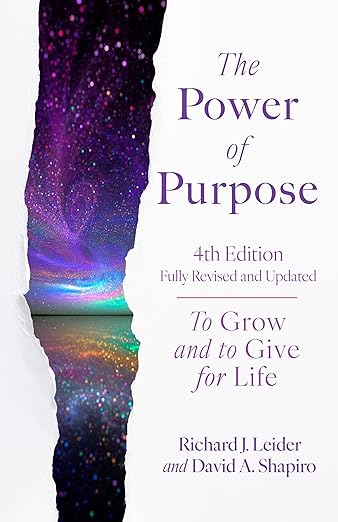
The Power of Purpose, first published in 1997, is considered by many to be the premier contribution to our understanding of the critical role purpose plays in human wellbeing. Most of us who teach and write about purpose have learned much from Richard Lieder and David Shapiro, and their insights, for which we are grateful, are certainly woven throughout our conscious eldering work. In a conversation with Leider recently, focused on what scientific research has learned in the past two decades about how purpose relates to human physical and cognitive health, I learned about this new fourth edition of the book, which consists of nearly 40% new material gleaned from many years of research and of inspiring people around the world.
I purchased it immediately and am finding my understandings deepening and my eagerness to share about purpose stronger than ever. The essence of conscious eldering is commitment to finding and living with purpose, and The Power of Purpose filled with stories and practices, is one of the three books that have most influenced my work.
Ron Pevny.
| | | |
Last year Ron Pevny was asked to present a webinar for Sage-ing International's World Wisdom Traditions series. Ron's webinar was titled "Conscious Eldering: The Hero's Journey Into Elderhood."
You can watch his hour-long presentationt by using this link: https://youtu.be/BtTIpc8FIKw
| |
The Human Values in Aging Newsletter
The newsletter you are reading is not intended to provide a comprehensive listing of workshops and other resources available these days to help support people in aging consciously. That job is well done by Rick Moody in his monthly Human Values in Aging newsletter. To receive it on the first day of each month, send an email to hrmoody@yahoo.com
| | |
One of our partner organizations, the Elders Action Network is an educational non-profit organization fostering a budding movement of vital elders dedicated to growing in consciousness while actively addressing the demanding social and environmental challenges facing our country and planet. They work inter-generationally for social and economic justice,environmental stewardship, and sound governance. They offer their multiple talents and resources in service to the goal of preserving and protecting life for all generations to come. Anyone committed to living and serving as a conscious elder in invited to join them in this critically important endeavor. EAN offerings include, among others,
* Bi-weekly Elder Activists for Social Justice Community Conversations
*The growing and influential "Elders Climate Action" initiative
* The Empowered Elder--EAN's foundational program
* Intergenerational environmental and social action projects
*The Elders for Regenerative Living initiative
To learn about EAN and its initiatives and programs, visit www.eldersaction.org
| | |
Another of our partner organizations is Sage-ing International, the pioneering organization in promoting the principles of "Sage-ing/conscious aging, Their greatly expanded offerings of online workshops and seminars, Elder Wisdom Circles, and their training program for Certified Sage-ing Leaders is grounded in the work of the late Rabbi Zalman Schachter-Shalomi, who introduced conscious aging to the world with his workshops at Omega Institute with Ram Dass and others, and via his seminal book, From Age-ing to Sage-ing.
To view their website, visit www.sage-ing.org
This coming Spring Sage-ing International will be publishing a new, comprehensive Sage-ing Handbook filled with essays and practices designed to support groups and individuals in working toward becoming Sages, also known as Conscious Elders. Ron Pevny has contributed a chapter focused on the reality that the Sage-ing Journey is at its core an extended rite of passage. We will provide more information about this Handbook in the Spring edition of Conscious Eldering Inspiration and Resources.
| |
Ron Pevny, Founder and Director
970-223-0857
3707 Coronado Ave, Fort Collins, Colorado 80526
ron@centerforconsciouseldering.com
| | |
In the depths of Winter I finally learned that within me
lay an invincible Summer
Albert Camus
| | | | |