Good afternoon friends of the
Peter Gray Parr Project and Atlantic salmon. I'm going to lead this update with a snip-it from our large summary document that has some
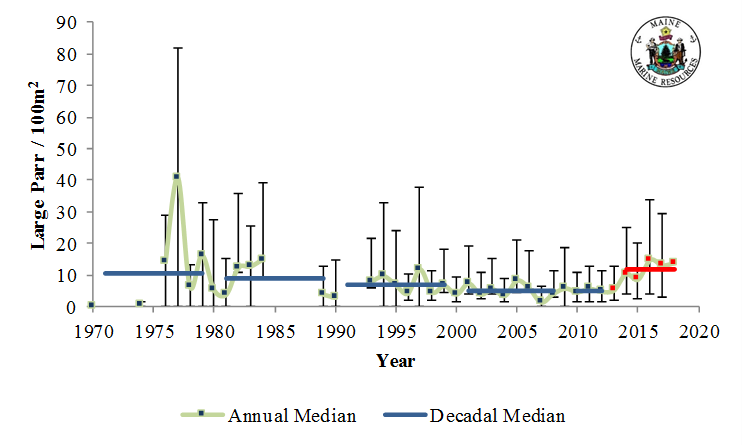
BIG NEWS. This section is referring to results from our
electrofishing effort this past September (see graph at the top of the page).
"Median large parr density during the span of the Project is 11.8 parr/unit, compared to the densities seen during unfed fry stocking of 4.9 parr/unit (a unit is 100m
2 of salmon habitat). This is a
141% increase over a 7-year time span.
In other words, the
parr
densities in the East Machias River as a result of the
Project are
more than double what they were during unfed fry stocking. This is the
highest (!!!!!)
decadal large parr density observed in the East Machias River
since electrofishing began in the mid-1970s. The next highest decadal median was during the 1970s at 10.5 parr/unit."
Another way to put this is, there are
more salmon parr in the East Machias River then there has been in the past 4 decades!
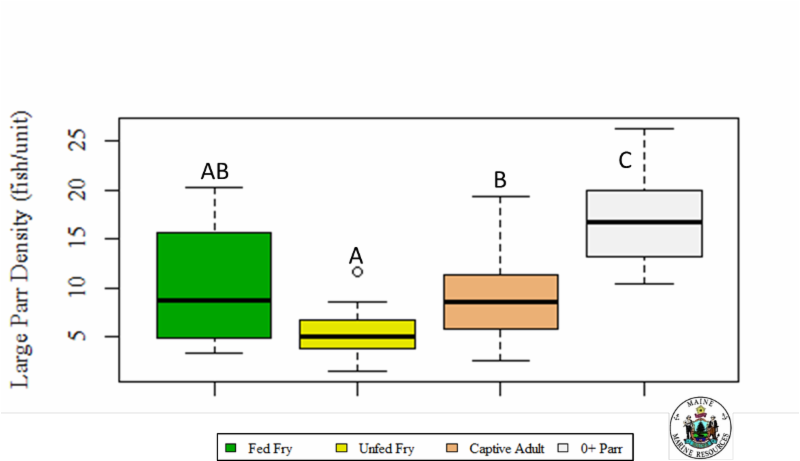
The good news doesn't stop there. If you look at the box plot displaying densities of parr observed in Northern Stream, you will see that fall parr stocking from the
Peter Gray Hatchery outperforms other stocking strategies. Those strategies include: fed fry (fry that are stocked in late May/early June after feeding for a few weeks), unfed fry (fry stocked right after emergence in the the beginning/middle of May), and captive reared adults (adults stocked in the stream before spawning season to spawn on their own in the stream bed). In congruence with this, fall parr stocking produces
significantly greater parr densities in B-class (mid-size streams) and C-class (mainstem) width class waters then other stocking strategies.
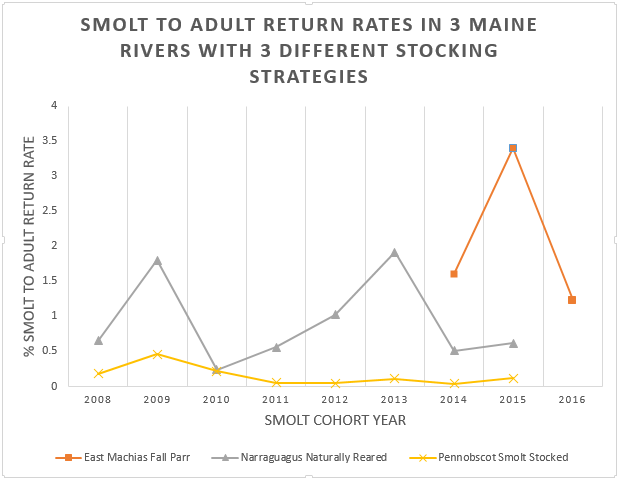
Take a look at the graph comparing the
smolt to adult return rates (i.e. percentage of return adults, otherwise known as at-sea survival) of three different Maine rivers using thr
ee different stocking strategies. Given the three years of data we have the average return rate resulting from the
Peter Gray Parr Project (2.08%) is higher than that of average return rates for naturally-reared salmon on the Narraguagus River (0.915%) and smolt stocked salmon on the Penobscot River (0.153%)
(USASAC 2017). Naturally-reared refers to fish that have been stocked as unfed fry, egg planted, or are a result of natural spawning. Smolt stocked salmon are raised in a hatchery setting to accelerate growth and stocked out in the spring right before migration to the sea (no in-river experience).
All of this data is pointing towards the fact that the
Peter Gray Parr Project
model for raising salmon outperforms other strategies in producing more parr, more smolt, and higher adult returns.
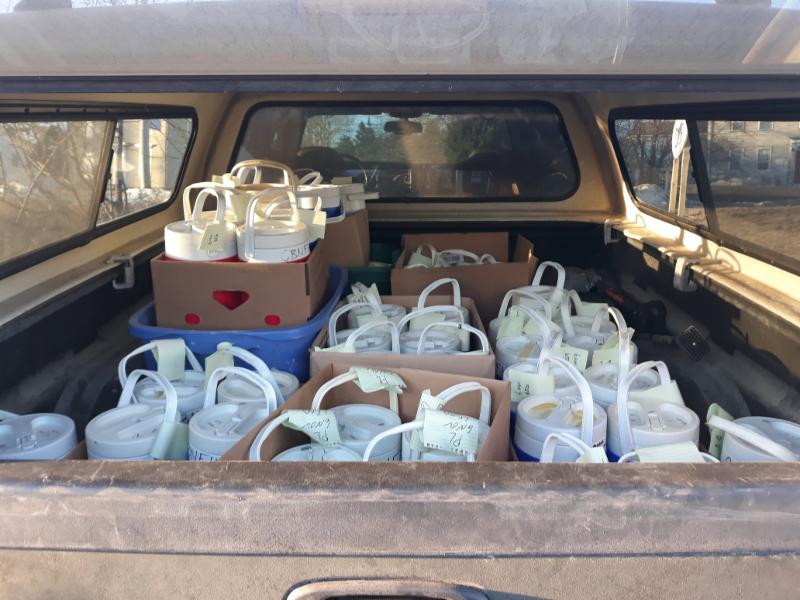
We now have the bulk of our salmon eggs at the Peter Gray Hatchery for the 2019 rearing season. Currently around 350,000 eggs are incubating in East Machias. When it is all said and done we will have picked up around 365,000 Atlantic salmon
eyed eggs from the US Fish and Wildlife - Craig Brook National Fish Hatchery. Thank you to our PGPP partners there for your help - we couldn't do it without you.
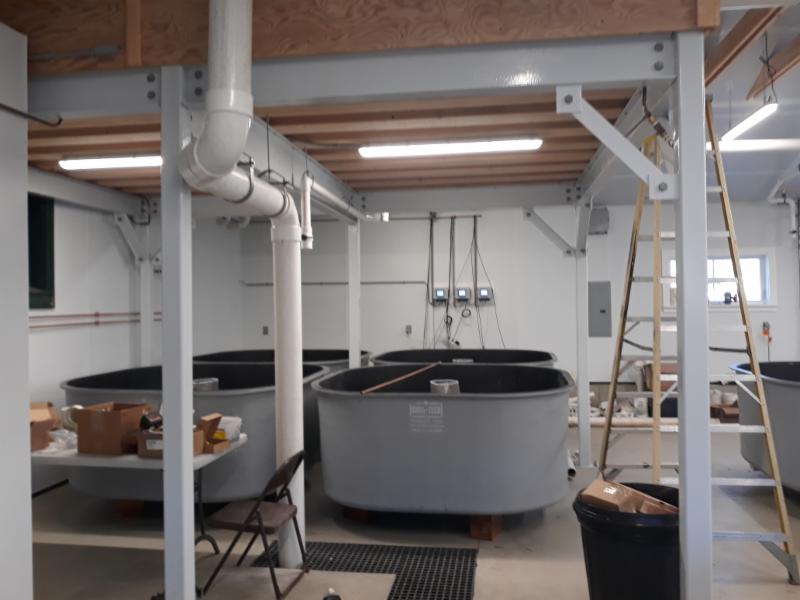
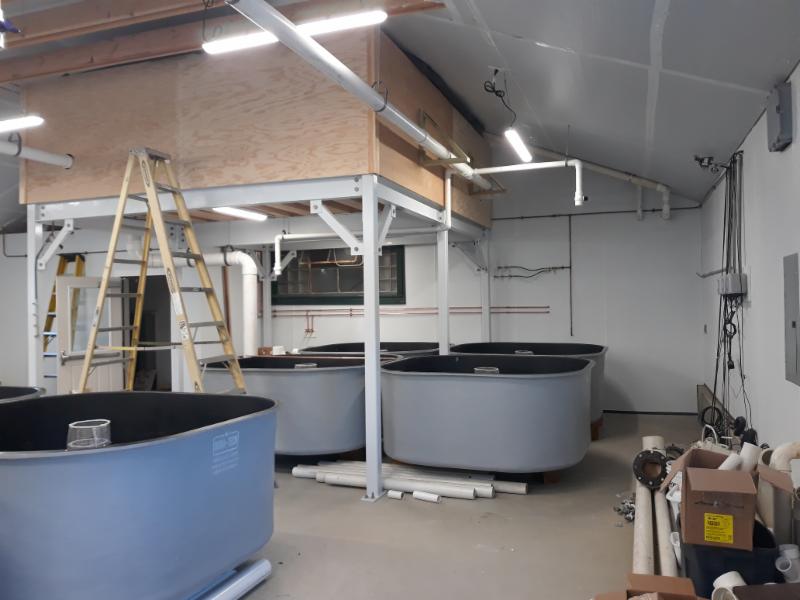
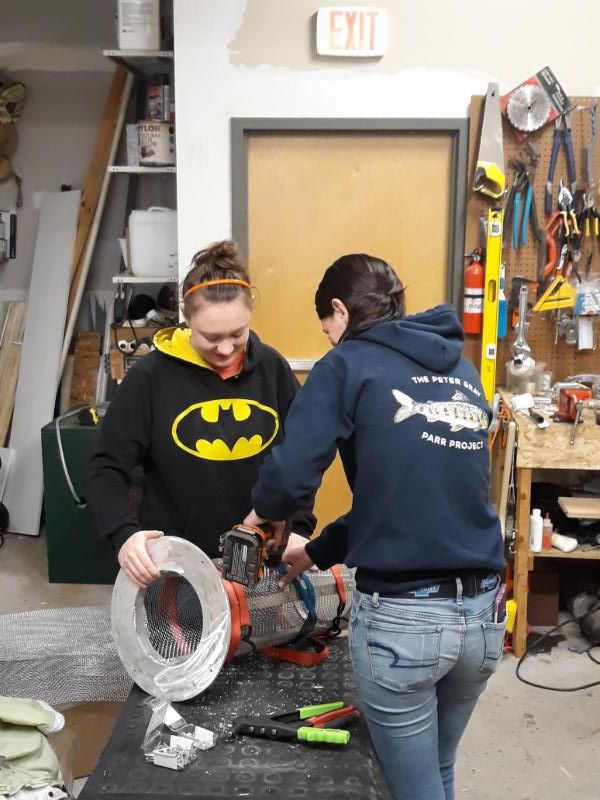
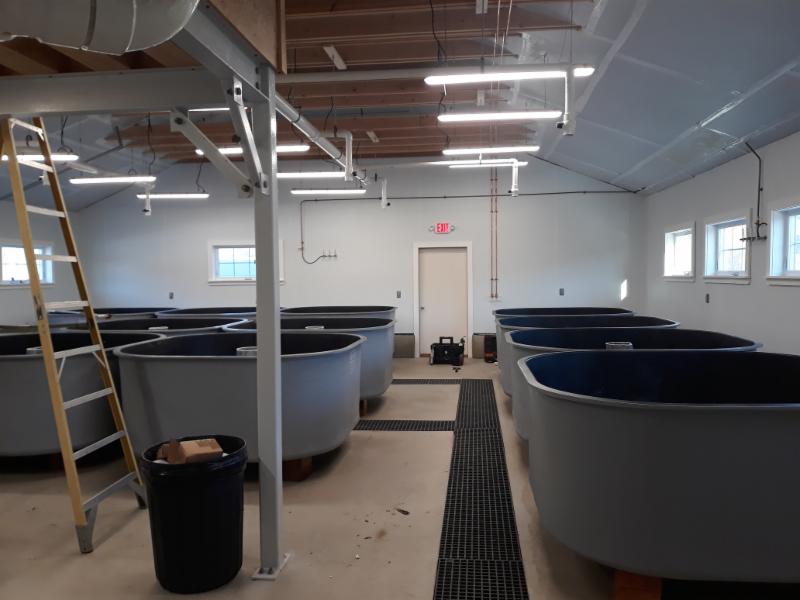
In other photos you will findvsome progress in our hatchery expansion. We are building drain screens (see Rachel and Meagan working away) and have now started running the plumbing throughout the hatchery. There is a lot more work to do, but the goal is to have salmon growing in the expansion come this May!
If you are new to receiving these updates and would like to catch up on some you have missed, please visit our website
here
. Also, if there are any of your friends you think would enjoy this content please share with them or let us know their email address to add to the list!