|
Learn the symptoms of overheating in your pet. Excessive panting, difficulty breathing, increased heart and respiratory rates, and weakness can be some of the first signs of trouble. Overheating can also cause seizures, bloody diarrhea and vomiting. Breed, coat type, age, and activity level all impact an animal’s ability to handle heat. Contact your veterinarian or an emergency veterinary hospital immediately if you think your pet may be overheating.
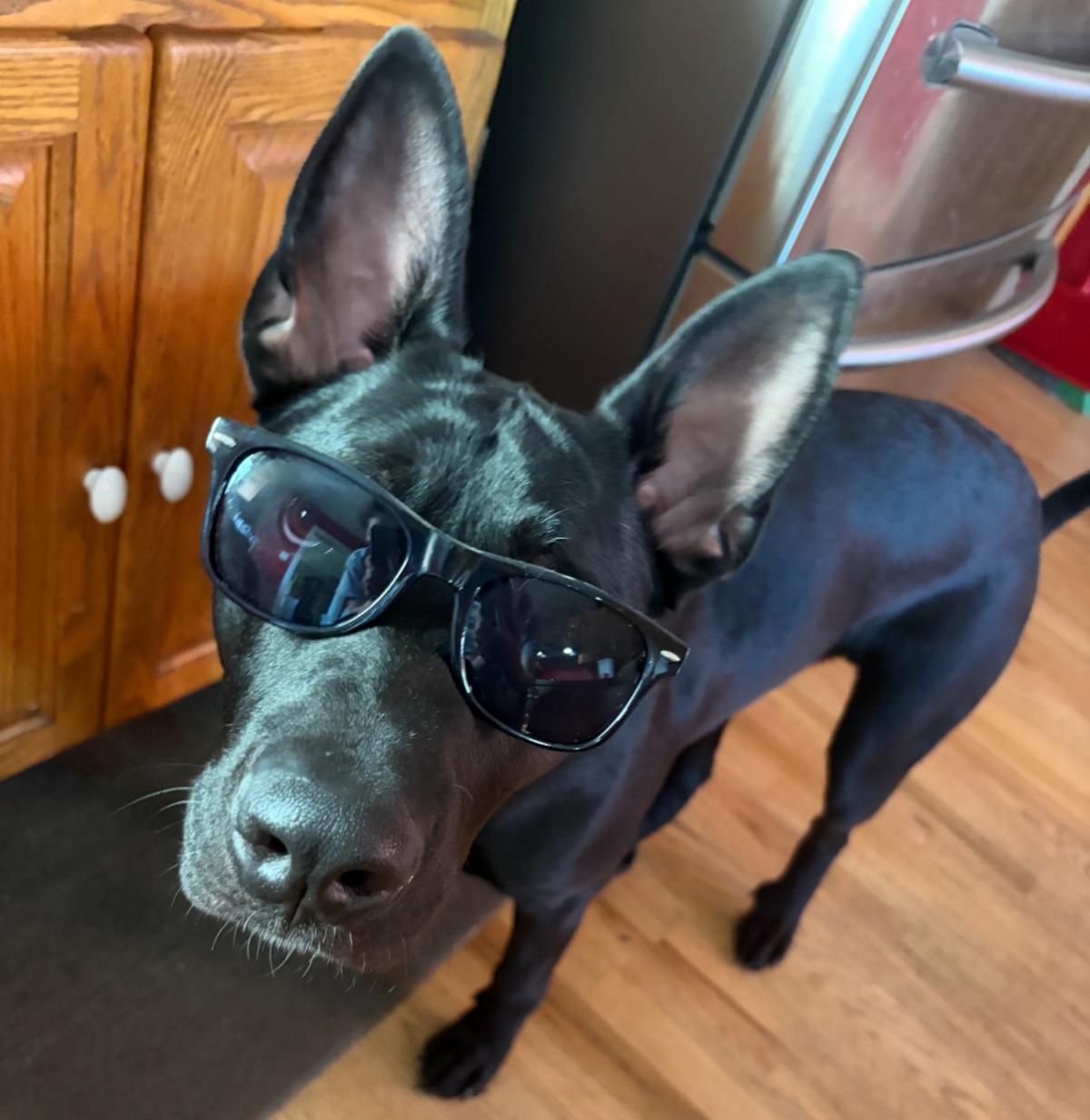
Pictured is Dom, sporting his summer look! He was adopted from the Bonnie Hays Animal Shelter and is staying cool in his home.
A few more things to keep in mind when temperatures rise:
- Animals should always have access to fresh, clean drinking water and shelter from the elements. When it’s hot out, bringing your pet indoors with you is usually the best option.
- Take your dog out during the cooler parts of the day, keep walks short, and avoid asphalt if possible. Walking on grass is a great alternative! If you must walk your dog on cement or asphalt, test the temperature of the surface first. If the pavement is too hot for your bare hand or foot, then it’s too hot for your dog. You can purchase booties to protect your dog’s feet from hot surfaces, but it will take time and training to get your pup used to wearing them.
- Never leave a pet in a car. Vehicle interiors can reach deadly temperatures in a matter of minutes, even in the shade with the windows cracked. Keep the phone numbers for Washington County Animal Services (503-846-7041) and Washington County non-emergency dispatch (503-629-0111) in your phone in case you find an animal in a car on a hot day. If the animal is in obvious distress, call 9-1-1.
|