|
In This Issue:
- IMA Leaders Take Action at AMA Interim House of Delegates
- IMA 2026 Legislative Priorities
- AMA Community Health Impact Lab Micro Grants
- CMS Finalizes New APCM Add-On Codes for Behavioral Health and Collaborative Care Integration
- Medicaid Managed Care Listening Sessions
| | |
IMA Leaders Take Action at AMA Interim House of Delegates
The AMA House of Delegates addressed a range of critical issues impacting the nation's health care system at the 2025 Interim Meeting, which took place Nov. 14-18 in National Harbor, Maryland.
Some key topics at the meeting included:
-
Prior authorization: Delegates took several actions to push back against this payer practice, including adopting a resolution for the AMA to "advocate that low-cost medications and procedures should not require prior authorization."
-
Scope of practice: Four substantial policy actions were taken to defend physician-led, team-based care against inappropriate scope of practice expansions. This included modifying existing policy on laser surgery, adopting new policy on deceptive advertising of nonphysicians' training, and modifying existing policy to support research on specialty switching of physician assistants and nurse practitioners.
-
Augmented intelligence (AI): Delegates approved a resolution that aims to create safeguards to protect patients and physicians from deepfake technology. Separately, delegates also adopted policy to expand AI training in medical education.
-
Rural health care: Delegates adopted several policies to sustain and strengthen access to care for patients in rural areas, including policy supporting minimum standards for alternate payment models to rural hospitals.
-
Substance use disorder treatment: A House-passed resolution calls on the AMA to advocate to remove "red flag" or suspicious order designations for ordering FDA-approved products to treat opioid use disorder (OUD). The resolution also calls for the AMA to remove all barriers to medications for OUD, including prior authorization, fair-first and step-therapy policies.
Pictured above: IMA CEO Susie Keller, AMA Delegate and Chair-Elect of AMA's Council on Medical Service Patrice Burgess, MD; Young Physician Section Rep. Joey Florence, MD; and AMA Alternate-Delegate Zachary Warnock, MD
| | |
IMA 2026 Legislative Priorities
Every year the IMA House of Delegates comes together to develop and adopt policies and directives for the IMA to carry forward. For the 2026 legislative session, IMA members have established a list of priorities, which include:
-
Improving the physician workforce in Idaho via enhanced UME and GME pathways, incentivizing physicians to serve as preceptors, and increased support of the Rural Physician Incentive Program (RPIP).
-
Adding a medical emergency exception to Idaho's abortion ban.
-
Amending Idaho's parental consent laws to address newborn screening, mental health, treatment for physical & sexual assault, and care for pregnant and parenting teens.
-
Maintaining a strong and stable Medicaid program.
Please CLICK HERE to review the document in its entirety.
| |
AMA Community Health Impact Lab Micro Grants Program: Apply Now!
The AMA is awarding a total of $1 million in micro grants to support 20 physician-led initiatives aimed at improving health outcomes in their communities. This program funds innovative, community-centered projects that address a broad range of health-related challenges faced by populations with limited access to care. CLICK HERE to learn more and/or to register for the upcoming informational webinar taking place on December 16 at 11 a.m. Central.
- Application opens: Nov. 13, 2025
- Application deadline: March 1, 2026
- Notification of awards: April 30, 2026
- Project period: 12 months
| | |
CMS Finalizes New APCM Add-On Codes for Behavioral Health and Collaborative Care Integration
CMS's CY 2026 Medicare Physician Fee Schedule final rule makes several important updates that directly impact primary care management and integrated behavioral health. One of the most significant changes is the introduction of new Advanced Primary Care Management (APCM) add-on G-codes that allow practices already furnishing these services to also report behavioral health integration (BHI) or collaborative care model (CoCM) activities in the same month. These add-on codes are designed to reduce the administrative burden and time-based documentation associated with traditional BHI and CoCM billing, while still recognizing the value of coordinated behavioral health services delivered in primary care settings. CMS's goal is to strengthen whole-person care and expand access to behavioral health support through models that many practices already use.
As highlighted in earlier CMS briefings, the APCM codes offer a more predictable revenue stream by grouping Medicare patients based on the number of chronic conditions or QMB status. The new behavioral health add-on G-codes are available when these services are furnished during the same month as APCM. Several commenters to the final rule again pushed for eliminating cost sharing to encourage patients to seek these services and reduce the administrative burden on providers. CMS acknowledged these concerns and is considering future policy changes, including the possibility of reclassifying these services as preventive which would remove cost sharing. CMS also emphasized that stakeholder input will be important during the CY 2027 proposed rue comment period, particularly regarding ongoing barriers to delivering integrated behavioral health services. The finalized G-codes are defined as follows:
-
+G0568 – Initial psychiatric collaborative care management for the first calendar month of behavioral health care manager activities, performed in consultation with a psychiatric consultant and directed by the treating physician or qualified health care professional. Required elements include patient outreach and engagement, initial clinical assessment with validated rating scales, development of an individualized treatment plan, psychiatric consultant review, registry enrollment, ongoing tracking and documentation, weekly case review, and delivery of brief, evidence-based interventions such as behavioral activation or motivational interviewing. (1.88 Work RVU)
-
+G0569 – Subsequent psychiatric collaborative care management for each additional month. Required elements include ongoing tracking of patient progress, weekly case consultation, coordination of care with the treating clinician and other mental health providers, review of treatment response and medication recommendations, brief evidence-based interventions, monitoring with validated scales, and relapse-prevention planning as the patient nears discharge from active treatment (2.05 Work RVU)
-
+G0570 – General behavioral health care management services directed by a physician or qualified health care professional, reported per calendar month. Required elements include initial or follow-up assessments using validated rating tools, behavioral health care planning and revisions, coordination of treatments such as psychotherapy or pharmacotherapy, and continuity of care through a designated member of the care team. (.93 Work RVU)
For RHCs and FQHCs, CMS finalized parallel updates that phase out older bundled G-codes and require the reporting of the underlying CPT and HCPCS codes instead. This includes discontinuing G0512 and G0071 and allowing the use of G0568, G0569, and G0570 when behavioral health services are integrated with APCM. In addition, RHCs and FQHCs must bill the individual remote evaluation and monitoring codes G2010, G2250, and CPT 98016 to receive separate payment. Payment for these individual codes will be based on the national non-facility PFS rate, and standard cost-sharing requirements will apply.
Overall, CMS is moving toward more transparent, code-specific reporting and encouraging practices to incorporate behavioral health as a routine component of primary care. The 2026 final rule reflects CMS's continued emphasis on care coordination, whole-person care, and payment structures that more accurately capture the work occurring within team-based primary care models.
| | |
Medicaid Managed Care Listening Sessions
Save the Dates!
| | |
The Idaho Department of Health and Welfare Division of Medicaid invites all Medicaid members, providers and community partners to a series of listening sessions around the state. Attendees are encouraged to share insights and recommendations for the new Medicaid managed care program. IMA will publish meeting times and locations as information becomes available.
| |  | |
November 10, 2025: Pocatello
December 15, 2025: Rexburg
January 6, 2026: Caldwell
February 3, 2026: Virtual Only
March 10, 2026: Gooding
April 7, 2026: Boise Westgate
May 26, 2026: Coeur D'Alene
May 28, 2026: Lewiston
| | |
AMA Discounted 2026 Medical Coding Books: Order Yours Today!
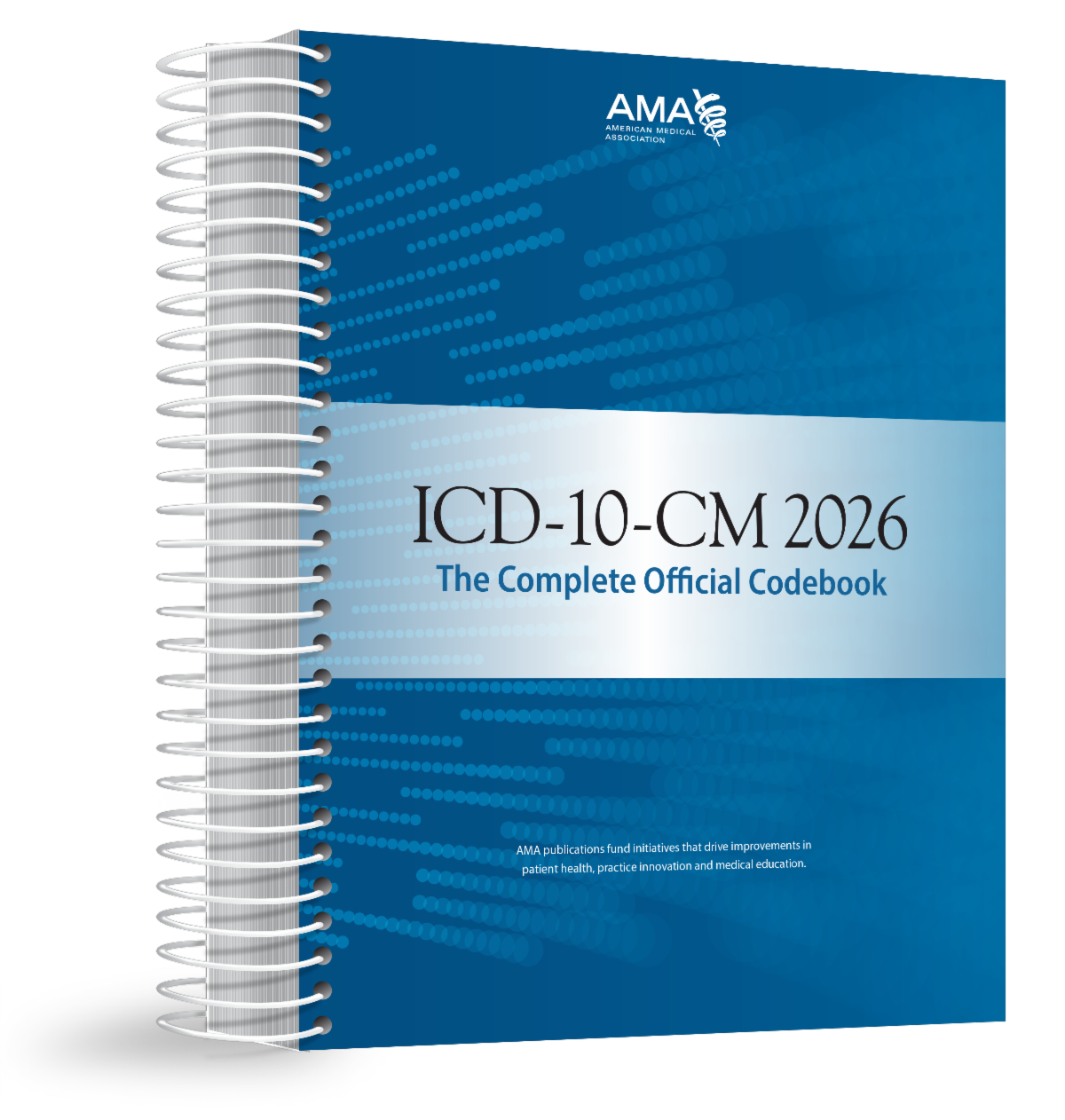
The Idaho Medical Association is pleased to offer substantial discounts on resource materials for AMA and Optum360° books for your office. Order your CPT®, HCPCS, ICD-10, Code of Medical Ethics and other resource materials today! The discounted Coder's Bundle includes the 2026 CPT Professional Edition and the 2026 ICD-10-CM manual for one discounted price.
The 2026 Essential Reference Guide order form with the most popular choices is available HERE for your convenience.
Please note there is a $9.00 shipping and handling fee per book. We also offer a 20% shipping discount for orders of five or more books. Sales tax is calculated on merchandise only and prior to adding shipping fees.
Books will be shipped or hand delivered to you as soon as they are available. ICD-10 and CPT books are now on-hand and can be sent to your office today! Contact Rebecca (rebecca@idmed.org) at the IMA with any questions or call (208) 344-7888x101.
CPT® is a registered trademark of the American Medical Association.
| | | | |