I-site newsletter is a global educational newsletter FOR HEALTH CARE PROVIDERS launched in 2009, that monthly provides independent updates from the international literature on specialty rigid contact lenses such as corneal, orthokeratology and scleral lenses and related topics. View as Webpage
|
|
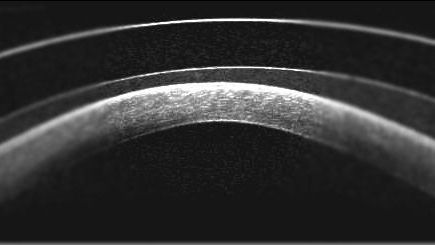
Ocular surface shape is the workbench in contact lens practice, even more so in specialty contact lens clinic. Two recent papers, one from Germany and one from Spain, shed light on the use of measuring ocular surface shape and sagittal height (SAG) and how to apply this to contact lens fitting. Javier Rojas-Viñuela in Clinical and Experimental Optometry describes the methods for measuring ocular surface shape over a large chord (AS-OCT, profilometry using ESP and sMap and Scheimpflug using the CSP Pentacam), as SAGs are one of the first parameters that must be adjusted when fitting sclerals, the article states. Fluid reservoir thickness needs to be adequate to avoid any lens bearing on the cornea, and there is consensus that this should be about 300 microns at lens application and 200 microns after settling, although this may vary depending on the practitioner’s preferences and lens design. But success with the first lens SAG is important, because applying several scleral lenses in a neophyte contact lens patient can be time consuming. In the new European journal Optometry & Contact Lenses, Stefan Bandlitz published a paper on the same topic; table 5 in his open-access article shows a nice comparison of SAGs in microns measured in different studies, while table 2 shows a comparison of the scleral angles. This paper states that the topography of the sclera can affect various aspects of contact lens fit, such as centration, superficial tissue compression, and optical and physiological compatibility. A detailed understanding of the anatomy and topography of the sclera as well as of possible factors influencing the scleral surface allows for an individualised selection of soft and scleral lenses. It enables a simplified lens selection, a prognosis of the lens fit and an assessment of changes in the scleral topography. Tissue compression from scleral (and soft) lens wear appears to be primarily superficial (conjunctival and episcleral) and varies with scleral topography, wear time and lens design. So – using ocular surface shape to fit large-diameter lenses ánd assessing the impact of the lens on the ocular surface can both can be very helpful in clinical practice, it seems. My two (euro-)cents’ worth. See links to the two (both open access) papers below.
|
|
Technology in Contact Lens Practice |
|
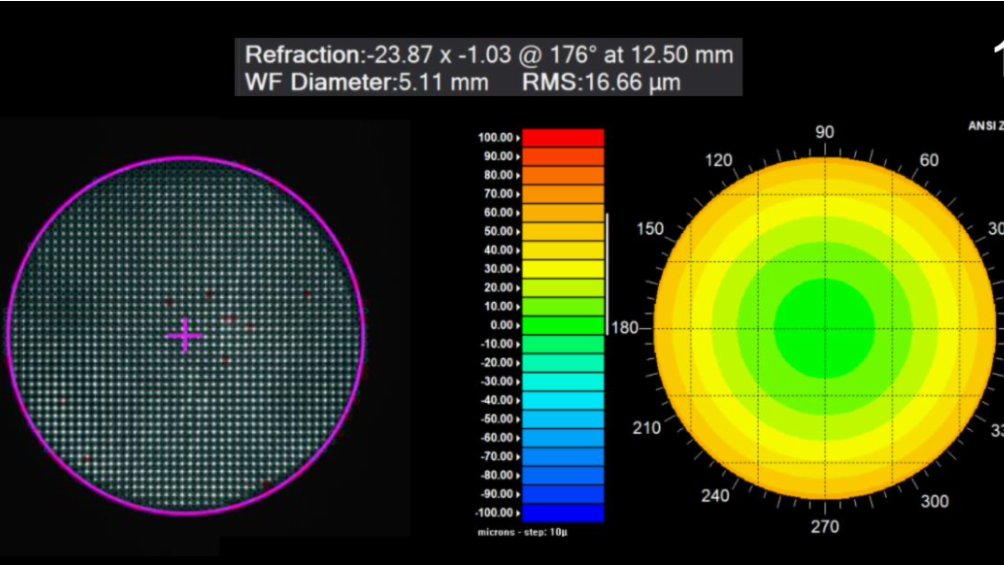
This newsletter features a 'technology in contact lens practice update' - from ocular surface shape (previous item) to higher-order aberration in sclerals to axial-length considerations in ortho-k. |
|
Fluid Reservoir Thickness & Aberrations |
|
To investigate the effect of varying the fluid reservoir thickness (FR) of scleral lenses in keratoconic eyes, 40 eyes were fitted with a scleral lens device having three different FR thicknesses in this study from India. The mean (±SD) values of central FR thickness for low, standard and high FRs were 300±195, 544±214 and 1145±239 microns, respectively. Statistically significant improvements in visual performance were seen with different FR thickness lenses. Post-hoc testing showed better distance vision in low- and standard-FR lenses compared to high-FR lenses, and lenses with standard FRs showed better contrast sensitivity compared with those having low and high FRs. A statistically significant reduction of higher-order root mean square aberrations was found with all FR thickness lenses compared to baseline, but no significant difference was noted between lenses. A moderate positive correlation was observed between higher-order aberrations and distance vision for low-FR lenses. FR thickness should be considered an important factor to provide better vision in keratoconic eyes, the paper concludes. |
|
Optical Impact of Reservoir Thickness |
|
This pilot study conducted in Spain looked at the effect on refraction and optical quality of an increase in the corneal clearance after fitting scleral lenses in healthy subjects. The fluid reservoir thickness varied from 418±112 to 706±120 and 990±117 microns, respectively, in this study. Significant changes were detected in the spherical equivalent and high-order aberrations (HOAs), especially coma and spherical aberration, with increased sagittal heights. Increasing reservoir thickness leads to more myopic refractive error and to increases in different ocular HOAs. The authors noted that this aspect should be considered when fitting sclerals, especially multifocal designs.
|
|
Clinical and Topographic Outcomes of Hybrid and Scleral Lenses |
|
This study from Turkey evaluated the effects of hybrid contact lenses and mini-scleral lenses in eyes with advanced keratoconus. Mean best-corrected visual acuity improved significantly with hybrid and scleral lenses, the mean spherical equivalent and topographic astigmatism measurements decreased significantly in both groups, and the root-mean square higher-order aberrations (HOAs) decreased significantly in both groups as well. Eight patients in the hybrid lens group experienced lens-related discomfort. Significant improvements in visual acuity, spherical equivalent, topographic astigmatism and HOAs were observed with both lenses. However, higher patient comfort with scleral lenses may lead to higher compliance in patients with advanced keratoconus, according to the investigators. |
|
Understanding Axial Length Changes |
|
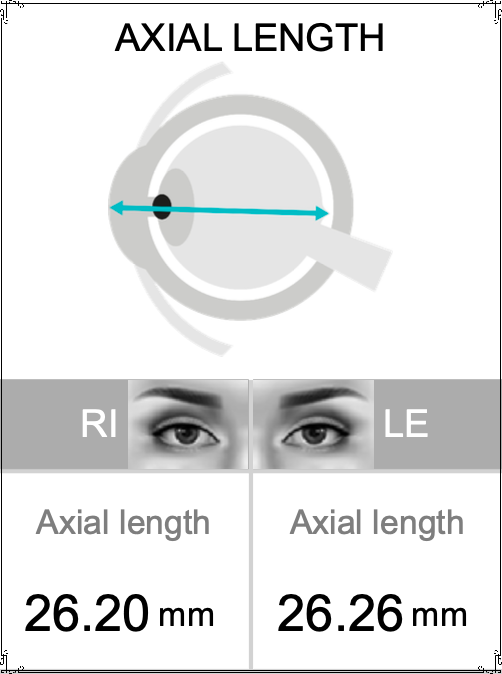
Wang et el from the Children's Hospital of Fudan University in Shanghai, China aimed at determining the pattern of axial variation in subjects with initial shortened axial length during the entire period of orthokeratology and also whether shortened axial length (AL) after one month of orthokeratology can be a predictor of the amount of myopia control. They included 106 children with myopia aged 8 to 14 wearing ortho-k lenses: 54 eyes with shortened AL at the first-month visit and 52 eyes without shortened AL in the first month. AL at baseline and within the entire period of ortho-k (20 months), including fitting, washout period and re-wear, was measured. The study concluded that after AL is shortened in the initial stage of ortho-k, it will experience a rapid rebound during the washout period, and the shortening can reappear when re-wearing the ortho-k lenses. Hence, the evaluation of ortho-k will be more objective and accurate after the washout period. In addition, the existence and degree of axial shortening can be used as a predictor of long-term myopia development, the authors state. |
|
Crystalline Lens Thickness vs Axial Length |
|
To start with the conclusion of another paper from China: crystalline lens thickness is associated with axial length elongation and myopia progression in orthokeratology; something that not many of us in the field would be aware of, supposedly. Considering individual variability with regard to the effects of ortho-k on myopia progression and controversies regarding the precise underlying mechanism, the aim of this study was to investigate several ocular measurements associated with axial length (AL) growth in children wearing ortho-k lenses. Initially, crystalline lens thickness and AL were significantly increased after 12 months of ortho-k wear compared with baseline in this study. The anterior chamber depth did not change significantly. Subsequently, reduced rate of AL elongation was found in children who were older at the initiation of ortho-k wear, had a higher degree of myopia at baseline, had thicker central corneal thickness and had a greater increase of crystalline lens thickness over 12 months. Only higher degree of myopia and greater increase of crystalline lens thickness were associated with smaller increases of AL in multivariable analyses. In conclusion: both crystalline lens thickness and AL were significantly increased in children with overnight ortho-k wear after 12 months of follow-up. Higher baseline myopia and greater increase of crystalline lens thickness were associated with less increase in AL during ortho-k wear in children with myopia. |
|
Higher-Order Aberrations with Novel Scleral Contact Lens Technologies |
|
A webinar was hosted by the Scleral Lens Education Society on August 3rd and presented by Barry Eiden and John Gelles . Visual disturbances can be divided into low- and high-order aberrations (LOAs & HOAs). LOAs are correctable with sphere and cylindrical optics. HOAs are more complex and can’t be corrected with traditional optics. Rigid contact lenses have the ability to address LOAs and also HOAs induced by anterior corneal shape anomalies via the rigidity of the contact lens and its ability to “mask” anterior corneal irregularities. Internal HOAs induced primarily by posterior corneal shape irregularities and/or lenticular opacities (cataracts) can have a significant negative impact on visual function. This course reviews basic concepts of aberrometry and HOAs as well as how contact lenses can address HOAs, including novel contact lens designs that can compensate for residual internal HOAs.
|
|
Global Specialty Lens Symposium 2023 |
|
Call for Free Paper & Posters |
|
The Education Committee of the Global Specialty Lens Symposium, to be held January 18-21, 2023 at the Horseshoe Las Vegas US (formerly Bally’s), invites the submission of abstracts for the presentation of Free Papers and Posters. The committee seeks topics including new and innovative concepts, clinical cases and research on all aspects of contact lenses (such as materials, designs, lens care, etc.) in addition to related topics such as corneal and ocular surface disease, diagnosis and treatment approaches, and practice management. The submission deadline is October 3, 2022.
|
|
Amsterdam, Netherlands
Copyright © 2022. All Rights Reserved
This newsletter is kindly supported by
Bausch + Lomb Specialty Products
|
|
|
I-site is an educational newsletter that is distributed on a monthly basis and provides an update on rigid gas permeable-related topics (scientific research, case reports and other publications worldwide). I-site is objective and non-political. Disclosure: I-site's editor Eef van der Worp, optometrist PhD FAAO FBCLA FIACLE FSLS, receives educational grants from a number of industry partners but is not related to any specific company. |
|
|
|
|
|
|