FAIR REPRESENTATION & REDISTRICTING
FOR NEW YORK STATE GRANTMAKERS
|
|
The first initial Census Data has been released and conversations and map drawing are heating up - meaning redistricting is in high gear. This newsletter seeks to capture the most relevant news, resources, and information to help foundation leaders engage in redistricting efforts at the local and state level.
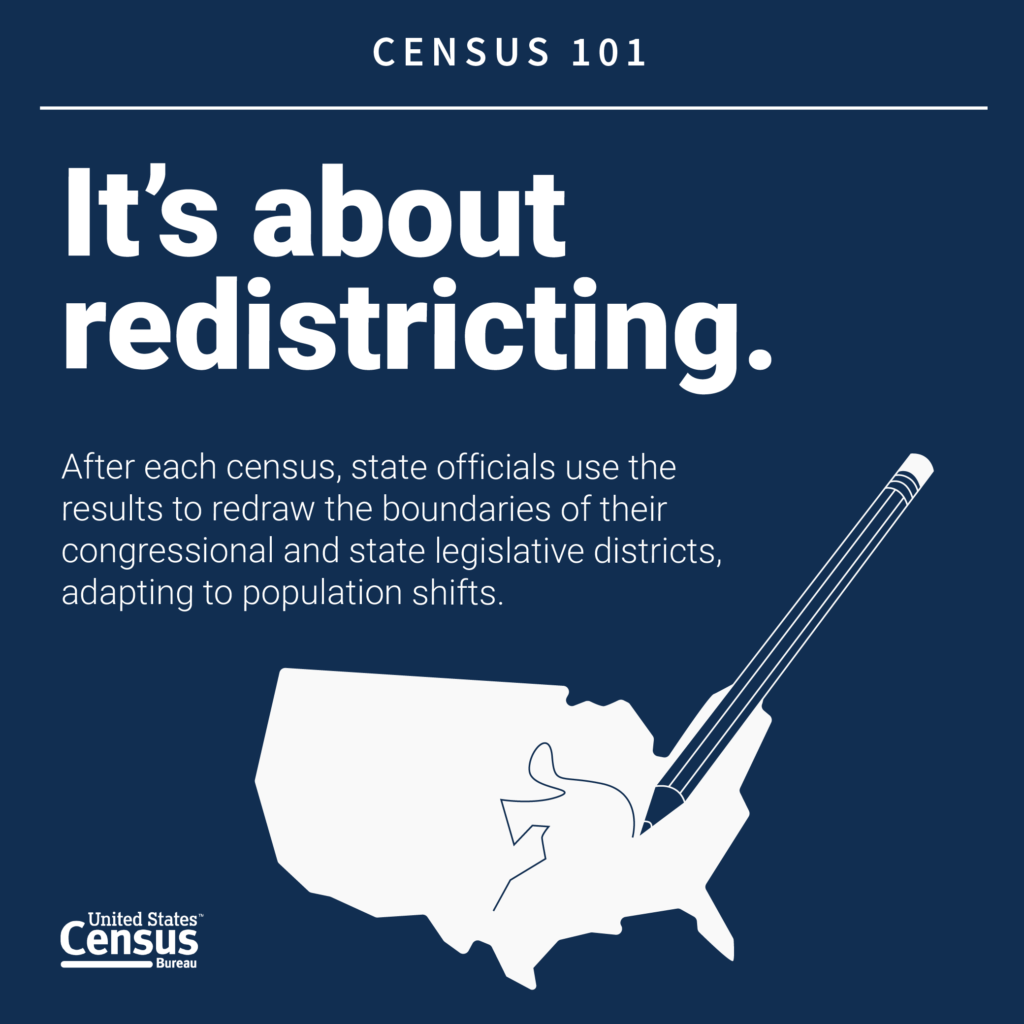
When the New York State Census Equity Fund announced the creation of a pooled fund to work on a complete count for census 2020, the Fund always included redistricting as part of its work plan. Counting people is important to ensure New York receives its fair share of federal resources to support vital community programs and infrastructure. At the same time, ensuring all New Yorkers have fair representation is equally as important.
Just like census, redistricting is part of the democratic process to ensure that communities are fairly represented. If you want to learn more about how your foundation can engage in this work or if you have grantees looking for resources, networks, and connections, please contact us.
|
|
Update from the New York State Independent Redistricting Commission |
|
The New York State Independent Redistricting Commission (IRC) held their final "listening" hearing on Sunday, August 15, 2021 at 2:00 pm. The listening sessions held throughout July and August were attended by various individuals and community leaders from each region to provide information to the Commissioners about their hopes for the redistricting process. All regional sessions can be viewed on the IRC's website.
Our team attended each session held by the Commission so we could provide funders in NYS with a high-level report of the key take-aways from each meeting. A huge debt of gratitude to Michael Remaley, who is a consultant to the NYS Census Equity Fund for providing this summary of each session. The information captured during the listening sessions will be useful to assist the Steering Committee direct grants throughout 2021 to support fair and just redistricting processes across the State. Click here to download a PDF with information about what we learned/heard from communities about redistricting in their region.
|
|
Resources from Our National Partners:
Census Data Release
|
|
"No matter our color, background or zip code, voters should pick their leaders, not the other way around. We come together every decade to draw new district lines that give each of our votes equal weight, each of our voices equal stature, and each of our communities equal access to the decision making processes that determine funds for schools, hospitals, and other essential services that our government allocates." - FCCP |
From our Partners at FCCP
FCCP has developed a toolkit designed to provide strategy and messaging guidance to districting stakeholders, tailored around the Census Bureau’s release of redistricting data on Thursday, August 12.
In the toolkit, you will find:
- An overview of our core message
- Strategic guidance
- Information about the data release
- Talking points
- Template press advisory
- Template press release
- Draft social media
Resources Compiled by the Census Team at The Leadership Conference on Civil & Human Rights
What exactly is happening on Thursday, August 12th? On Thursday, the Census Bureau will release in-depth demographic statistics from the 2020 Census. These data will show how the ethnic, racial, and voting age makeup of neighborhoods has changed since the 2010 Census. Additionally, these detailed data will be used by most state legislatures to redistrict or redraw their political districts for elections in a process known as “redistricting.”
Specifically, the August data release will provide the first look at the demographic characteristics of the nation by state, county, city, all the way down to the census block level, including:
- Race and ethnicity.
- Population 18 years and over.
- Occupied and vacant housing units.
- People living in group quarters like nursing homes, prisons, military barracks and college dorms.
Data users will be able to access 2020 Census redistricting data by downloading the complete set of files for each state, the District of Columbia, or Puerto Rico, from the Census Bureau’s File Transfer Protocol site (FTP site). Data will be available for the full range of geographies provided in the redistricting dataset, including down to the census block level. Supporting resources for working with the August release of these data can be found at the Decennial Census P.L. 94-171 Redistricting Data Summary Files webpage, including a step-by-step “how-to” guide. Note: The Census Bureau will release the same data in easier-to-use formats by September 30, 2021.
Along with this release on Thursday, or soon after, the Census Bureau will release a 2020 Census data map, provide data visualization tools, update their QuickFacts table, and publish various America Counts stories.
This release follows the April 26, 2021 release of the first results from the 2020 Census that showed the total population of the United States and determined each state’s share of the 435 Congressional seats in the U.S. House of Representatives.
What’s the difference between the release on August 12 and the release by September 30, 2021?
To put it simply, the release by September 30 will be the same data but in an easier to understand format. The August 12 release will be in a “legacy” format on a public FTP site that governments have used in the 2010 and 2000 Censuses. These same data will be released in easier-to-use formats by September 30, 2021. Additionally, the Census Bureau will send these easier to understand data via DVD and flash drive to the official recipients in each state. By September 30 these data will also be published on the Census Bureau’s data explorer web tool data.census.gov.
Resources to help you prepare for the legacy format redistricting data release.
-
FAQs on Redistricting. Here you will find a Frequently Asked Questions (FAQ) document that goes through common questions regarding the redistricting data and related data materials.
-
FAQs on imputation. Here you will find a Frequently Asked Questions (FAQ) document that goes through common questions regarding the imputation process.
-
Census Data Release Timeline (updated). Here you will find a census data release timeline. Originally released in April, this updated timeline reviews what census data releases we expect this fall.
|
|
New York
Public Mapping Project
If your school or public interest organization is interested in participating in a redistricting mapping project to draw congressional and state legislative maps in a competition (and where maps can be submitted to the state commission for consideration), please email Jeff Wice for more information. Free software, data, and instruction will be provided.
|
UPDATES FROM NATIONAL PARTNERS
|
|
News about the American Community Survey
NEW YORK STATE NEWS
|
|
|
News and Resources from the Census Bureau |
|
NEWS ABOUT THE
AMERICAN COMMUNITY SURVEY
On July 29, the Census Bureau announced that it will not be releasing its 1-year 2020 American Community Survey (ACS) estimates in its standard form due to the impact of the COVID-19 pandemic on data collection. The low response rate did not meet the bureau’s data quality standards. The 2020 1-year estimates, which collect monthly data for a period of 12 months, had their lowest response rate in the history of the survey at 71%. Those who were missed skewed toward people with lower incomes, less education and who didn’t own their homes, raising the risk that survey results would be biased, according to the Bureau. The Bureau will release experimental estimates developed from 2020 ACS 1-year data and is in the process of reviewing the quality of the ACS 5-year estimates (2016-2020), tentatively scheduled to be released in December.
FCCP and other national partners are monitoring this issue closely and analyzing the
implications of this news on their collective work, including for research,
advocacy, the distribution of federal funds, and more. They are reassured by
the Bureau’s commitment to data quality standards. We will continue to keep you
updated on this important issue, including any opportunities to weigh in on the
importance of the ACS.
More information on this decision and its implications from the Bureau’s view can be
CENSUS BUREAU RESOURCES
The Census Bureau has released the following resources to prepare stakeholders in preparation of the 2020 data release:
The Census Bureau has also provided the following communication resources to support the redistricting process. The following resources builds on prior research on race/class narratives that is led by ASO Communications and Frameshift. The first phase of their psychographic research has been completed and can be accessed by clicking on the links below.
|
|
REDISTRICTING TOOLS TO HELP FUNDERS |
|
Redistricting Report Card
In response to the 2021 redistricting cycle, the Princeton Gerrymandering Project developed this report card as a tool to help the public identify gerrymandered maps. The Redistricting Report Card uses a powerful and unique set of analytics to grade each state’s newly-drawn maps during the redistricting process. Information and new more maps are being added as they are received.
CUNY Redistricting & You Interactive Map
This tool developed by the Center for Urban Research at the Graduate Center of the City University of NY (CUNY) will help various stakeholders understand the local implications of redrawing legislative district lines across the country.
The map has been updated to show population counts from the 2020 census, highlighting which congressional and state legislative districts will need to grow and shrink to meet the goal of the population equality during redistricting.
New York State Demographic Information
Cornell University’s Program on Applied Demographics (PAD) has posted detailed information with regional charts and a county map showing the state’s population changes from 2010-2020 by county, region, race and ethnicity.
Princeton Gerrymandering Project
This nonpartisan tool will help localities understand how to conduct nonpartisan gerrymandering at the State level. The Project bridges "the gap between mathematics and the law to achieve fair representation through redistricting reform." The mapping tool provides information on state-by-state reforms and census-related timeline delay alerts.
Census Bureau's Historical Interactive Apportionment Map
The new online mapping tool from the Census Bureau displays 10 decades of appointment and population data.
Redistricting in New York after the 2020 census, Ballotpedia
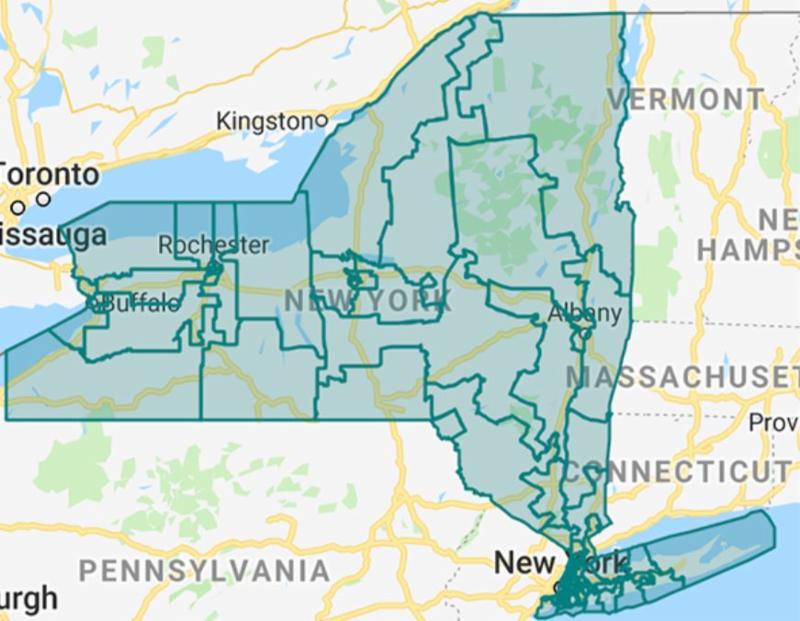
New York Redistricting Amendment
S 8833 is a proposed amendment to the New York constitution that would make changes to the redistricting reforms approved by voters in 2014 by changing deadlines and the thresholds needed to approve maps, as well as certain criteria for drawing maps.
The Brennan Center has an overview of what is in the amendment and what it means for the redistricting process. The amendment will be on the ballot in November and it is important that voters understand the amendment.
All about Redistricting
This is a comprehensive resource on redistricting rules, processes, and reform across all fifty states created by Justin Levitt at Loyola Law School that includes Redistricting 101 materials in six languages.
Redistricting Data Hub
The nonpartisan Redistricting Data Hub was founded by experts with backgrounds in pioneering redistricting legal cases, the establishment of independent redistricting commissions, and related ballot initiatives in different states. The goal of the Redistricting Data Hub is to provide individuals, civic organizations, and good government groups the data, tools, and knowledge to participate effectively in redistricting processes by learning how to define their communities, provide meaningful public input, recognize gerrymandering, and advocate for fair and legal maps.
|
|
This email was generated by Engage New York in support of the NYS Census Equity Fund; a pooled fund focused on supporting a fair and accurate census count as well as fair representation in the redistricting process.
|
|
|
|
|
|
|